When you look at where silicone 3D printing has progressed, the landscape reveals a faster adoption across aerospace, audiology, consumer electronics, and soft robotics. The healthcare applications that exist remain concentrated in training models, surgical devices, and early-stage research. When you know that other 3D printing technologies have found a natural place in implants, medical devices sold at scale, in the everyday toolkit of a clinician or hospital, it’s quite paradoxical to realize that the sector that seems like the natural home of silicone additive manufacturing is the one where adoption has remained most cautious.
This opinion piece offers the opportunity to unpack why and to take stock of who is building the ecosystem capable of changing it.
A material that defies easy printing
Silicone is a thermoset elastomer and that single fact changes everything. Unlike thermoplastics, it cannot be melted and re-solidified, which immediately disqualifies the most widespread AM processes: FFF, SLS, and most standard SLA workflows.
It begins in liquid form and only becomes structural through vulcanization, triggered by heat, UV light, or a chemical catalyst depending on the system. Its viscosity is different from a photopolymer resin: it collapses without support, requires two-component mixing at precise ratios in real time, and demands tight control over every process variable (temperature, humidity, nozzle pressure) with a rigor that standard AM workflows simply aren’t built for.
Because many silicone formulations are transparent, even visual inspection of layer quality is unreliable. The result is a material that requires purpose-built machines, purpose-built materials, and a demanding process that is not often seen in clinical environments.
Who is building this space: a market update
Despite these barriers, a small but determined cohort of companies has spent years constructing the technical and commercial foundations of silicone additive manufacturing. The landscape has matured but remains far from mainstream, even in healthcare.
Lynxter (France) celebrates its tenth anniversary this year as a globally recognized leader in the field. Founded in 2016 in the Basque Country, the company’s story is rooted in healthcare from the start: co-founder Thomas Batigne’s earliest experiments involved a modified printer producing prototype dressings for wound healing research at Rangueil University Hospital in Toulouse.
A decade later, Lynxter’s S300X – LIQ21|LIQ11 can process medical-grade RTV2 silicone certified ISO 10993-05, and its machines are now installed inside AP-HP’s PRIM3D platform in Paris, a hospital-embedded AM hub working to develop next-generation medical simulators that reduce reliance on cadavers and animals in surgical training. The company is present in 43 countries today, and active in both aerospace and medical sectors.
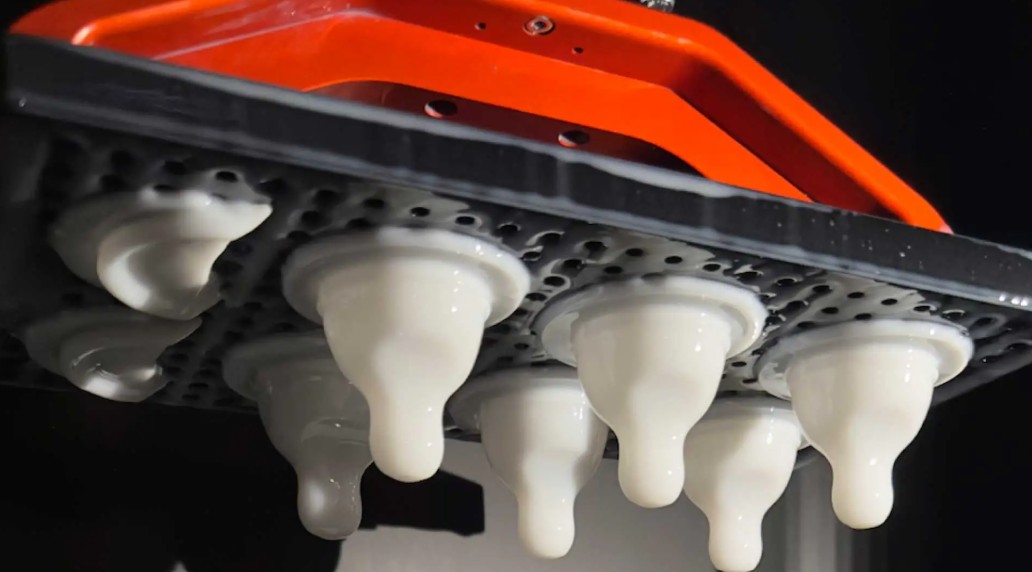
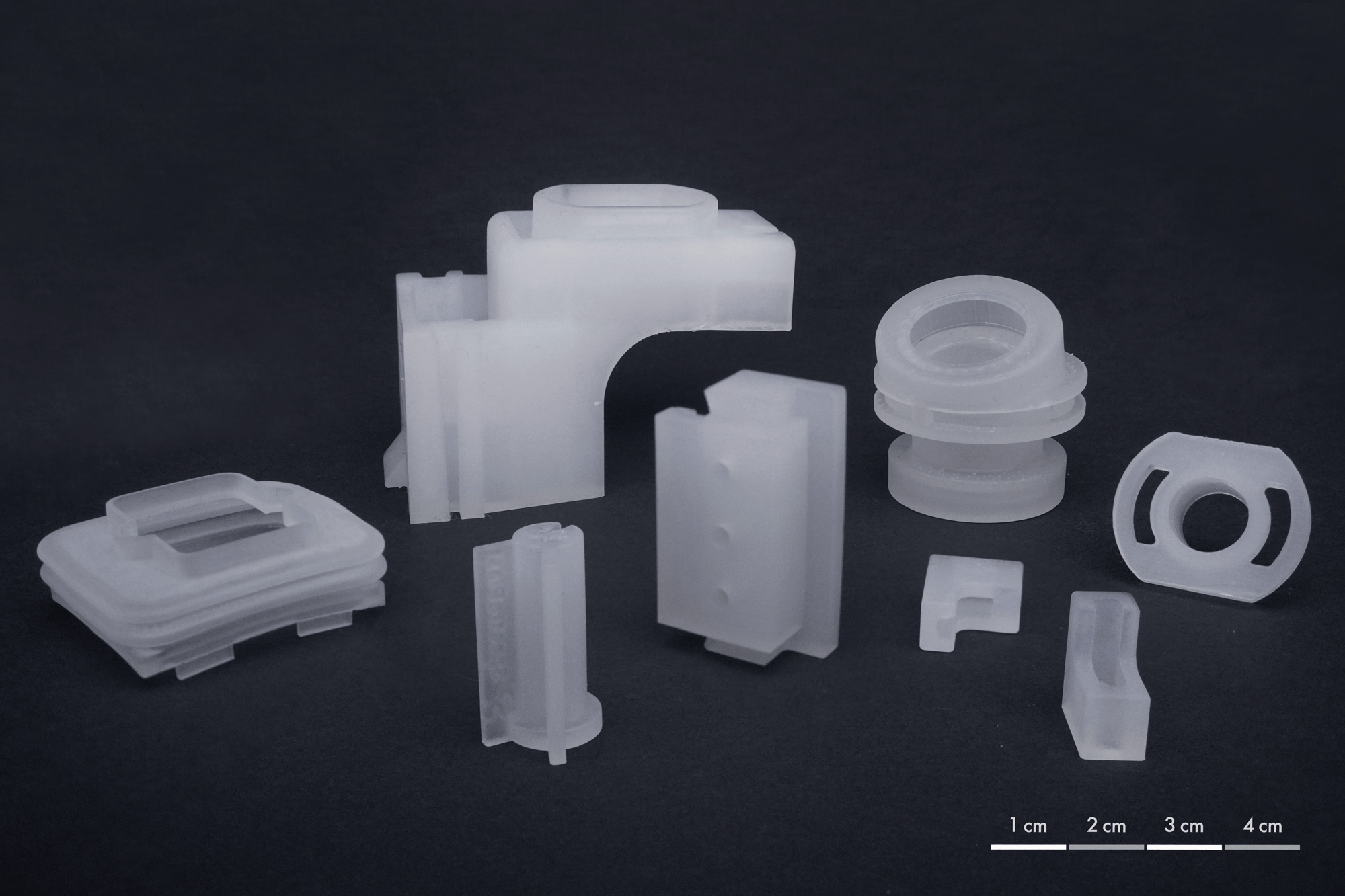
Spectroplast (Switzerland), an ETH Zurich spinoff founded in 2018, takes a chemistry-first approach: its proprietary SAM technology uses light-cured silicone to produce 100% pure silicone parts with the resolution and surface quality that extrusion struggles to match. Operating as a contract manufacturer, it removes the process burden from customers entirely.
Its TrueSil material series is ISO-certified for biocompatibility, and audiology — hearing aids, custom ear protection — has been one of its strongest clinical entry points. A Series A round closed in late 2024, backed by AM Ventures and HZG Group.
3Deus Dynamics (France) has structured its entire offering around healthcare and aerospace. Rather than selling machines, it delivers finished silicone anatomical models (vascular, cardiac, patient-specific) directly to hospital procurement. The company also collaborates with medical device manufacturers for the R&D and preclinical testing phases. It is one of the few companies to have absorbed the process complexity of silicone AM so that clinicians simply don’t have to.
Axtra3D (USA) entered the silicone AM space in April 2025 with TrueSilX50, developed in partnership with Spectroplast. TrueSilX50 is reported to be the first 100% pure silicone material processed via photopolymerization. Compatible with its Lumia X1 HPS platform, the material is biocompatible per ISO 10993 and targets anatomical models, wearable medical devices, and vascular models. It is not a core offering, but a significant step toward scalable, production-grade silicone AM.
InnovatiQ (Germany), formerly German RepRap and now part of the Arburg group, has been processing liquid silicone rubber via its LAM (Liquid Additive Manufacturing) technology for years. Its LiQ320 is commercially available and compatible with medical-grade LSR formulations.
Prayasta (India) is tackling the hardest problem of all: implant-grade silicone. Its Silimac P250 uses IR laser curing to process materials too viscous for conventional silicone printers, targeting personalized breast prostheses and, further down the line, a range of soft tissue implants. The company is working with the Indian Institute of Science to bridge the gap between research and clinical deployment.
Stratasys recently joined forces with silicone manufacturer Shin-Etsu to develop P3 Med Silicone 25A BioComp. Ideal for medical production parts, the material could be used to manufacture patient skin contact devices and wearables.
Certified to ISO 10993, the material can be processed by the Origin P3™ platform, without tooling.
Why the adoption gap persists
Let us not be pessimistic. When we look at the number of companies that have entered the space in the last decade vs the number of companies that shut down their activities, we can’t help but admit that there is somehow some advancements. But why is silicone 3D printing still struggling to be adopted in clinical environments? Several converging factors explain this.
The regulatory burden is uniquely demanding for soft implantable materials. The path from a technically successful silicone 3D-printed part to a cleared, reimbursable medical device is long and uncertain. Class III medical device classification, which governs most implantable parts, requires clinical evidence, on top of biocompatibility data.
Reimbursement has not caught up, and the dossier of this healthcare 3D printing edition helps to understand why.
Standardization of silicone AM processes does not yet exist. In titanium powder bed fusion or photopolymer-based dental printing, there are documented, validated workflows that hospital procurement committees and quality assurance teams can evaluate. Silicone AM has no equivalent process standardization. Each vendor’s approach produces parts that behave differently under testing. The absence of a shared technical language makes clinical validation harder and slows adoption within healthcare systems.
The material’s properties, which are its greatest strength, are also its greatest challenge. Silicone’s softness, elasticity, and transparency are precisely why it is used in implants and simulators. But those same properties make quality control difficult.
Lastly, healthcare institutions are not yet or always equipped to absorb the technology in-house. The PRIM3D model at AP-HP is compelling precisely because it is exceptional: a dedicated, professionally staffed AM platform embedded within a major hospital network.
Most clinical environments do not have that infrastructure. Hospitals that want to use silicone AM currently depend on external service providers, which adds lead time, limits customization, and makes the technology invisible to clinicians who might otherwise specify it. The workflow, for most use cases, is not yet point-of-care.
Where silicone 3D printing can change patient outcomes
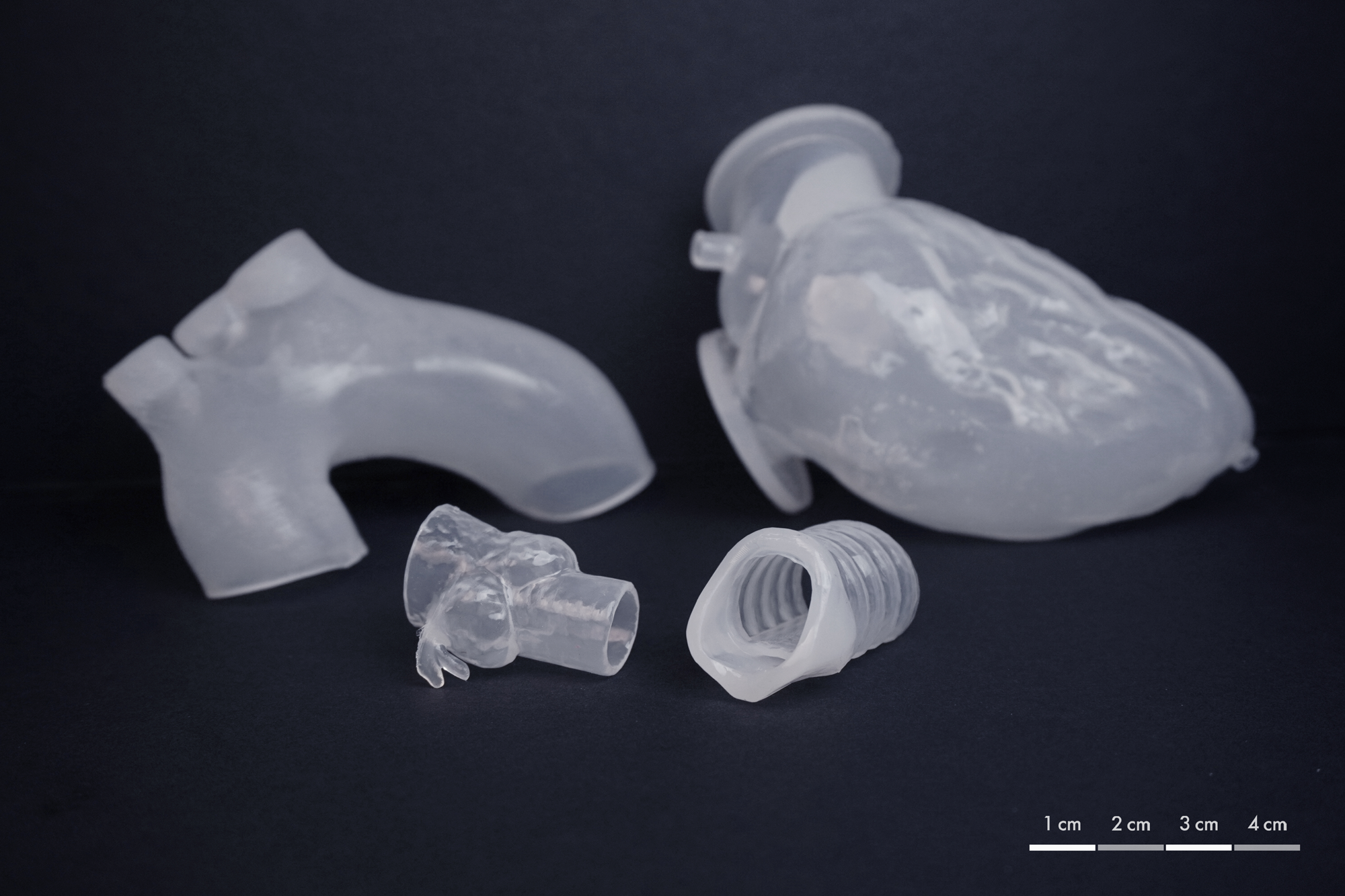
Within the constraints above, several application categories are worth watching closely.
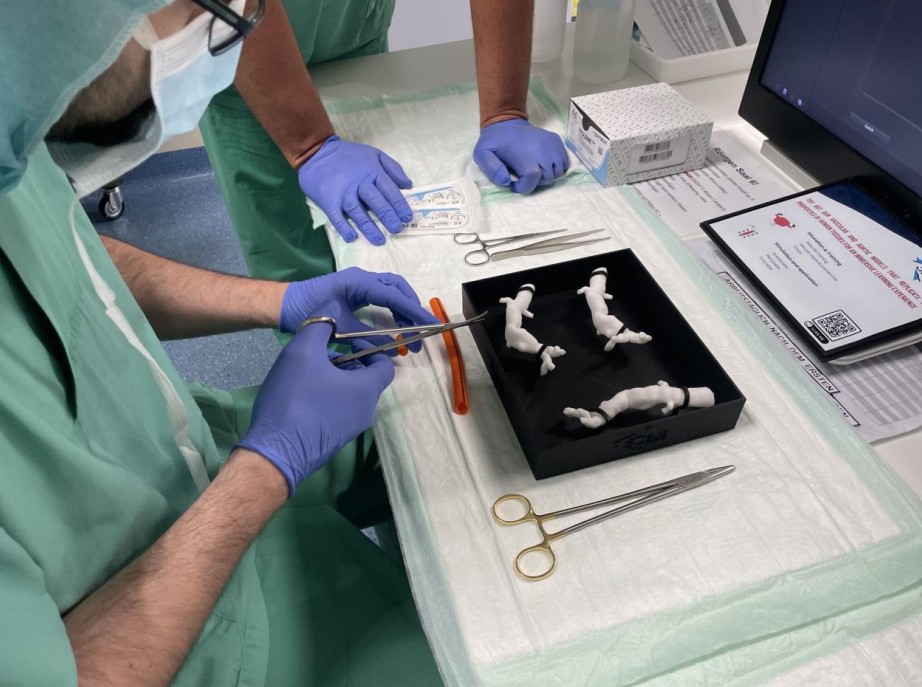
Surgical training and pre-operative planning. This is where silicone 3D printing has made its clearest inroads. The PRIM3D/Lynxter collaboration is a strong example: anatomical models printed in silicone faithfully replicate tissue texture, compliance, and tactile behavior in ways that rigid polymer models cannot.
Silicone aortas for vascular surgery training, cardiac phantoms for interventional cardiology, and pediatric airway models for anesthesia practice are all in active use in leading hospital centers. These applications do not require implant-grade regulatory clearance. They are training tools and planning aids, which lowers the barrier significantly. 3Deus Dynamics has structured its entire commercial model around this category.
Custom external prosthetics and epithetics. External prostheses (ear, nose, facial reconstruction, ocular) have long been made from silicone through traditional mold-casting. AM offers a genuine workflow advantage here: digital scanning + silicone 3D printing eliminates the iterative casting and trimming process, compresses lead times, and can produce geometries impossible in a mold.
Soft implantable and contact devices. Silicone’s biocompatibility is well-established from decades of use in implants (breast prostheses, cochlear implant housings, cardiovascular seals). The question is whether AM can produce implant-grade silicone with the dimensional precision, surface quality, and long-term mechanical stability that regulatory bodies require. Prayasta is working on the materials science side of this. Spectroplast’s TrueSil series is moving toward ISO certification for broader biocompatibility.
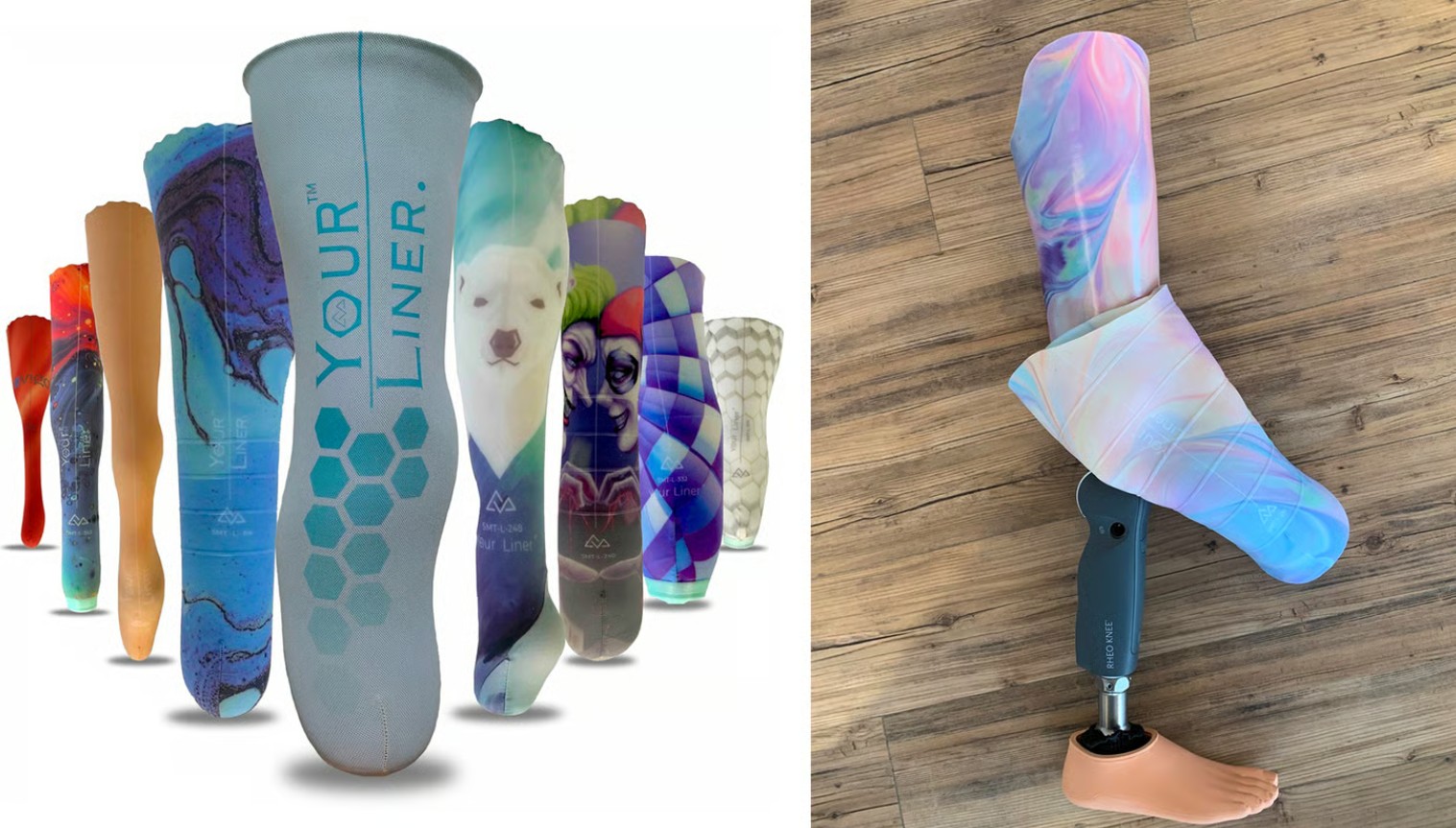
Wearable and monitoring devices. Flexible electronics, patient-worn sensors, drug delivery patches, and orthotic soft interfaces represent a rapidly growing application space. Silicone’s skin-safe properties, combined with the design freedom of AM, enable conformable geometries that rigid housings cannot achieve. Axtra3D specifically identifies wearable medical devices as a key application for TrueSilX50. This category operates under less stringent regulatory frameworks than implantables and may prove to be the fastest commercial pathway for silicone AM in healthcare.
Pharmaceutical and lab-on-chip applications. Microfluidic devices (used in diagnostics, drug testing, and research) are routinely made from PDMS (polydimethylsiloxane), a silicone variant. The ability to 3D print such structures with internal channels, membranes, and integrated flow control elements is an active area of academic and industrial research.
Where is the market headed?
Silicone 3D printing in healthcare is in a transitional moment, more mature than five years ago, but with still a long road ahead. The positive signals are real: investment is flowing, new material systems are expanding what can be printed, and hospital infrastructure is beginning to appear.
While Lynxter’s anniversary gives a good reason to be optimistic; a lot of work still needs to be done around regulatory frameworks, reimbursement and process standardization.
The truth is, most technology providers in this space are small, with limited reach into clinical decision-making. To change that, they need to move beyond material biocompatibility validation toward full clinical-grade manufacturing qualification, engage regulators proactively alongside hospital partners, and build economic models that work within hospital budget realities; all of which we discussed in the dossier of this edition of 3D ADEPT Mag.
*This opinion piece has first been published in the March/April edition of 3D ADEPT Mag.
Update on August 31st: This article has been updated to reflect the correct credit of the featured image and to add Stratasys to the list of players navigatig this field.