A closer look at space and semiconductor applications
From a printed shape to a dense part
Picture a family building a sandcastle on the beach. Tall towers, bold bridges and a feature seem to defy gravity. The castle looks solid and the kids are impressed. For a moment, you believe you’ve nailed it, but beneath the surface, it’s just grains of sand with air trapped between them.
You could try many things: squeezing out the air, fusing the grains together, even shrinking the whole structure by 20%. Chances are the towers would slump, the walls would crack, and your grand design would admit defeat. Then you see that, despite its fine shape, the sandcastle was never solid.
Why pores must disappear
This, in essence, is the central challenge of additively manufactured technical ceramics. The printed part is the sandcastle, a so-called green body. Sintering is the attempt to turn it into a brick. Densification is the critical step. Pores must disappear, particles must bond, and the part must shrink uniformly. It must do so without warping, cracking or collapsing.
Why is densification such a persistent headache in ceramic additive manufacturing? In which AM processes does it pose the greatest challenge? And how are technology providers and manufacturers working to overcome it?
This dossier explores those questions, and why, in ceramic AM, making the shape is only half the battle.
The density targets and process comparisons below come from the named experts. They apply to the materials, methods and uses discussed here. They do not set one rule for every ceramic part.
The challenge is making the shape solid.
I’m pretty sure that those who once dubbed post-processing additive manufacturing’s “dirty little secret” never had densification in mind. And yet, for anyone working seriously with the additive manufacturing of technical ceramics, densification remains the ultimate headache.
I agree with Laura Griffiths that it is time to retire this expression. Yet ceramic AM shows why it persists. Teams face material issues at every step, from powder to printing and sintering. They have gained design freedom. However, they still need to secure material integrity.
High-temperature sintering must remove pores from the printed “green” body. The aim is a dense, strong ceramic part. In practice, achieving this is far from simple.
Porosity and strength
Guy Zimmerman, CEO of XJet 3D, explains why densification matters so much for technical ceramics: “ceramic materials possess extremely high melting points and covalent/ionic bonds that inherently resist diffusion. In additive manufacturing, achieving full densification is vital because ceramics are brittle by nature [which means] any residual porosity acts as a stress concentrator, catastrophically reducing the material’s inherent strength, thermal conductivity, and dielectric properties. Unlike metals, which can tolerate minor imperfections through plastic deformation, ceramics fail suddenly and completely when subjected to stress concentrations from incomplete densification.”
Eric Louradour, Ceramic Engineer at 3DCeram, also highlights this sensitivity. Unlike metals, ceramics “do not undergo plastic deformation when subjected to mechanical stress.” As a result, “even a very small amount of residual porosity can therefore act as a crack initiation site, leading to rapid and catastrophic crack propagation through the material.”
Surface flaws and material integrity
These risks go beyond pores within the part. As Malte Hartmann, development engineer at Sinto Advanced Ceramics Europe GmbH, further explains, “When subjected to heavy mechanical loads, ceramics show a different behavior, than metals or polymers. Ceramics show no amount of plastic deformation, therefore flaws in the microstructure (e.g. voids) or on the surface act as crack initiators. In turn, smooth surfaces and high density are significant quality criteria in ceramic manufacturing.”
In other words, in ceramic AM, densification is the moment when a promising shape either becomes a functional component or quietly returns to the category of well-designed but unusable parts.
In which AM processes does it pose the greatest challenge?
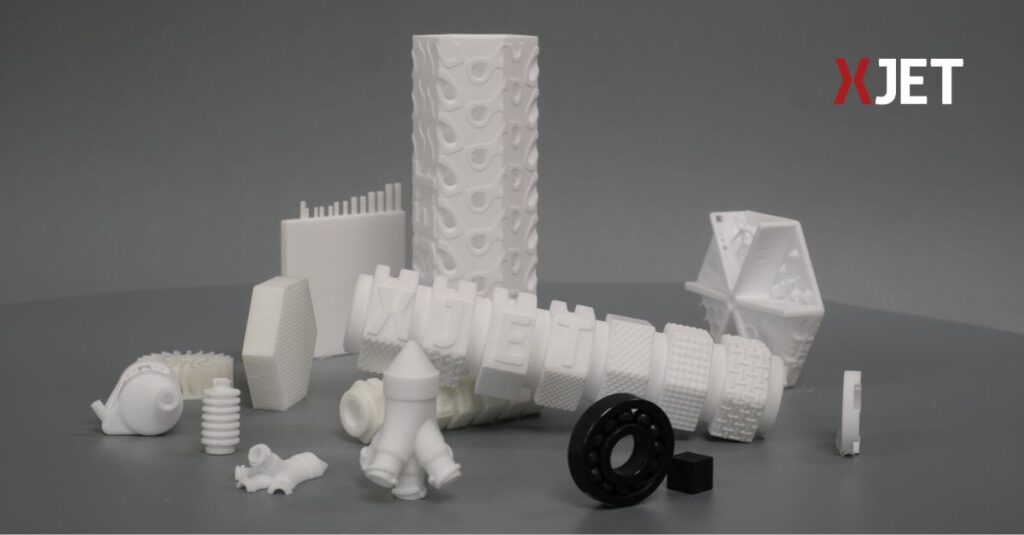
Based on our dossier “Ceramic 3D Printing: the current manufacturing landscape and the business model that drives industrial applications”, every additive manufacturing process used for technical ceramics faces densification challenges. However, the kind and severity of those challenges vary depending on the technology.
The dossier covers several indirect ceramic AM routes. They include slurry-based Selective Laser Sintering, Binder Jetting (BJ), and extrusion such as Fused Deposition Modeling or Robocasting. It also covers Direct Inkjet Printing (DIP) / Material Jetting and vat photopolymerization (SLA, DLP, LCD, CLIP, LCM). These routes produce a ceramic green body. Debinding and sintering then turn it into a dense, functional part.
How each process shapes the green body
Where densification challenges occur largely depends on how the ceramic part starts its life.
From our understanding, in binder jetting, low green density can make it more difficult to eliminate residual porosity during sintering.
Slurry-based SLS and indirect powder bed fusion face shrinkage challenges. Sintering must remove pores without cracking the part or changing its shape.
Vat photopolymerization requires control of binder burnout and shrinkage to support uniform densification.
Extrusion processes include FDM, robocasting and DIW. Voids between printed layers can add to the porosity that sintering must address.
And in material jetting, solid loading and particle packing in the ink are among the factors to consider when assessing green density and subsequent densification.
Our experts differ in their views on which ceramic AM failure modes are most directly tied to insufficient densification. That’s not surprising, given that they work with different AM processes to produce dense ceramic parts.

Porosity, layers and failure modes
Louradour provides a view across processes of these failure modes, stressing that residual porosity remains the dominant risk factor. He explains that “residual porosity resulting from poor particle packing acts as a strong local stress concentrator, significantly reducing mechanical strength and reliability.” Beyond volumetric porosity, he highlights that incomplete sintering can leave interlayer regions mechanically weak, leading to “interfacial failure modes such as delamination or premature crack propagation along layer boundaries.
Furthermore, the use of insufficiently deagglomerated powders or slurries with low solid loading can exacerbate these issues. During sintering, such conditions may induce differential shrinkage and heterogeneous densification, generating internal stress gradients within the part. These stress gradients increase the risk of distortion, microcracking, or catastrophic failure, particularly in complex geometries or large components.”
How ceramic materials differ
Louradour also links the difficulty of making parts dense to the material itself. In his view, silicon carbide (SiC) presents the greatest challenge. Oxide ceramics are generally easier to densify.
According to Hartmann, “delamination is the most common failure mode for AM ceramic parts.” He also believes that non-oxide ceramics are more demanding in terms of thermal processing conditions, i.e. atmosphere/pressure.
Zimmerman, on the other hand, explains: “ceramic parts with insufficient densification, characterized by porous structures, are prone to crack initiation and propagation, especially hidden cracks that compromise part functionality without visible warning signs.”
Since different routes lead to different failure modes, how does this play out in the key industries where technical ceramics add value?
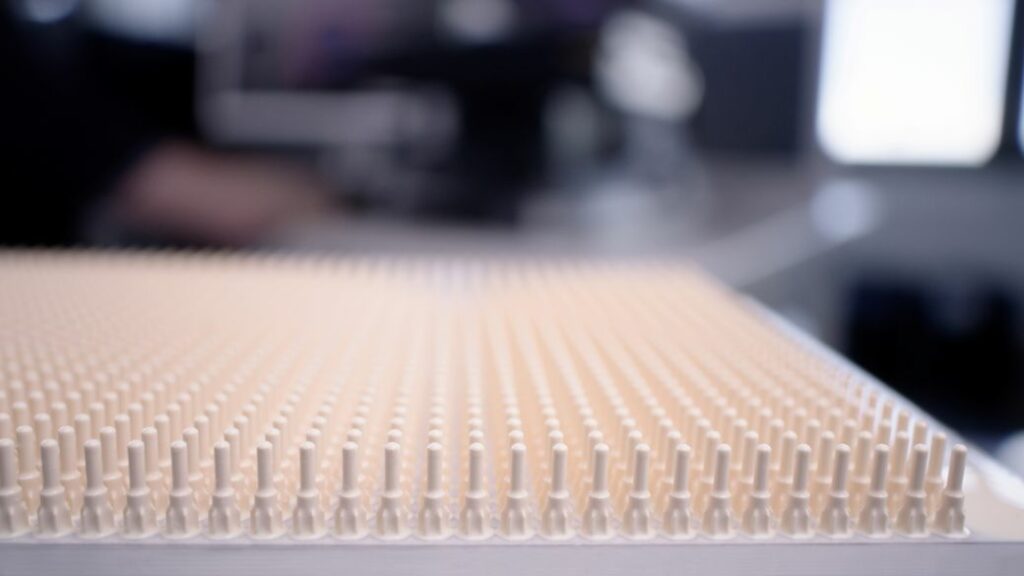
Dense 3D printed ceramic parts for space and chip production
For the space and chip uses discussed here, the experts stress the need to check density and remaining pores. Their views also show that density alone does not decide whether a part or process is fit for use.

Sinto Advanced Ceramics Europe GmbH’s subject matter expert notes, “We see that economical factors are substantially more hindering for an even wider application of AM, compared to technical challenges. Given the right production technologies and processing, densification is not an issue.” Once the process can make dense parts, cost and the ability to make more parts take center stage. That said, from a manufacturing perspective, Hartmann says that “slurry-based AM (e.g. VPP) has the advantage of a fine starting grain size, as sintering activity is linked to surface-area, a small grain size is crucial for densification.”
Density and the economics of adoption
Technology providers, however, see densification as the first filter manufacturers apply when evaluating ceramic AM for serial production.
In the view of 3DCeram’s subject matter expert, while densification remains “a critical prerequisite for industrial deployment of ceramic additive manufacturing, particularly in the semiconductor industry,” it is not the sole factor shaping adoption. He points out that long thermal cycles, post-sintering machining, and the need for advanced quality control technologies significantly impact lead times and overall production costs. In practice, he argues, “while densification remains a key technical enabler, it is the combined effect of cost and lead time that currently drives the economic viability of ceramic additive manufacturing in semiconductor and space production chains.”
A similar view is emphasized by XJet 3D’s CEO: “For manufacturers, densification is unquestionably the primary factor that manufacturers evaluate for serial and industrial production scenarios. The semiconductor and aerospace industry demands 99% densification as a non-negotiable requirement, so as to avoid outgassing and dielectric breakdown.”
Thermal cycles, lead time and cost
Zimmerman views densification as the price of admission to these industries. He also recognizes its impact on lead time and cost.
In sintering-based approaches, achieving high density hinges on tightly controlled thermal cycles and process expertise, which can stretch production timelines.
The CEO highlights this trade-off directly: “For sintering-based technologies like XJet’s NanoParticle Jetting, reaching to high density requires finely tuned sintering performance that comes with expertise, another step before getting this ‘entry ticket’. XJet’s process makes it much easier, not only in that the sintering phase is relatively shorter, but also in the fact that the sintering temperature is relatively low (<1500℃), and part shrinkage is isotropic. This presents a much shorter overall production process down to days instead of weeks, shortening lead time by several folds while reducing end-to-end production cost by consuming less energy, labor and post-processing investment.”
Ways to make dense parts for space and chip production
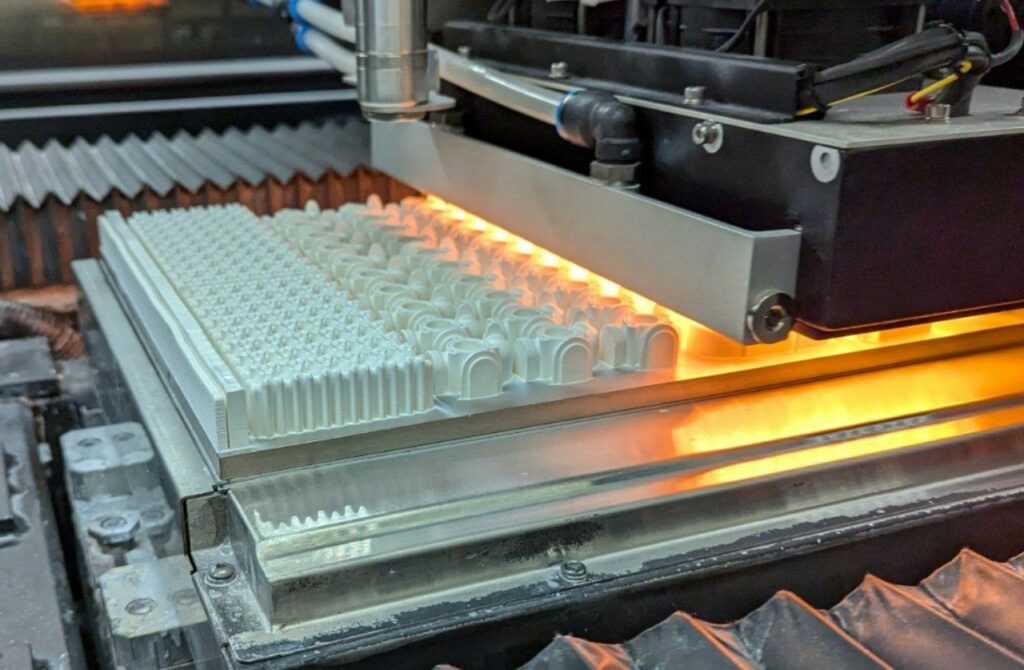
Choosing how to make a part dense requires a close look at whether the process works well, time after time. This applies across AM processes, especially for demanding applications.
According to the contributors, sintering at high heat remains the most common route to dense AM ceramic parts. It is relatively simple and fits existing industrial equipment.
As Guy Zimmerman explains, “The most widely used densification technique for AM ceramics is in-air sintering using high-temperature furnaces,” a method that avoids controlled atmospheres or elevated pressure and therefore keeps both energy consumption and process complexity in check. When finely tuned, such approaches can deliver the density levels demanded by these sectors, with Zimmerman noting that greater than 99% theoretical density can be achieved without resorting to additional refinement steps.
When sintering needs further refinement
Yet, for tough uses, making a part dense does not always stop at sintering. Malte Hartmann adds: “Apart from the densification during sintering, hot isostatic pressing is a common refinement technique in order to create ceramic parts for especially demanding environments.”
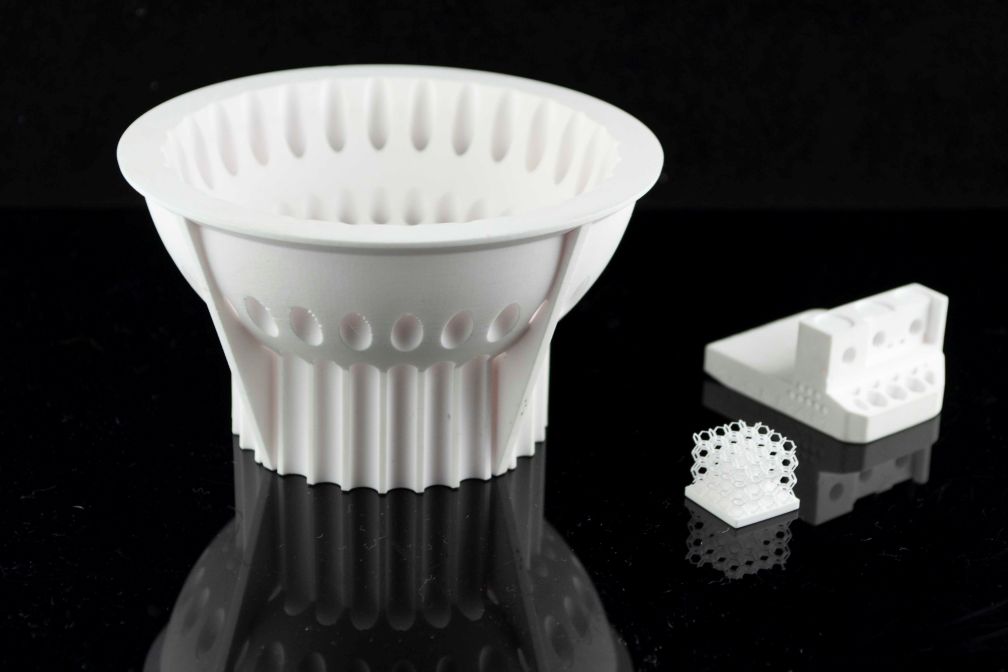
The experts describe a series of steps. Sintering provides the main route. HIP can then serve cases where performance gains justify its extra cost and complexity.
Matching the technique to the material
Louradour further nuances this picture by stressing that the relevance of densification techniques is strongly material-dependent. For nitride-based ceramics, he highlights Gas Pressure Sintering (GPS) as “one of the most relevant technologies,” as applied pressure prevents decomposition while enabling very high density levels. “Spark Plasma Sintering (SPS) can be technically attractive in terms of densification efficiency and microstructural control. However, its industrial applicability remains limited today due to constraints on part size, geometry, and scalability”, he adds before warning:
By contrast, oxide ceramics generally respond well to pressureless sintering in air. HIP can remove remaining pores for demanding semiconductor and space applications. Thus, the choice depends on both the application and the material’s chemistry.
Why densification alone does not guarantee acceptance
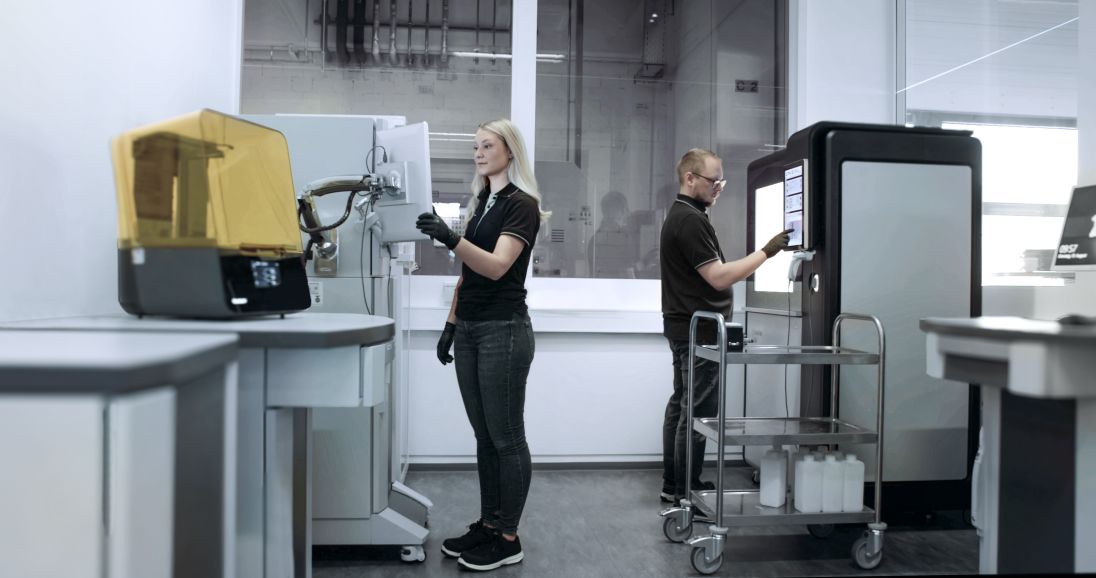
High density is only the first step for ceramic parts destined for semiconductor tools or space hardware. Approval takes time and demands strict tests. Records matter as much as how the material performs.
Interestingly, while Sinto Advanced Ceramics Europe GmbH supports its customers along the way, Malte Hartmann notes that in their case, “they are usually the main driving force in this bureaucratic act,” adding that successful implementation in space and semiconductors sectors is possible, but rarely fast.
From the technology provider’s perspective, density is only one part of the equation. Guy Zimmerman emphasizes that “qualification for AM ceramic components in these sectors are exceptionally rigorous,” extending well beyond bulk properties.
Surface quality and purity
The surface also matters. Pores on it can contaminate wafers or impair thermal and electrical performance in space systems. Zimmerman highlights the difficulty of meeting both internal density and surface quality requirements.
According to 3DCeram’s subject matter expert, qualification challenges are further compounded by the intrinsic characteristics of ceramic AM processes. He notes that additive manufacturing produces “non-standard microstructures, which must be fully characterized and validated,” making qualification “often long and costly.”
Purity and tests
Semiconductor applications demand very high purity. Deviations during debinding or sintering can cause contamination, with severe economic consequences. For space applications, he adds, qualification often uses statistical methods such as Weibull analysis. These assess reliability and the probability of failure. Both sectors therefore check that parts perform well and give the same results over time.
Densification must therefore do more than close pores. It must produce material that meets the demands of sectors where failure can be sudden and severe. This shapes both qualification and the choice of ceramic AM technology.
*This dossier was first published in the January/February edition of 3D ADEPT Mag.
Editor’s notes
Sinto Advanced Ceramics Europe GmbH is a contract manufacturer who provides additive manufacturing services for the production of high-precision ceramic components.
With a focus on technical ceramics, 3DCeram is a provider of AM solutions powered by SLA.
XJET is a provider of additive manufacturing solutions powered by NanoParticle Jetting Technology™.
THE 3D ADEPT WEEKLY NEWSLETTER
The industry moves fast. Stay ahead.
Every week, the latest additive manufacturing news, in-depth features and real-world applications, straight to your inbox. Plus, be the first to know when a new issue of 3D ADEPT Mag is out.
Free · One email a week · Unsubscribe anytime
Clicking loads our email provider’s sign-up form, including its analytics and Google’s anti-bot protection. You’re only subscribed if you complete the sign-up. Read our privacy policy.