

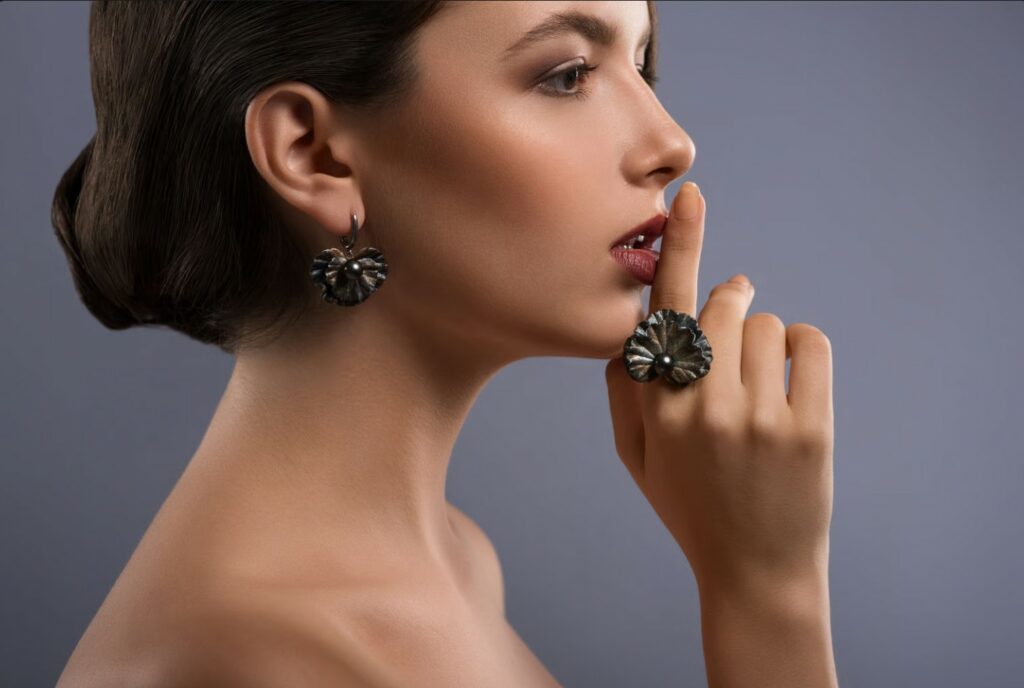
In a conversation about wedding rings, my cousin asked me: “In a world where money is not a matter, what would be the ideal metal to 3D print the rings I designed?”
For context, my cousin, an artist and jewelry designer is getting married. Although he knows AM can be used for jewelry applications, he had never really used the technology for commercial purposes. It took his own wedding for wanting to explore the technology for customization.
And because I work with a trade publication that focuses on additive manufacturing, I believe, sometimes he thinks I am an engineer, knowing every single technical detail and manufacturing process about every single application AM can enable.
That said, that was all it took to catch my attention: a love story like the backdrop, a ring, and the possibility of incorporating additive manufacturing? I took the bait. And because I believe in living a purposeful life, I decided, with the help of my colleagues at 3D ADEPT, to explore the intention behind using metals for 3D-printed jewelry.
We saw in “materials of intent” the deliberate selection of material based on the design outcome desired, the brand story to be told, and the manufacturing capability available.
In the jewelry sector, where material cost often exceeds manufacturing cost, and where aesthetic perfection is non-negotiable, material choice has become an act of creative strategy. This dossier explores what that means.
| Too long to read? Here’s the summary. In 3D printed jewelry, brand positioning matters more than price when choosing a metal. Gold and platinum stay with top-tier luxury brands, titanium appeals to technical and sports brands, and stainless steel suits accessible luxury. Experts from Legor, Neoshapes and Incus agree that quality depends on powder control and sintering. Platinum, titanium and multi-material jewelry are next. |
Material choices: Beyond the cost factor

When a jewelry brand selects a material for an AM-produced collection, the decision is rarely about price alone. Fabio Di Falco, Marketing, Customer Support & 3D Business Unit Manager at Legor, a specialist in the science of precious metals, explains that material choice is governed by a constellation of factors:
“The choice is not determined solely by the material itself, but also by the intrinsic advantages of Additive Manufacturing: extreme speed and agility in moving from concept to finished part; freedom to create complex shapes and designs that cannot be achieved through traditional technologies; economic sustainability across different production volumes without the need for expensive tooling; and flexibility for testing and R&D activities.“
It may seem obvious that the choice of material affects how a piece is manufactured but if we look closer, we might realize that it also influences the brand’s identity, positioning, storytelling, pricing, customer perception, and overall strategy.
Stéphane Vigié, CEO and cofounder of Neoshapes, observes a clear hierarchy in how brands approach the decision: “Brand-driven first. First-tier brands, the most prestigious, will use only 18k gold and platinum for prestige reasons and brand image. Titanium is not for everyone. Classic watch brands, for example, will not use titanium, while technical and sports brands will use this material. Steel is universal, although there is entry-level and high-quality grade distinction.“
This means that cost often follows brand positioning. Platinum, for instance, is too expensive for second and third-tier brands; titanium, more expensive than steel, reserves itself for specific market segments; and third-tier brands operate exclusively within steel’s price envelope.
The peculiarities of materials
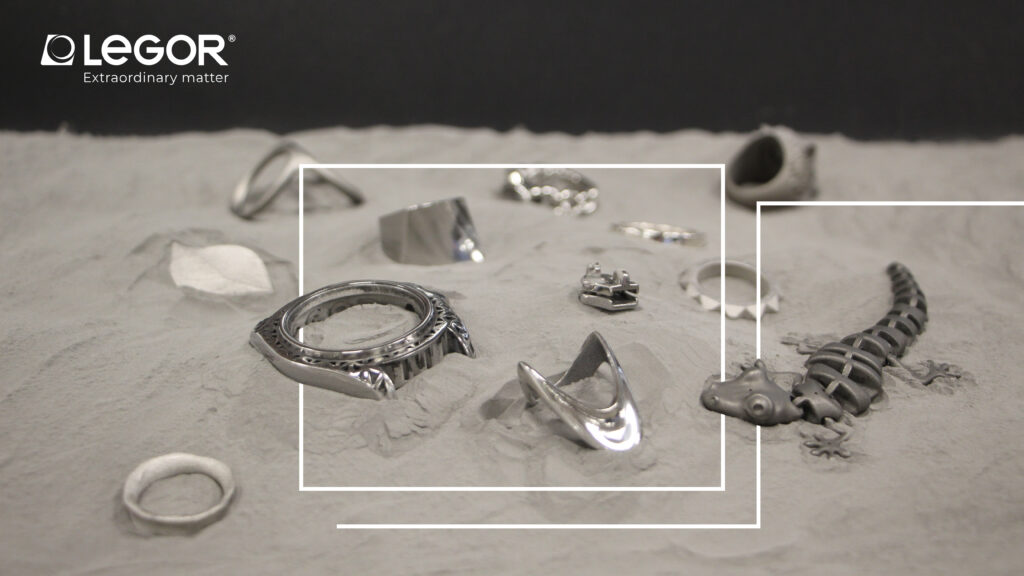
If Di Falco and Vigié made us realize that a brand-material alignment is often at the heart of each jewelry application, we often underestimate the fact that each metal carries cultural meaning.
Precious metals: gold, platinum, and silver
Precious metals are probably the most familiar to the jewelry industry and based on our latest dossier on the topic, they are also the most technically demanding to process. As Damiano Zito, CEO of Progold S.p.A., told 3D ADEPT in an interview, “Precious metals present unique characteristics compared to other metals. They do not oxidize at high temperatures, withstand high corrosion, and do not chemically interact with the environment. Characterized by long lifetime, they are usually ductile and lustrous in appearance.”
For those debuting in (or not familiar with) the jewelry sector, think of gold alloys (18k yellow, white, and rose) as the industry standard. Processed by AM, they reveal the complexity of material economics in luxury manufacturing.
Gold powders are available in jewelry-standard formulations, but atomized gold is costly. Any unfused powder must be recovered with meticulous care to prevent material loss. While gold can be processed accurately by AM, its overall cost-per-part exceeds traditional casting. This makes AM economically viable primarily for complex geometries or bespoke, high-value pieces, in particular when AM’s design freedom justifies the premium.
Platinum presents a different scenario. Its high melting point and strong thermal conductivity make it a good material candidate for laser-based systems. With this material, designs that usually demand extensive manual finishing through conventional methods can be delivered with SLM and other fusion processes. These processes allow for complete consolidation and deliver excellent material properties.
Silver and fine silver expose the double-edged nature of material properties. Exceptional thermal and electrical
conductivity, assets in many applications, become real challenges in laser-based processing. Heat dissipates rapidly through the powder bed, narrowing the processing window and destabilizing the melt pool. Silver DMLS is commercially available, particularly for robust, larger components. Fine-detail jewelry remains challenging due to silver’s tendency to conduct heat away from the laser spot, limiting the precision achievable.
Titanium: the technical luxury
Acknowledged across many industrial applications, I often like to describe titanium as a material that brings “independent value”.
Di Falco told us “Jewelry manufacturers are gradually introducing titanium, and several successful collections already exist, thanks to its unique technical characteristics including lightness, hypoallergenic properties, and the possibility of coloring it through anodization. [Titanium] also has a high perceived value among end users, who associate it with advanced technology, innovation, and contemporary design.”
Bronze and stainless steel: chosen for their accessibility?
We stepped into this dossier with the assumption that bronze was the ideal material candidate for “accessible luxury.” While this cliché is often mistakenly due to the easy comparison with gold, the experts made us realize that bronze cannot be defined as an accessible luxury material. Rather, it belongs to fashion accessories, small metal components, and industrial or decorative products.
Stainless steel, on the other hand, emerges as the more credible answer. It provides durability, brightness, excellent hypoallergenic properties, and a perception of lasting quality. Consumers increasingly associate high-quality branded collections with steel, positioning it within modern luxury rather than budget alternatives.
Additive manufacturing approaches
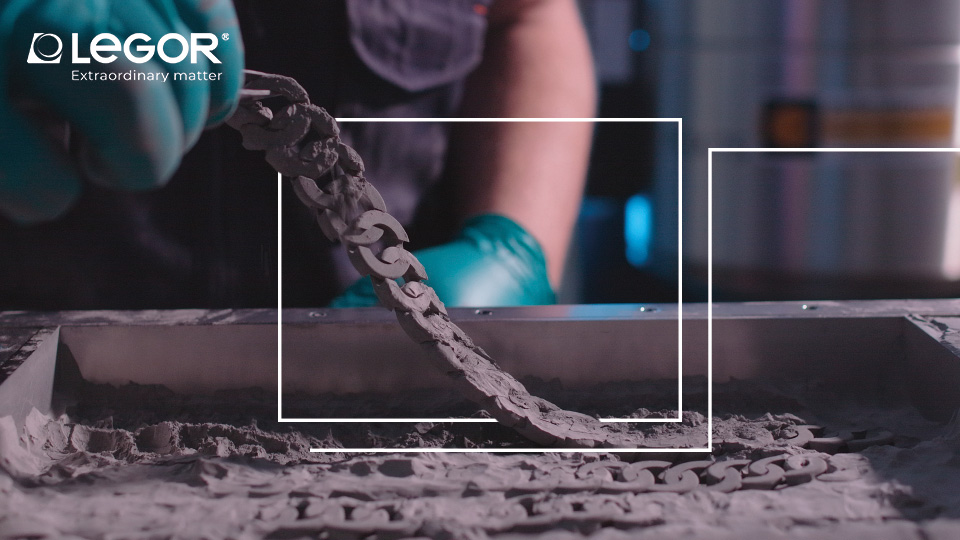
Most jewelry makers still rely on indirect 3D printing with precious metals because this route benefits from the centuries of research into the production of jewels that is the hallmark of traditional casting techniques. Established workflows, mature material‑recovery practices, and deeply refined craftsmanship continue to make this hybrid approach the dominant choice.
Yet the metallurgical consequences (or let’s say manufacturing challenges) of indirect versus direct production are significant. With indirect casting, grains grow large and organize chaotically, resulting in porosity and compromised mechanical properties. Direct metal printing, whether through binder jetting or lithography-based approaches, produces a superior metallurgical state: small, well-organized grains that permit easier post-processing.
This makes all the difference in luxury goods, where surface quality and ease of polishing are crucial. Although indirect methods often require extensive hand finishing to achieve the aesthetic standards of fine jewelry, direct methods reduce these labor costs while improving consistency.
That said, our goal here is not to compare indirect vs direct manufacturing processes but to understand how they differ and the value direct 3D printing processes bring to jewelry production.
DMLS, binder jetting, and lithography-based approaches
A lot of emphasis has often been made on DMLS (Direct Metal Laser Sintering) which remains the most-widely used AM process, and primary route for fine jewelry production. Alongside DMLS, we have also mentioned in this dossier binder jetting and material jetting as suitable alternatives for jewelry applications.
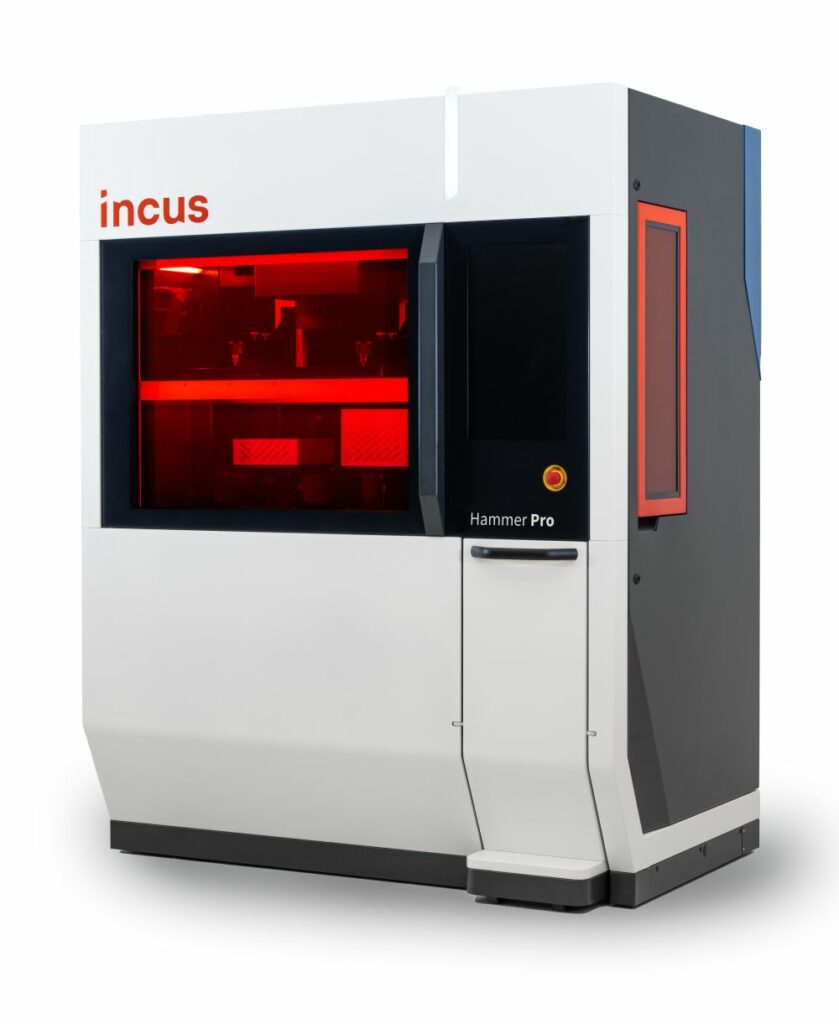
One production candidate we haven’t explored deeply for such applications is Lithography-based metal manufacturing (LMM). Developed by engineering company Incus GmbH, we have seen the technology prove its capabilities in the healthcare industry through MetShape.
Rather than melting metal powder with a laser or depositing binder onto powder beds, LMM uses photolithography to selectively cross-link metal powder suspended in a photosensitive polymer binder. The resulting green parts undergo debinding and sintering.
When asked how other AM technologies can shift material preferences compared to binder jetting, LPBF or hybrid processes, Dr. Gerald Mitteramskogler, CEO and founder of Incus GmbH clarifies first the nature of the jewelry industry which is often treated as a single market while in reality, it consists of many different segments. He explains:
“A luxury watch manufacturer in Switzerland, a high-volume gold jewelry producer in India, and a fashion accessory brand all have completely different requirements in terms of design, manufacturing cost, surface quality, and material consumption.
What we see across many markets is a desire to create products that appear massive and valuable while minimizing the amount of precious metal required. We also see increasing demand for integrated features, fine textures, articulated structures, and geometries that eliminate assembly steps.
In my opinion, material selection is often driven less by customer preference and more by the limitations of the manufacturing technology. LPBF favors alloys with good laser absorption and weldability. Binder jetting typically benefits from powders with excellent flowability and sintering behavior. As a result, the process frequently influences the alloy selection.
Technologies such as Lithography-based Metal Manufacturing (LMM) change the equation because they prioritize resolution, surface quality, and geometric freedom. Since the process is not constrained by support structures and can achieve extremely fine details, designers can focus more on the desired product characteristics and less on manufacturing restrictions.”
In jewelry, where precious metal value often exceeds manufacturing cost, minimizing waste, reducing post-processing, and enabling lightweight hollow structures become more important than maximizing build speed. This is where LMM stands out from the crowd.
Sintering: Where material becomes finished piece
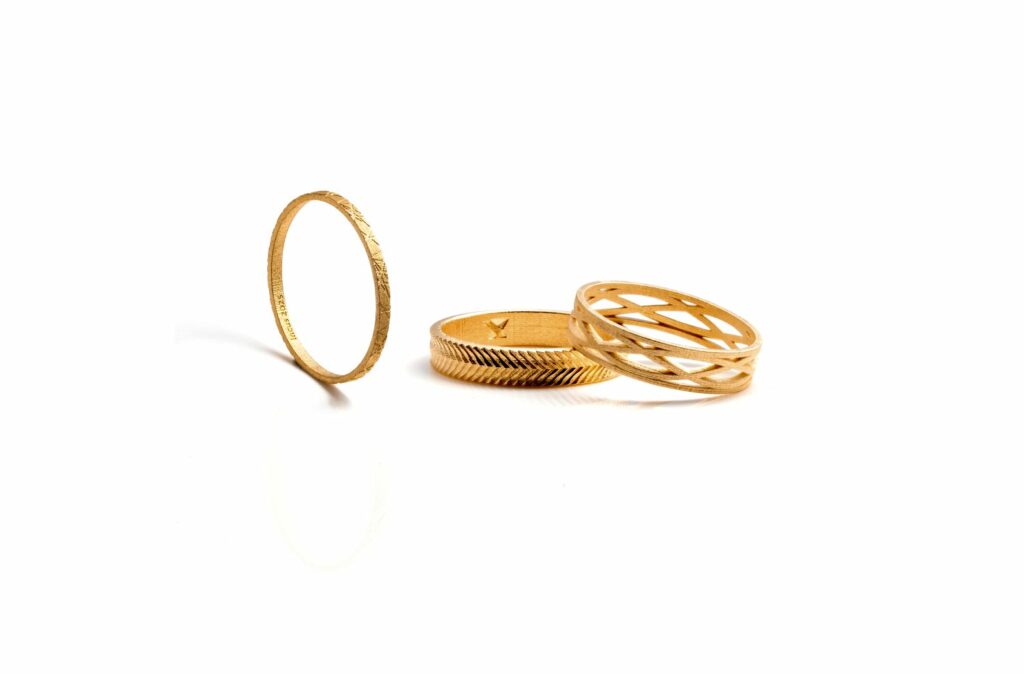
Sintering is intrinsic to indirect or powder‑based processes that rely on a binder or green part. While using AM processes like binder jetting, material jetting, LMM or even metal FDM, the printed part is a green body that must be densified through sintering to achieve final mechanical properties.
While precious‑metal powders tolerate the sintering step better than many base‑metal powders, each of them also reveals their own challenges:
According to Legor’s expert, bronze presents “significant challenges during the sintering phase.” Bronze is a low-melting-point alloy that “tends to move considerably during thermal shrinkage, making it difficult to maintain nominal tolerances on complex geometries.”
Achieving the final density required for jewelry-grade components remains imperfect; residual porosity often persists, requiring careful balancing of process parameters. This metallurgical reality limits bronze’s suitability for fine jewelry applications and explains its relegation to fashion accessories.
Where bronze struggles with dimensional stability, titanium demands obsessive chemical control. Titanium has an extremely high affinity for oxygen. During sintering, if oxygen content exceeds 2,000 parts per million (ppm), the component becomes brittle and its mechanical characteristics degrade catastrophically.
Di Falco notes that “the real complexity of the process is linked to titanium’s extremely high affinity for oxygen. The oxygen content in both the chamber and the material must remain strictly below 2,000 ppm. A higher concentration makes the component brittle and compromises mechanical characteristics.”

Incus’ CEO elaborates: “Titanium presents almost the opposite challenge from copper. It has a strong affinity for oxygen, carbon, and nitrogen at elevated temperatures. This is particularly relevant for fatigue-critical applications. Small changes in oxygen and carbon content can significantly influence mechanical behavior. As particle sizes become smaller, surface area increases and contamination control becomes even more important.”
Yet the effort yields reward. Initial results from titanium sintering are “much more encouraging,” with excellent densification levels and high mechanical properties achievable.
Across all metals used for jewelry applications, and unlike other industries where mechanical properties and dimensions prevail, Neoshapes’ CEO Vigié identifies that the main challenges in the luxury industry are achieving quality and desired aesthetic and meeting cost and lead time requirements.
All of this underscores the importance of the sintering step to achieve quality and aesthetic pivotal for 3D printed jewels, especially those meant for the luxury sector. This step determines both density and the foundation upon which polishing and finishing can build perfection.
Quality control: where precision becomes non-negotiable
One misconception Mitteramskogler encounters regularly is that additive manufacturing somehow eliminates the need for classical quality control. “In reality, it is exactly the opposite. The more advanced the manufacturing technology becomes, the more disciplined the quality-control approach must be,” he said.
Quality control is not new but applying it in jewelry AM is more demanding. It even begins before the first layer. All three experts explain that to ensure consistency between batches, one must first look at powder specifications, the printed and sintered component.
Fabio Di Falco explains, for example, that at Legor, their team controls dozens of powder parameters: chemical composition and purity; particle size distribution (PSD) and flowability; apparent density; moisture content; and the absence of organic or metallic contaminants.
Powder behavior determines everything downstream. A shipment of gold powder with incorrect particle size distribution will print differently than expected, affecting densification, surface finish, and post-processing requirements. For precious metals, where material cost justifies investment in characterization, this discipline is crucial.

Stéphane Vigié, CEO and cofounder of Neoshapes, a specialized 3D printing center, reinforces the priority: “Powder specifications is the most important thing whatever the printing technology, and we control dozens of parameters to fit our 3D printing binder technologies.”
After powder verification comes debinding and sintering, the steps that transform green parts into finished metal. Vigié notes: “Just behind powder comes debinding and sintering, which are obviously also very important steps for binder 3D printing technologies, and it’s related to the quality of the furnace and to the heating parameters. Finding the right parameters for each alloy and for a specific furnace behavior is the most important thing when it comes to 3D printing binder technologies.”
Different materials demand different protocols. For bronze, strict monitoring of dimensional shrinkage, geometric stability, and final density is required. For titanium, residual oxygen concentration must remain below 2,000 ppm, with analytical control ensuring ductility, along with checks on final density and surface finish. For precious metals, chemistry, density, surface quality, color consistency, and ease of polishing are the focus.
Speaking of LMM, Incus’ CEO notes that at the feedstock level, they monitor particle size distribution, powder morphology, feedstock rheology, homogeneity and storage stability. For finished parts, “we typically evaluate density, dimensional accuracy, surface roughness, microstructure [and mechanical properties for components outside of the jewelry sector]. Material-specific requirements then depend on the application.”
Beyond jewelry and luxury goods, Dr. Gerald Mitteramskogler (Incus GmbH) says they have delivered applications across industries such as electronics, thermal management, and medical technology.
Examples include rings, necklaces, watch components, decorative luxury components, RF antennas, precision electronic components, advanced cooling structures, medical devices, orthopedic and dental applications.
“However, the most interesting projects are often those that do not fit into traditional categories,” he notes.
What material selection taught us and what the future looks like
We started this dossier with the belief that copper could offer an accessible luxury pathway to 3D printed jewelry. Contributions shared along the way reveal that copper would be a more ideal material candidate for fashion accessories and industrial components.
What we learned, instead, is that material choice in jewelry AM is governed by a triangle of constraints: brand positioning, metallurgical tractability, and aesthetic outcome.
Contributions shared highlight a common thread: platinum and titanium will accelerate in adoption. For Vigié (Neoshapes), “platinum will rise because of cost versus gold and prestige image, and especially because it’s a perfect fit for binder technologies, which allow platinum parts much easier than traditional technologies. Titanium will rise because it’s sought-after for light properties and technical identity, and so far, it was expensive to produce parts with traditional process, while 3D printing makes it much easier.”
Di Falco (Legor) on the other hand, predicts that “as oxygen management becomes progressively standardized and operating costs decrease, titanium will become a key material for cutting-edge collections that combine large volumes, extreme lightness, and a high perceived technological value.”
Silver, too, will benefit. AM silver eliminates the thermal challenges of casting, making fine-detail jewelry more feasible than conventional silversmithing permits.
For precious metals, the frontier is not new alloys but workflow optimization. And for that to happen, three priorities must be carefully considered for Di Falco:
- Reducing powder volume: Decreasing the precious metal powder needed inside the machine, thereby reducing capital tied up in raw material
- Minimizing process losses: Optimizing powder recovery and recirculation, with the goal of eliminating losses during processing
- Workflow efficiency: Making machines faster, safer, and more specialized when handling materials with extremely high intrinsic value
As for Dr. Gerald Mitteramskogler (Incus GmbH), he sees multi-material jewelry as the most exciting horizon: “Imagine combining different gold colors, different alloy compositions, lightweight lattice structures, or even functional elements within a single component. The future of additive manufacturing in jewelry is not simply about printing gold more efficiently. It is about creating products that could not be manufactured by casting, machining, or traditional jewelry production methods in the first place. That is where the truly disruptive potential lies.”
If this were to happen, this would confirm the vision we initially have of “materials of intent” which is the deliberate selection of material(s) based on the design outcome desired, the (brand) story to be told, and the available manufacturing capability.
*This dossier was initially published in the July/August edition of 3D ADEPT Mag.
THE 3D ADEPT WEEKLY NEWSLETTER Every week, the latest additive manufacturing news, in-depth features and real-world applications, straight to your inbox. Plus, be the first to know when a new issue of 3D ADEPT Mag is out. Free · One email a week · Unsubscribe anytime Clicking loads our email provider’s sign-up form, including its analytics and Google’s anti-bot protection. You’re only subscribed if you complete the sign-up. Read our privacy policy.The industry moves fast. Stay ahead.