Moisture is invisible and odorless. Most production sites do not document it, and no universal threshold exists. Many operators therefore discover it only when examining defects in a finished part. It is easy to overlook because it reflects how people have handled the material since production. What exactly does moisture do to 3D printing materials, and how are approaches to controlling it changing?
This dossier deliberately emphasizes moisture in metal 3D printing materials. The reason is that from a standardization perspective, in polymer processing, moisture management has been a well‑established requirement for decades. Drying protocols, acceptable moisture ranges, and standardized test methods existed long before metal AM started paying attention to it.
When we look at metal AM, in 2022, ASTM’s F42 committee published a standard guide for testing moisture content in AM powder feedstock. A second standard followed in 2025. That standard focuses on assessing the effect of moisture on metallic feedstock.
The thing is, “there is no universal moisture threshold for metal AM powders. The level at which moisture becomes problematic depends on the alloy, powder characteristics, printing process and measurement method. At very low moisture levels, even small amounts of surface-adsorbed water can be significant because they may affect powder flow, surface chemistry and gas formation during processing,” the team at Cambridge Sensotec, experts in gas analysis and atmospheric control in metal additive manufacturing, told 3D ADEPT Media.
This explanation from Cambridge Sensotec underscores how manufacturers should establish acceptable moisture levels for each specific powder and process.
Material-specific limits
Dr Stephen Repper, Scientist, at Metalysis, a manufacturer of metal and alloy powders through solid-state electrolysis, explains that “levels of even a few hundreds of ppm can lead to agglomeration of the powder, affecting flowability and the ability to sieve into defined size fractions.” “This, however, is easy to spot and rectify for a trained operator. We routinely measure residual oxygen concentrations in our products, in conjunction with Loss On Ignition (LOI), where 50–100ppm of oxygen or hydrogen originating from moisture, can mean the difference between passing or failing a customer specification,” he adds, talking about their specific material processing.
While material producers hold themselves to internal limits tight enough to decide whether a batch ships, reality is, due to other variables along the supply and handling chain, it remains crucial for AM users to monitor it throughout the manufacturing process.
So, how does humidity get in and what does it do to 3D printing materials?
Cambridge Sensotec lists exposure to humid air during opening, transfer or handling; inadequate storage or packaging; condensation when cold powder or containers meet warmer, humid conditions; and residual moisture from upstream processing or cleaning. Fine powders are especially vulnerable, because a high surface-area-to-volume ratio offers more surface for water to adsorb onto.
Interesting fact, all materials can suffer from this. Moisture “can also be present in polymers, ceramics, pharmaceuticals, food powders, minerals, pigments, salts and other particulate materials. Depending on the material, water may be free, absorbed or chemically bound. The appropriate measurement technique therefore depends on the material and the form in which the moisture is present,” Cambridge Sensotec explains.
That said, in metal 3D printing, particularly in LPBF/SLM, it can reduce powder flowability, alter surface chemistry, promote oxidation and contribute to melt-pool instability, spatter and porosity.
According to Cambridge Sensotec, these effects may appear in finished parts such as internal pores, rough surfaces, irregular tracks, oxidation or reduced fatigue performance. However, similar defects can result from other process issues, making moisture difficult to identify as the sole cause.
Powders produced through electrolysis
The impact also depends on where the moisture originates. For example, most AM powder is gas atomized but this is not the case of Metalysis’ materials. Dr Stephen Repper comments:
“As a metal powder producer using the FFC solid state electrolysis process, Metalysis’ relationship with, and handling of, moisture is different to producers using more conventional melting routes. With our electrochemical process, we utilize an electrolyte of calcium chloride. During product harvesting there is a small amount of electrolyte drag-out with the metal powder. Initially, this is advantageous, acting as a protective layer preventing reoxidation. However, the calcium chloride must be removed, which is hygroscopic in nature and highly soluble in water. Consequently, water treatment is an integral step in our process, which is challenging to avoid. Once the calcium chloride is eliminated, the product is dried to remove any remaining moisture.”
The difference between the moisture tolerance of a finished part and the moisture sensitivity of a powder
LPBF remains a widely used metal 3D printing process, so users often associate moisture with LPBF alone. However, other technologies also face this issue. The severity and mechanism vary by technology, feedstock and process atmosphere.
“The key distinction is between moisture in the feedstock and moisture in the machine environment. A dry build chamber does not necessarily mean the powder itself is dry. Moisture absorbed during storage or transfer can remain with the powder and influence the printing process,” Cambridge Sensotec states.
| Process | How moisture behaves | Relative exposure |
|---|---|---|
| LPBF / SLM | Fine powders with a high surface-area-to-volume ratio adsorb moisture during storage and handling, influencing flowability, surface chemistry, melt-pool behavior and defect formation. | Highest |
| Powder DED | Moisture influences powder behavior and processing, though the feedstock is typically coarser. | Moderate |
| Binder jetting | Powder behavior and processing are affected, with no melt pool involved at the printing stage. | Moderate |
| EB-PBF | The vacuum environment reduces atmospheric moisture, but moisture adsorbed and carried by the powder can still be released during heating. | Lower |
| WAAM / wire-based | Wire feedstock has far less exposed surface area, so sensitivity is generally lower. | Lowest |
Table 1: Moisture sensitivity by metal AM process
Powder and finished parts: different sensitivities
These differences reveal how important it is to differentiate between the moisture tolerance of a finished part and the moisture sensitivity of a powder.
In a finished part, the assessment revolves around corrosion. Condensation, prolonged contact with liquid water, chlorides, pH and temperature are also important factors to take into consideration. That’s the reason why Cambridge Sensotec says, “metal 3D-printed parts can generally tolerate moisture in less demanding applications, depending on the material, surface condition and type of exposure.”
At the powder stage, reoxidation is critical. As Metalysis notes, for certain products prone to reoxidation (iron or rare earth metal alloys, for example) moisture removal and subsequent strategies to prevent pick-up are critical. That’s why alloys that behave well as finished parts are not necessarily the alloys that behave well as powder.
Preventing moisture: what works for polymers
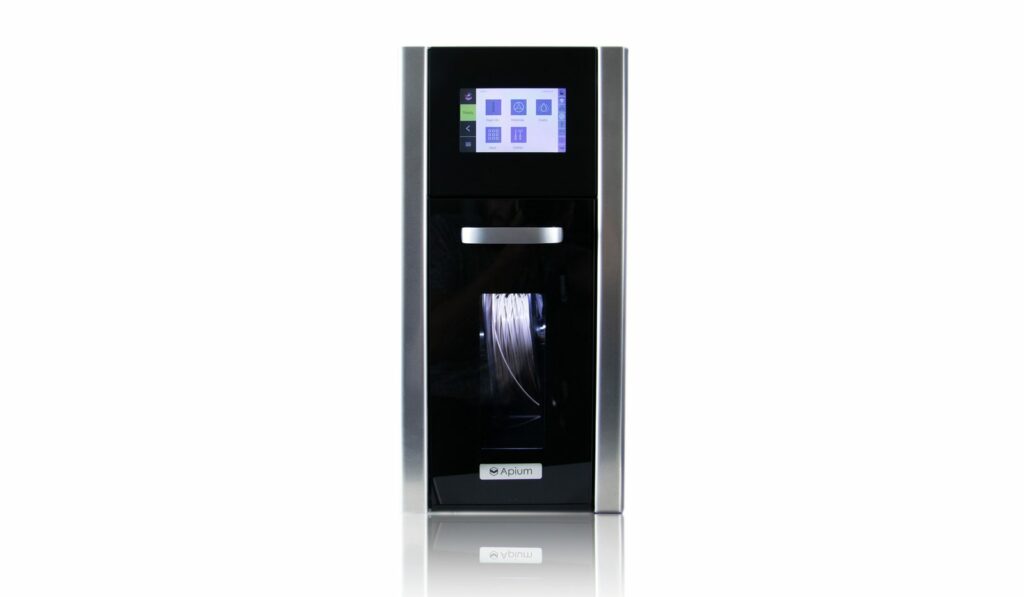
Almost every polymer other than the polyolefins absorbs moisture from the atmosphere. In material extrusion, this shows up as bubbles in the melt, poor surface finish and weaker interlayer adhesion. This often leads to hydrolysis, which degrades the polymer’s mechanical properties and can cause delamination mid-build.
Most machine manufacturers recommend addressing it before printing, using filament dryers (example here). They hold the material at controlled temperature ahead of the print. These devices are particularly useful when printing high-performance polymers such as PEEK and polycarbonate.
…and what works for metals
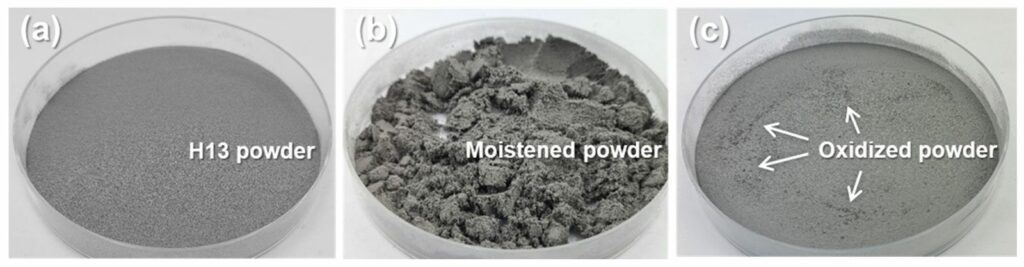
Based on everything shared above, drying should be a scheduled step rather than a corrective action. Here prevention at two levels is ideal: in the production environment of the powder and in the way it is contained.
Metal powders that are unshielded from the surrounding atmosphere absorb moisture strongly. This requires management of the moisture content of the ambient air at every point in the process. Typical production room requirements sit in the range of 19–22°C with an adjustable relative humidity of 10–40%, held constant according to the powder in use.
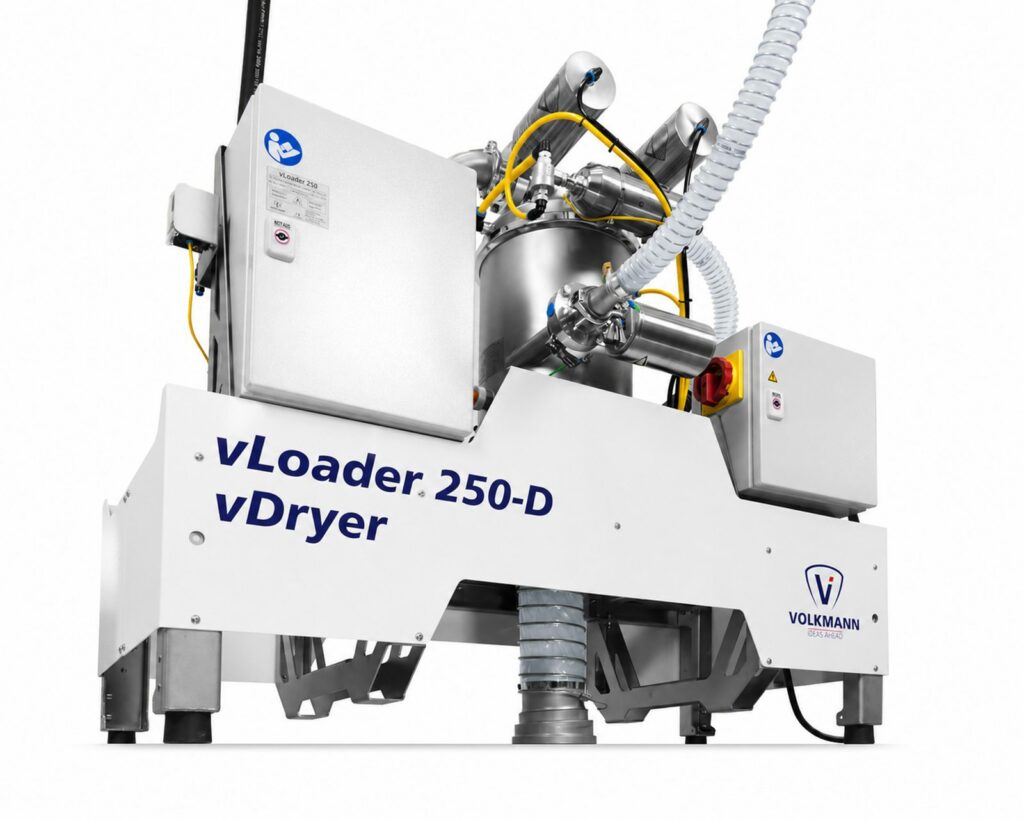
When it comes to containment and handling, material producers put the emphasis on packaging. Metalysis’ expert confirms this ensures powders do not absorb moisture prior to use in a 3D printer.
Existing measurement techniques
Recent standards (ASTM F3606-22 and ASTM F3702-25) help AM users understand how they should apply measurement techniques.
| Approach | What it measures | Where it sits |
|---|---|---|
| Loss on drying (LOD) | Mass lost on heating — total moisture in a powder sample | Laboratory |
| Thermogravimetric analysis (TGA) | Mass change against temperature, resolving how water is bound | Laboratory |
| Karl Fischer titration | Water content by chemical reaction; suited to very low levels | Laboratory |
| Loss on ignition (LOI) | Oxygen and hydrogen originating from moisture, against specification | Producer QC |
| Oven desorption | Water released from a sample under controlled heating | Laboratory |
| Environmental monitoring | Humidity in storage areas and printing systems — the atmosphere, not the powder | Continuous, in situ |
| In-line gas analysis | Dew point and moisture in the process and carrier gases, alongside oxygen | Continuous, in-machine |
Table 2: Approaches to measuring moisture
Direct measurement of powder moisture requires a representative sample and a laboratory technique, such as Karl Fischer titration or gravimetric analysis. These methods remain necessary to quantify very low levels.
Continuous monitoring of the atmosphere
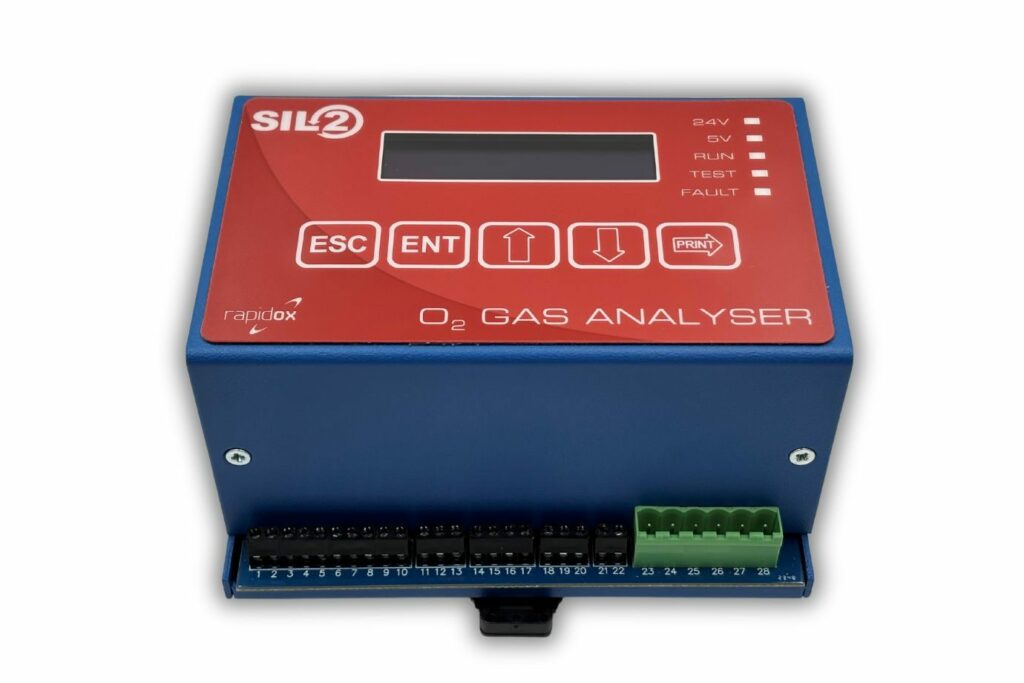
Continuous monitoring is relevant when one wants to control the atmosphere. Cambridge Sensotec’s Rapidox analyzers, for example, are built for this. “The Cambridge Sensotec Rapidox OEM oxygen gas analyzer system can have a moisture sensor added as an auxiliary sensor allowing both oxygen and water to be monitored and displayed continuously in a single instrument. The sensors measure water either as a dewpoint (°Cdp / °Fdp H2O), or moisture (in ppmV) over a range from as low as -100°Cdp (0.013ppmV) to +20°Cdp (23,000ppm / 2.3%), covering extremely dry to wet gas conditions,” the company shares with 3D ADEPT Media.
They help “AM manufacturers monitor and control critical conditions throughout the powder-to-part process.”
From ‘how much?’ to ‘how does it behave?’
AM users rarely treat moisture as a priority or test for it routinely. They also rarely identify it as the primary cause, because other issues can produce similar defects. However, recent standards urge manufacturers to explore the topic more closely. They encourage monitoring beyond the machine, taking in the powder, the process and the entire production environment.
THE 3D ADEPT WEEKLY NEWSLETTER
The industry moves fast. Stay ahead.
Every week, the latest additive manufacturing news, in-depth features and real-world applications, straight to your inbox. Plus, be the first to know when a new issue of 3D ADEPT Mag is out.
Free · One email a week · Unsubscribe anytime
Clicking loads our email provider’s sign-up form, including its analytics and Google’s anti-bot protection. You’re only subscribed if you complete the sign-up. Read our privacy policy.