A conversation with Timo Goebel, Head of BMW Additive Manufacturing
January 2025: Jens Ertel stepped back from his role as Head of BMW Additive Manufacturing, passing the torch to Timo Goebel. A leadership change of that weight deserves time for the successor to settle into his new role, assess and decide what to carry forward and what to do differently.
So, we waited a year for this conversation to happen, and it was worth it. Together with Goebel, we discussed:
– The man taking the helm
– BMW Group’s current industrial reality and the reason why most AM technology vendors fail when trying to sell their solutions to the group
– and why BMW is going beyond the automotive field to leverage AM.
1. The man taking the helm
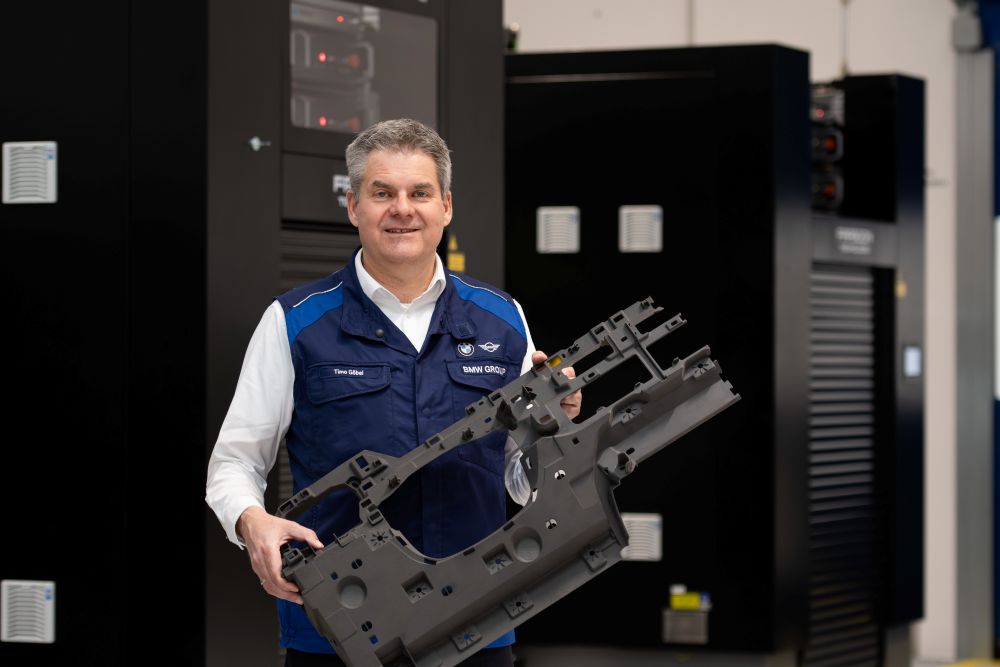
Under Ertel, BMW’s AM operations became one of the most respected in the world. I personally often thought of this department as a benchmark other automotive OEMs measure themselves against.
From the outset, Goebel acknowledges Ertel’s work, showing pride and deep respect for what his predecessor built. That said, his years across several development departments make him challenge the belief that AM is at heart a prototyping technology.
While we were surprised to realize that AM still suffers from that cliché, for BMW Group’s AM operations, this means in particular, having a value-driven mindset, in which every application has to justify itself on speed, flexibility, and cost.
When asked what “industrial maturity” means today for AM at BMW, his answer is a signal of where he intends to take the program:
“For me, it means that AM is no longer seen as a special or experimental technology. It is a fully integrated and trusted part of the production system… it requires a shift from experimentation to accountability.”
As per the words of Goebel, accountability rests on three tests for each application: scalability, repeatability, and economically viable across the overall system.
2. BMW Group’s current industrial reality
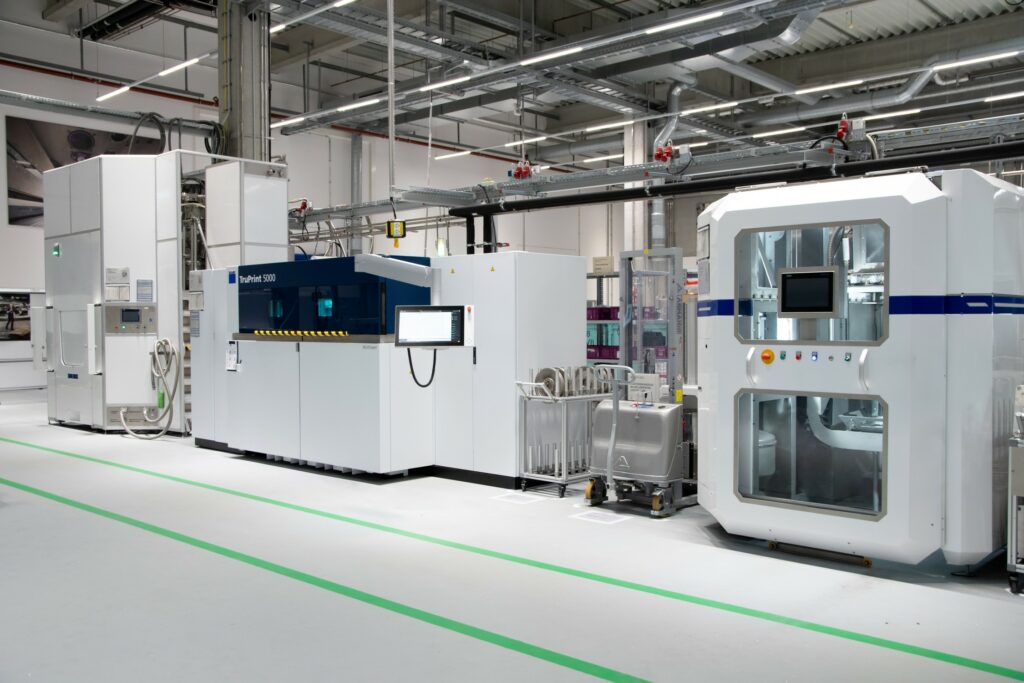
For the first time in a decade of covering BMW’s additive activities, I didn’t care about the number of machines.
Anyone who has followed BMW Group’s AM activities over the years could guess the types of AM equipment on their production floor. What matters now is what comes off them today and Goebel says: “300 tons of components per year are produced at the BMW Group AM Campus.”
One strategy, many application logics
As you may know, BMW uses AM across very different vehicle segments, from MINI to Rolls-Royce. Goebel told 3D ADEPT Media that across this portfolio, the core AM strategy remains the same.
He explains that in high-volume segments such as MINI and core BMW models, the priorities are scalability, cost efficiency, and robustness, with one distinctive twist: AM lets BMW deliver individualization in series, customizing parts at volume in a way customers notice.
At the low-volume, luxury end (Rolls-Royce), the emphasis tilts toward individualization, design freedom, and customer-specific value.
What about spare parts, we asked?
Although for most automotive players, end-of-life and long-tail spare parts is a main concern, BMW Group remains cautious about the role of AM here:
AM is not the main focus for spare parts, Goebel notes, but it is becoming a key enabler for keeping long-tail parts available economically and sustainably. The difficulty, he outlines, lies in the subsequent approval process for a new manufacturing method and material.
Interestingly, only a part originally produced with AM can be cleanly replaced by an AM spare, because a printed part is a different object from its conventionally made equivalent and must be qualified on its own terms.
The debate about an open-materials strategy

The conversation we started five years ago around “openness” is still one that creates debate in the AM industry today. Despite the wave of acquisitions we have witnessed in the industry, most AM systems available are still closed, proprietary technologies.
“We fully acknowledge that this creates a natural tension with machine vendors, because we call it razor-and-blade technology; their business models are often built around closed ecosystems”, Goebel acknowledges.
For the Head of AM, price is only one component of the case for openness. Open materials, he argues, are a lever for cost competitiveness and supply flexibility and, easy to overlook, for material performance, since different materials bring different properties to a part.
His team deliberately builds a balanced portfolio of closed and open systems, choosing on the basis of the application and the maturity of the process, and avoiding dependence on any single supplier or technology stack.
Most importantly, BMW engages vendors as partners, but with a stated expectation that the ecosystem must evolve toward openness over time. Goebel does not mind whether the machine maker or a third party opens the system. For every new machine, BMW now writes an open-system requirement into the specification.
“We are very strict on this, and we make a lot of effort balancing this”, the Head of BMW AM states.
Four dimensions shape these requirements:
– First, relevance: does the technology address a real problem, whether performance, cost, or lead time?
– Second, industrial validation, where most candidates are tested against reality (reproducibility, process stability, and material performance under automotive conditions of salt, heat, and everything else the road throws at a part.) Here Goebel is blunt about the gap between the pitch and the plant floor: “They always tell you we are reliable, we are reproducing, and our process is stable whereas it’s not.”
– Third comes economic qualification across the full process chain
– And finally, system integration: a solution has to embed into existing lines and into a broader supplier ecosystem that guarantees availability, quality assurance, and repeatability at scale.
So, where do candidates fall down? Rarely for being uninteresting, Goebel’s point is the opposite. They fail on scalability (it works in the lab, but not in series), on insufficient cost competitiveness, on process instability and quality variation, and on poor integration into existing workflows.
3. Beyond BMW’s walls
Since last year, experts have been complaining that the automotive AM business case is slowing. We challenged BMW Group’s expert on this assumption, and he does not see any regression.
As a matter of fact, BMW is replacing much of its SLS and SLM fleet this year and next. With more automation, falling material costs, and suppliers making real efficiency gains, he sees AM steadily closing the gap on traditional methods such as die casting.
Cost, he emphasizes, is the key and it is the one wish he would make of vendors: open material systems, and machines that are genuinely robust and easy to maintain. “Bring the cost down” and the business can finally scale,” he notes.
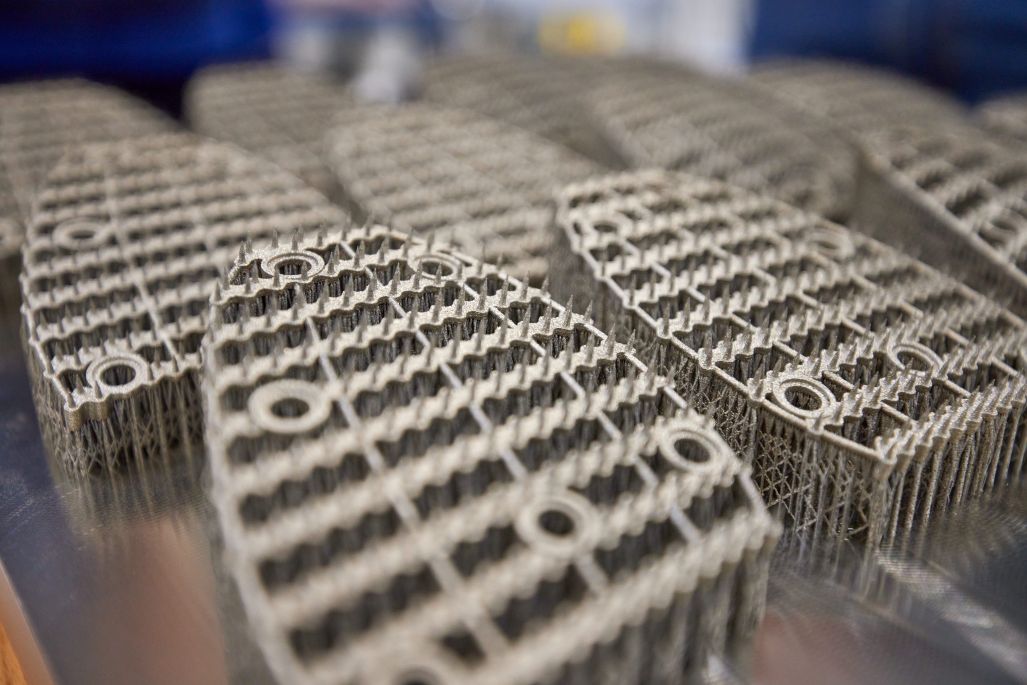
Increasingly, automotive OEMs are using AM for work that has nothing to do with cars and BMW is no exception. Recently, the Group produced spike plates and took part in the bottleUP project using recycled material. Is this a profitable business model for an automotive OEM, we asked, or ultimately a sophisticated way to keep machines busy, justify the AM investment internally, and generate visibility, with the business case coming second?
Goebel’s answer is honest about the mix of motives: “It is not purely driven by profitability… these use cases help us explore material behavior in special environments and conditions, and that experience feeds directly back into our automotive applications, where the requirements are often even higher.”
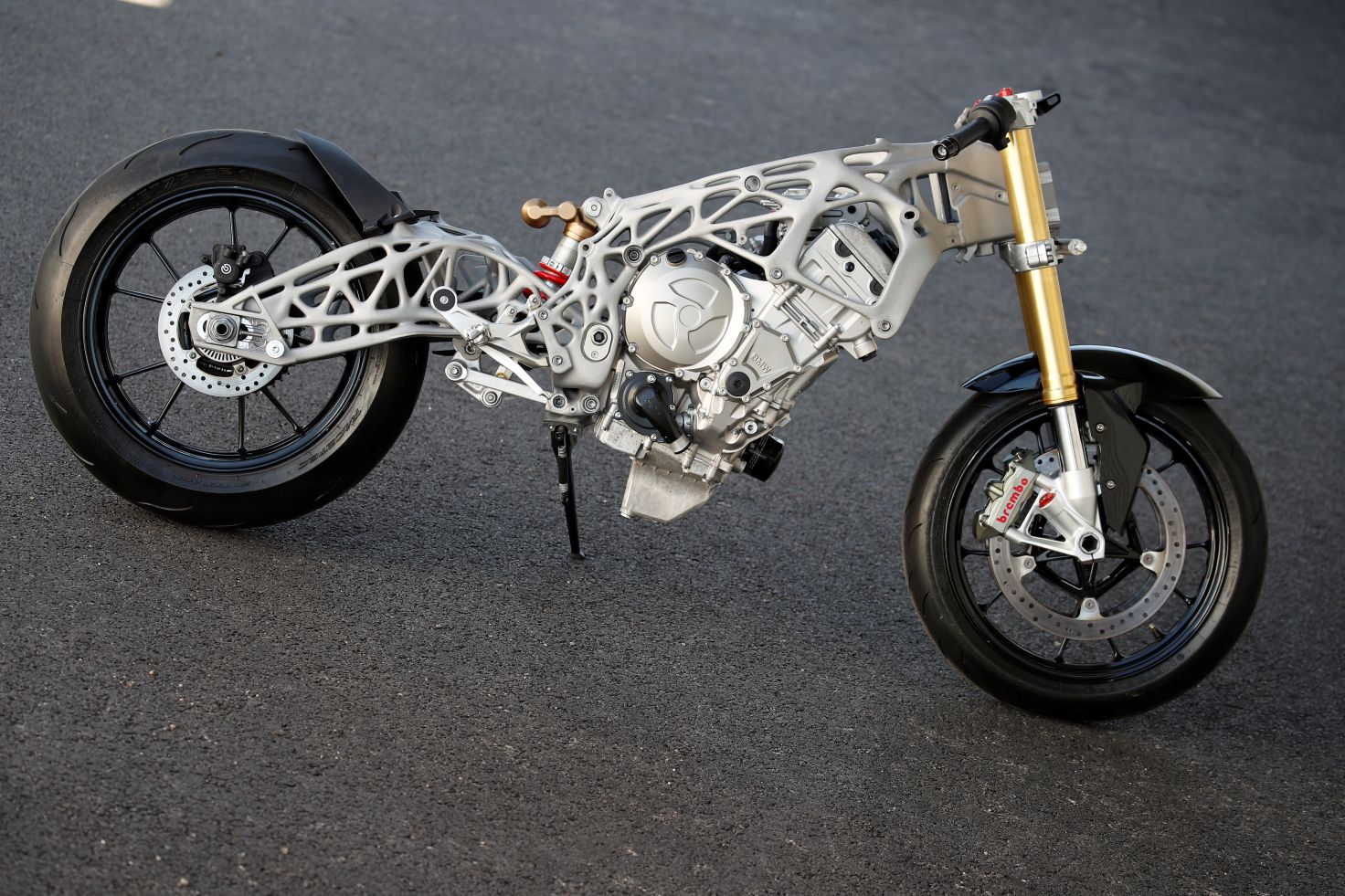
He assesses external work through three lenses:
– Capability building comes first: projects such as the spike plates or bottleUP let BMW probe material behavior, process limits, and design in real-world conditions outside automotive, then carry the lessons back to a more demanding home turf.
– Ecosystem visibility: being seen as a credible, forward-looking industrial player helps attract partners and accelerates the wider AM ecosystem.
– Third, and most important to him, is a long-term business logic that keeps discipline intact: AM investments must ultimately be justified by automotive use cases (prototyping, the production system, or series applications.) External projects remain a complement.
So, what will we look back on as the real turning point? Ten years from now, Goebel believes, this moment will read as the transition from technology exploration to true industrialization, the point at which AM stopped being prized mainly for design freedom and new materials and became a backbone technology, first in prototyping and then in series. The future cars, as he puts it, cannot be developed without AM.
*All images: courtesy of BMW Group. This interview has first been published in the May/June edition of 3D ADEPT Mag. Have a look at the entire issue here.