Understanding the economics and timing of innovation
December 2025. I sat down for a yearly catch-up with Marina Haugg, Head of Marketing & PR at Solukon.
Like many end-of-year conversations in the additive manufacturing industry, the conversation was about reviewing the past twelve months and sketching plans for the next. Very quickly, the discussion shifted to product roadmaps and upcoming launches. Not what would be launched, but why, and when:
“Do AM users really understand the rationale behind new equipment releases?
Do they see those launches as meaningful technological steps, or simply as innovation for the sake of innovation?”
Those questions stuck with me. They brought back a conversation I had at Formnext 2023 with the Head of R&D at a university. During a networking event, she confided her frustration: her team had barely started using a newly installed industrial 3D printer when the manufacturer announced an upgraded version. With so many launches happening in parallel, she said, it had become increasingly difficult to grasp the real value of each new platform, and to know whether waiting, upgrading, or replacing was the right move.
Connecting that experience with Marina’s concerns made one thing clear: while we have spent years explaining how to invest in AM equipment (costs, considerations, ROI), far less attention has been paid to a critical question AM users face once the machine is already on the shop floor:
When should you upgrade your existing AM equipment and when does it make more sense to replace it entirely?
This dossier aims to shed light on those grey areas, by reconnecting machine builders’ strategies with the real-world constraints, expectations, and decision-making processes of AM users.
The decision to upgrade or invest in new manufacturing equipment is rarely straightforward. In theory, the choice is simple: a new system makes sense when its expected benefits outweigh its costs. In practice, however, evaluating those benefits and costs involves far more than a basic economic calculation.
Rather than starting with numbers, let’s step back and address a more fundamental question:
1) Is this innovation driven by real user needs, or is this innovation for the sake of innovation?
“Development for us has three dimensions: machine, process, and software,” explains Andreas Hartmann, CEO/CTO of Solukon from the outset, and those dimensions must be aligned before a new system ever reaches the market. This framing sets the tone for how platform decisions are made across the additive manufacturing industry: not as isolated engineering projects, but as multi-layered responses to evolving industrial requirements.

From Solukon’s perspective, no single factor triggers the development of a new machine platform. Market demand, customer requests, and the launch plans of LPBF printer OEMs all play a role, particularly when several manufacturers move in the same direction, toward larger build volumes, new materials, or different support strategies. Competitive pressure is obviously monitored, but, as Hartmann stresses, it is not the primary driver. What matters most is whether a new system meaningfully improves reliability, safety, and efficiency for users.
This logic is echoed, though framed differently, by both HP and EOS:
Arvind Rangarajan, HP AM Global Head of Product and Strategy, notes that platform decisions emerge when customers “begin to hit structural limits,” where incremental improvements in speed or quality are no longer enough to support scale, economics, or integration into manufacturing operations.
At EOS, Sebastian Becker, Head of Product Management Metal, similarly describes new platforms as a response to lifecycle limits, when customer requirements remain theoretically achievable but demand a technological step-change to be realized.
Across all three companies, internal roadmaps matter, but only to the extent that they remain grounded in real usage data, customer feedback, and market readiness. This means that new platforms are introduced when existing systems can no longer support the next stage of industrialization, and when a platform-level shift is the most credible way to remove adoption barriers and create measurable value for AM users.
2) Different technologies, different signals: How triggers vary by role
I find it interesting to note that although the decision to develop a new machine platform is never driven by a single factor such as competitive pressure or marketing cadence, experts’ perspectives reveal three ways of framing the “right moment”.
This might be due to the fact that, they bring different expertise to the market, therefore, they do not always face the same limitations in terms of scale and scope.
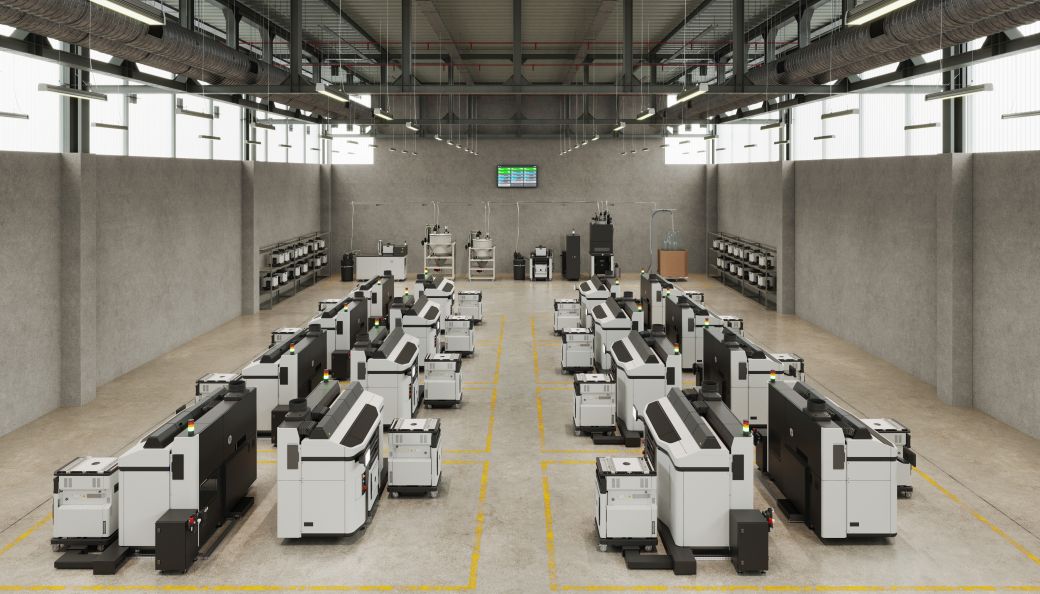
For context, Solukon brings its expertise as a machine manufacturer of automated depowdering equipment, HP as a machine manufacturer of Binder Jetting technology for metals (HP Metal Jet) and Multi Jet Fusion (MJF) for polymers, expanding to filament 3D printing as we will see below and EOS brings its expertise in metal 3D printing (LPBF).
Solukon: Anticipating the ecosystem, not just the machine
Three key considerations trigger the development or upgrade of automated depowdering systems:
First, Hartmann points to a combination of market demand, planned printer launches, and direct customer requests. He explains:
“For us it is important that customers that intend to buy a (new) LPBF printer already know that they will, sooner or later, need an automated depowdering system, too. This was not always the case in Solukon’s history, but luckily the awareness of the importance of depowdering has risen.”
This growing awareness has fundamentally changed how depowdering is perceived, no longer as an optional add-on, but as an integral part of industrial metal AM workflows.
Second, Solukon closely monitors broader movements among LPBF printer manufacturers. A particularly strong signal emerges when several OEMs move in the same direction with planned product launches, whether toward larger build volumes, new materials, or alternative approaches to support structures.
“This is a particularly strong trigger for Solukon, as our depowdering systems are, and are intended to remain, compatible with all LPBF printers. Our strong alignment with OEMs is also rooted in the fact that they are generally well positioned to accurately assess customer needs. Sometimes we develop and launch depowdering systems at the explicit request of OEMs, as this was the case for the SFM-AT1000-S and SFM-AT1500-S,” Hartmann continues.
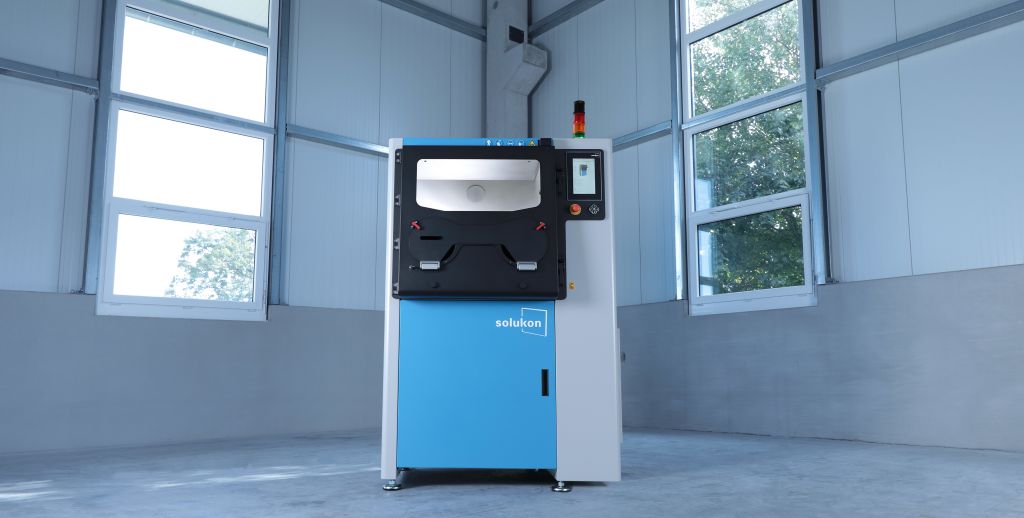
Here, platform decisions are less about reacting to competition and more about anticipating systemic shifts across the LPBF ecosystem.
Finally, day-to-day application experience plays a decisive role. The CEO notes:
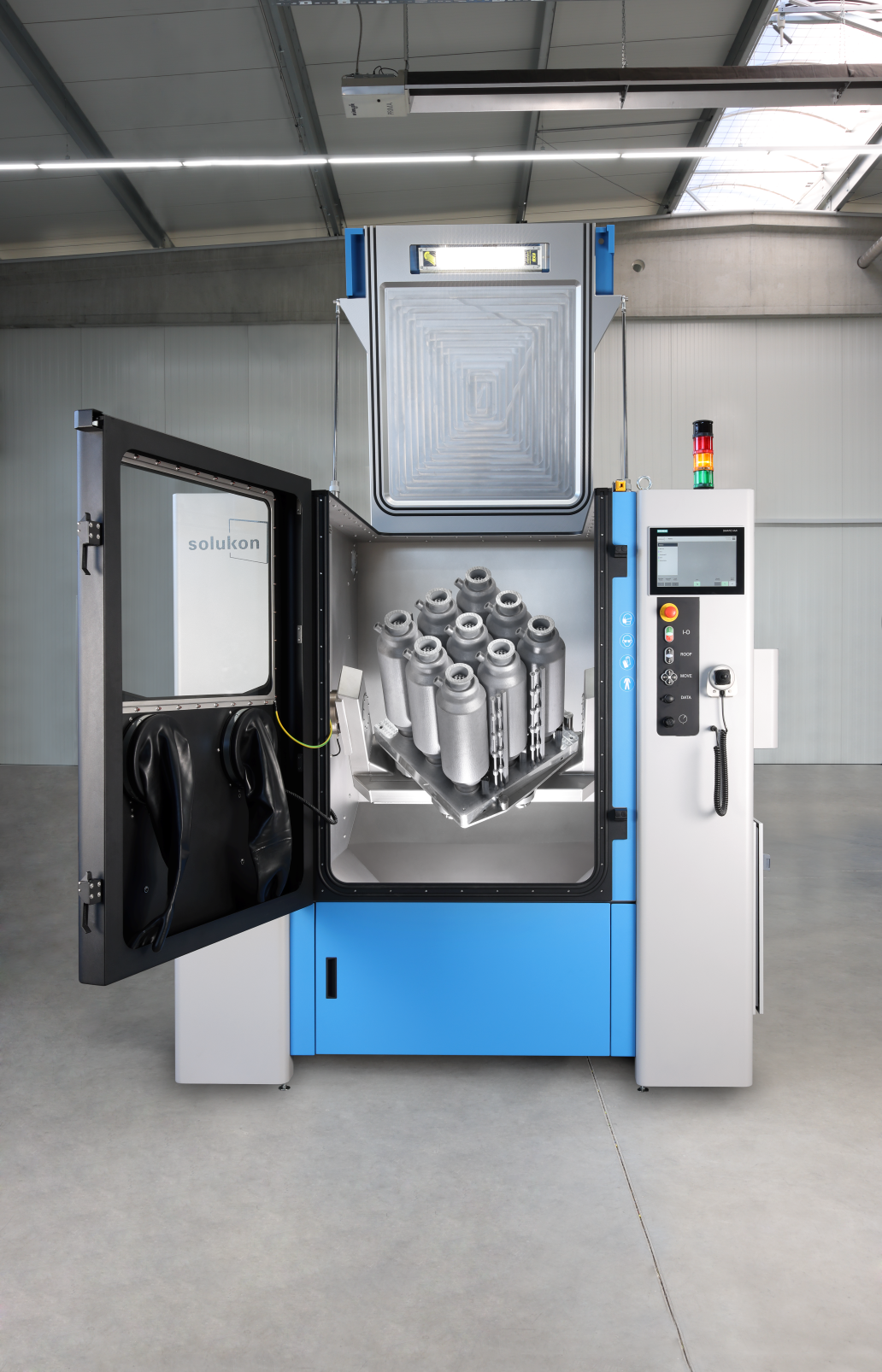
“When we introduced ultrasonic technology, for example, we specifically addressed the issue that conventional cleaning systems sometimes leave residual powder in long, delicate structures. Long testing showed that ultrasonic excitation is the way to go here, and we quickly launched a new machine version, the SFM-AT350-E, within months. Our experienced application team works closely with customers, providing hands-on support and first-hand feedback that is directly fed back into our machine development department.”
That said, for Andreas Hartmann, a system is replaced only when upgrades and retrofits are no longer technically or economically feasible. Solukon designs its machines with upgradeability in mind, but when innovation reaches a scope that requires a fundamentally new machine concept, rather than “incremental improvement”, a new platform becomes justified. This typically happens when software integration, process tracking, or quality assurance capabilities represent a clear step-change, not just an enhancement.
Not to mention that users value familiarity, making timing critical. New launches must therefore balance genuine technological need with long-term trust.
HP: Platform shifts as enablers of scale and new audiences
HP frames new platform development primarily through the lens of adoption at scale. Rangarajan highlights that the trigger appears when customers’ ambitions expand beyond prototyping into economics, integration, and production viability. At that point, platform-level changes become a way to open additive manufacturing to new applications and new user groups.
“This approach is reflected in how we are expanding our portfolio to evolve alongside our customers. The introduction of HP Industrial Filament solutions, including the HP Industrial Filament 3D Printer 600 High Temperature (HP IF 600HT), extends our capabilities into high-temperature and engineered filaments. As a modular platform, it allows customers to adopt advanced materials and new applications across sectors such as aerospace, oil and gas, medical, automotive, rail, and education, while maintaining stable, production-ready environments. Ultimately, platform decisions are about meeting customers where they are today while creating a clear path to scale,” HP AM Global Head of Product and Strategy explains.
HP & EOS: Lifecycle advancement and technological inflection points
Both industrial 3D printer manufacturers also approach new machine platforms as deliberate lifecycle advancements, introduced only when incremental optimization no longer supports industrial requirements.

“We have done this consistently with HP Multi Jet Fusion technology by evolving materials, hardware, software, and workflows in ways customers can integrate without disrupting production. HP’s modular design allows these improvements to be introduced incrementally, preserving production stability while continuing to deliver on performance and cost,” HP’s expert notes.
Sebastian Becker highlights that the decision emerges when rising expectations around productivity, automation, and process stability converge with a technological inflection point in the company’s roadmap.
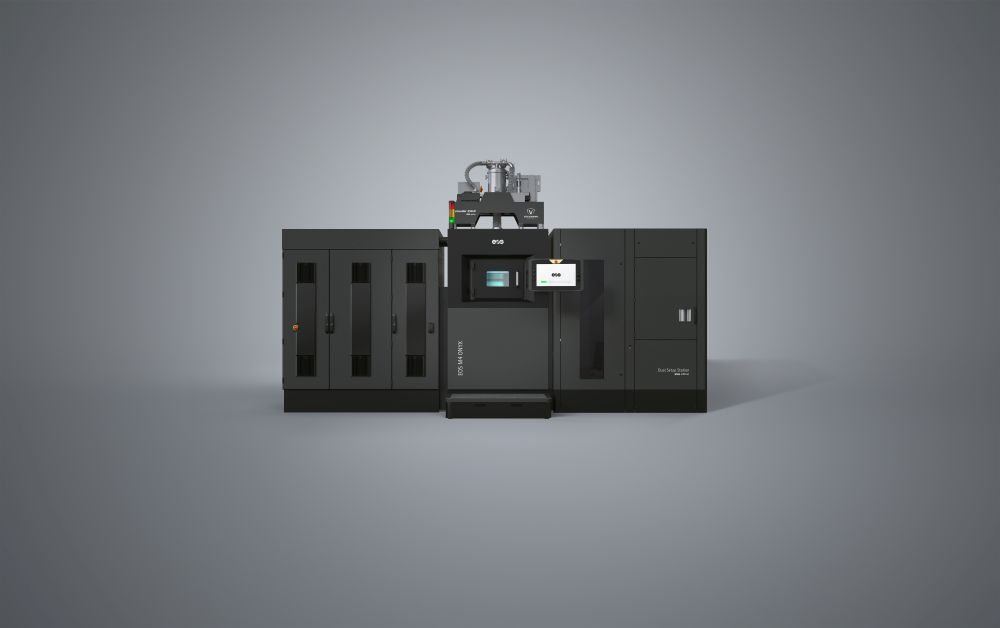
The 3D printer EOS M4 ONYX illustrates this logic well. Customer demands were already visible, but the existing platform class could no longer support them optimally. At that stage, EOS begins to ask a set of fundamental questions that go beyond short-term performance gains:
“First, can the existing solution still deliver relevant performance improvements, or has its technological potential been exhausted?
Second, is each further adaptation becoming more complex and more expensive than fundamentally rethinking the platform, and is the platform still suitable for integrating a new technology?
Third: Does the existing platform limit new applications, automation, or stable serial production?”
When the answers to these questions point in the same direction, EOS views a new platform not as a risk, but as a more sustainable and scalable path forward.
3) Understanding the lifecycle of industrial AM equipment before investing
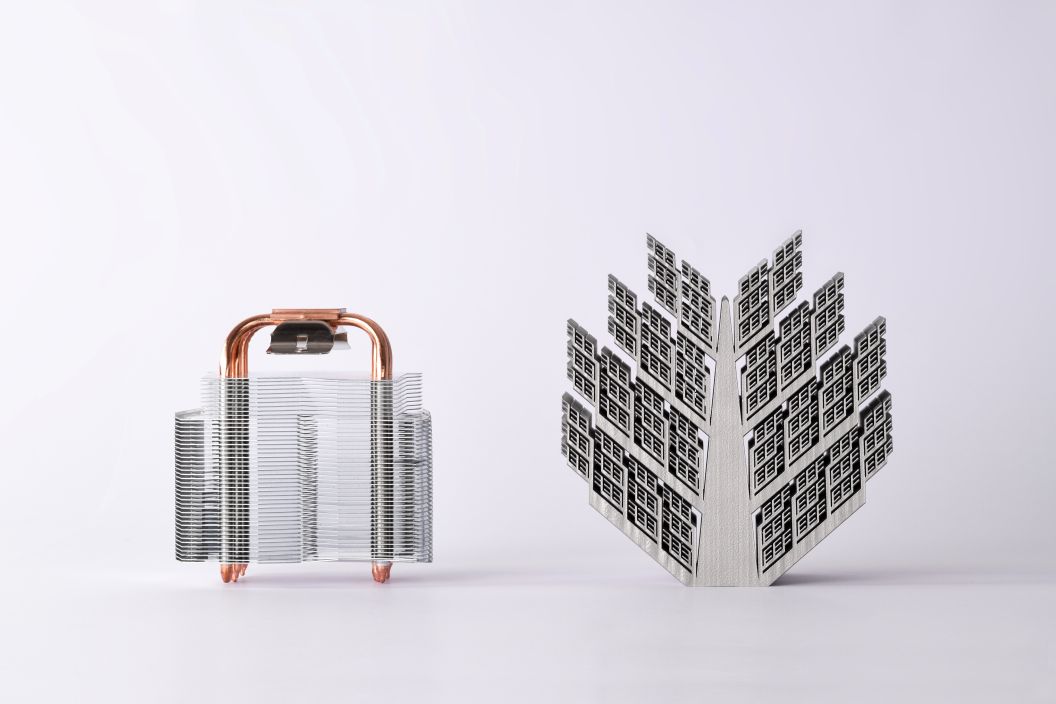
Beyond market maturity and increasing production volumes, which often push AM users toward upgraded or new equipment, I have come to realize that lifecycle decisions in additive manufacturing are far less standardized than the commonly cited three-to-five-year replacement rule suggests.
While Total Cost of Ownership (TCO) remains a relevant economic benchmark, particularly when operating inefficiencies, maintenance costs, or material losses begin to outweigh the benefits of an existing system, experts’ perspectives to this dossier reveal that in AM, lifecycle is increasingly defined by how value evolves over time, not by fixed replacement intervals.
With HP and EOS, I learned that industrial 3D printers are still designed for long production lives, and that this has not fundamentally changed. Systems such as HP’s Multi Jet Fusion platforms, introduced as early as 2017, remain in active production today.
What has changed is the way performance improvements are delivered: rather than frequent hardware replacements, software updates, material developments, automation, and process optimization now play a central role in keeping systems productive and economically relevant over many years.
The logic is slightly different when looking at post-processing equipment. Through my exchange with Solukon, I realized that it is often more accurate to speak of innovation cycles rather than machine lifecycles. Depowdering systems can remain in daily operation for many years as long as part complexity and throughput requirements remain stable. The moment when a switch becomes justified is less about the age of the machine and more about whether it can still cope with evolving geometries, higher volumes, automation needs, or the skills available on the user’s side.
Overall, the experts’ insights reshaped my understanding of AM equipment lifecycle. Whether it is a 3D printer or a depowdering system, the right time to invest in a new platform is no longer dictated by years in service, but by a system’s ability to support changing applications, production ambitions, and industrial maturity, sometimes over decades rather than within a predefined cycle.
4) Modular platforms: flexibility for manufacturers, security for AM users?
In the context of 3D printer and post-processing equipment manufacturing, we see modularity as a way to design machines around clearly separated, swappable functional blocks, from printheads, materials, motion systems, or build volumes, to curing or depowdering units.
In theory, this allows individual functions to be selected, upgraded, or reconfigured without redesigning or replacing the entire system. The key question, however, is whether this strategy truly benefits the AM user, and more specifically, whether it helps reduce the financial risk associated with long-term equipment investments.
From the contributors’ responses, modularity does appear to play that role, provided it is designed with real use cases in mind. At Solukon for instance, modularity is closely linked to adaptability and specialization. “Modularity means an opportunity to tailor the depowdering system to the customers’ requirements,” Hartmann states, pointing to options such as knocking, ultrasonic excitation, different swivel arm configurations, or customized mounting plates.
This approach allows users to avoid over-investing in capabilities they may never need. The same principle applies to automation: “Higher levels of automation through robot integration are always an individual project rather than an off-the-shelf solution,” he notes, precisely because fixed configurations would not reflect the diversity of customer applications. For Hartmann, the financial benefit lies in machines that are “designed from the start in a way that they can be upgraded gradually and in different directions at a later stage.”
At HP, modularity is framed as a way to align capital expenditure with application maturity. “For customers, modular systems allow investment to scale with application maturity, rather than requiring large upfront commitments before volumes are proven,” explains Arvind Rangarajan.
This flexibility, he adds, “reduces financial risk and supports more confident, measured adoption.” From a platform perspective, modularity also enables HP to introduce new capabilities incrementally, “without destabilizing installed systems or forcing disruptive platform resets”; a point that directly addresses the risk AM users face when early investments become obsolete too quickly.

A similar economic logic underpins the modular approach at EOS, where platform decisions are explicitly tied to financial sustainability. “Modular platforms significantly reduce financial risk,” Sebastian Becker explains, as they enable step-by-step innovation, shorter development cycles, and simpler service while ensuring that “systems do not need to be replaced in full.”
Interestingly, modularity also allows EOS to separate functions through clear interfaces, making it possible to integrate partner solutions and focus internal resources on core AM processes. For users, this translates into scalability, maintainability, and the ability to introduce innovation “without disrupting ongoing production.”
Altogether, these perspectives suggest that modularity is not about avoiding platform evolution, but about changing how its cost and risk are distributed over time. For AM users, the real value of modularity lies in its ability to replace all-or-nothing investment decisions with progressive, application-driven upgrades, reducing exposure while keeping the door open to future innovation.
5) Too early or too late: when innovation creates value or risk
“We are the first to launch this technology…” I have lost count of how many times I have seen this claim in press releases. Being first is clearly good marketing, and it can come with real advantages. That said, from a user perspective, I have come to realize that launching a new machine or technology is far less about being first, and far more about aligning technology with real industrial readiness.
I now understand this Head of R&D met at a networking event at Formnext 2023 who told me they had barely started using their newly installed industrial 3D printer when the manufacturer announced an upgraded version.
Probably, all she could think of was: How will this new launch affect production stability? Qualification efforts? ROI? Long-term planning?
From insights shared by Andreas Hartmann (Solukon), Arvind Rangarajan (HP), and Sebastian Becker (EOS), it is clear that machine manufacturers are aware of the risks associated with launching either too early or too late, even if they approach the issue from slightly different angles.
From the perspective of HP, launching too early can undermine value creation altogether. As Rangarajan explains, customers expect new systems to “integrate seamlessly into existing production environments, including quality systems, post-processing, and qualification.”
When those surrounding elements are not ready, even strong hardware “struggles to deliver consistent value,” turning innovation into an added cost rather than an accelerator.
At the same time, waiting too long introduces a different risk: as confidence in AM grows and cost per part declines, customers begin redesigning products and supply chains on the assumption that the technology is already available. If platform innovation does not keep pace, adoption slows unnecessarily. For HP, the right timing is when technical readiness and economic readiness converge.
Close collaboration as the key to launch timing
For both printer and post-processing manufacturers, managing this timing challenge relies heavily on early and continuous collaboration with customers and partners, but the rationale differs depending on their role in the AM value chain.
“Hardware timing is ultimately about system readiness. Additive manufacturing delivers value when platforms, materials, workflows, and qualification pathways advance in step. When one element moves too far ahead of the others, customers encounter added complexity rather than meaningful progress”, HP’s expert confirms.
At EOS, the risk of launching too early is closely tied to industrial reliability. Introducing immature technology would conflict directly with EOS’s commitment to stable, repeatable production. As Becker explains, technologies are evaluated and tested early, but only commercialized once they are “stable, repeatable, and serviceable in real production environments.”
Launching too late, however, can mean missing market opportunities or weakening technological leadership. EOS balances these risks by involving pilot customers early, defining materials at an early stage, and embedding validation and verification into the production ramp-up, so that new platforms arrive when customers already operate established end-to-end manufacturing workflows.
Reinforcing the argument of system readiness and ecosystem enablement highlighted by Rangarajan, Becker points out: “A machine on its own does not create an industrial production solution. Customers of the EOS M4 ONYX are already active in AM production and operate established end‑to‑end manufacturing processes. Materials are defined very early in the development phase based on clear market pull in the respective target markets. “
For post-processing equipment, the timing challenge takes a different form. At Solukon, launching too early can mean misjudging actual market needs. A depowdering system introduced prematurely may fail to accommodate the real dimensions or characteristics of parts coming from newly launched printers.
Hartmann explains that this risk is mitigated through “extremely close collaboration and exchange with a wide range of machine manufacturers as well as with customers and prospective users.”
Launching too late, while not yet experienced by Solukon, could give competitors room to move or disappoint customers who depend on reliable downstream solutions. What stands out is Solukon’s willingness to combine data with experience and intuition: systems such as the SFM-AT300 and later the SFM-AT350 were launched without strong initial demand, yet proved to be well timed as market requirements caught up.
Whether it is a 3D printer or a depowdering system, getting the timing right is about ensuring that when a new system arrives, users are actually ready to turn innovation into value.
Concluding thoughts
At the end of this dossier, it is clear that those who were still considered product launches as a race toward the newest machine will now see them as a question of readiness. At least, that’s the main takeaway of insights shared in the lines above: Readiness of the technology, of the surrounding ecosystem, and of the user’s own production environment.
Across printers and post-processing systems’ development, one thing is clear: hardware lifecycles remain long, while innovation cycles are accelerating through software, materials, and automation.
As an AM user, your smartest investment decisions should be driven by whether real limits have been reached. Before upgrading, retrofitting or replacing your AM equipment, consider a checklist that includes the following questions as the first step of your decision-making process:
- Have I reached a real limitation?
(Productivity, part complexity, automation, cost per part, or stability) - Can my current system still evolve?
(Through software, materials, process optimization, or modular upgrades.) - Is the surrounding ecosystem ready?
(Post-processing, qualification, materials, automation, workforce skills.) - What risk am I trying to reduce?
(Operational disruption, sunk cost, delayed adoption, or missed opportunity.) - Will this next step support my production goals, not just today, but potentially in three to five years?
If you can answer these questions clearly, you are on the right path to invest in innovation.
*Featured image: HP. This dossier has first been published in two parts (Part 1 in the January/February edition of 3D ADEPT Mag and Part 2 in the March/April edition of 3D ADEPT Mag.)