Q&A with Gidi Grinstein, Founder & President of Tikkun Olam Makers (TOM)
There is a surprisingly large and rapidly growing ecosystem of nonprofits that use 3D printing as a core operational tool. They span prosthetics and assistive devices, housing, education, disaster relief, and global humanitarian aid, and they’re expanding precisely because AM solves the two biggest nonprofit constraints: cost and logistics.
Not to mention that 3D printing fits nonprofits so well, because those teams often operate with tight budgets, small teams, unpredictable supply chains, and high demand for customization, all of which can be addressed by 3D printing.
When it comes to prosthetics and assistive devices, a guide from WHO reveals that an estimated 90% of people who need assistive devices cannot access them, largely because customized equipment is expensive, difficult to obtain, or unavailable in many regions.
This is precisely the gap that Tikkun Olam Makers (TOM) was built to close. Founded in 2014 by Gidi Grinstein, TOM operates at the intersection of open-source design, frugal innovation, and community-driven manufacturing.
Headquartered in Manhattan, New York, with roots in Israel, the nonprofit develops affordable, customizable assistive technologies for people with disabilities and the elderly; mobilizing a global network of engineers, designers, students, and makers through collaborative “makeathons.”
With over 1,200 open-source solutions developed across 36 countries, TOM has demonstrated that radical affordability and genuine quality are not mutually exclusive.
In the Q&A below, Gidi Grinstein shares with 3D ADEPT Media how TOM’s model works in practice, from design methodology and manufacturing choices to quality control, cross-border iteration, and what it would take for the advanced manufacturing industry to engage more deeply with the humanitarian potential of additive manufacturing.
3DA: How does TOM ensure that open-source designs maintain quality, safety, and reliability across different regions and makers?
Gidi Grinstein (GG): Our motto is “Affordable and Accessible for Anyone Anywhere”, which mandates that all TOM Solutions are equally available in developed and developing nations, as well as in metropolitan and rural areas.
We want to serve New York City and Upstate New York, North America, and Africa. Hence, all TOM Solutions are documented in detail into “digital product files” which are standardized to address all relevant necessary information for their manufacturing.
Each final product file is “tested” by having a team of makers manufacture the product without contacting the design team. This is how we maintain quality, safety, and reliability, but I also admit that we are still learning.
3DA: What are the most common misconceptions engineers or clinicians have when they first join TOM’s ecosystem?
GG: Engineers sometimes downplay the innovation insights of our “need knowers,” who are often ingenious because they live with their disability. In our experience, Need Knowers often have more than one idea about how to solve their own problem, and all their approaches are relevant and valuable.
TOM preserves the documentation of all “concepts” (level 2) and “working models” (level 3), and not just those that matured into “products” (level 5), because in different circumstances, for example, per the availability of tools or materials, these half-baked ideas may become useful.
Clinicians often downplay the power of design to solve the challenges they face as caregivers. One of our most successful recent experiments was introducing designers into hospitals in Israel to address the needs of those recently wounded in the conflict. We were stunned that about a third of our innovation in the past year came from within hospitals.
3DA: How central is 3D printing to TOM’s mission today, and how has its role evolved as the network has grown?
GG: TOM’s design approach is based on frugal innovation, and our vision calls for standardizing the tools used to design and, therefore, also to manufacture a TOM Solution.
Our motto is “Basic Cubed”, namely, using basic tools, materials, and skills so that TOM Solutions can be manufactured anywhere in the world. Hence, we have standardized the TOM Workshop by detailing the tools that it should hold so that it can manufacture all TOM Solutions.
Within this context, desktop 3D printers are the central manufacturing tool featured in TOM Workshops and used to distribute TOM Solutions. But a TOM Makerspace requires additional tools, e.g., a sewing machine, wood cutter, and CNC machine.
In addition, industrial 3D-printers can be used to manufacture small batches, but our approach emphasizes accessibility and is therefore reliant on desktop 3D-printers.
3DA: What types of 3D printing technologies (FDM, resin, SLS, etc.) are most commonly used across TOM communities, and why?
GG: Across all TOM communities, we use commercially available, affordable, standard-sized home/office FDM printers, e.g., Prusa or Bambu. We encourage all makers to develop products that can be printed on a print bed of 10x 10x 10, so they are accessible to makers, hobbyists, and small makerspaces.
By utilizing flexible TPU and PLA, along with high-quality, food-safe PETG, we can print a wide range of ready-to-use products from our TOM portfolio. We urge makers to steer clear of resin, SLS, and even abs prints due to their high cost, requirement for specialized printers, curing devices, or climate-controlled environments.
By sticking with basic FDM printers with a small to medium-sized print bed, we allow more people to replicate our products wherever they are located.
3DA: With more than 1,000 solutions in development, how does TOM prioritize which designs to scale or invest further in?
GG: In principle, our process is fully democratized, so every TOMer or TOM Team (a group of TOMers) can choose the products that they’ll work on. The product-design process is standardized into five phases, so a person or a group can take a “concept” (Level 2) and upgrade it to a “prototype” (Level 4), but the manufacturing to “product” (Level 5) is produced by a different group.
In this context, the responsibility of our TOM Studios, our small in-house teams of designers, is to orchestrate the product-development process, which is carried out by TOMers or TOM Teams in Israel, the U.S., and around the world.
The one caveat is the approval that a TOM Solution is legitimately a “product” (Level 5), and ready for international distribution. This process is the responsibility of our TOM Studios in Tel-Aviv and New York City. Also, if care professionals highlight a need, which was often the case in Israel during the war, then our TOM Studio would ask one of our abled volunteer development groups to focus on that problem.
3DA: TOM devices often cost 80–99% less than traditional alternatives. What are the key levers that make such dramatic cost reductions possible?
The TOM Process of identifying neglected problems and developing solutions for them is designed to ensure “radical affordability” by cutting the costs of innovation, because all products are developed by volunteers; by strict adherence to the principles of frugal innovation by using simple tools, materials and skills, which reduce the cost of products; by depositing all creations in the public domain, thereby eliminating the cost of IP; by distributed manufacturing, which eliminates the costs of inventory and distribution; and by the fact that we are a non-profit.
Also, TOM exposes the “real cost” of the product, namely the cost of materials and the amount of labor that is invested in each product. For example, our 3D-printable wheelchair for toddlers is estimated at $22036.
In doing so, our goal is to give the power of bargaining to the user. In most cases, vulnerable populations are weak and disenfranchised, often desperate to get a solution to their problem. Therefore, their demand curve is “inflexible.” This means that they’ll “pay any price,” which is why assistive devices are so expensive. We try to disrupt these patterns.
3DA: How do you ensure that low-cost doesn’t translate into low-quality, especially for critical assistive devices? OR The prosthesis adapted in Singapore, Israel, and Nashville is a powerful example of open-source iteration in action. How often does that kind of cross-border, cross-community improvement cycle actually happen and beyond cost, how do you measure whether a solution genuinely works for the person it was made for? What does follow-up look like in practice?
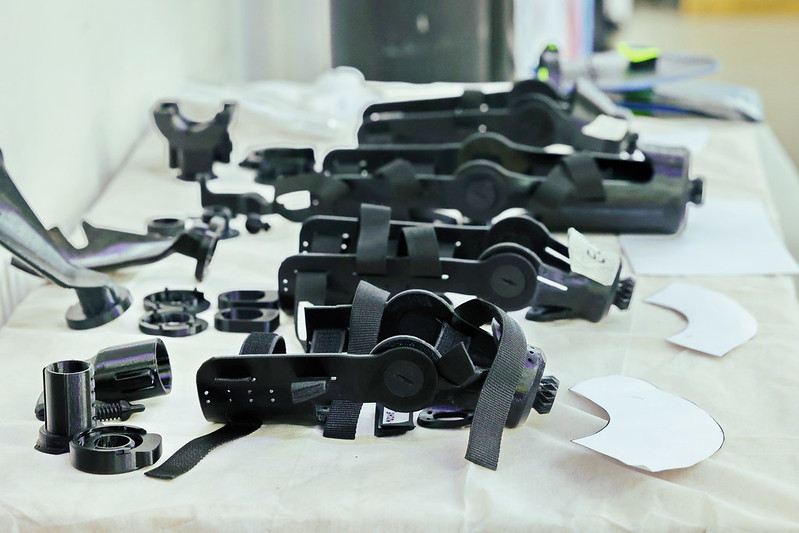
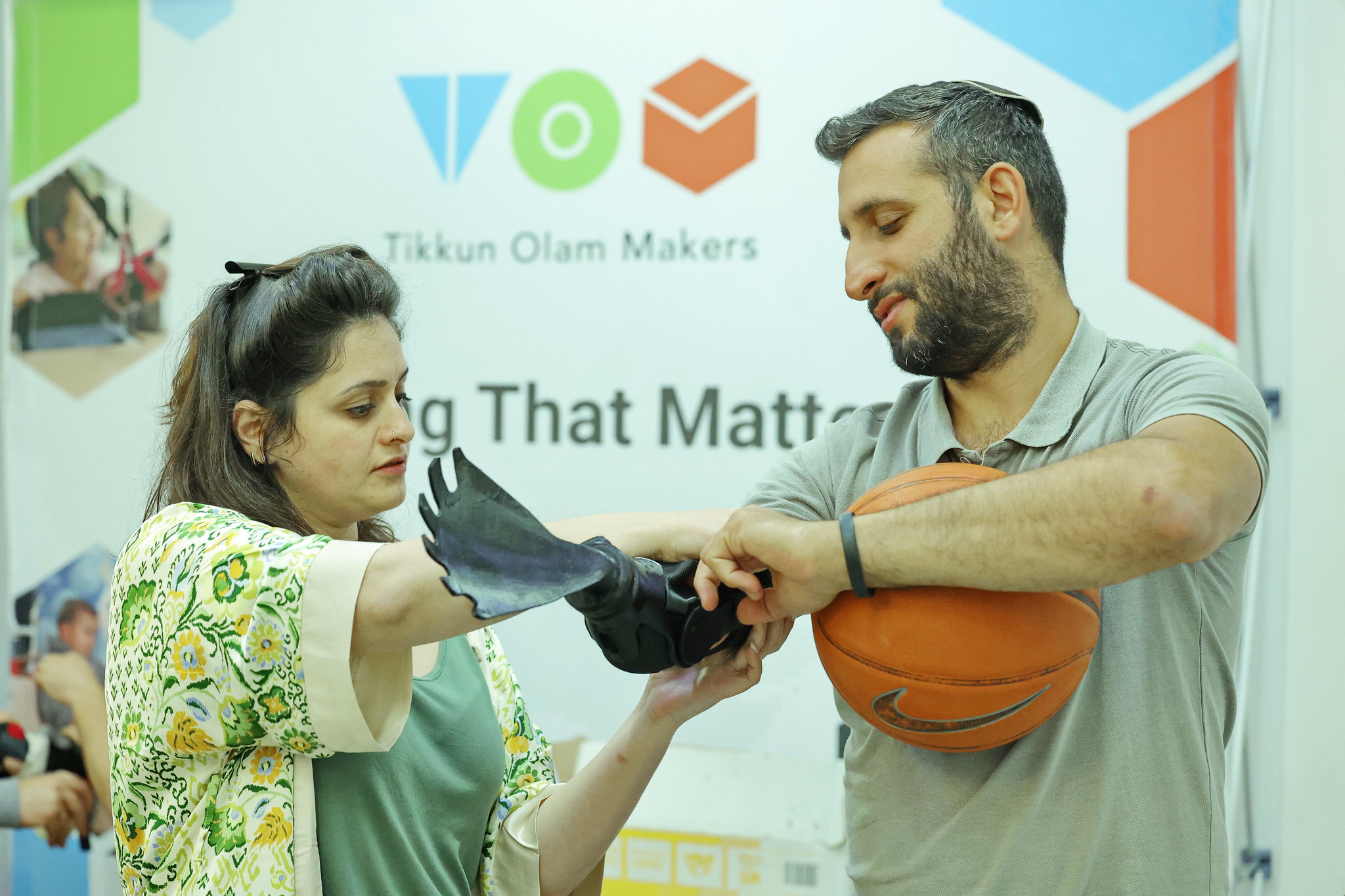
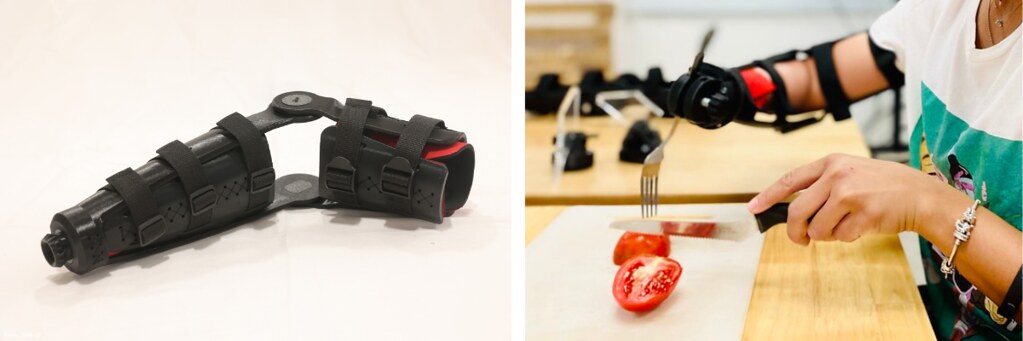
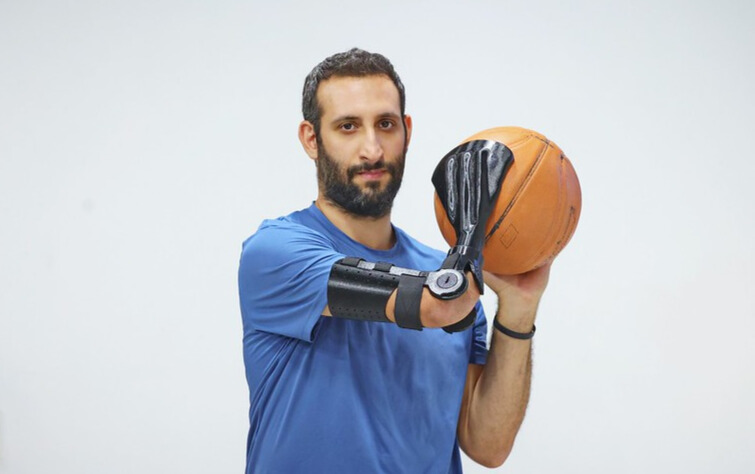
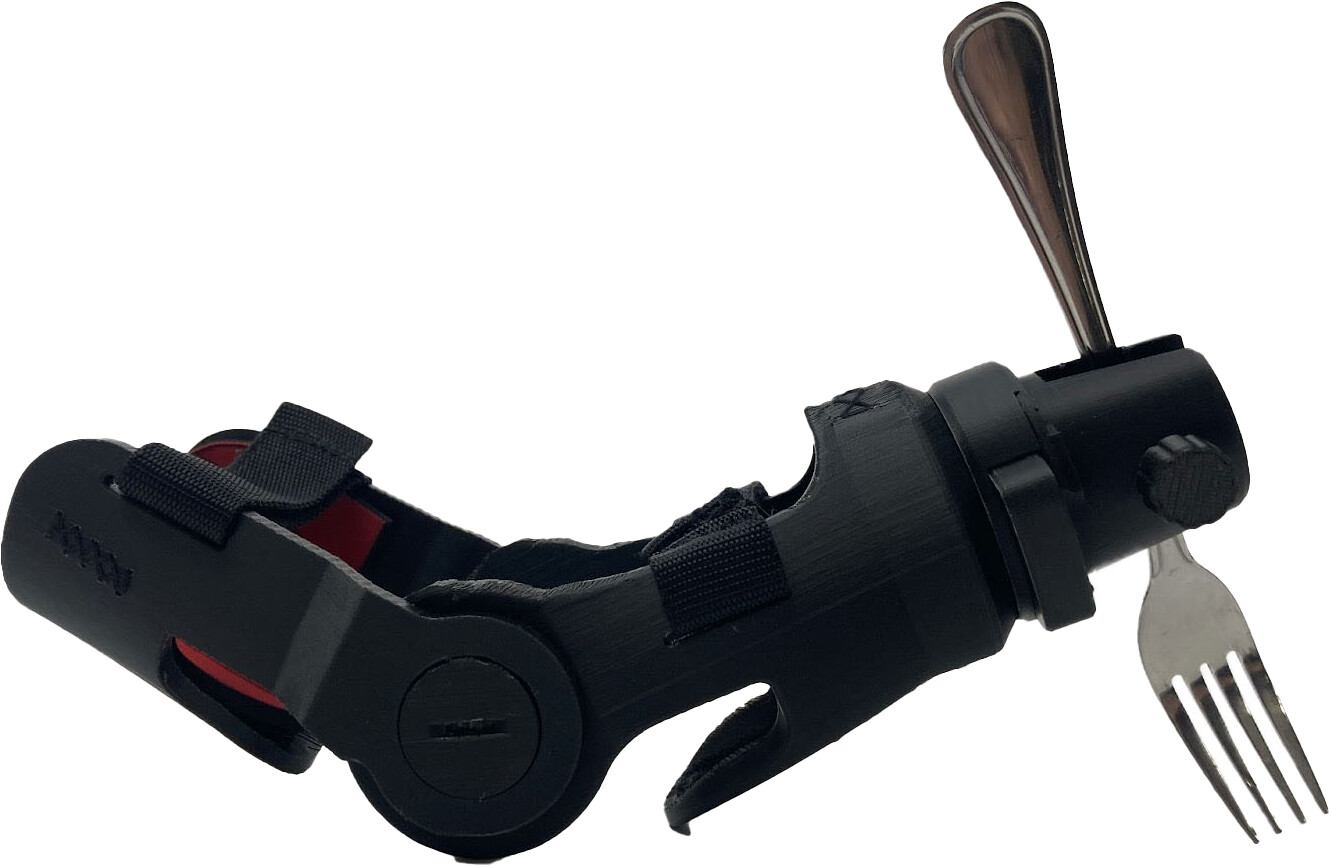
The TOM Prosthesis is a very interesting case because it began with a soldier by the name of Noam, who lost his arm and received a very high-end prosthesis from Israel’s Ministry of Defense. His challenge was that the fancy prosthesis was heavy, skewing his back; electric, needing to be charged; and would not allow him to paint and cook. A team of students designed a one-pound prosthesis for him with a “hand” that can be snapped on and off.
Thereafter, a team of engineers in Singapore used the design to create a solution for a double amputee to go to the toilet, and another team of students in Israel created a prosthesis that allowed a young girl to play the violin. Today, we can also accommodate basketball, swimming, playing guitar and drums, various activities in the kitchen, using touch screens, and more.
The person with the need – the Need Knower – is at the center of the design process and the key member of the design team. This ensures that every TOM Prototype (Level 4) or TOM Product (Level 5) has at least one happy user.
Once a design of a TOM Solution is uploaded to our platform at www.tomglobal.org as a concept, working model, prototype or product (Level 2 to Level 5, respectively), anyone can download and use it.
At that point, the evolution of the product and the improvement of its Digital Product File depend on the commitment of the users to share their improvements with us. At the same time, our experience is that most improvements happen among nearby teams that can meet in-person, as opposed to cross-border collaborations.
Clearly, there is a tradeoff between cost and quality, which we acknowledge and even embrace. Our approach of frugal innovation calls for focusing design on essential functionalities to reduce costs even at the expense of aesthetics or durability.
For example, many TOM Solutions should not be fixed if broken, but rather discarded and replaced, which is why all our materials are biodegradable. This approach is not just a matter of product quality, but also a consequence of our commitment to serving remote communities in developing nations, who are unlikely to have access to support.
3DA: What do you wish more people in the advanced manufacturing or technology industry understood about what you’re doing and what’s holding back deeper engagement from that world? OR If the model works, what does success look like in ten years: is it TOM getting bigger, or TOM becoming unnecessary?
TOM is a platform that allows people to volunteer their creations to humanity and to donate excess manufacturing capabilities. TOM is a marketplace between untapped resources and unmet needs, which is why TOM has the potential to become an exponential venture. Everyone who wants to get involved on either side of this imaginary market is welcome to reach out to us.
In an era of unprecedented abundance alongside painful scarcity, TOM’s goal is to help millions of people by inspiring and supporting a global movement of frugal innovation for vulnerable populations so that affordable and accessible products are available for anyone, anywhere.
Our success requires creating a portfolio of thousands of products and inspiring and mobilizing a distribution network of thousands of makerspaces and workshops. We are confident that these objectives are within our reach.
*All images: credit of TOM. This article has first been published in the March/April edition of 3D ADEPT Mag.