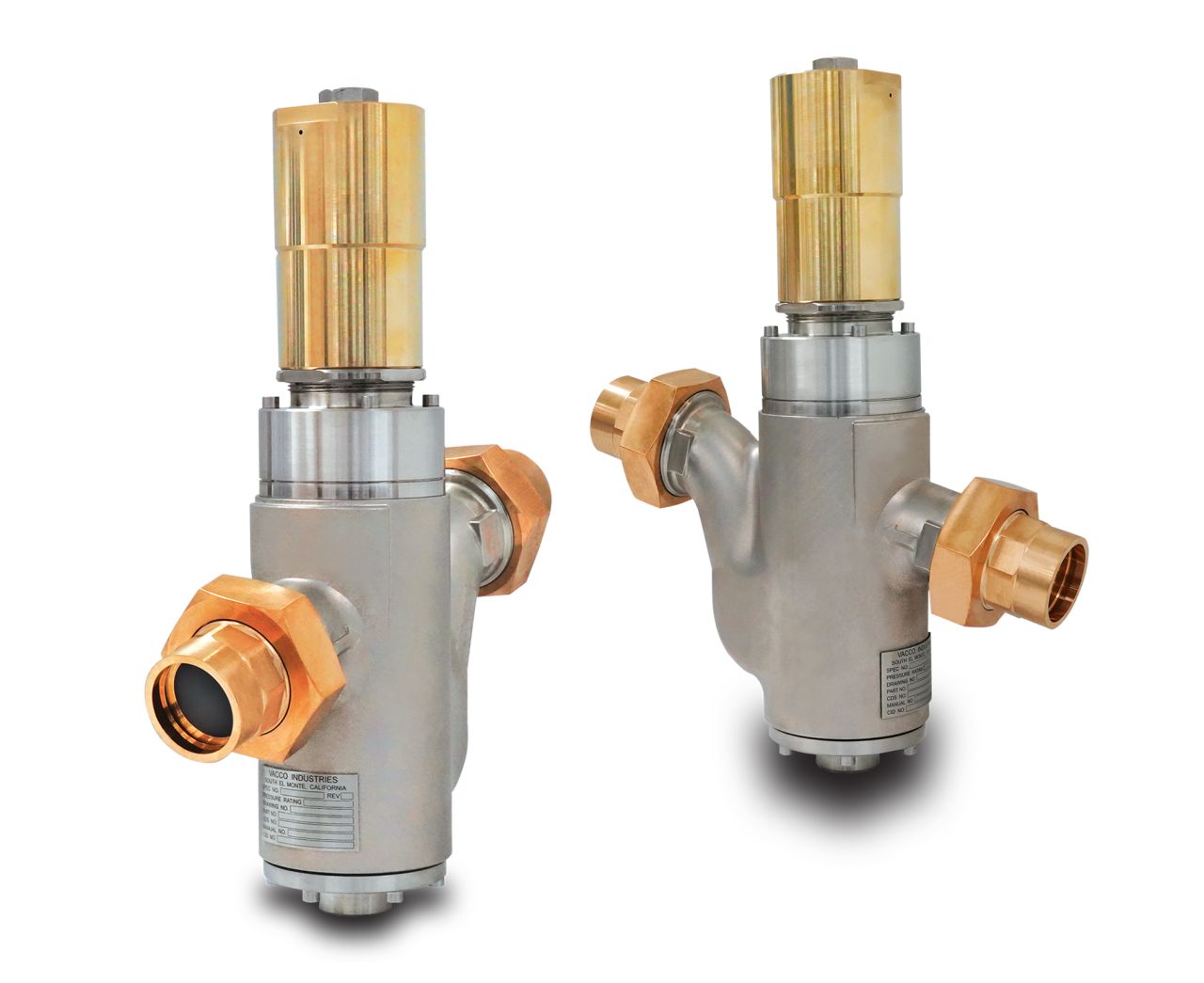
VACCO Industries, a designer and manufacturer of specialty valves, filters and advanced fluid control products, has manufactured and delivered a pressure regulating valve body using additive manufacturing to support the US Navy’s submarine fleet sustainment program.
The Cu-Ni valve was printed by advanced manufacturing service provider Penn United Technologies, Inc. using Laser Powder Bed Fusion (LPBF) and delivered to VACCO for final assembly and rigorous testing before deployment.
The effort was funded by the Submarine Industrial Base (SIB) through the Maritime Sustainment Technology and Innovation Consortium (MSTIC), a US Navy OTA program focused on advancing manufacturing solutions across the fleet in collaboration with Naval Sea Systems Command (NAVSEA).
Following assembly, the valve completed non-destructive testing and production-level validation, clearing it for installation aboard a submarine. The achievement marks a significant milestone in the Navy’s material maturity pathway for additive manufacturing.
“This program demonstrates the Navy’s commitment to accelerating component delivery to the fleet whilst strengthening the industrial supply chain,” VACCO stated on LinkedIn, adding plans to continue leveraging Navy additive specifications in future part production.
The use of Cu-Ni alloys in marine environments is well established in conventional manufacturing but qualifying them for LPBF production adds a new pathway for rapid sustainment and reduces lead times on critical spares.
As we previously reported, the US Navy has been exploring additive manufacturing for over 5,500 parts since 2016, though earlier assessments flagged scheduling challenges in translating validation into production deployment. VACCO’s successfully delivered component suggests that gap is narrowing, at least for specific high-value applications.
*We curate insights that matter to help you grow in your AM journey. Receive them once a week, straight to your inbox. Subscribe to our weekly newsletter.