To keep navigation channels safe and reliable, researchers and engineers with the U.S. Army Corps of Engineers (USACE) are strengthening coastal systems.
“The real opportunity is to keep sediment working within the coastal system and use it as a resource,” said Elizabeth Godsey, a USACE Regional Sediment Management and Engineering with Nature Practice Lead. “By combining dredged material with innovative design and printing methods, we can develop solutions that support navigation, restore habitat, and increase coastal resilience.”
In Alabama’s Mobile Bay specifically, storms, shoreline changes, shifting sediment processes, and other environmental stressors have contributed to habitat loss and a decline in local oyster populations.
To address this, the USACE Engineer Research and Development Center (ERDC), the Mobile District, and regional partners are evaluating how dredged sediment can be transformed into 3D-printed structures that provide critical oyster habitat, improve shoreline resilience, and expand beneficial use opportunities.
Why oysters in particular?
Oysters are pivotal to the function of Alabama’s estuaries. They enhance water quality, offer habitat for other ecologically and economically important species, and naturally influence nearshore waves and sediment processes to mitigate coastal erosion.
According to Godsey, the idea of using 3D printing came into play by observing how oysters naturally build reefs.
“As oyster reefs grow, they filter and stabilize sediment while creating complex habitat. We asked whether we could use the same system’s sediment, already in the navigation channel, as a building material to create structures that encourage new reef development,” she notes.
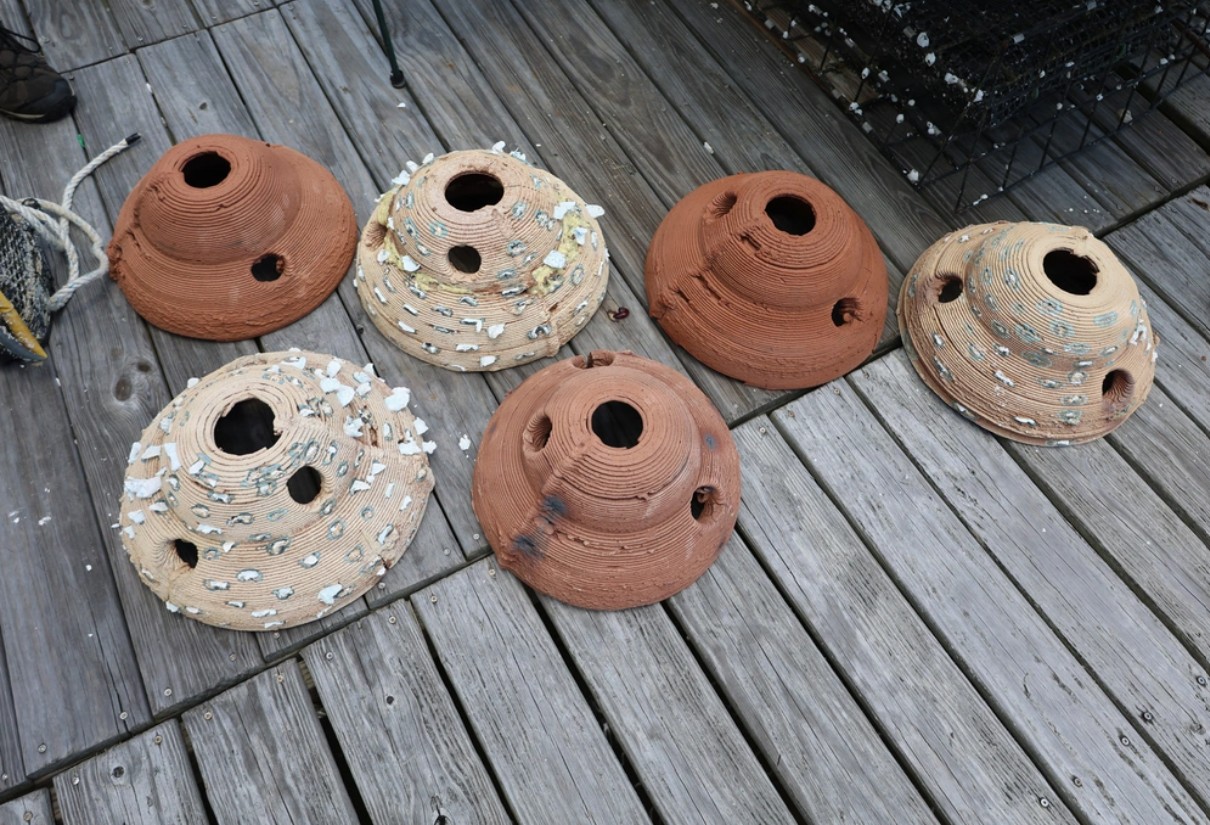
Researchers from ERDC’s Environmental Laboratory (EL) collected sediment from the Blakeley Island Confined Disposal Facility (CDF) to fabricate the 3D-printed structures. The team developed a specialized, printable sediment-based mixture to produce domes featuring varied surfaces, openings, and internal geometries intended to provide a stable substrate and habitat complexity.
Early deployments of the oyster domes are showing highly promising results. The nature-inspired structures are successfully attracting barnacles and oysters, adding immediate ecological value to the coastline.
The implications of this research extend far beyond Mobile Bay. Recognizing the myriad benefits of oysters and the success of these resilient designs, USACE is in the final stages of publishing a nationalEngineering Practice Guide for Oyster Reefs. This upcoming publication underscores that nature-based coastal engineering is of critical national interest.
*We curate insights that matter to help you grow in your AM journey. Receive them once a week, straight to your inbox. Subscribe to our weekly newsletter.