The development of new materials with unique post-processing requirements
We’ve always been the first to praise manufacturing approaches that focus on perfecting post-processing stages. For years, we’ve reminded the industry that this step, which can account for up to 50% of total production time and cost, is what turns 3D-printed parts into reliable ones. Researchers at Cornell University recently reinforced that view, showing how a carefully tuned heat treatment can bring out the best in AM IN718 by removing unwanted phases and improving elongation without compromising strength. But what if we looked at it from another angle? What if we designed materials that didn’t need all this extra work in the first place?
Let’s be clear: this article does not aim to demonstrate that post-processing can be eliminated. In our view, this crucial stage of the manufacturing process remains irreplaceable or is at least, at some point, always necessary. However, with the growing range of materials being explored in AM, particularly refractory metals, there’s room to ease certain steps to make 3D printed parts production-ready more efficiently.
That step could be material development. The question is how and where?
So far, we’ve identified 3 different approaches to develop AM materials that require minimal post-processing:
- Design materials with “as-built” properties in mind in order to achieve desired mechanical and surface properties straight from the printer, reducing or even eliminating heat treatment or HIP.
- Develop surface-optimized materials that naturally yield smoother surfaces or low roughness after printing. These materials are engineered for stable melt pools, reducing spatter-induced surface defects that would normally require machining. GRCop-42, for example, is a high-conductivity, high-strength copper alloy suitable for high heat flux applications like rocket engine combustion devices. It achieves higher conductivity by dissipating heat faster.
- Fine-tune chemistry and process parameters simultaneously to “print the microstructure” you want. This means that alloys can be formulated so that strengthening precipitates form during the AM process itself (rather than via post-build aging).

“New materials are coming to market that look at new processing pathways, like 3D printing, as enablers instead of something to be “solved.” This is a change in mindset: the goal with alloy and process design becomes how to use new processes to create better outcomes, instead of just meeting the performance of traditional manufacturing pathways like casting.
An exemplary category showing this is the growing use of refractory metals, like our Molyclast™family of alloys and our in-development high-refractory steels. These are designed not just for printability (via advanced sintering), but for upgraded performance in environments where conventional alloys quickly degrade.
Traditional AM workflows rely heavily on HIPing and heat treatment to fix porosity, anisotropy, or weak microstructures. With these new classes, the processing window is even tighter, and those conventional post-processes often add cost without fully solving the problem. That’s why approaches like ours matter: by engineering alloys and processes together, we deliver high-density, high-performance parts in the as-sintered state. That not only opens up entirely new engineering potential, but also reduces or eliminates the need for costly and time-consuming post-processing, and combined with near-net shaping, can streamline the entire workflow,” Foundation Alloy CEO Jake Guglin explains.
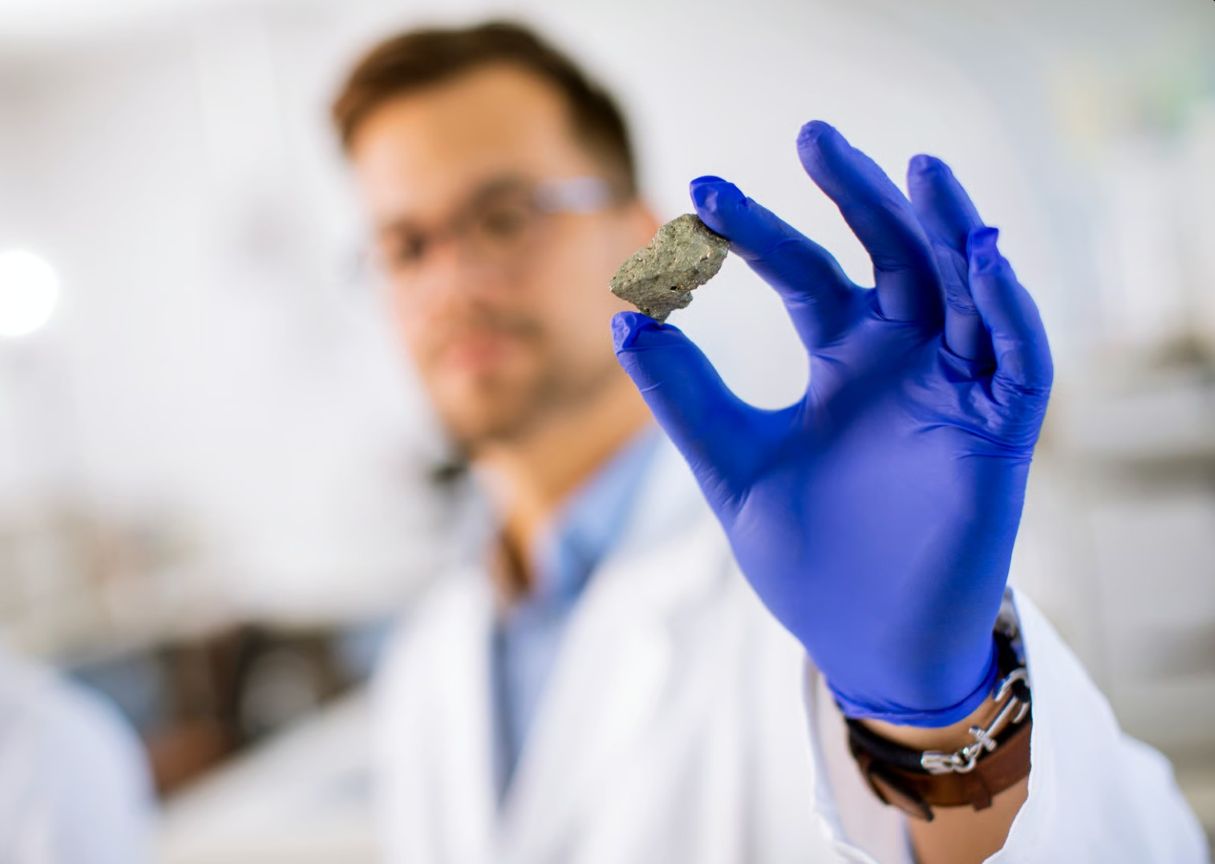
This MIT spinout is in the short list of material producers that have made refractory metals one of their core businesses. Although they are desired for extreme performance applications, refractory metals remain the least understood and difficult to process metals.
Refractory metals are often mixed with more common metals to give those metals some of the special properties of refractory metals. AM offers the opportunity to produce finished parts directly from refractory-based materials, allowing them to express their extraordinary properties, rather than relying on alloying them with more easily workable metals.
Foundation Alloy has cracked the code of refractory metal processing, and their secret lies in engineering new alloys and processes hand-in-hand.
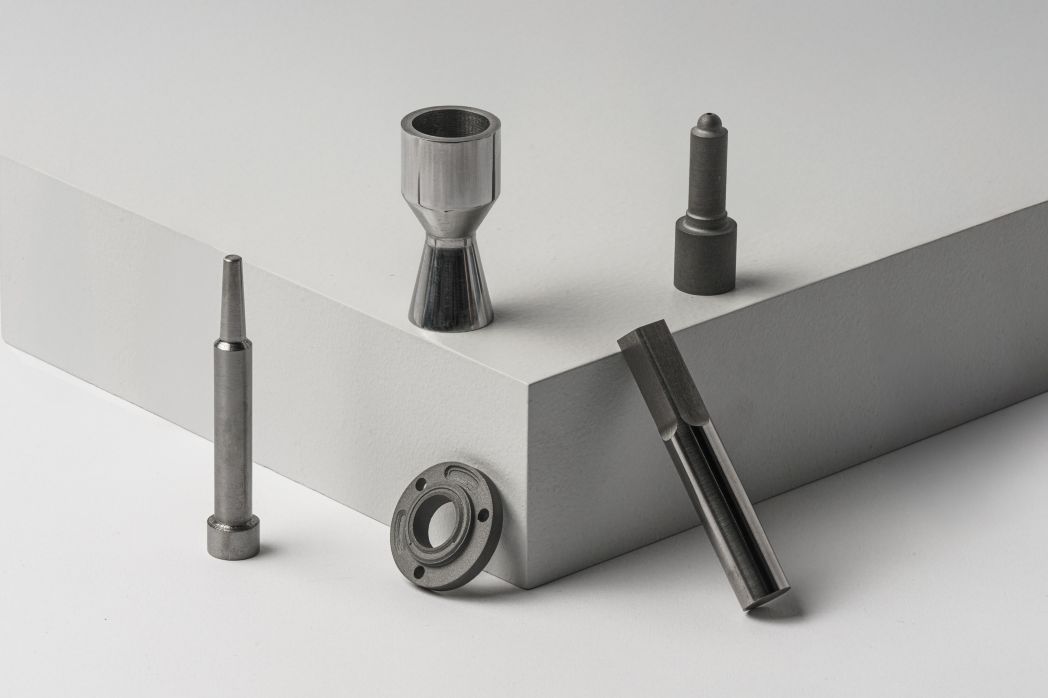
“Our alloys are engineered from the start to minimize downstream processing. In the as-sintered state, materials made with our proprietary MetalsFIRST™ process reach 98%+ density with fully tailored microstructures, so we don’t have to rely on secondary treatments like heat-treating or HIPing. For example, Molyclast™ MC700 is isotropic straight out of the furnace, without requiring hydrogen or high-vacuum steps. And because we use powder metallurgy, we can deliver near-net-shape parts, which cuts down significantly on machining,” Guglin completes.
In general, in addition to their very high melting points (W ≈ 3,400 °C), which causes unstable melt pools, refractory metals also have limited flowability and high viscosity, which leads to porosity and internal defects. Additionally, their low ductility at room temperature and high thermal gradients during AM lead to residual stresses.
Interestingly, since parts made with Foundation Alloy’ materials come out of the furnace 98%+ dense, fully isotropic, and with fine, controlled microstructures, that eliminates porosity-driven failures and removes the need for post-process densification.
“For us, the expertise isn’t just in inventing compositions, it’s in engineering the entire chain from powder to finished part. We are proving that new high-performance metals can be both scalable and economical, both of which are necessary if the field is going to create the type of industrial technology wave that’s being promised. Impact requires parts to be in the field, driving change, and that’s where we’re pushing hardest”, Guglin states.
As more companies turn their attention to refractory metals, the big question is: which applications will truly make a mark on the global market and shake up the traditional refractory metals industry? Foundation Alloy is showing us what’s possible, but the real proof will come when we see parts in action. The most compelling applications won’t just illustrate the promise of materials that need minimal post-processing; they’ll show that with refractory metals, production-ready 3D printed parts can be made faster and more efficiently than ever before. This topic will be explored further in another article.
*This article has first been published in the 2025 September/October edition of 3D ADEPT Mag. Featured image: 3D ADEPT Media.