The novelty is the process chain.
After 34 months, HÖRMANN Vehicle Engineering (HVE) and its consortium partners have completed 3D-FiberTrain, a research project targeting the tool-free production of large-format, heavily loaded outer skin components for rail vehicles.
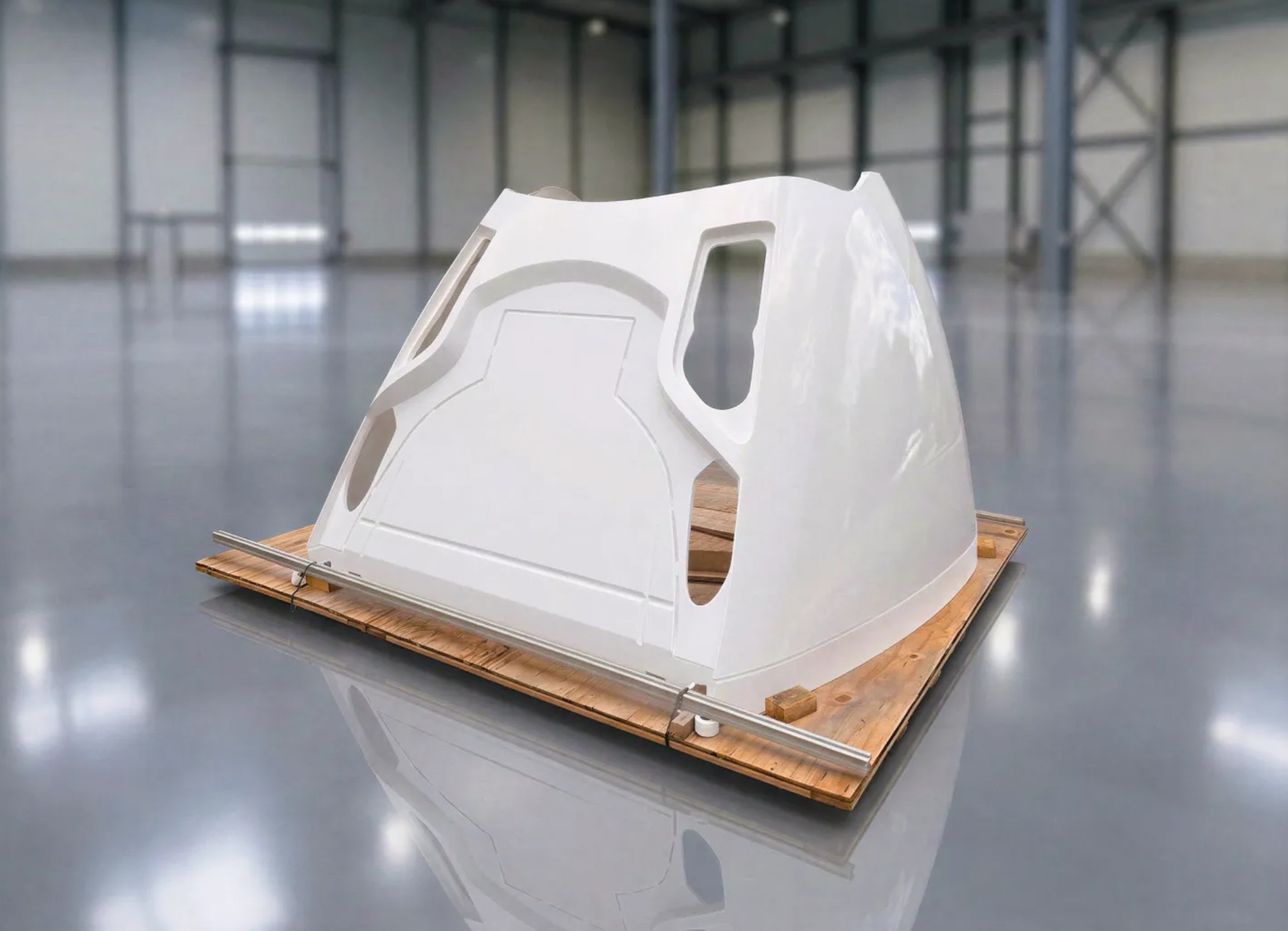
The engineering company specializing in the development process chain of rail, road, and special vehicles, chose as demonstrators the nose and front skirt of Siemens Mobility’s Velaro MultiSystem high-speed train (the ICE 3neo, Class 408), a platform rated for operating speeds up to 320 km/h.
Those components are currently produced using thermoset fiber-reinforced composites, via hand lay-up or vacuum infusion. According to HVE, the familiar constraints of process include high tooling costs, long production times, heavy manual labor, and materials that are difficult to recycle.
The consortium’s alternative combines three stages:
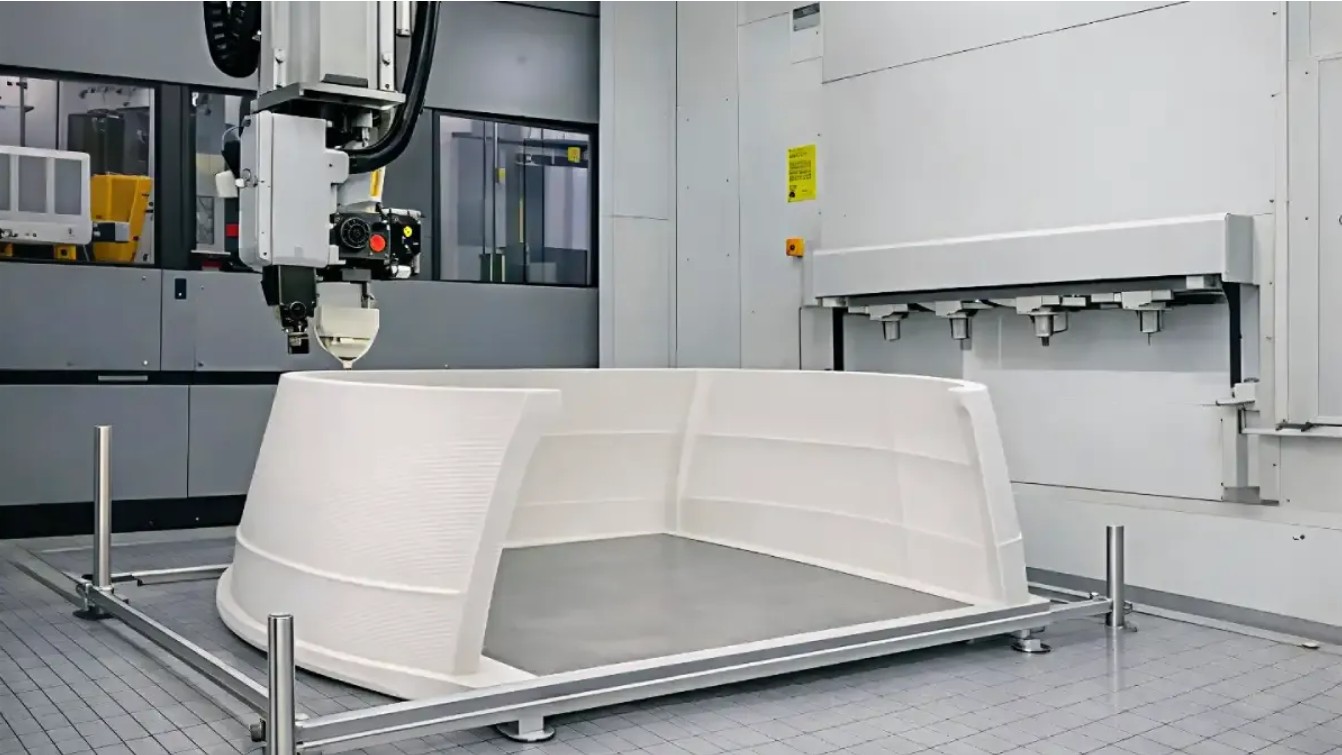
- Granulate-fed large-format extrusion prints the complex geometry without dedicated molds.
- A newly developed 3D tape-laying process then adds continuous fiber reinforcement along load paths, targeting high-stress areas only.
- Automated milling closes the chain, delivering dimensional accuracy and surface quality.
Since the chain is entirely thermoplastic, the consortium states it is fully recyclable.
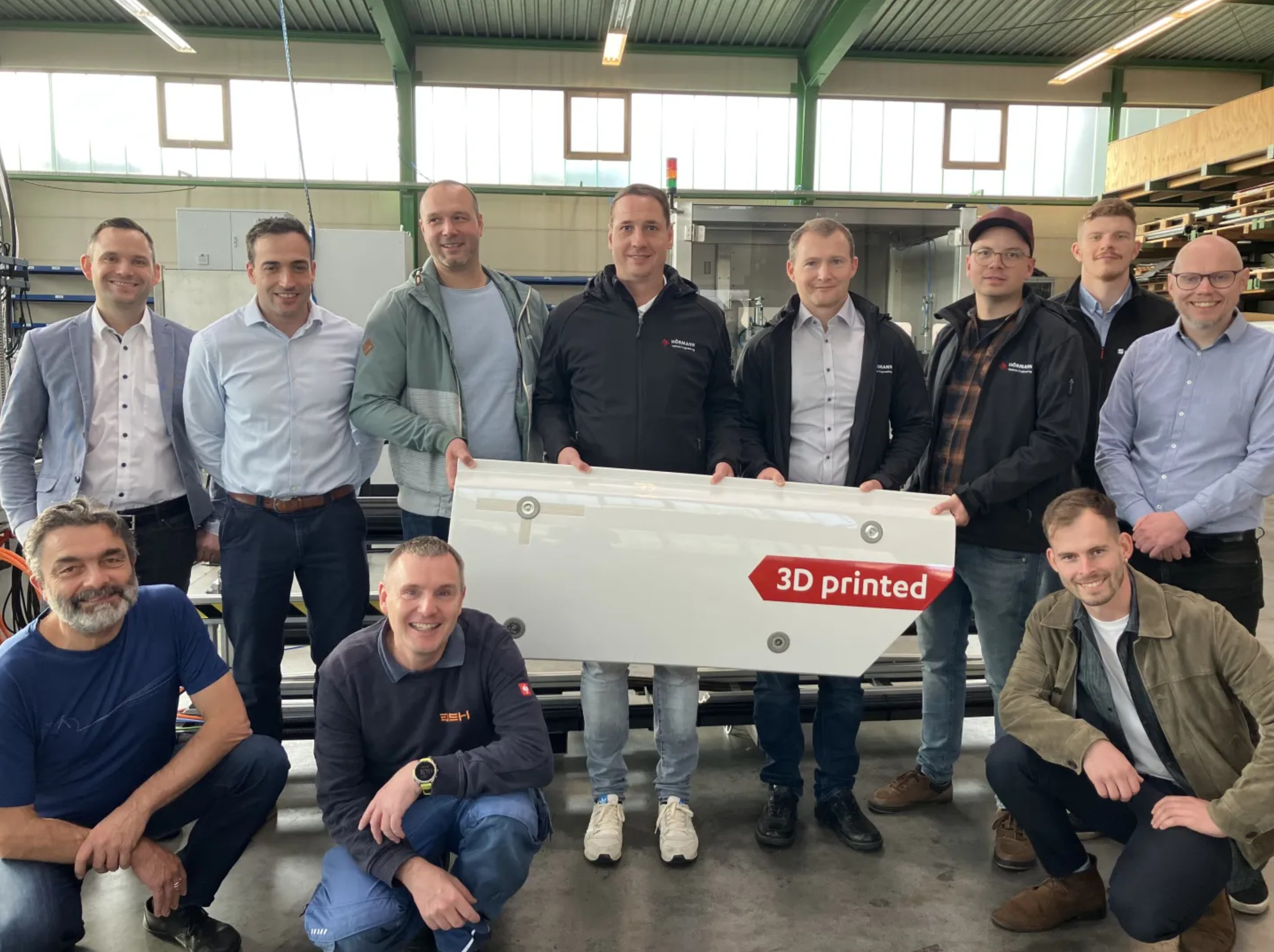
HVE led the project and defined requirements, design specification and structural validation, working with Fraunhofer IWU (Upper Lusatia Plastics Center, Zittau), Fraunhofer IMWS (Schkopau), Lakowa GmbH (Wilthen), and Siemens Mobility as associated partner.
The project ran from September 2023 to June 2026 under grant 19I23008A, funded by the German Federal Ministry for Economic Affairs and Energy with EU support. HVE reports lower manufacturing costs for small and medium series, shorter lead times, a reduced carbon footprint and faster design iteration.
A number of exterior rail parts have already been additively manufactured. As we reported in 2020, Siemens Mobility was already printing front casing parts for streetcars through its Easy Sparovation program, while DB ESG and Angel Trains trialled ULTEM 9085 interior parts on UK passenger trains.
Since then, we have witnessed other applications and developments made specifically for this field: Eplus3D braking discs (2022), SABIC’s rail-compliant materials (2022), and Hitachi Rail’s spare parts work with Roboze (2024).
Unlike other applications in the field that are mainly small, filament-based and largely non-structural, the combination of extrusion, continuous-fiber reinforcement and machining to manufacture 3D-FiberTrain make the case for a hybrid manufacturing approach in the railway industry.
That said, rail exterior parts must satisfy EN 45545 fire, smoke and toxicity requirements alongside structural approval. Until that evidence is public, 3D-FiberTrain just remains a validated process chain.
Images: Fraunhofer IWU, HÖRMANN Vehicle Engineering GmbH
* We curate insights that matter to help you grow in your AM journey. Receive them once a week, straight to your inbox. Subscribe to our weekly newsletter.