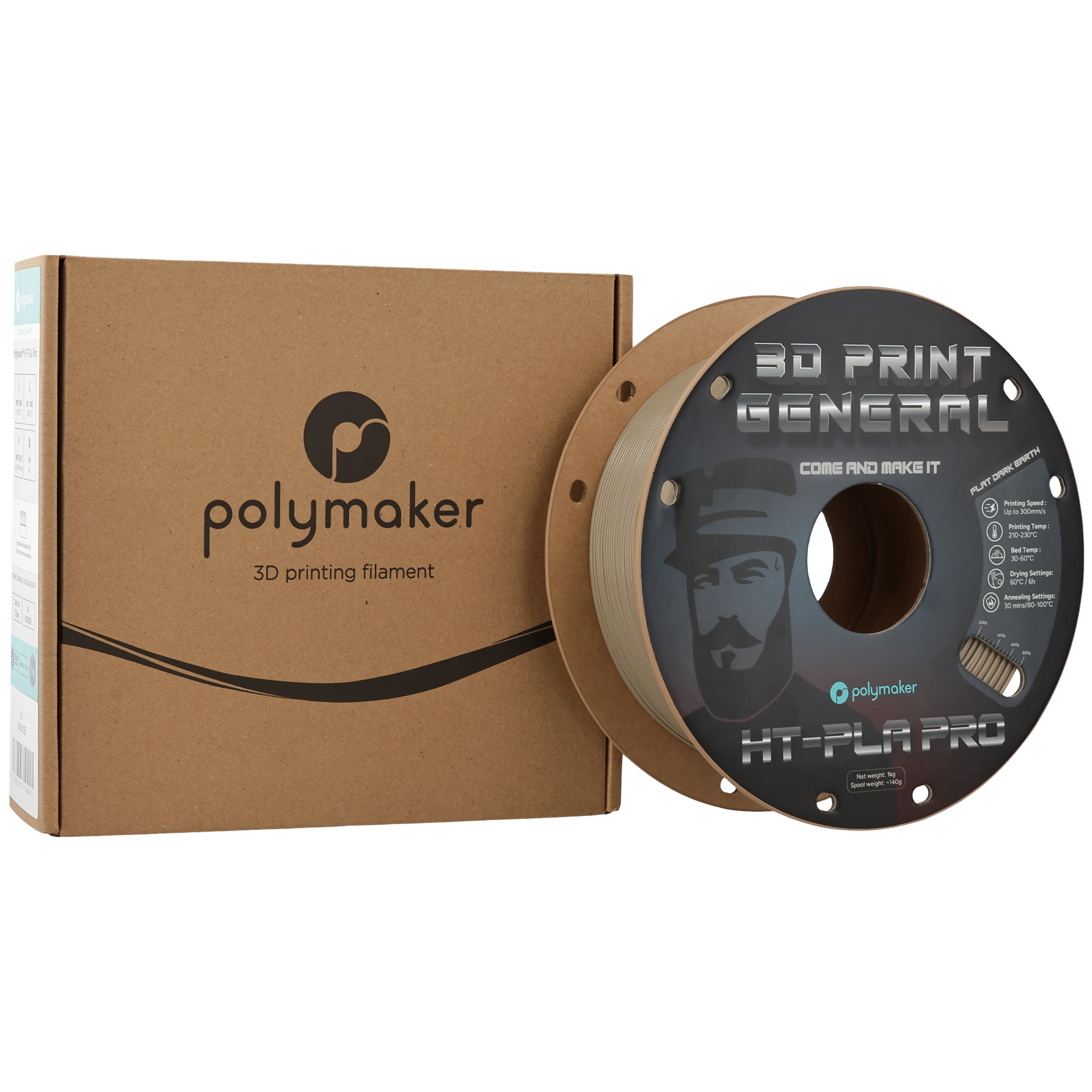
Material producer Polymaker has released a tougher, heat-stable PLA engineered to address the brittleness and poor layer adhesion that have traditionally limited high-temperature PLA applications.
Named HT-PLA Pro, the new filament would offer more than twice the notched Charpy impact strength at 9.94 kJ/m² versus 4.94 kJ/m², compared with standard HT-PLA.
It would also help achieve approximately 30% stronger layer adhesion through improved Z-tensile strength (rising from 20.8 MPa to 26.8 MPa).
The material maintains the thermal performance expected from the HT-PLA family. Its Vicat softening temperature is 148.3°C as printed and 150.5°C after annealing, measured to ISO 306. After a 30-minute anneal at 100°C, HT-PLA Pro achieves a heat deflection temperature of 107.6°C at 0.45 MPa, measured to ISO 75.
HT-PLA Pro requires no special handling. It prints on standard FDM printers without an enclosure or hardened nozzle, uses conventional PLA settings (230°C nozzle temperature, 25-65°C build plate temperature), and is validated for print speeds up to 300 mm/s. The material launches in 18 colours at an MSRP of €25.99 / $25.99.
 “HT-PLA Pro gives makers, print farms and functional-part users a stronger, more dependable HT-PLA option without adding complexity to their workflow,” said Maarten Bosters, Product Marketing Manager at Polymaker. “It combines a substantial toughness upgrade with the easy printing and heat stability that customers value from the HT-PLA range.”
The company also specifies that the material’s 150°C Vicat figure describes shape retention off plate and without load. It is not certified for loaded automotive underhood or engine-bay applications, nor for food-contact or medical use.
With this launch, we can clearly see how Polymaker aims to address specific production constraints encountered with FDM. The same strategy was seen in 2023 with the launch of PolySonic PLA which targeted the high-speed FDM segment by optimizing extrusion window, flow rate, and mechanical property retention at elevated printing speeds.
In this specific case, rather than enabling speed, the new material enables performance under thermal load by attacking a known material weakness. The 30% improvement in layer adhesion and 2x increase in impact strength indicate engineering focused on durability.
By eliminating the need for enclosures or specialty nozzles, Polymaker is targeting the broad installed base of standard FDM users who want heat-stable parts without workflow friction. This pragmatism suggests the company recognizes that performance gains mean little without path-to-production adoption.
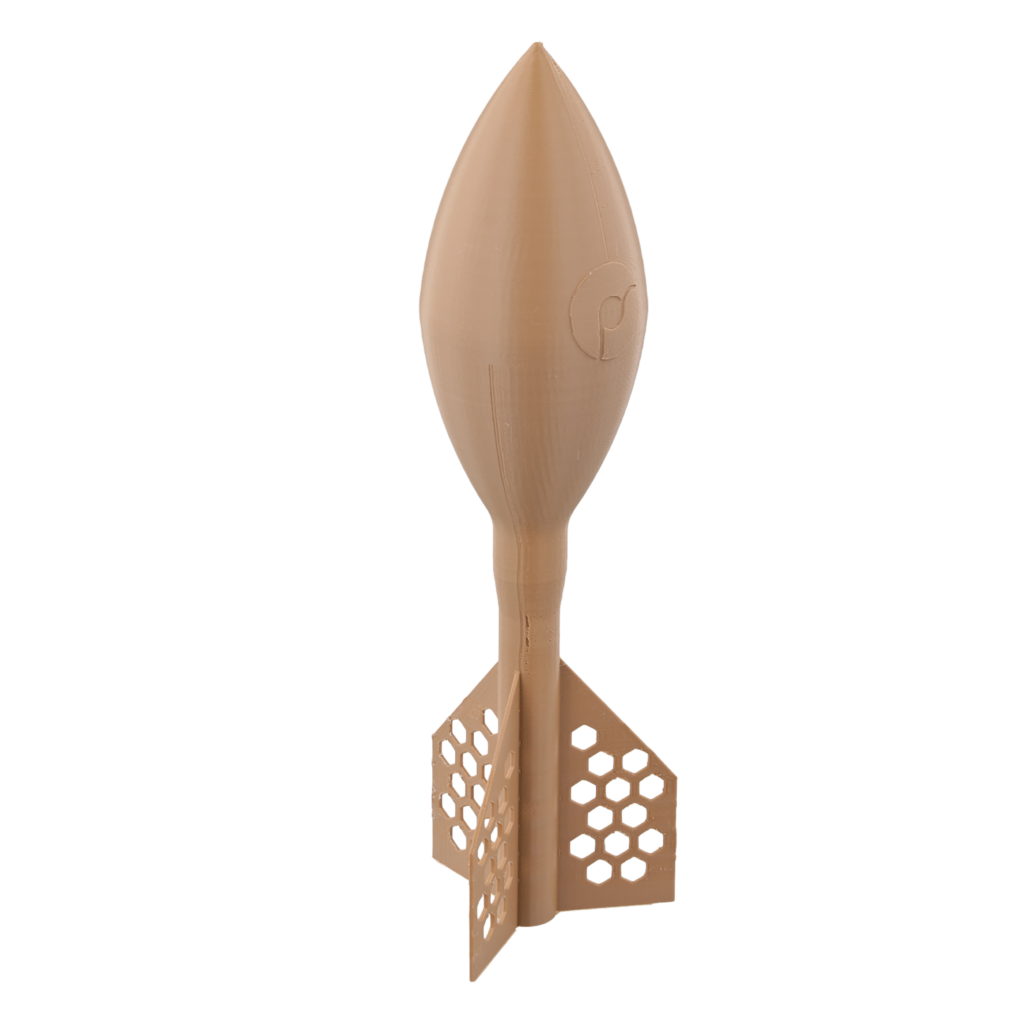
Functional parts users can achieve with this material include tooling, jigs, fixtures operating in moderate heat environments.
*We curate insights that matter to help you grow in your AM journey. Receive them once a week, straight to your inbox. Subscribe to our weekly newsletter