

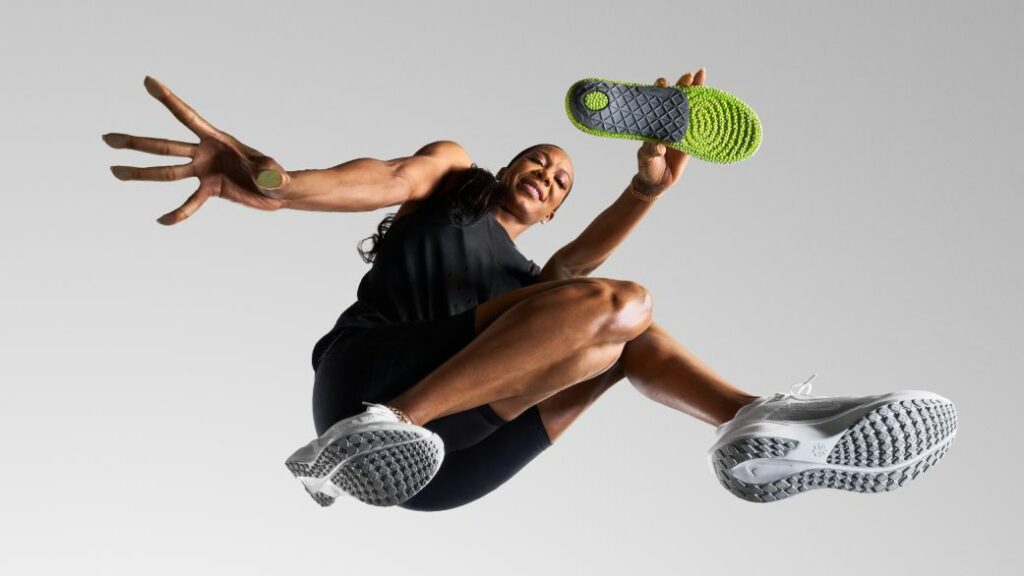
Superfeet, the expert in high-performance insoles, has extended its proprietary ME3D platform with a mobile scanning experience that lets consumers generate high-precision, 3D-printed personalized insoles directly from an iPhone.
The good news (and that is for people who are annoyed with new applications they need to download to benefit from a service) is that the mobile scanning is launched from superfeet.com with no standalone app to download. The feature runs on an iPhone 13 or newer with iOS 26, and sits alongside the in-store scanning still offered through specialty run retailers.
The process is driven by a proprietary algorithm built on podiatric data and biomechanical research. After a guided scan, users can review their foot profile, including shoe size and arch height, preview a 3D rendering of their insoles, choose between two SuperRev foam options, and add custom engraving to the heel.
The biometric data is then sent to Superfeet’s 3D-printing facility in Bellingham, Washington, where each pair is produced to the wearer’s exact measurements, pairing a precision-printed support cap with a stability lattice that scales in thickness according to body mass.
“This evolution allows us to deliver a level of individualized engineering that was once only possible through specialized in-person experiences, unlocking access to our most advanced one-of-one custom technology,” said Superfeet CEO Trip Randall. “By putting this power into the hands of consumers, we ensure that whether you are at home or on the go, the highest standard of personalized support is just a few clicks away.“
Superfeet’s additive journey for the better part of a decade has always focused on personalization. This was reflected through the company’s collaboration with Brooks Running in 2017, its Flowbuilt mass-customisation facility in 2018, and its HP and New Balance collaboration in 2020. Personalization leaned heavily on HP’s FitStation scanning hardware, brand partnerships and dedicated infrastructure.
The ME3D mobile moved the capture step onto a device most consumers already own, thereby removing a barrier to direct-to-consumer custom AM. The only thing we wonder now is whether production can scale reliably enough to meet demand without compromising the fit that justifies the premium.
*We curate insights that matter to help you grow in your AM journey. Receive them once a week, straight to your inbox. Subscribe to our weekly newsletter
THE 3D ADEPT WEEKLY NEWSLETTER
The industry moves fast. Stay ahead.
Every week, the latest additive manufacturing news, in-depth features and real-world applications, straight to your inbox. Plus, be the first to know when a new issue of 3D ADEPT Mag is out.
Free · One email a week · Unsubscribe anytime
Clicking loads our email provider’s sign-up form, including its analytics and Google’s anti-bot protection. You’re only subscribed if you complete the sign-up. Read our privacy policy.