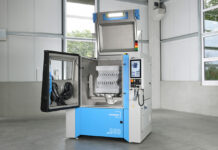
Research institute Fraunhofer IMWS joins forces with SLV Halle GmbH, the IKTR (Institute for Plastics Technology & Recycling e.V.), and studio.201 software GmbH to show how sensors can make granule-based 3D printing reliable enough for rail spare parts in the “AddiQ” project.
To do so, the team has developed a quality assurance solution that can be used during the manufacturing process. The solution requires the use of sensors, automated nozzle evaluation, and test specimen concepts to link process data with component properties.
Laying the foundation for more cost-effective and traceable manufacturing processes: the case of rail spare parts
Rail vehicles are often in service for several decades. However, individual components such as seat shells, trim panels, or exterior parts wear out sooner.
For Fused Granulate Fabrication (FGF) 3D printing to support the availability of such replacement parts reliably, the German consortium’s approach supplements the established testing of finished components with data directly from the printing process. This allows deviations to be detected earlier; at the same time, it lays the groundwork for more targeted process control and predictive maintenance.
To this end, Fraunhofer IMWS equipped a Yizumi granulate printer with sensors to measure acceleration, ambient temperature, granulate temperature and humidity, melt pressure, and the mass on the build platform.
All these parameters influence layer adhesion, geometry, and mechanical properties. The challenge, therefore, was not merely to collect process data. The key was to reliably link measured values to the resulting component quality using appropriate testing concepts.
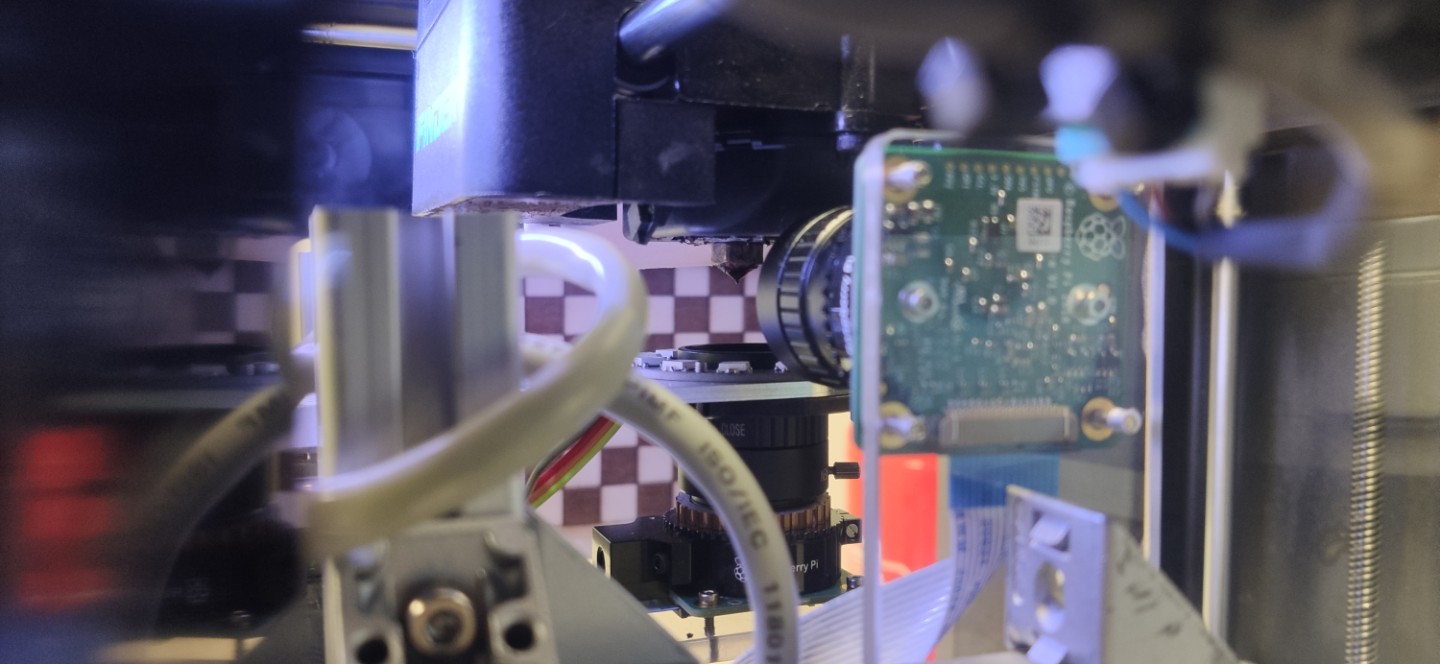
In addition, the team developed a retrofittable retract system and an automated image analysis system for printer nozzles. These tools enable the detection of wear and allow for better estimation of future maintenance needs.
“Based on our results, manufacturers of materials and components – as well as machine manufacturers – can learn about methods for evaluating the quality of 3D-printed components, test their own materials, and produce reference prints,” says Thomas Wagner, who led the subproject at Fraunhofer IMWS.
A 500-millimeter-long ICE front apron, scaled down to 38 percent of its original size, served as a demonstrator. The original component measures 1,300 millimeters and exceeds the build volume of the printing system used.
The results show how sensor technology and testing methods can be applied to other large-format replacement parts for rail vehicles in the future. The next step is to work with industry partners to apply the developed methods to specific customer components and qualify them for their respective applications.
*We curate insights that matter to help you grow in your AM journey. Receive them once a week, straight to your inbox. Subscribe to our weekly newsletter.