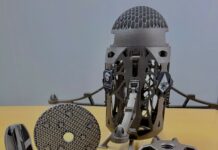
The diversity of perspectives shared at EFHAM 2025 further reinforced something I find myself returning to often: that advancing modern medicine, and in this case, the adoption of additive manufacturing, requires learning from those who are already doing the hard work of making it real.
Among the leaders whose insights stayed with me was Dr. Mark Tan, Radiologist and Clinical Lead of the Singapore General Hospital (SGH) 3D Printing Centre. His trajectory speaks for itself. He sharpened his practice at some of the most respected institutions in the field: clinical 3D printing at the Department of Radiology, Stanford University; the Anatomic Modelling Laboratories at Mayo Clinic; and a fellowship in clinical additive manufacturing at the University of Basel Hospital in Switzerland. To me, these are not names dropped for prestige, they represent a deliberate, disciplined approach to craft.
It is easy to glamorize AM when the surgeon’s work is made visible through the patient on the table. But to get there, several steps need to be taken and most of them happen far from the spotlight. As a Radiologist and Clinical Lead, Dr. Tan operates at that less visible intersection, coordinating across teams to improve overall clinical care. It is work that is still underrated. Or perhaps more accurately: equally deserving of the spotlight.
Our conversation explores the impact of Virtual Surgical Planning and Clinical 3D Printing (VSP-C3DP) at SGH, and more importantly, the workflow, quality standards, and operational maturity that make that impact possible.
The impact of Virtual Surgical Planning and Clinical 3D Printing (VSP-C3DP)
When asked where 3D printing has had the clearest, measurable clinical impact at SGH, Tan directly talked about Virtual Surgical Planning and Clinical 3D Printing (VSP-C3DP).
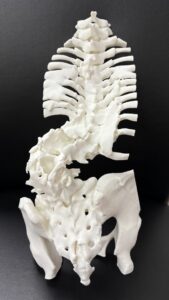
At its core, VSP-C3DP allows surgical operations to be simulated before a patient ever enters the operating room. It also allows patient-specific anatomical models, surgical guides, and implants to be developed and produced from medical imaging using AM methods.
What makes it clinically significant, and operationally demanding, is what sits behind it. As Tan explains, it requires multiple disciplines to work in concert: clinical care, radiology, design engineering, and manufacturing, each integrating their respective expertise into a single end-to-end system.
At SGH, that infrastructure has translated into measurable impact across several areas of care, improving treatment efficacy, efficiency, and service delivery. But one field stands out: Reconstructive and Regenerative Surgery.
The reason is that VSP-C3DP enables treatment outcomes in this field that were previously difficult or impossible to achieve consistently. Tan points to concrete examples: “the resection of osseous tumours with clear surgical margins, the precise realignment of mal-aligned joints to prevent the progression of early osteoarthritis, and the performance of complex otological surgeries.”
All of this is made possible through pre-operative planning grounded in patient-specific imaging. Beyond planning, VSP-C3DP also improves the fit and biomedical characteristics of patient-specific implants, enabled by custom design and the use of high-performance metal, thermoplastic, and bioresorbable materials produced through AM.
Then there are the cases that exceeded expectations. When asked about surprising applications, Tan pointed to complex hand and upper and lower limb fracture malunion reconstruction — surgeries that require precise osteotomies at specific locations, orientations, and angles, alongside custom implant sizing and positioning to restore anatomical structure and function. “The use of VSP-C3DP in this domain has surpassed initial expectations,” he notes, and has since positioned SGH as a national centre of excellence for these complex procedures.
Workflow, quality & operational maturity
For me, assessing the impact of such a service means looking closely at the infrastructure that sustains it. The Radiologist and Clinical Lead explains:
Radiologist and Clinical Lead of the Singapore General Hospital (SGH)
3D Printing Centre
“SGH conducts VSP-C3DP development and production processes in-house and/or in partnership with industry. This allows the hospital to achieve objectives such as the development of pre-operative surgical plans derived from medical imaging, as well as the rapid and accurate design and production in-house and/or in partnership with industry patient-specific surgical guides and implants from medical imaging. In this, the deep domain and subject matter expertise in this domain developed and sustained within the healthcare facility is utilised and directed towards these objectives.
Regarding in-house processes, we see the development and production of virtual and physical anatomical models as well as medical devices both as an extension of, as well as a function of the hospital working in support of, clinical services and patient care. The general workflow of VSP-C3DP, involving functions of patient-specific medical imaging acquisition and post-processing, and of engineering design and production, as well as the quality assurance and quality management system (QA-QMS) within which this workflow operates, are thus designed in line with national regulations governing the clinical services of and the production of medical devices by the healthcare facility.
Aligned to this, medical imaging functions are performed by specialized and registered medical personnel (radiological technologists and radiologists) using specialised imaging and segmentation software approved by national regulations. Anatomical models and medical device development is performed by in-house design, quality management and production engineers, in close consultation and in consensus with clinicians and imaging specialists, in line with supplier, design, production, delivery and process controls as well as the essential principles detailed by national regulations for the safety and performance of medical devices, as well as in adherence to process and part verification and validation protocols. The requisite post market controls for the use of these devices is also formulated and instituted.
In terms of AM equipment, SGH currently employs general and specialized Fused Filament Fabrication (FFF) and inverted vat polymerisation AM printers and has access to Selective Laser Sintering (SLS) and Material Jetting printers if required. SGH also continues to explore the incorporation of Virtual Reality (VR)/Augmented Reality (AR) systems for treatment visualisation and planning.”
We learn through this governance model that SGH has built a VSP-C3DP operation in which every step of the workflow, from imaging acquisition to device delivery, is designed around regulatory compliance and clinical accountability.
Specialized and registered medical personnel handle imaging functions. Engineers work in close consultation with clinicians and imaging specialists. With quality assurance embedded throughout, this infrastructure reflects a deliberate choice to treat point-of-care manufacturing as a clinical function subject to the same standards as any other medical service.
Producing in-house versus outsourcing
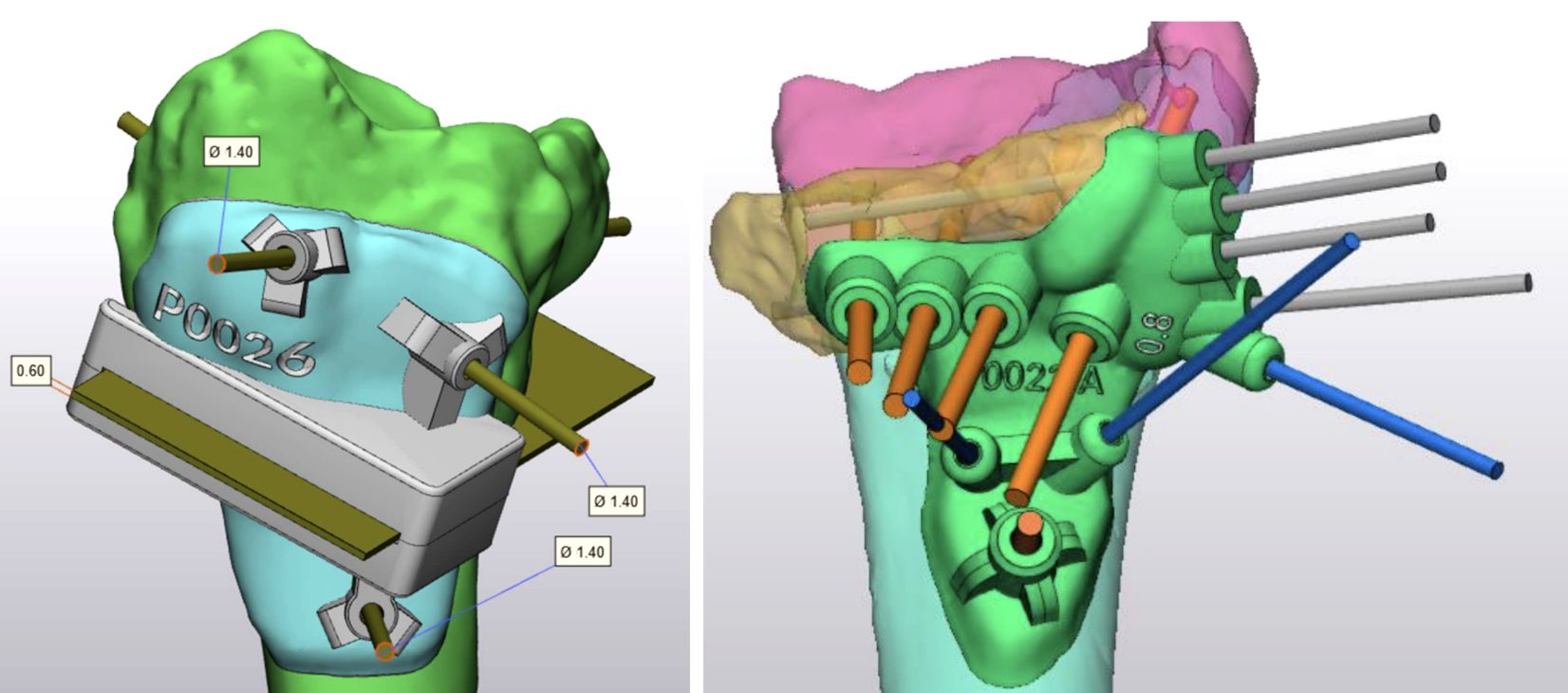
The question of what to produce in-house versus what to outsource follows that same logic. Tan’s position is clear: both models have legitimate and complementary roles, and the decision should be driven by operational need rather than ideology.
In-house production makes the most sense when speed, customization, and tight clinical integration are paramount, when a surgical guide needs to be developed bespoke, in low volumes, in close dialogue with the surgeon and imaging specialist.
Outsourcing becomes the more appropriate choice when economies of scale matter, when volumes exceed what the facility can sustain cost-effectively, or when the manufacturing technique required is too specialised to maintain internally. It is a pragmatic framework, and one that resists the tendency to frame point-of-care manufacturing as inherently superior to industry partnership.
Evaluation of new technologies entering the workflow
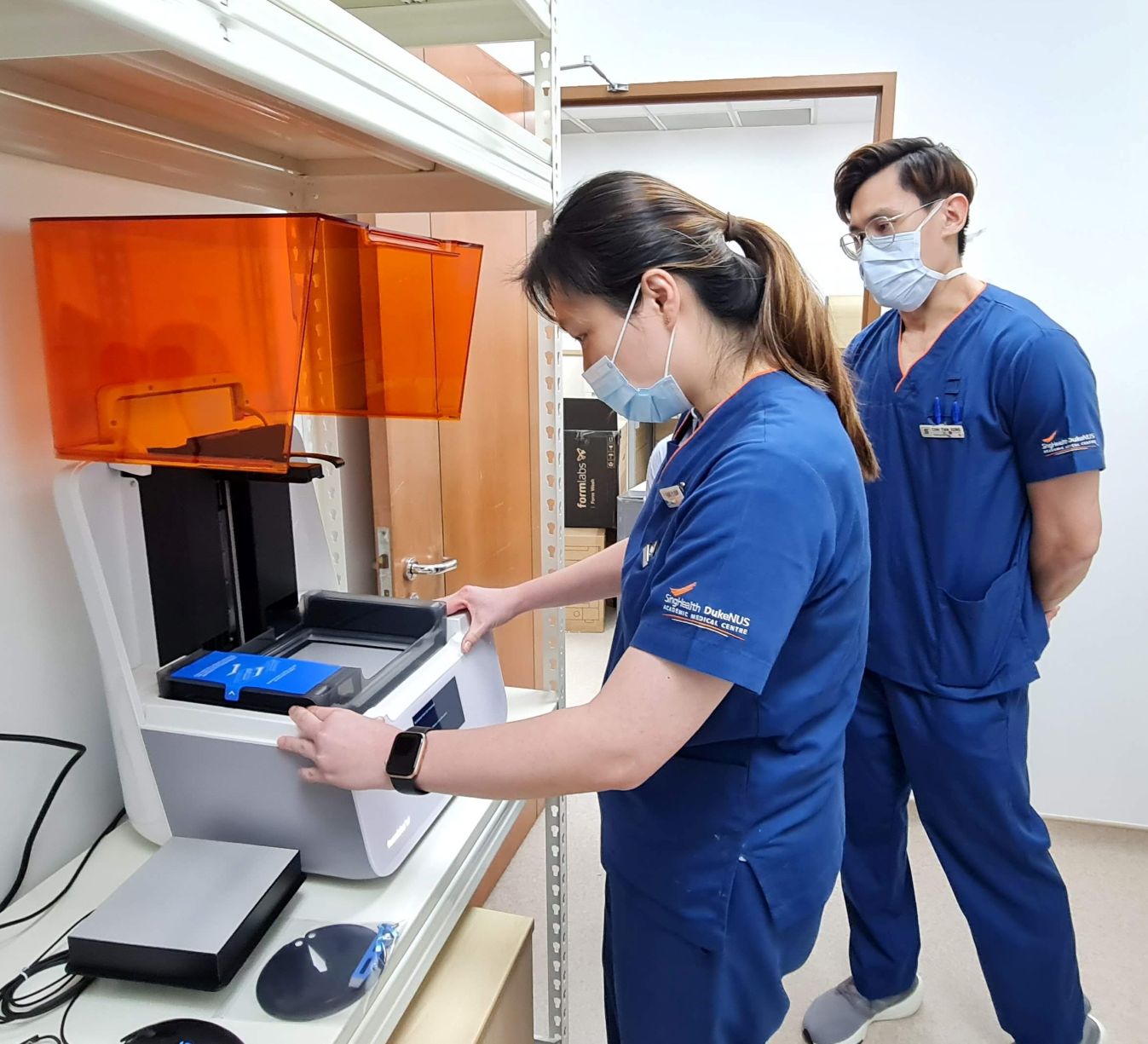 The same rigour applies to how new technologies enter the workflow. Tan’s approach to evaluation sits at the intersection of medical ethics, engineering principles, and financial stewardship. And we are not surprised to see that here, the order matters.
The starting point is always the patient: does the technology deliver a clear benefit, and does it do so safely? From there, the assessment broadens to consider whether there is precedent for its deployment, what barriers exist to integration, and whether it reduces complexity or risk in ways that go beyond purely economic metrics — surgical ergonomics, reduced blood loss, team confidence. Only then does the financial case comes into place, with benefit weighed against the real cost of establishing and sustaining a service line.
This assessment of clinical AM adoption is neither technology-first nor cost-first. It is outcomes-first and sustained by the kind of cross-disciplinary network-building and continuous learning that Tan himself has modelled throughout his career.
Learning from across the field
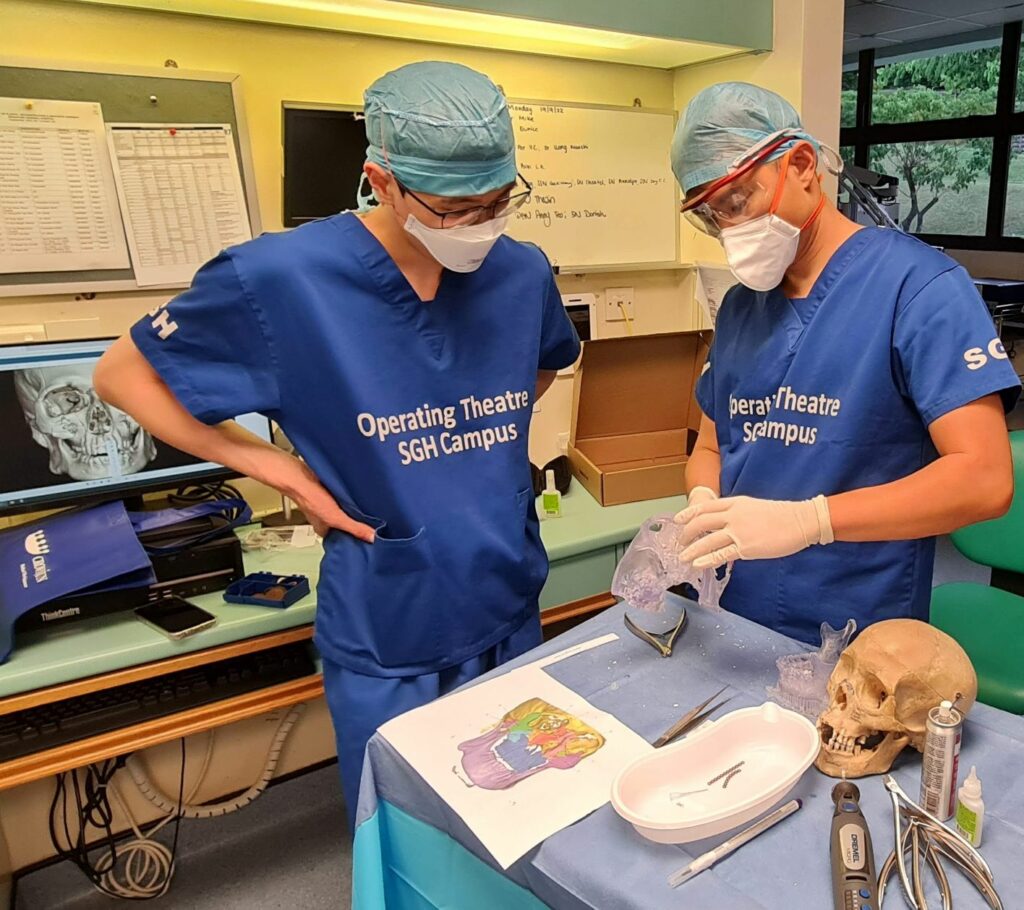 Before we wrapped up, I wanted to know what Tan himself took away from the European exchange and what he thought could travel in the other direction.
Rather than defaulting to a comparison of infrastructure or regulation, he pointed to something less tangible but more durable: shared instincts. Both ecosystems, he observed, place emphasis on capability and talent development, on community and consensus building, on strong academic-industrial linkages that translate into market creation.
The difference, perhaps, is one of circumstance. Singapore’s position as a small, globally connected nation, what Tan describes as “a coral reef of the global commons where the cultures of the world meet”, has sharpened a particular focus on these qualities out of necessity. Human capital is the country’s only resource.
It is a generous reading of the global AM landscape, and a useful one. Not a competition between models, but an argument for continued cross-regional dialogue as a mechanism for advancing the field as a whole.
And when asked what failure had taught him the most about building a point-of-care program, Tan’s answer was notably forward-facing. He recalled the ongoing demands of the discipline itself: “There is much work to be done in developing VSP-C3DP products and services whether in-house or industry-led, with key skills to work on for practitioners in the field including keeping one’s knowledge bank current and relevant in this dynamic and multi-disciplinary field, inspiring technological possibilities to solve meaningful problems, building mutually beneficial collaborations — aided by the existing and emerging social, media and conference platforms in VSP-C3DP and AM that build knowledge exchange, networks and common community,” he concludes.
*This interview has first been published in the March/April edition of 3D ADEPT Mag. All images: courtesy of Singapore General Hospital (SGH) 3D Printing Centre.