

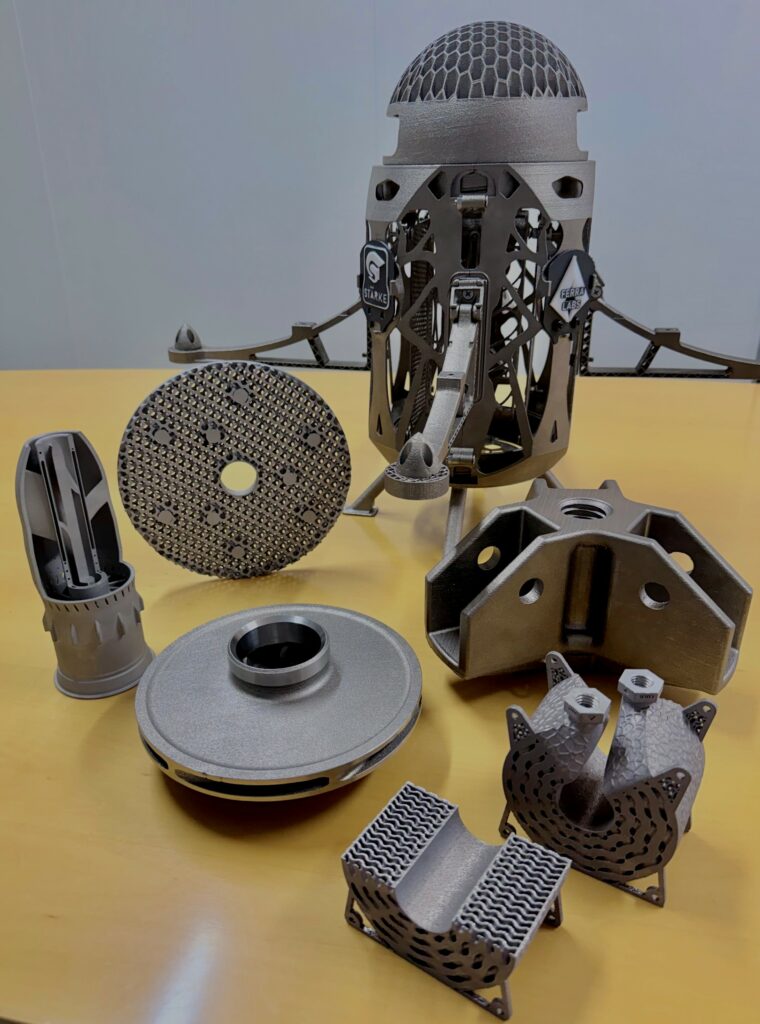
A new $2.7 million industry-led project will help establish the sovereign capability Australia needs to manufacture critical metal components for defense, maritime and medical applications.
Stärke-AMG and Flinders University lead the four-year initiative. It will develop manufacturing processes, qualification data and quality frameworks. Together, these will support production of certified metal additive manufactured components in Australia.
Adelaide University and Metal Powder Works are also part of the initiative. They will contribute specialist expertise in materials development, powder characterization and process optimization.
Closing the capability gap
The project addresses a key barrier to wider additive manufacturing adoption. It seeks to bridge the gap between prototype development and production of qualified components that meet industry requirements.
By closing this capability gap, the project will help establish local manufacturing capacity for advanced metal components. These will serve defence, maritime and medical applications. In turn, this will reduce reliance on overseas supply chains and support the growth of Australian industry.
For Stärke-AMG, the project marks a strategic step beyond prototyping and towards becoming a qualified manufacturing partner for high-value defence, maritime, space and healthcare markets.
Stärke-AMG CEO Al Jawhari said the project would help build the systems and technical evidence required to meet the demands of regulated industries.
Leading the research effort, Flinders University will develop material science, qualification methodologies and performance datasets. These will help researchers understand, validate and qualify advanced alloys for defence and medical applications.
Using three Renishaw AM400 systems, the project will establish production-ready pathways for a range of strategic alloys. These alloys serve defense, shipbuilding and medical technologies. The aim is therefore to create a pathway from prototype development to qualified production.
By project completion, the consortium aims to deliver qualified manufacturing workflows, certification-ready datasets and production demonstrators. These will support sovereign manufacturing capability and reduce reliance on imported components in the aforementioned strategic sectors.
THE 3D ADEPT WEEKLY NEWSLETTER
The industry moves fast. Stay ahead.
Every week, the latest additive manufacturing news, in-depth features and real-world applications, straight to your inbox. Plus, be the first to know when a new issue of 3D ADEPT Mag is out.
Free · One email a week · Unsubscribe anytime
Clicking loads our email provider’s sign-up form, including its analytics and Google’s anti-bot protection. You’re only subscribed if you complete the sign-up. Read our privacy policy.