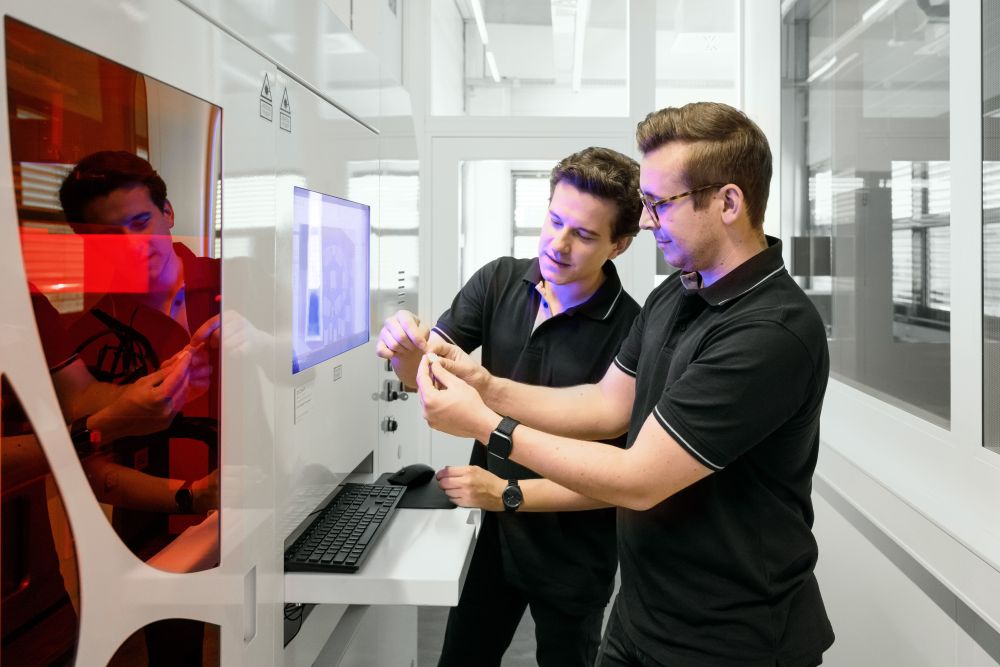
A closer look at space and semiconductor applications
Picture this: you’re at the beach with your family, proudly attempting to build the sandcastle, the kind with ambitious towers, heroic bridges, and at least one feature that defies gravity. It looks solid and the kids are impressed. For a moment, you believe you’ve nailed but beneath the surface, it’s just grains of sand with air trapped between them.
You could try everything: squeezing out the air, fusing the grains together, even shrinking the whole structure by 20%. Chances are the towers would slump, the walls would crack, and your architectural masterpiece would admit defeat. There you realize that despite its beautiful shape, the sandcastle was never truly solid to begin with.
This, in essence, is the central challenge of additively manufactured technical ceramics. The printed part is the sandcastle, a so-called green body. Sintering is the attempt to turn it into a brick. And densification is the make-or-break moment where pores must disappear, particles must fuse, and the part must shrink uniformly, without warping, cracking, or collapsing under its own ambition.
Why is densification such a persistent headache in ceramic additive manufacturing? In which AM processes does it pose the greatest challenge? And how are technology providers and manufacturers working to overcome it?
This dossier explores those questions, and why, in ceramic AM, making the shape is only half the battle.
The challenge is making the shape solid.
I’m pretty sure that those who once dubbed post-processing additive manufacturing’s “dirty little secret” never had densification in mind. And yet, for anyone working seriously with the additive manufacturing of technical ceramics, densification remains the ultimate headache.
While I agree with my friend Laura Griffiths that it’s time to retire the expression altogether, few situations illustrate the reality of ceramic AM better: operators are fighting the material at every step of the process chain, from powder to print to sintering. At this point, design freedom has already been won. Material integrity, however, is still very much up for negotiation.
The objective of this final stage is deceptively simple: during high-temperature sintering, porosity must be eliminated from the printed “green” body to achieve a dense, high-strength ceramic part. In practice, that objective is anything but trivial.

As Guy Zimmerman, CEO of XJet 3D, points out, densification is particularly critical for technical ceramics compared with metals or polymers in AM, because “ceramic materials possess extremely high melting points and covalent/ionic bonds that inherently resist diffusion. In additive manufacturing, achieving full densification is vital because ceramics are brittle by nature [which means] any residual porosity acts as a stress concentrator, catastrophically reducing the material’s inherent strength, thermal conductivity, and dielectric properties. Unlike metals, which can tolerate minor imperfections through plastic deformation, ceramics fail suddenly and completely when subjected to stress concentrations from incomplete densification.”
This fundamental sensitivity to porosity is also emphasized by Eric Louradour, Ceramic Engineer at 3DCeram, who notes that ceramics, unlike metals, “do not undergo plastic deformation when subjected to mechanical stress.” As a result, “even a very small amount of residual porosity can therefore act as a crack initiation site, leading to rapid and catastrophic crack propagation through the material.”
This sensitivity to defects is not limited to bulk porosity. As Malte Hartmann, development engineer at Sinto Advanced Ceramics Europe GmbH, further explains, “When subjected to heavy mechanical loads, ceramics show a different behavior, than metals or polymers. Ceramics show no amount of plastic deformation, therefore flaws in the microstructure (e.g. voids) or on the surface act as crack initiators. In turn, smooth surfaces and high density are significant quality criteria in ceramic manufacturing.”
In other words, in ceramic AM, densification is the moment when a promising shape either becomes a functional component or quietly returns to the category of well-designed but unusable parts.
In which AM processes does it pose the greatest challenge?
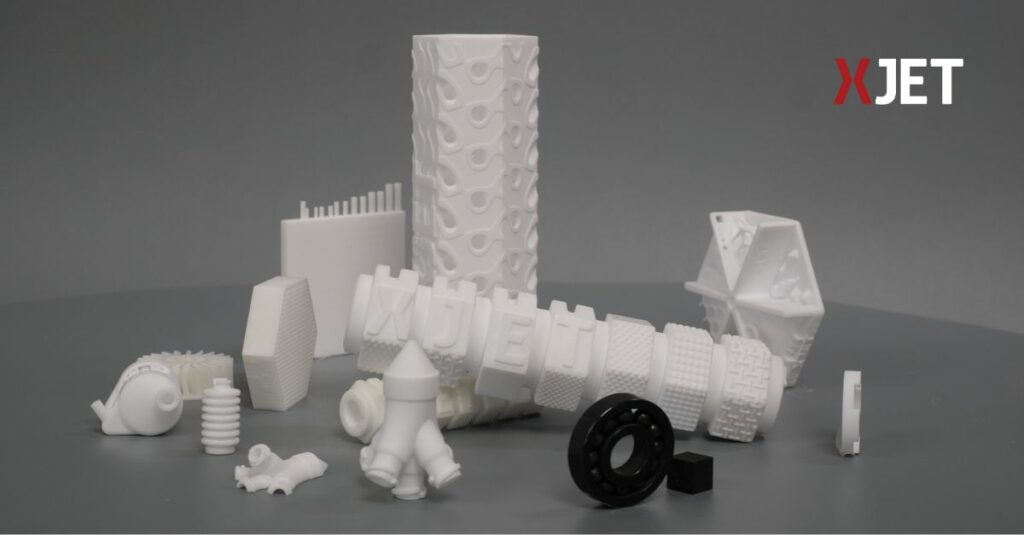
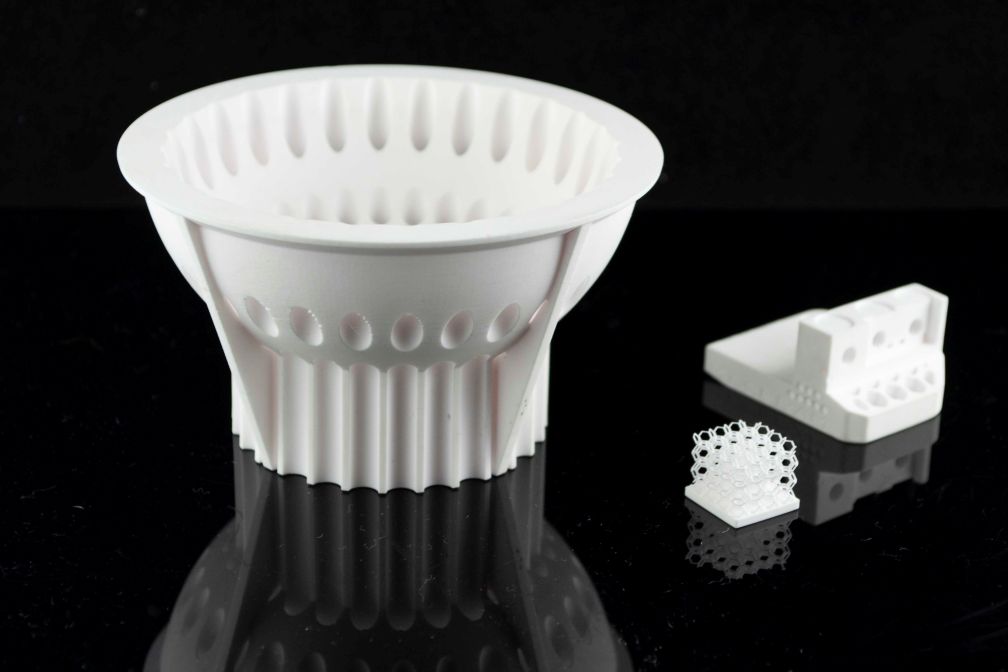
XJet high-density ceramic part collection
Based on our dossier “Ceramic 3D Printing: the current manufacturing landscape and the business model that drives industrial applications”, every additive manufacturing process used for technical ceramics faces densification challenges. However, the kind and severity of those challenges vary depending on the technology.
All the AM processes identified in the dossier (slurry-based Selective Laser Sintering, Binder Jetting (BJ), extrusion processes such as Fused Deposition Modeling/Robocasting, Direct Inkjet Printing (DIP) / Material Jetting, Stereolithography and VAT Photopolymerization (SLA, DLP, LCD, CLIP, LCM)) produce a ceramic green body that must be debindered and sintered to become dense and functional.
Where densification challenges occur largely depends on how the ceramic part starts its life.
From our understanding, in binder jetting, the issue is straightforward: low green density leads to high residual porosity after sintering, even when everything else goes right.
With slurry-based SLS and indirect powder bed fusion, the struggle shifts to shrinkage control: pores must be eliminated without the part cracking or losing its shape along the way.
In VAT photopolymerization processes, densification is undermined during binder burnout, where polymer removal introduces pores and differential shrinkage that make uniform densification difficult to achieve.
Extrusion-based processes such as FDM, robocasting, or DIW start with another handicap altogether: interlayer voids baked into the green body, meaning sintering must work overtime to compensate for high initial porosity.
And in material jetting, the problem starts with the droplets: because jettable inks can’t carry much solid content, the particles don’t pack well, which limits the final density.
Our experts differ in their views on which ceramic AM failure modes are most directly tied to insufficient densification. That’s not surprising, given that they work with different AM processes to produce dense ceramic parts.
Louradour provides a process-agnostic view of these failure modes, stressing that residual porosity remains the dominant risk factor. He explains that “residual porosity resulting from poor particle packing acts as a strong local stress concentrator, significantly reducing mechanical strength and reliability.” Beyond volumetric porosity, he highlights that incomplete sintering can leave interlayer regions mechanically weak, leading to “interfacial failure modes such as delamination or premature crack propagation along layer boundaries.
Furthermore, the use of insufficiently deagglomerated powders or slurries with low solid loading can exacerbate these issues. During sintering, such conditions may induce differential shrinkage and heterogeneous densification, generating internal stress gradients within the part. These stress gradients increase the risk of distortion, microcracking, or catastrophic failure, particularly in complex geometries or large components.”
Beyond these failure modes, Louratour believes that the difficulty of densification is largely driven by the intrinsic nature of the ceramic material itself, with Silicon carbide (SiC) generally considered the most challenging material to densify and Oxide ceramics the easiest to densify.
According to Hartmann, “delamination is the most common failure mode for AM ceramic parts.” He also believes that non-oxide ceramics are more demanding in terms of thermal processing conditions, i.e. atmosphere/pressure.
For Zimmerman on the other hand, “ceramic parts with insufficient densification, characterized by porous structures, are prone to crack initiation and propagation, especially hidden cracks that compromise part functionality without visible warning signs.”
Since different routes lead to different failure modes, how does this play out in the key industries where technical ceramics add value?
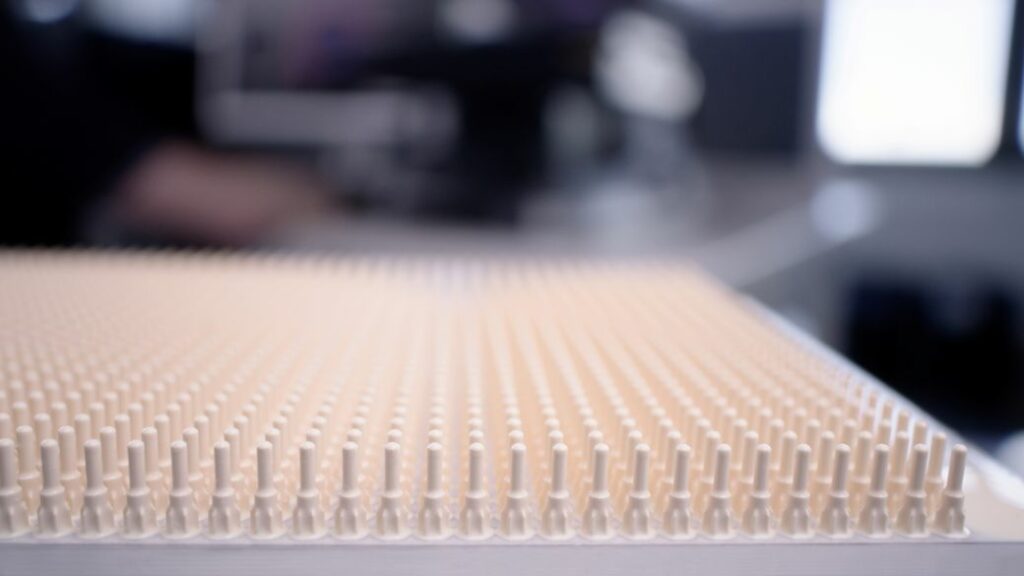
A closer look at densification in 3D printed ceramic parts produced for space and semiconductor applications
When it comes to space and semiconductor applications, densification could be a mission-critical safety requirement that could limit or foster the adoption of ceramic 3D printing processes. Indeed, although it is not always the primary obstacle, full density of ceramic 3D printed parts remains non-negotiable.

Sinto Advanced Ceramics Europe GmbH’s subject matter expert notes, “We see that economical factors are substantially more hindering for an even wider application of AM, compared to technical challenges. Given the right production technologies and processing, densification is not an issue.” This means that when densification is under control, cost, scalability, and production economics quickly take center stage. That said, from a manufacturing perspective, Hartmann says that “slurry-based AM (e.g. VPP) has the advantage of a fine starting grain size, as sintering activity is linked to surface-area, a small grain size is crucial for densification.”
Technology providers, however, see densification as the first filter manufacturers apply when evaluating ceramic AM for serial production.
For 3Ceram’s subject matter expert, while densification remains “a critical prerequisite for industrial deployment of ceramic additive manufacturing, particularly in the semiconductor industry,” it is not the sole factor shaping adoption. He points out that long thermal cycles, post-sintering machining, and the need for advanced quality control technologies significantly impact lead times and overall production costs. In practice, he argues, “while densification remains a key technical enabler, it is the combined effect of cost and lead time that currently drives the economic viability of ceramic additive manufacturing in semiconductor and space production chains.”
A similar view is emphasized by XJet 3D’s CEO: “For manufacturers, densification is unquestionably the primary factor that manufacturers evaluate for serial and industrial production scenarios. The semiconductor and aerospace industry demands 99% densification as a non-negotiable requirement, so as to avoid outgassing and dielectric breakdown.”
If Zimmerman sees densification as the price of admission and not the main bottleneck for ceramic 3D printing processes to be used in these demanding industries, he also recognizes that this challenge plays a decisive role in lead time and cost structure.
In sintering-based approaches, achieving high density hinges on tightly controlled thermal cycles and process expertise are steps that can stretch production timelines.
The CEO highlights this trade-off directly: “For sintering-based technologies like XJet’s NanoParticle Jetting, reaching to high density requires finely tuned sintering performance that comes with expertise, another step before getting this ‘entry ticket’. XJet’s process makes it much easier, not only in that the sintering phase is relatively shorter, but also in the fact that the sintering temperature is relatively low (<1500℃), and part shrinkage is isotropic. This presents a much shorter overall production process down to days instead of weeks, shortening lead time by several folds while reducing end-to-end production cost by consuming less energy, labor and post-processing investment.”
Densification techniques most relevant for space and semiconductor applications
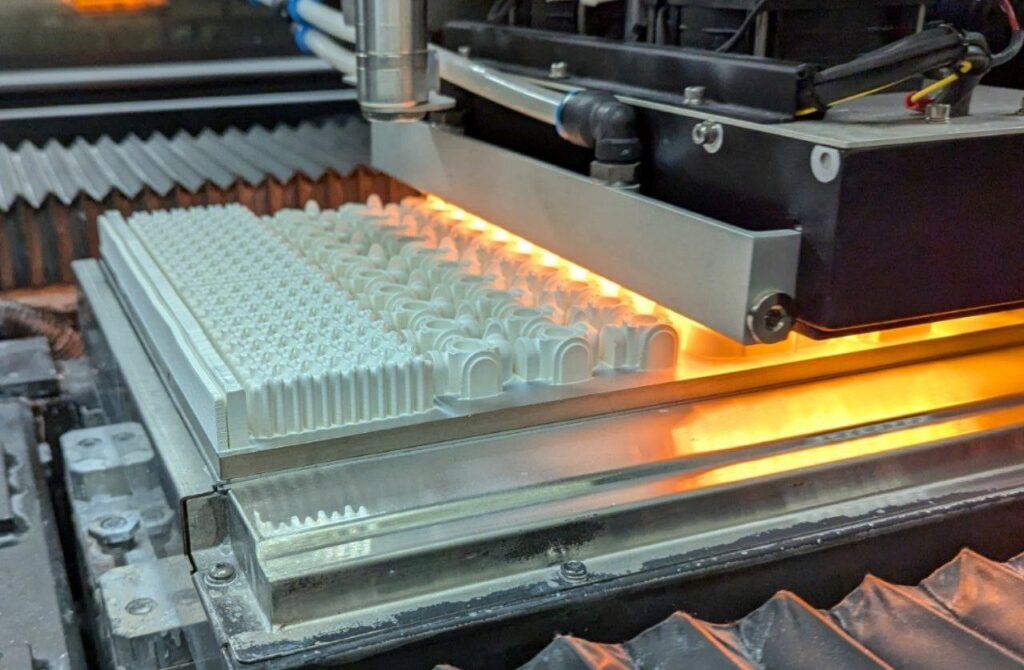
No matter what AM process you leverage, finding the right densification technique for high stakes applications achieved with technical ceramics often comes down to reliability, repeatability, and industrial pragmatism.
Our exchanges with experts reveal that high-temperature sintering remains the most widely used approach to achieve dense AM ceramic parts, valued for its relative simplicity and compatibility with existing industrial infrastructure.
As Guy Zimmerman explains, “The most widely used densification technique for AM ceramics is in-air sintering using high-temperature furnaces,” a method that avoids controlled atmospheres or elevated pressure and therefore keeps both energy consumption and process complexity in check. When finely tuned, such approaches can deliver the density levels demanded by these sectors, with Zimmerman noting that greater than 99% theoretical density can be achieved without resorting to additional refinement steps.
Even with that in mind, for especially demanding environments, densification does not always stop at sintering. For Malte Hartmann, “Apart from the densification during sintering, hot isostatic pressing is a common refinement technique in order to create ceramic parts for especially demanding environments.”
The picture that emerges is a tiered strategy: sintering as the industrial backbone, with HIP selectively applied where extreme performance margins justify the added cost and complexity.
Louradour further nuances this picture by stressing that the relevance of densification techniques is strongly material-dependent. For nitride-based ceramics, he highlights Gas Pressure Sintering (GPS) as “one of the most relevant technologies,” as applied pressure prevents decomposition while enabling very high density levels. “Spark Plasma Sintering (SPS) can be technically attractive in terms of densification efficiency and microstructural control. However, its industrial applicability remains limited today due to constraints on part size, geometry, and scalability”, he adds before warning:
Oxide ceramics, by contrast, generally respond well to conventional pressureless sintering in air, with HIP reserved for cases where residual porosity must be eliminated to meet the stringent requirements of semiconductor and space applications. This reinforces the idea that densification strategies in ceramic AM are increasingly tailored, not only to the application, but to the chemistry of the material itself.
Why densification alone does not guarantee acceptance
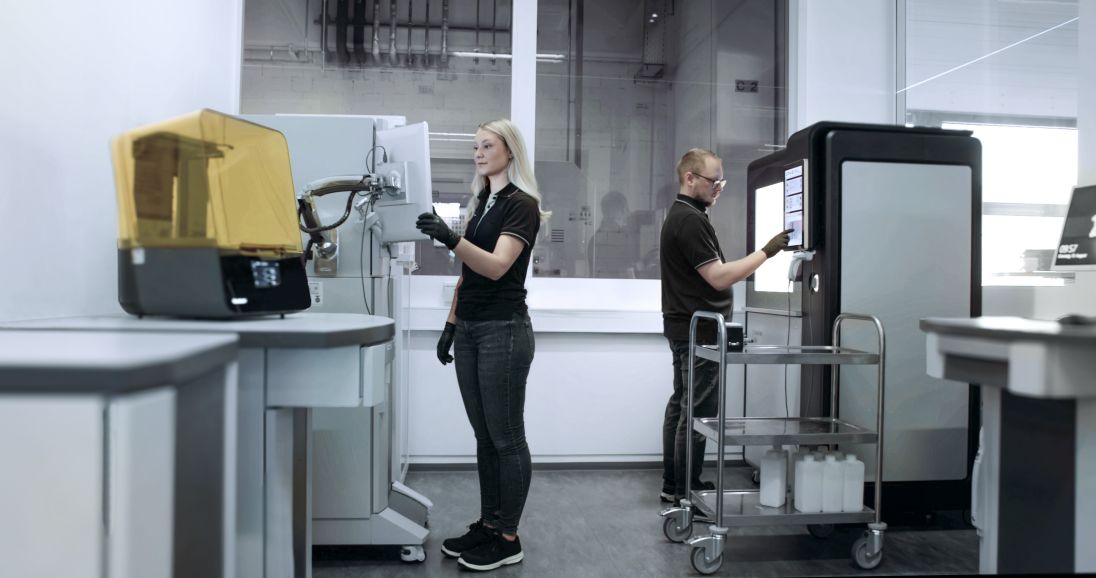
Copyright: Sinto Advanced Ceramics Europe GmbH
If achieving high density is the entry ticket, qualification is the real endurance test for additively manufactured ceramic parts destined for semiconductor tools or space hardware. No matter what AM process is leveraged, it is no secret that the process is widely acknowledged as rigorous, time-consuming, and often driven as much by documentation as by material performance.
Interestingly, while Sinto Advanced Ceramics Europe GmbH supports its customers along the way, Malte Hartmann notes that in their case, “they are usually the main driving force in this bureaucratic act,” adding that successful implementation in space and semiconductors sectors is possible, but rarely fast.
From the technology provider’s perspective, density is only one part of the equation. Guy Zimmerman emphasizes that “qualification for AM ceramic components in these sectors are exceptionally rigorous,” extending well beyond bulk properties.
Surface integrity, in particular, becomes a decisive factor: surface porosity can trigger wafer contamination in semiconductor environments or degrade thermal and electrical performance in space systems. Meeting both internal density and surface quality requirements simultaneously, Zimmerman explains, represents one of the most demanding hurdles in advanced manufacturing.
For 3DCeram’s subject matter expert, qualification challenges are further compounded by the intrinsic characteristics of ceramic AM processes. He notes that additive manufacturing produces “non-standard microstructures, which must be fully characterized and validated,” making qualification “often long and costly.”
In semiconductor applications in particular, extremely high purity levels are required, and any deviation during debinding or sintering can result in contamination risks with severe economic consequences. For space applications, he adds, qualification often relies on statistical approaches such as Weibull analysis to assess reliability and failure probability, underscoring that in both sectors, densification is scrutinized not only for performance, but for predictability and reproducibility over time.
In this context, densification must go beyond closing pores to deliver a material state that can survive scrutiny in sectors where failure modes are neither gradual nor forgiving, a requirement that reshapes not only qualification strategies, but also how ceramic AM technologies are evaluated and selected in the first place.
*This dossier has first been published in the January/February edition of 3D ADEPT Mag.
Editor’s notes
Sinto Advanced Ceramics Europe GmbH is a contract manufacturer who provides additive manufacturing services for the production of high-precision ceramic components.
With a focus on technical ceramics, 3DCeram is a provider of AM solutions powered by SLA.
XJET is a provider of additive manufacturing solutions powered by NanoParticle Jetting Technology™.