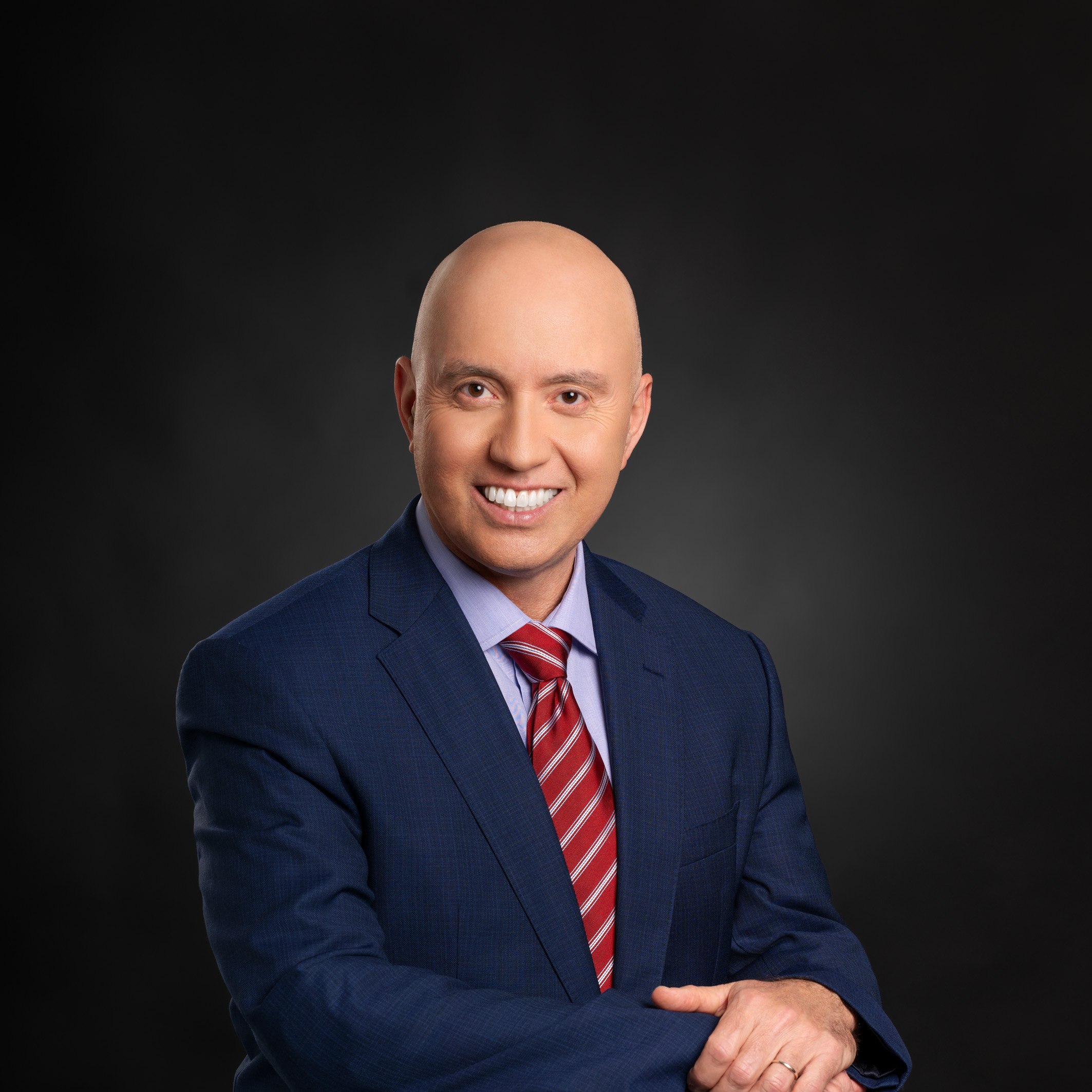
A conversation with Stratasys CEO Yoav Zeif on tariffs, trust, technology, and the lives additive manufacturing is quietly saving.
An AM trade show is not typically the place you would learn more about international trade theory. And yet, sitting with Stratasys CEO Yoav Zeif on the show floor at RAPID+TCT 2026 in Boston, that is more or less what happened and it was the best possible start to our conversation.
Before the machines, before the strategy, before the healthcare stories that would come later and remind me of the impact of those who champion AM, Zeif made me realize he thinks in systems. The PhD in international economics, the years teaching trade theory at university: these are the lens through which he reads the market.
Yoav Zeif did not dodge the tariff question. He leaned into it, with the confidence of someone who has spent years thinking about exactly this kind of disruption, long before it became the dominant topic on every manufacturing floor: “The best solution, by far, is to have free trade. But there is only one caveat: everybody needs to play fair,” he told 3D ADEPT Media.
What followed was part economics lecture, part strategic roadmap and entirely revealing of how Zeif thinks about Stratasys’ place in a world that is rapidly redrawing its industrial geography.
The economist perspective
It is no secret that the rules of global trade are not applied symmetrically. According to Zeif, free trade generates the highest value for everyone, but only when all parties play by the same rules. The moment one actor leverages another’s openness to capture disproportionate value (through unfair subsidies, IP violations, or masked import barriers), the system breaks down.
The rationale behind this argument might seem obvious: tariffs, when applied transparently, are at least legible. Everybody knows the rules. A new equilibrium forms. And from that equilibrium, companies have to ask themselves a very practical question: “how do I now deliver the best solution to my customers at the [best] cost?”
For Stratasys, one answer has already materialized. The company relocated filament production from Israel to the United States, avoiding tariff exposure on a line worth several million dollars. A move that reinforces the importance of distributed manufacturing.
“Give me the file, I will print it where you need it, when you need it. That is distributed manufacturing. And additive has a huge advantage here.” The versatility argument for additive manufacturing has been made many times. But in the context of tariff regimes that can shift anytime, anywhere, it’s worth considering every time it is necessary.
Picture this: Moving a traditional manufacturing plant takes years. Shifting a digital file takes seconds. That gap between the speed of geopolitical change and the speed of industrial adaptation is precisely where Zeif sees additive manufacturing’s structural edge.
Consolidation, credibility, and the discipline of profitability
The industry consolidation question is one that could, as I noted to Zeif, make a CEO uncomfortable, particularly given the takeover attempts and merger talks Stratasys has navigated in recent years.
Consolidation, he argues, is not a sign of weakness. It is a natural feature of any maturing industry. The hundreds of startups that filled Formnext halls three or four years ago were never all going to survive, he continues, not because their technology was necessarily flawed, but because delivering value and reliability to industrial customers requires financial durability. Innovation from startups is essential; so is the kind of consolidation that concentrates resources into credible, stable platforms.
And credibility, Zeif insists, is the central currency in this market. When a customer bets on a new manufacturing technology, they are also evaluating whether the company behind it will still be there in three years.
“Profitability is the ultimate test of whether a company is really delivering value. It means you can generate value. That is why it was so important for me; we are very disciplined.”
Stratasys is, by Zeif’s account, the only profitable public company in additive manufacturing. He frames this as a signal to customers: these people are not bleeding. They will be here tomorrow.
Five technologies, zero cannibalization, if the fit is right
With SAF, P3, FDM, PolyJet, and Origin all under one roof, the obvious question is how Stratasys prevents its own technologies from competing against each other. For the CEO, there is no one technology that solves all problems. The goal here is to match the technology to the application.
Need monolithic dentures? PolyJet. A large structural part for a UAV? Only FDM has the build volume. Ten thousand drone components at production speed? That is SAF or P3 territory. This is a complementary portfolio and what ties it together, is the software GrabCAD. It gives every customer the same workflow regardless of which machine is running on their floor.
Saving lives with 3D printing
It is rare, in an interview, to see a CEO become visibly emotional. It happened when I asked Zeif about Stratasys’ work with Boston Children’s Hospital given that RAPID+TCT 2026 was held in the very city where some of this work is taking place.
He described surgical guides printed for open-heart procedures on infants. A surgeon who told him: “when I open that small chest, it is not the first time I have seen that heart, because I have already practiced on the printed model.” Mistake rates drop. Recovery times shorten. Suffering decreases.
He also described an Israeli army officer who lost the front of his skull in Gaza. Stratasys printed the mold. A new part was fabricated. The man is now fully functional, able, finally, to leave his home without a helmet.
“We are saving lives with 3D printing. What can be better than that?”
Where next?
Between the tariff theory and EBITDA margins, the logic of distributed manufacturing and the verticals where 3D printing helps save lives, this conversation with Stratasys CEO Yoav Zeif is a reminder that aerospace, defense, healthcare and medical remain the high-value drivers of AM; with defense leading the charge.
Most importantly, it highlights how resilience and trust shape what manufacturing can mean when it is applied to something that truly matters.