It’s been a few years now that, alongside the growing number of AM applications driven by sustainability, we’ve dedicated one issue of 3D ADEPT Mag each year to this crucial topic. The goal has always been the same: to keep track of how AM companies are advancing on their sustainability journey.
Two years ago, for the first time, we turned our attention to legislation, highlighting how new regulatory frameworks could push hesitant companies to take the leap. We also shed light on the key areas where ESG principles are being applied across the additive manufacturing landscape.
Fast forward to today, there is still a long road ahead:
- Leading / large AM companies (e.g., Stratasys, EOS, HP, etc.) are ESG-aware, have reporting in place, but clear steps toward improved environmental and social governance are yet to be highlighted – especially when it comes to Additive Manufacturing (AM).
- Mid-size AM firms might have some ESG initiatives, especially around environmental/efficiency, but likely less formal reporting, lower external assurance, and less mature supply chain/social justice governance.
- Small AM companies often focus first on technical scale, cost, and product development. As a result, ESG remains viewed as a future requirement rather than a current priority, especially where resources are constrained.
Recycling, the comfort zone
Recycling has become a central focus in advancing sustainability within Additive Manufacturing (AM). That’s in my view AM companies’ comfort zone, although it directly tackles several of the industry’s most pressing environmental and economic challenges.
These challenges include, for instance, material efficiency and waste reduction, lowering the carbon footprint, economic sustainability, or even enabling a circular economy.
A few examples worth mentioning that we covered this year include:
The “bottleUP” project from BMW Group
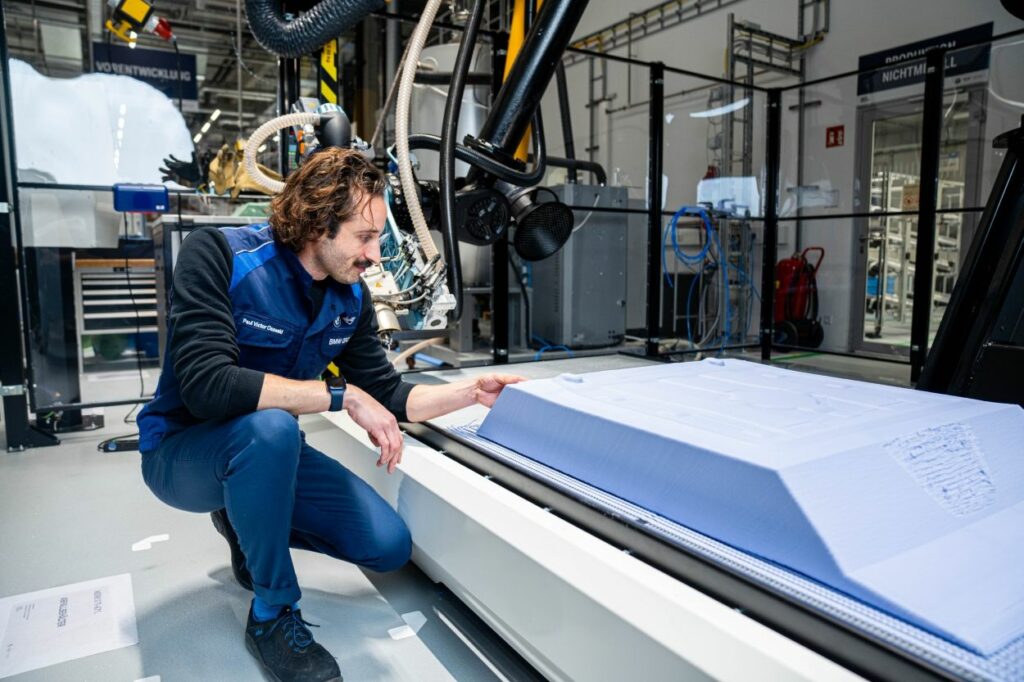
This project focuses on obtaining 3D printing material for various applications by recycling PET bottles.
Each year, since 2018, up to 12 tonnes of waste powder can be recycled into filament and granulate and can then be reused for the manufacture of auxiliary production devices in the plants and for pre-development projects at the Additive Manufacturing Campus.
Today, various locations across the BMW Group’s global production network are supplied with 3D-printed components from the Additive Manufacturing Campus in Oberschleißheim, where the company has consolidated its production, research, and training activities in additive manufacturing under one roof.
The new 3D printing recycling program from The College of Engineering and Applied Science in Colorado
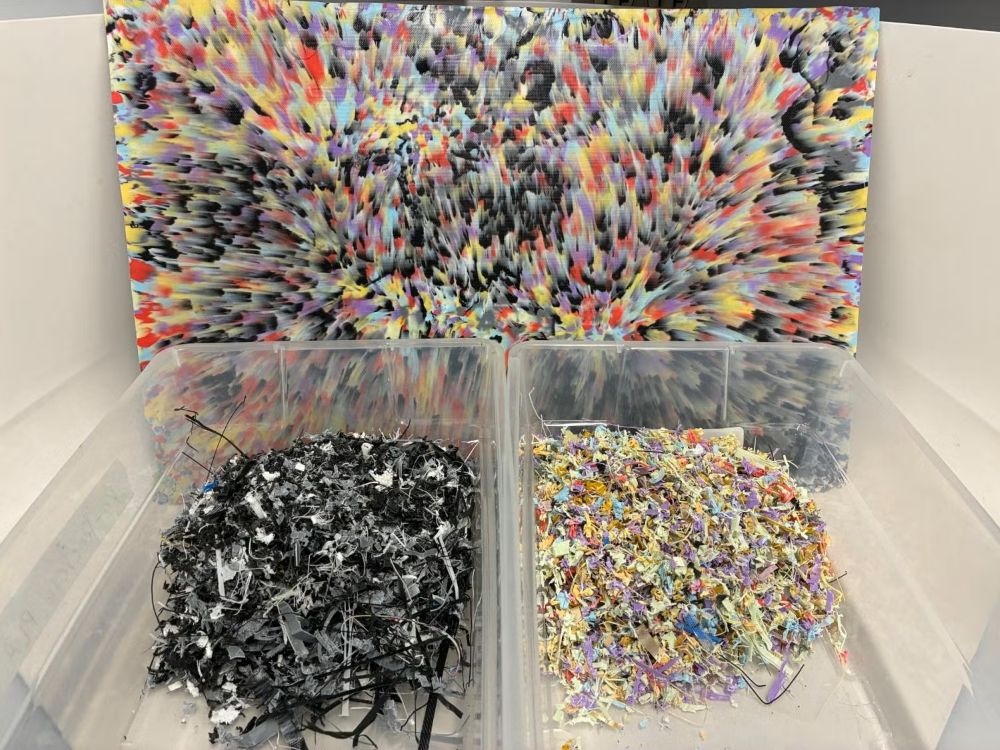
Similar to the “bottleUP” project, this initiative transforms plastic waste from 3D printing into reusable materials, reducing landfill impact and supporting innovative student projects.
The process involves collecting failed or excess PLA prints, grinding them into small fragments and using a T-shirt press to flatten the fragments into durable flat sheets. These sheets serve as raw material for laser cutting projects, offering students a sustainable alternative while conserving resources.
Today, this recycling process has been incorporated into the Integrated Teaching and Learning Program (ITLP) ecosystem, and sheets of this material are free for students to use.
Although we recognize the importance of these initiatives, they remain the most accessible and visible sustainability efforts for the industry. Not only are recycling initiatives tangible, they perfectly align with additive manufacturing’s inherent strengths in material efficiency and waste reduction.
For companies developing and selling million-dollar machines, recycling is a low-risk strategy that shouldn’t be pursued in isolation. Tackling ESG regulations may seem daunting, but hiding behind “easy wins” isn’t enough. A far more strategic move is to leverage what AM does best (traceability and circularity) and connect it to broader ESG goals through an anchor framework: the Digital Product Passport (DPP).
The Digital Product Passport (DPP)
Since 2024, the European Union requires nearly all products sold in the EU to feature a Digital Product Passport (DPP). This initiative, part of the Ecodesign for Sustainable Products Regulation, aims to enhance transparency across product value chains by providing comprehensive information about each product’s origin, materials, environmental impact, and disposal recommendations.
For AM companies, the DPP is an opportunity to include data standards, intellectual property (IP) rights, and the technical requirements for comprehensive traceability across the supply chain. Another key benefit for AM companies and users would be to increase transparency, improve resource management, and promote circularity.
In the short list of companies that can improve traceability in AM by integrating DPPs, one that we would keep on our radar is Additive Marking GmbH.
Founded in 2018 by Dr. Ulrich Jahnke and two other partners, the company aims to provide comprehensive end-to-end traceability beyond the AM industry. The management of digital product passports within the Additive Marking Suite emphasizes the importance of product traceability in AM.
Thanks to product traceability, manufacturers can track each part across its entire lifecycle—from data preparation, production, and post-processing, to quality assurance, logistics, usage, and recycling.
Traceability should be thought from the start of production as material properties and dimensional accuracy are established during production. At this stage, even seemingly minor factors like build orientation or position within the build volume can affect performance.
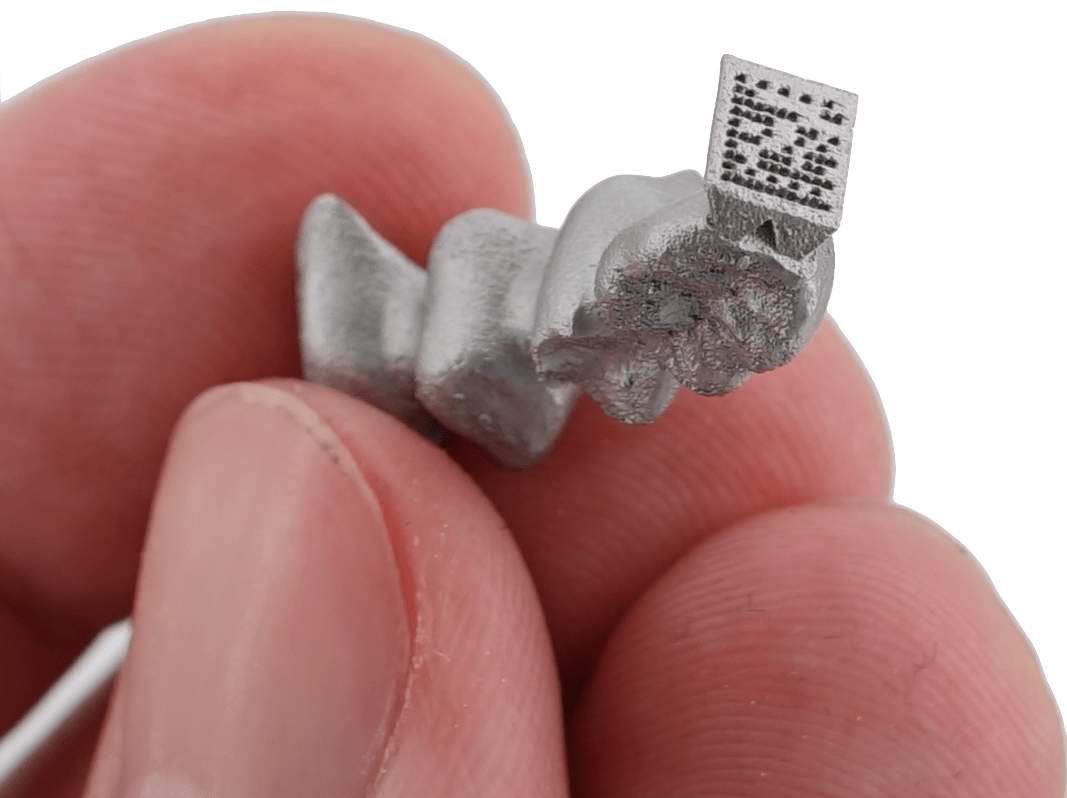
Additive Marking enables direct, machine-readable part identification embedded during the build process. Unlike traditional labelling (which can be prone to errors), the company’s technology ensures accurate, efficient, and reliable traceability throughout the part’s lifecycle, supporting quality control, regulatory compliance, and operational efficiency.
How does this translate to real-world applications, and what specific benefits does it bring to AM technology providers? These questions will be explored in a follow-up article. What is clear, however, is that product traceability is paramount in industries where safety, quality, and regulatory compliance are non-negotiable.