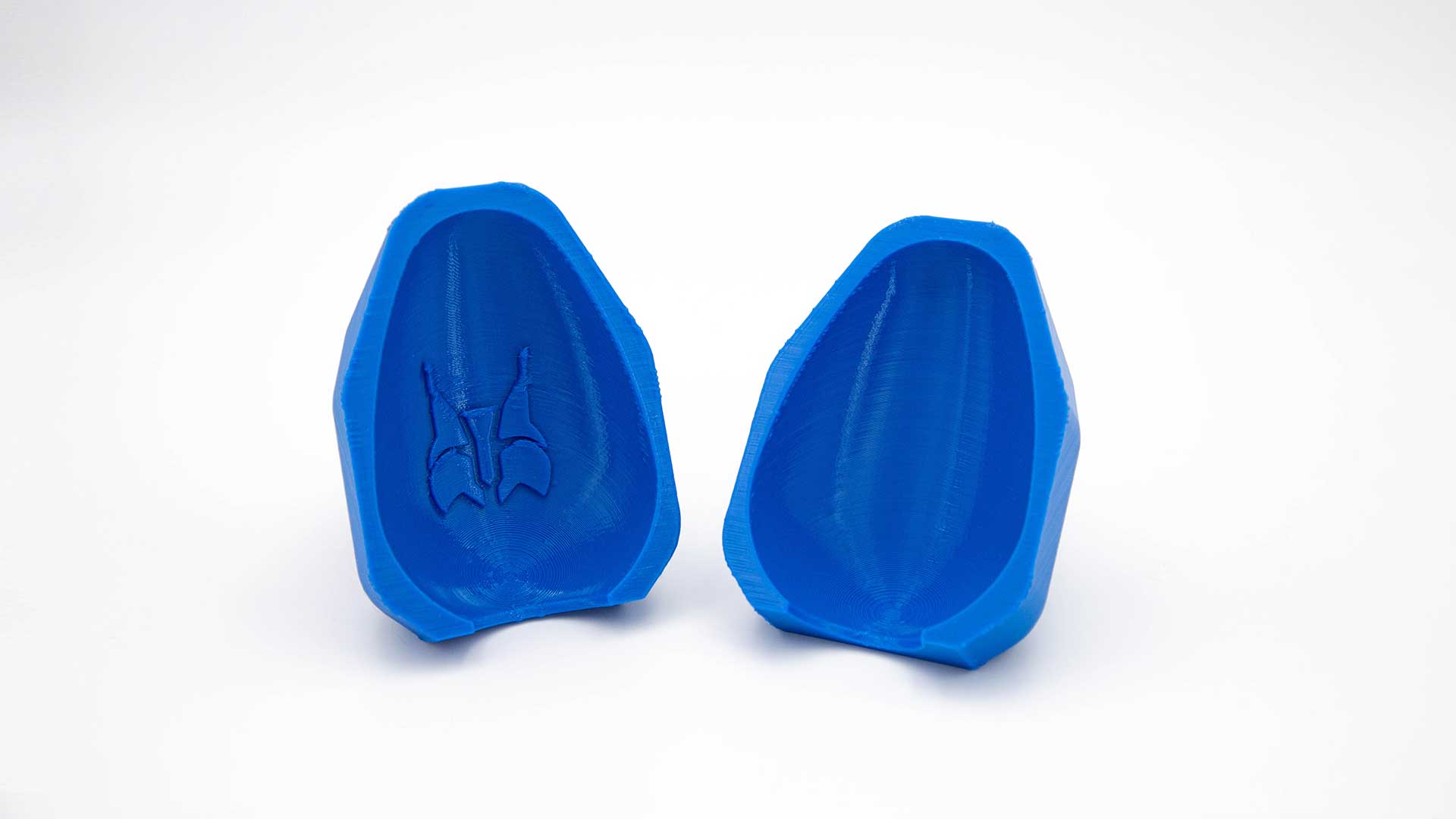
French 3D printing specialist Lynxter has announced the launch of SIL-004, a silicone material it describes as the “world’s first directly 3D-printable material” compliant with FDA CFR 21 177-2600 food-grade standards. Free from BPA and PFAS, the material targets food processing environments where repeated contact with fatty or aqueous substances, intensive cleaning cycles, and strict sanitary requirements are the norm.
Compatible with Lynxter’s S300X – LIQ21|LIQ11 and S600D printers, it opens a path to on-demand production of seals, scrapers, molds, and conveyor components, parts that traditionally required weeks of lead time through casting or injection molding.
SIL-004 and the conversation around food-safe 3D printing
The conversation around food-safe 3D printing is largely driven by rigid thermoplastics. As we covered in 2023, the Danish Technological Institute developed a blue nylon powder combining metal detectability and visual traceability, a clever safety tool, but a hard material at its core.
More recently, Sculpteo introduced PA12 Blue, a food-contact-compliant polyamide built on the same color-detection logic for rapid contamination identification. And FABULOUS and AMT validated a full workflow for food contact compliance using DETECT PA11 with vapor smoothing post-processing, targeting the surface porosity challenge inherent to most additive processes.
What all these approaches have in common is their reliance on rigid polymers materials suited to structural components such as gears, guides, and conveyor parts.
SIL-004 operates in a fundamentally different design space: 50 Shore A elastomeric softness, 203% elongation at break, an operating range from -50°C to 250°C, and inherent chemical resistance.
These are properties that rigid polyamides simply cannot offer, and they matter enormously when a seal has to deform, recover, and resist aggressive cleaning agents across thousands of cycles.
Is this really a first?
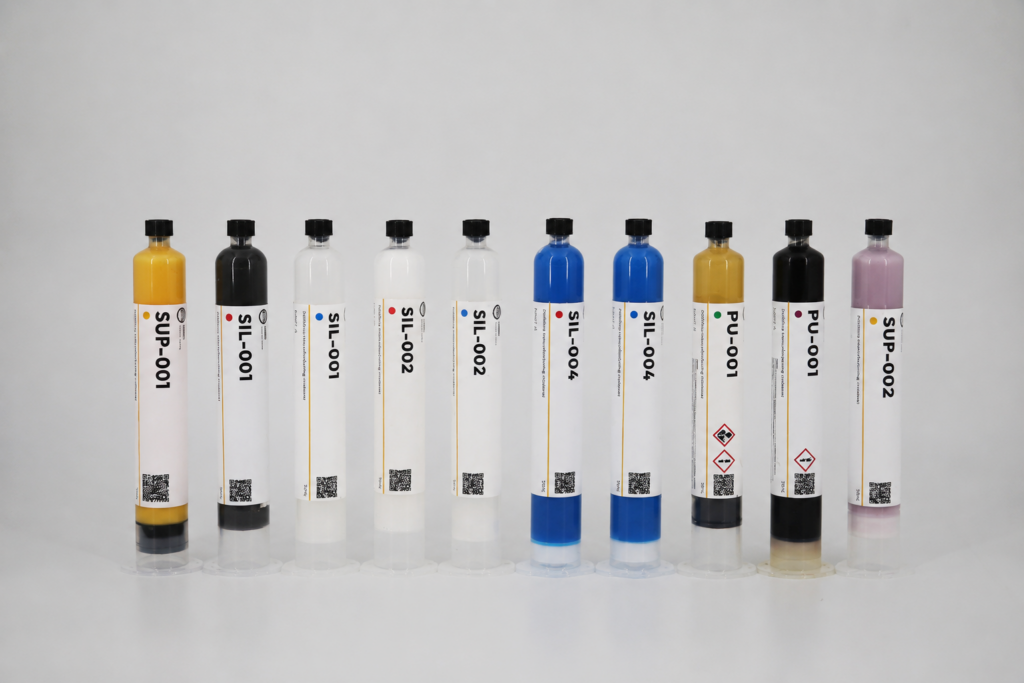
Lynxter’s claim deserves scrutiny. Silicone has long been listed among FDA-recognized food-safe polymers, alongside PLA, PETG, PA11, and PA12, but being accepted as a material category is not the same as offering a ready-to-print, industrially certified formulation.
Until now, food-grade silicone in additive manufacturing typically appeared as a post-process coating or casting material used to seal or mold around 3D-printed masters, not as a printable input material in its own right. Based on available evidence, no equivalent directly printable silicone meeting FDA CFR 21 177-2600 had been commercialized before SIL-004.
Market Implications
The timing is significant. Lynxter is marking ten years of silicone 3D printing expertise this year, and SIL-004 positions the company to serve food processing, cosmetics, and pharmaceutical sectors where regulatory compliance is not optional.
For manufacturers needing custom elastomeric components in hours rather than weeks, without tooling investment, this changes the economics of small-batch and prototype production meaningfully.
*We curate insights that matter to help you grow in your AM journey. Receive them once a week, straight to your inbox. Subscribe to our weekly newsletter.