

The Cadillac CELESTIQ is an ultra-luxury, hand-built electric sedan that demonstrates how General Motors is pushing Additive Manufacturing beyond prototyping.
With over 130 parts produced using additive manufacturing, the vehicle is helping re-establish Cadillac as the ‘Standard of the World’. It stands out as a rare example of effective AM implementation in low-volume production.
Key characteristics of this production
AM is shining through the steering wheel center, the adjustable seat belt, and from a technical perspective, through consolidation.
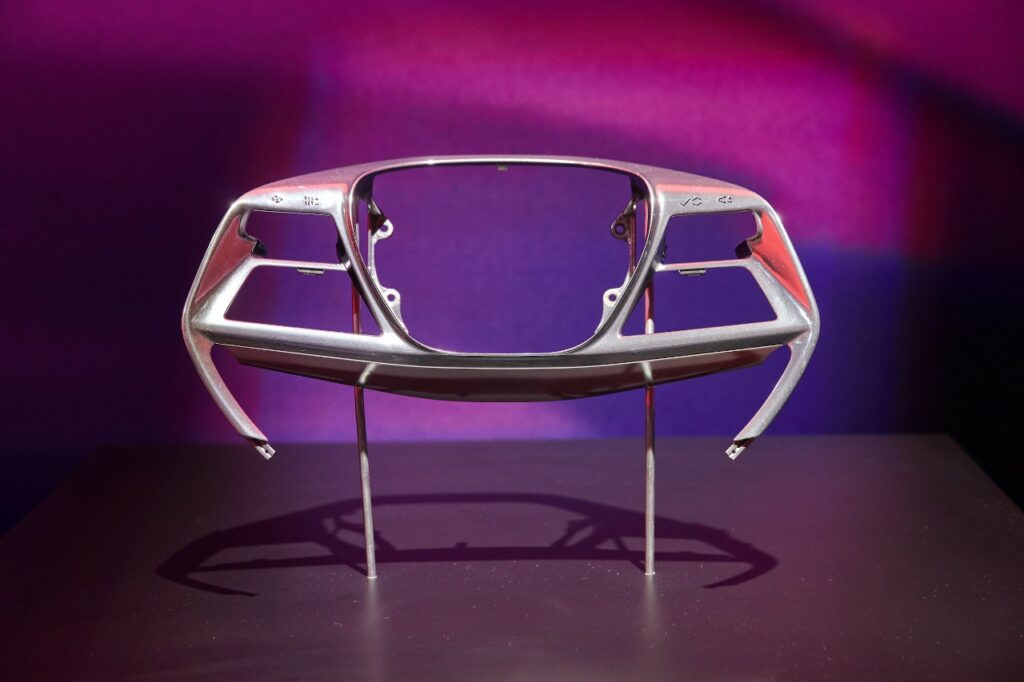
The CELESTIQ steering wheel center represents GM’s largest 3D printed production metal part to date. This trim bezel component covers the front face of the steering wheel. It surrounds the switches and presents a sleek finish.
This component is also one of only a few production parts created using metal laser powder bed fusion technology.
Brennon White, GM technical specialist for advanced manufacturing production applications, has been working in additive manufacturing for 14 years. He explains that the precision and flexibility of additive manufacturing made it the perfect process to create custom components for CELESTIQ.
“We wanted the part to be metal, fitting with the high-end look and feel of the vehicle,” says White. “We looked at multiple options to make this part, and additive won out because it can make a delicate, detailed, and compact part.”
From development to production
Most of the 3D printed components in CELESTIQ are initially developed at AIC before engaging the supply base for production – including window switches, grab handles, console decor and structural pieces under the surface. With the highest concentration of additive manufacturing parts of any GM product, CELESTIQ is one of the most custom commissioned vehicles on the market.
“When looking at whether to use additive manufacturing, we ask ‘can it meet the functional requirements, and does it make sense economically?’ If the answer is yes to both, we know we should target AM,” says White. “That’s what we did with CELESTIQ – and additive gave us something that we never could have achieved otherwise.”

Stay connected by following us on Facebook, Twitter, LinkedIn & Instagram, and subscribe to our weekly newsletter for the latest updates. Have a story to share or want to be featured in our next digital magazine issue? Send it to editor@3dadept.com !
THE 3D ADEPT WEEKLY NEWSLETTER
The industry moves fast. Stay ahead.
Every week, the latest additive manufacturing news, in-depth features and real-world applications, straight to your inbox. Plus, be the first to know when a new issue of 3D ADEPT Mag is out.
Free · One email a week · Unsubscribe anytime
Clicking loads our email provider’s sign-up form, including its analytics and Google’s anti-bot protection. You’re only subscribed if you complete the sign-up. Read our privacy policy.