Mahdi Naïm is not new to additive manufacturing. We previously covered the Lyon- and Casablanca-based industrial designer through his collaboration with Satori, producing 3D-printed work-from-home objects built on lattice structures optimized for function and form. With AERIS, a bicycle saddle currently in active development, Naïm enters a product category where AM has been gaining steady ground.
The 3D-printed saddle space is no longer uncharted territory. We have covered how Carbon’s DLS technology powered the Specialized S-Works saddle, using lattice geometries to replace foam and improve pressure distribution.
Fizik’s One-to-One custom service followed a similar path, combining Carbon’s DLS with pressure-mapping data to build bespoke saddles for individual riders. Czech company Posedla went further with Joyseat, developing an algorithm that transforms sit bone data and rider preferences into fully customized saddles produced via Multi Jet Fusion. In each case, AM is used to do what foam cannot: tune stiffness zone by zone, reduce weight, and open the door to mass customization.
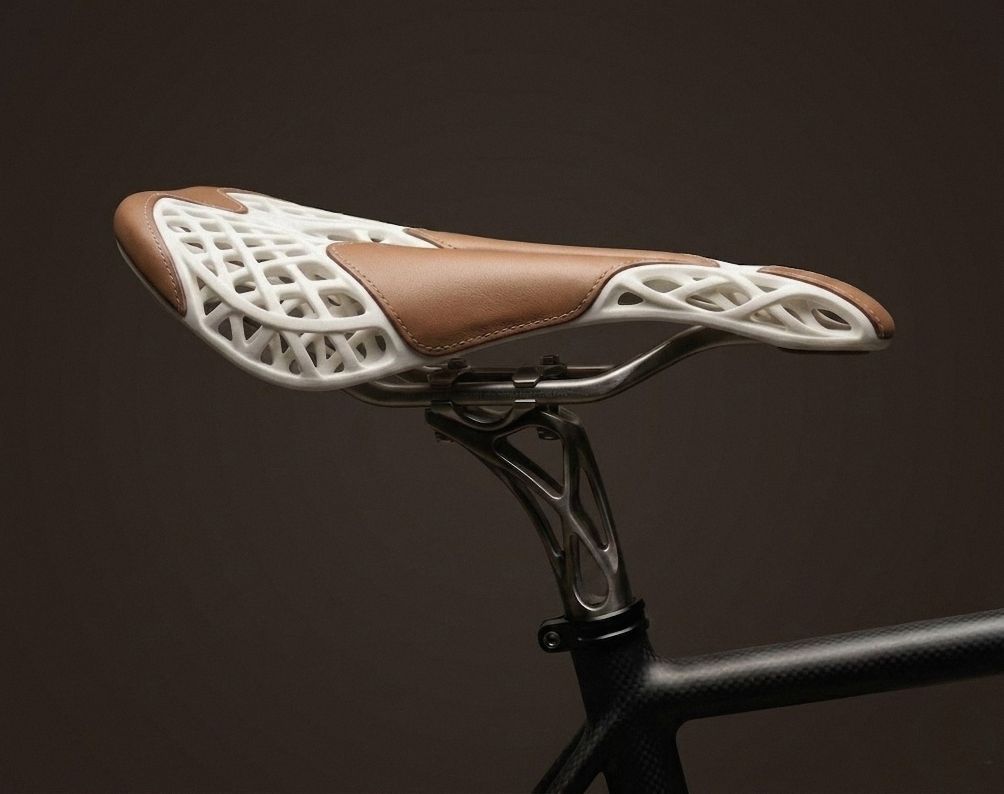
AERIS shares some of that structural DNA: a variable-density lattice produced by high-precision SLA/DLP in high-performance elastomer resin, with three biomimetically optimized zones addressing ischial support, postural transitions, and perineal relief. No added padding. The structure is the saddle.
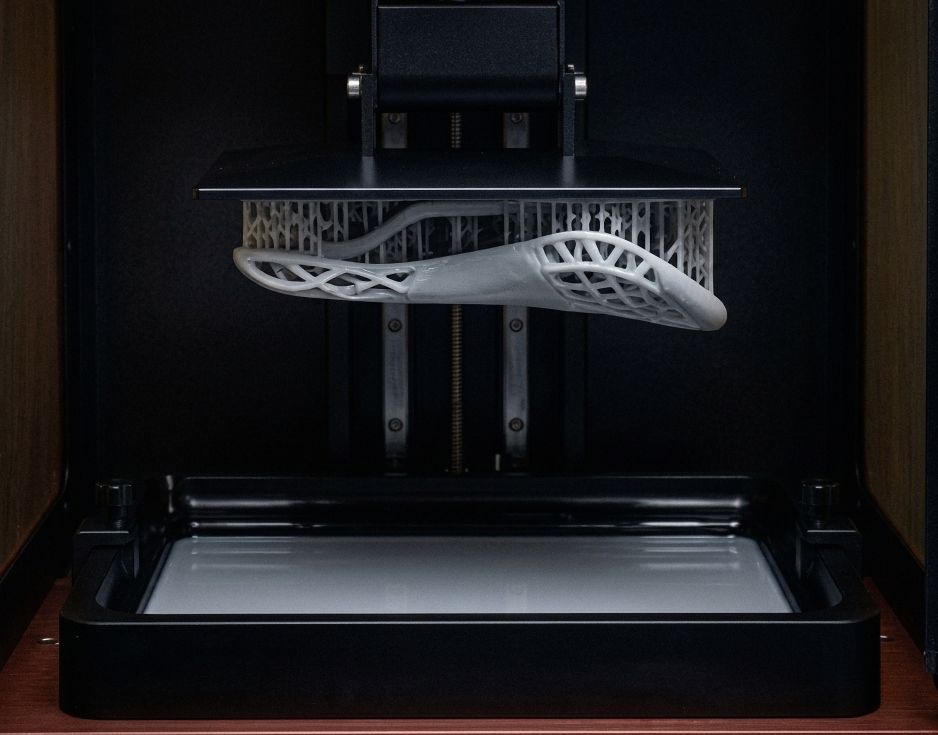
Where Naïm diverges is in the intentional integration of traditional craft. A master saddler hand-stitches full-grain vegetable-tanned leather directly onto the printed structure, as a second structural logic co-designed from the first sketch.
The leather, Naïm argues, works mechanically with the resin: distributing pressure and shear forces differently, and providing durability that neither foam nor elastomers achieve at equivalent weight. The material interface was engineered during the modelling phase.
“It is not that technology and craft can coexist. It is that they must think together from the very beginning of the design process,” Naïm states. That hybrid methodology is what makes the saddle stand out.
AERIS is currently moving toward small-series production, with discussions underway with industrial partners in additive manufacturing and premium cycling equipment. The project is open to real-condition testing partnerships.
*We curate insights that matter to help you grow in your AM journey. Receive them once a week, straight to your inbox. Subscribe to our weekly newsletter