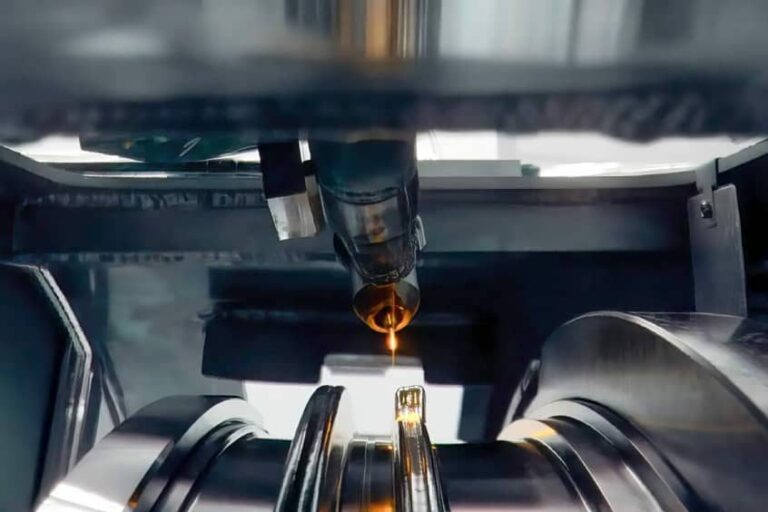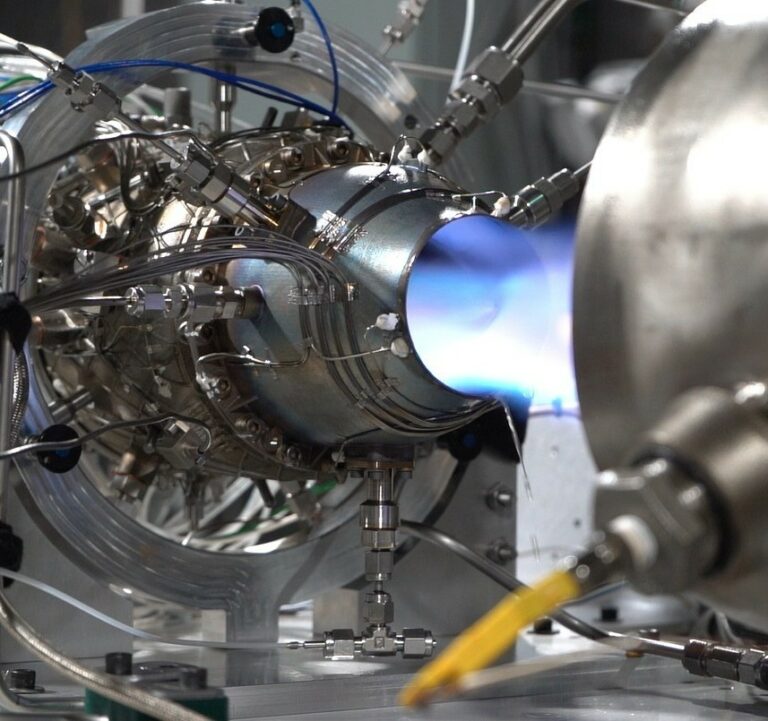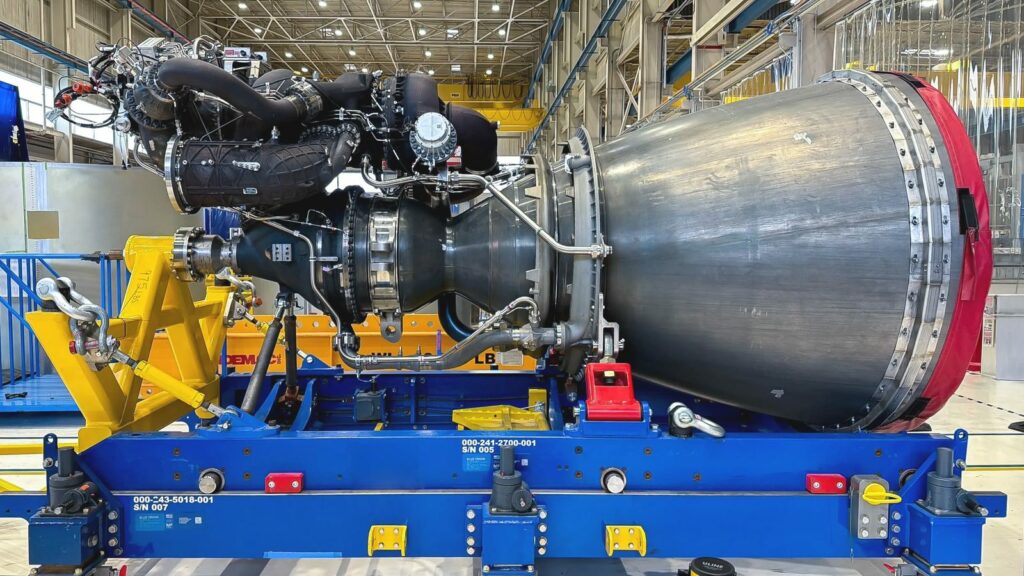
Blue Origin says additive manufacturing produces more than 65% of its Northstar booster engine. The company announced the figure on November 5, 2026. Northstar is a reusable engine running on liquid oxygen and liquefied natural gas (LOX/LNG). Its rated thrust reaches 715,000 pounds.
In rocket propulsion, every component that disappears from the assembly is one less part to make, inspect and qualify.
Northstar becomes the company’s second booster engine, after the BE-4. The BE-4 uses oxygen-rich staged combustion. Seven BE-4 engines power New Glenn’s reusable booster. Two also power the first stage of United Launch Alliance’s Vulcan. Compared to BE-4, Northstar would be 30% lighter and contain 50% fewer parts. However, it would deliver 715,000 pounds-force instead of 640,000.
What does additive manufacturing change in this engine?
According to the company, AM is the main lever behind these figures. “Leveraging in-house additive manufacturing to reduce part count and mass by eliminating and combining components, over 65% of the engine mass is additive, while maintaining engine life for rapid reuse,” the company says.
The gains would also extend beyond the hardware itself. Blue Origin says manufacturing improvements have cut production timelines. As a result, engine assembly would take less than a day. The program took 11 months to move from approval to development testing. On design, however, Northstar retains the company’s established approach. It keeps the LNG-fueled, oxygen-rich staged combustion cycle and the single-shaft turbopump.
The announcement follows ArianeGroup’s claim that 70% of its reusable rocket engine is 3D printed by a few weeks. So far, our coverage of printed engines this year has mainly focused on launch startups. Examples include NordSpace’s Hadfield-150 additively manufactured engine. LEAP Space also unveiled its 3D-printed Serrano engine.
BE-4 already powers two launch vehicles. Northstar is therefore a program to watch as large-scale metal AM faces repeated flights and rapid reuse. These remain the real test for any reusable engine.
On the same day, the company also introduced GS3, a third stage for New Glenn. I would not be surprised if the 65% figure became a benchmark for future engine announcements.
THE 3D ADEPT WEEKLY NEWSLETTER
The industry moves fast. Stay ahead.
Every week, the latest additive manufacturing news, in-depth features and real-world applications, straight to your inbox. Plus, be the first to know when a new issue of 3D ADEPT Mag is out.
Free · One email a week · Unsubscribe anytime
Clicking loads our email provider’s sign-up form, including its analytics and Google’s anti-bot protection. You’re only subscribed if you complete the sign-up. Read our privacy policy.