Four months. That is how long Beehive Industries needed to take its Frenzy 6 engine from finalized requirements to a prototype on the test stand.
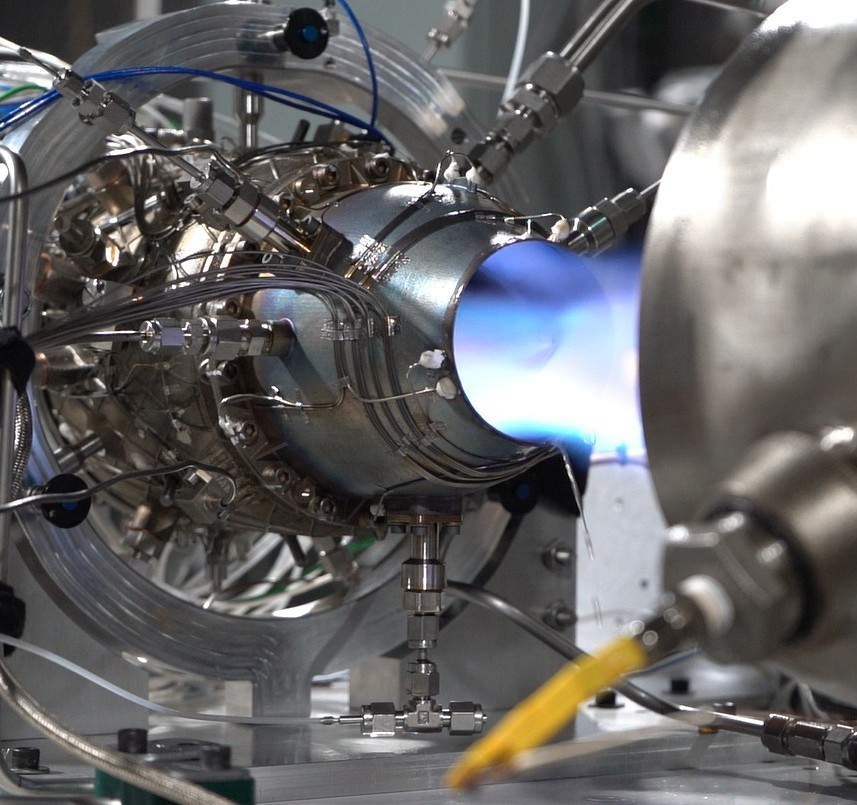
The Colorado company makes jet engines with additive manufacturing for uncrewed aerial defense. Tests of its 100 lbf Frenzy 6 prototype focused on three goals: reliability, engine performance and operability.
Beehive first test-fired the engine at its headquarters on September 23. Four months earlier, it had finalized requirements with its U.S. Air Force customer. In an early run that month, the prototype reached 80,000 RPM. Beehive calls it the Zero Engine to Test (ZETT).
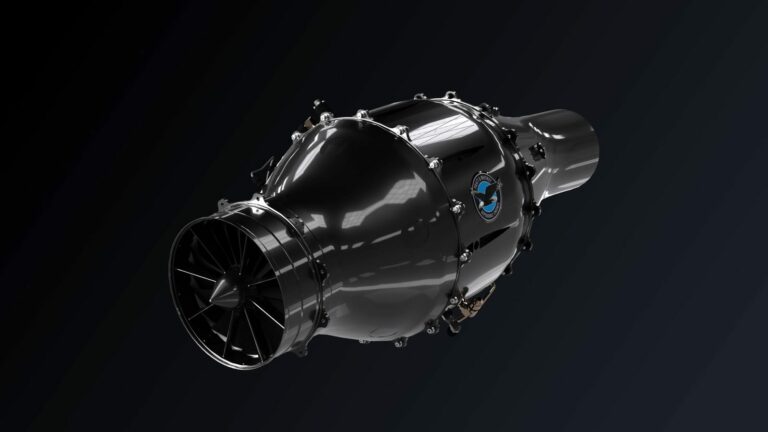
The Frenzy 6 engine
Frenzy 6 is the second member of the Frenzy engine family, after the 200 lbf Frenzy 8. To design it, Beehive’s engineers reused the design principles and lessons learned from the larger engine. The $29.7 million U.S. Air Force contract announced in April supports Frenzy 8’s development.
“Frenzy 8 validated how we design and scale a concept at unprecedented speed,” said David Kimball, Chief Technology Officer at Beehive. He says those lessons helped the team iterate faster on Frenzy 6. The four-month path from requirements to testing shows the potential of an approach that uses AM.
Chief Product Officer Gordie Follin describes Frenzy 6 as a compact version of Frenzy 8. It targets smaller munitions, drones and UAVs. In these segments, defense customers increasingly seek “affordable mass.” They want large numbers of systems at a cost low enough to make them expendable.
The key role of additive manufacturing here
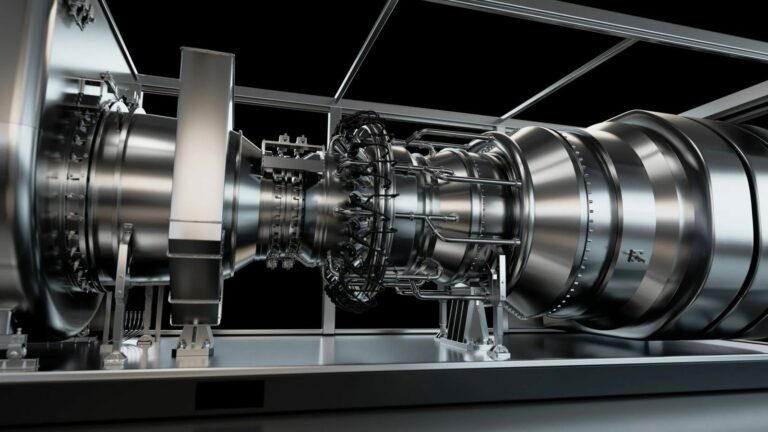
Beehive completed its demonstrator’s first fire tests in 2024. The company said it had combined hundreds of conventional parts into 15 primary components. It estimated the price at about half that of traditionally developed engines. Beehive also applied this part consolidation approach to Frenzy 6. Fewer parts mean fewer interfaces, suppliers and assembly steps to qualify or validate.
In practice, this shortens the print-test-redesign loop that Beehive credits for Frenzy 6’s timeline. The U.S. Army also recently applied this approach during the flight-test of the 3D printed heavy-fuel rotary engine on its VICTOR drone.
Beehive Industries has invested in Southwest Ohio and acquired two machine shops near Cincinnati. It has also recently bought EOS 3D printers. We look forward to seeing how these steps support its goal of producing more than 8,000 jet engines a year.
THE 3D ADEPT WEEKLY NEWSLETTER
The industry moves fast. Stay ahead.
Every week, the latest additive manufacturing news, in-depth features and real-world applications, straight to your inbox. Plus, be the first to know when a new issue of 3D ADEPT Mag is out.
Free · One email a week · Unsubscribe anytime
Clicking loads our email provider’s sign-up form, including its analytics and Google’s anti-bot protection. You’re only subscribed if you complete the sign-up. Read our privacy policy.