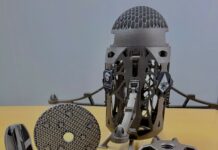
For years, improving the power density of solid oxide fuel cells (SOFCs) meant gradually optimizing the same flat, stacked architecture, tightening seals, refining interconnects, reducing losses at the margins. A research team at the Technical University of Denmark (DTU Energy) has now taken a fundamentally different path.
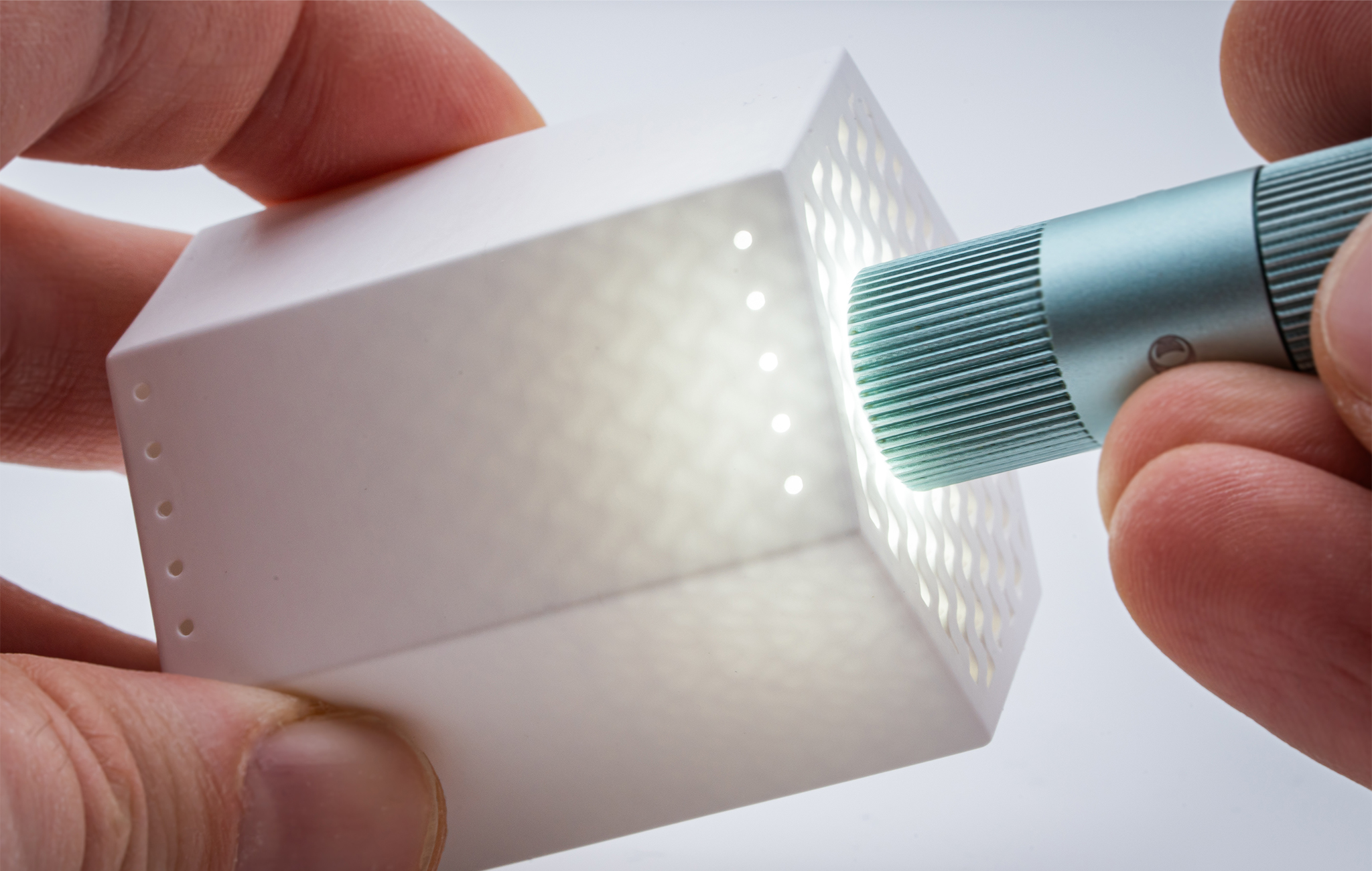
Working with a Lithoz CeraFab system, the team led by Prof. Vincenzo Esposito has demonstrated monolithic SOFCs built around nature-inspired gyroid geometries, three-dimensional, thin-walled structures printed as a single unit from yttria-stabilized zirconia (8YSZ). The result is a fivefold increase in power-to-weight ratio compared to conventional planar SOFCs, reaching approximately 1 W g⁻¹ against the typical 0.2 W g⁻¹ of current architectures.
By eliminating the interconnects and sealants that conventional stacked designs depend on, and that have long been their Achilles heel, the monolithic gyroid architecture dramatically reduces weight and thermal mismatch while improving volume utilization. This opens the door to a complete rethinking of compact, lightweight hydrogen engine design for land, sea, and aerial transportation.
Enabling this was Lithoz’s Lithography-based Ceramic Manufacturing (LCM) process, which we have covered extensively across applications ranging from semiconductors to medical devices and aerospace. Its precision and repeatability proved essential here: replicating the intricate gyroid geometry with thin, gastight walls at the required consistency simply wasn’t achievable with other manufacturing approaches. As we noted in our coverage of Lithoz’s ceramic heat exchanger project for hydrogen-electric propulsion, the company’s ceramic AM is a production candidate worth exploring for applications in the energy transition.
The fuel cell context also connects to a broader conversation we’ve tracked in the industry. Our analysis of additive manufacturing in heat exchangers for fuel cell applications highlighted how geometric freedom enabled by AM is progressively enabling performance levels that traditional manufacturing cannot.
With the design and test phase now complete, Prof. Esposito’s team is planning to scale the work to an industrial level, a transition that will test whether LCM’s precision can be matched with the throughput hydrogen propulsion markets will eventually demand.
Editor’s notes:
This application around solid oxide fuel cells (SOFC) is familiar with Solid Oxide Electrolysis Cells (SOEC), another application enabled by ceramic 3D printing (SLA 3D printing in this specific case). Both share the same fundamental technology operating in reverse. They use solid ceramic electrolytes at high temperatures ( °C), but SOFCs generate electricity from fuel (exothermic), while SOECs use electricity to produce fuel (endothermic).
*We curate insights that matter to help you grow in your AM journey. Receive them once a week, straight to your inbox. Subscribe to our weekly newsletter.