
It was mostly a cloudy, occasionally rainy week in Paris, with only brief glimpses of sunshine. Yet inside the halls of JEC World 2026, the mood told a different story. Engineers, material scientists, and manufacturers gathered in full force, turning the exhibition floor into a hub of ideas, partnerships, and new composite technologies.
At the world’s leading composites show, it is easy to overlook additive manufacturing. After all, the composites industry already relies on roughly 15 conventional manufacturing processes, typically grouped into three broad categories: open-mold, closed-mold, and continuous or automated processes.
Additive manufacturing represents only a fraction of that landscape. Within the seven process categories recognized by ISO/ASTM standards, five are currently the most relevant for composite materials: material extrusion (e.g., FDM with fiber reinforcement), powder bed fusion for polymer composites, vat photopolymerization, directed energy deposition, and sheet lamination—also known as laminated object manufacturing.
Yet walking through the aisles of JEC World 2026, one reality quickly becomes apparent: material extrusion is still conducting the orchestra of composite additive manufacturing applications, especially through Large Format Additive Manufacturing (LFAM).
That observation was not entirely surprising. Still, I arrived at the show with a clear objective: to identify the applications where additive manufacturing of composites is genuinely moving the needle.
Aerospace & Defense remains the most prominent adopter
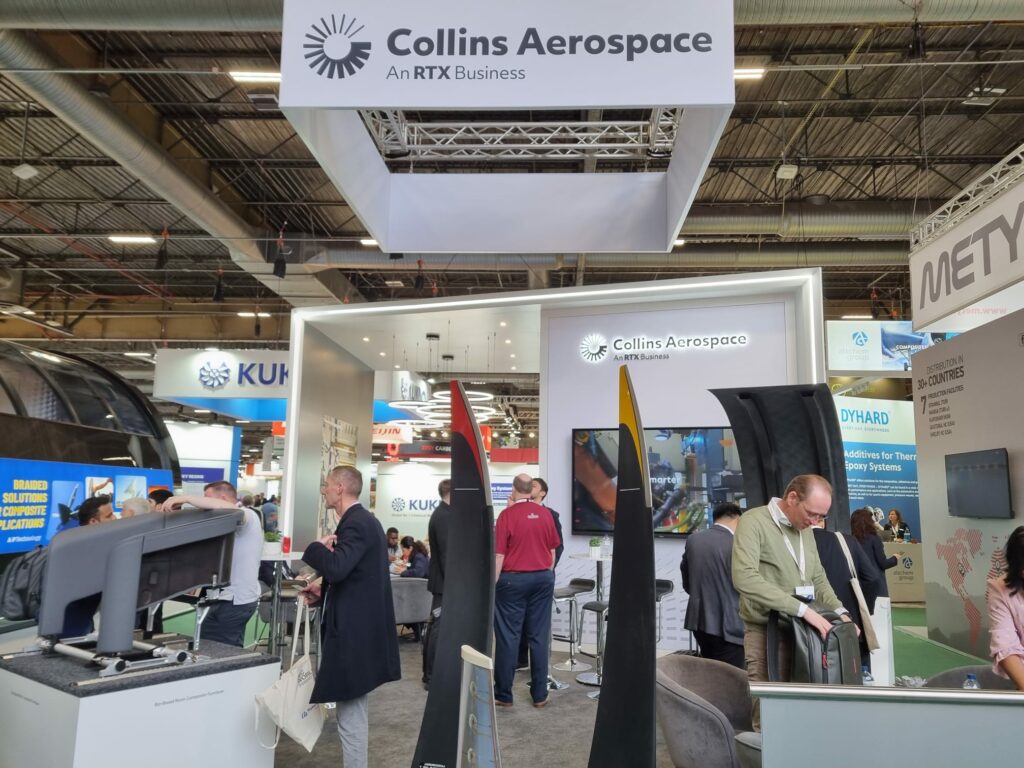
If large-format additive manufacturing (LFAM) has gained traction across several industrial sectors due to its ability to produce large, complex parts, Aerospace & Defense remains its most prominent adopter, largely because of the potential to reduce tooling costs and lead times.
This is hardly a secret. In fact, if JEC World were not a composites show covering all vertical industries, I would have easily called it the “Aerospace & Defense composites show.”
Between major aerospace companies such as Collins Aerospace and numerous OEMs exhibiting on the show floor, JEC World clearly illustrates how the sector’s tolerance for advanced materials and complex geometries makes it a natural fit for applications such as tooling, jigs, fixtures, and molds.
Beyond Thermwood, demonstrating a pair of drone molds in the Live Demo Area, other examples caught my attention, including the massive 3D-printed airplane blades rotating at ST Engineering’s booth, produced in ASA.
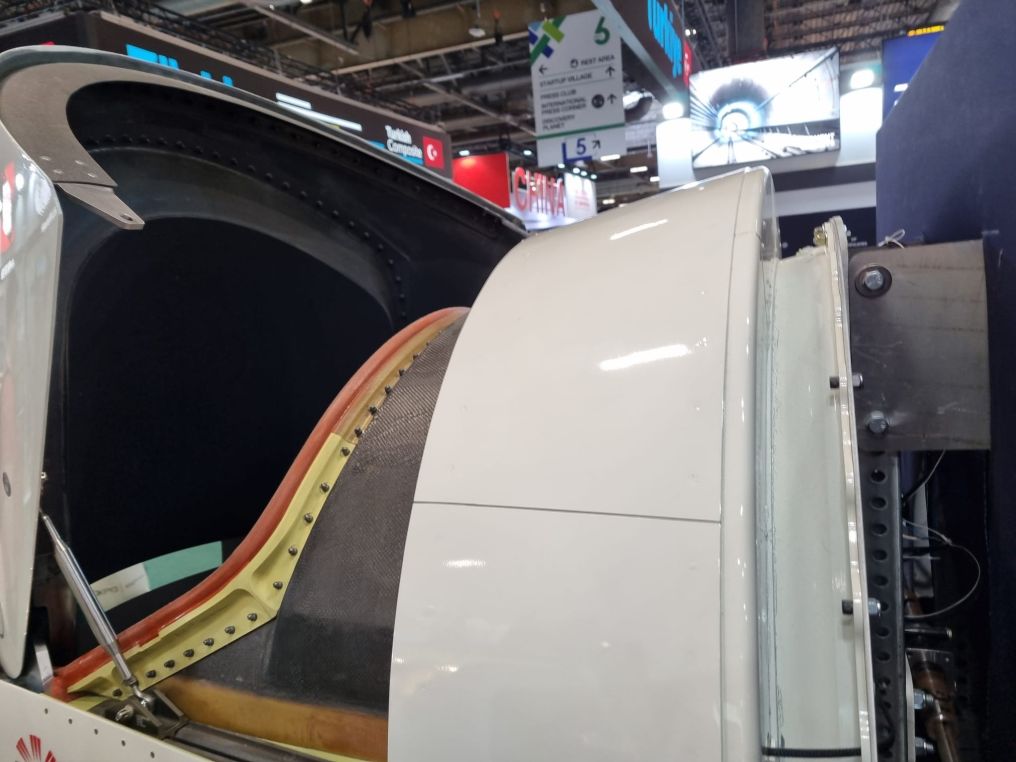
Another interesting component was a part located at the front of the aircraft. Not the most visually striking element, but a reminder that progress tends to accelerate when technologies intersect: the 3D-printed piece acts as a seam between two parts produced using conventional manufacturing processes.
Automotive & Motorsport: the performance playground
If automotive and motorsport are other obvious vertical industries, the applications showcased made LFAM a natural choice: body panels and interior components, with motorsport continuing to push the envelope on performance-grade composites.
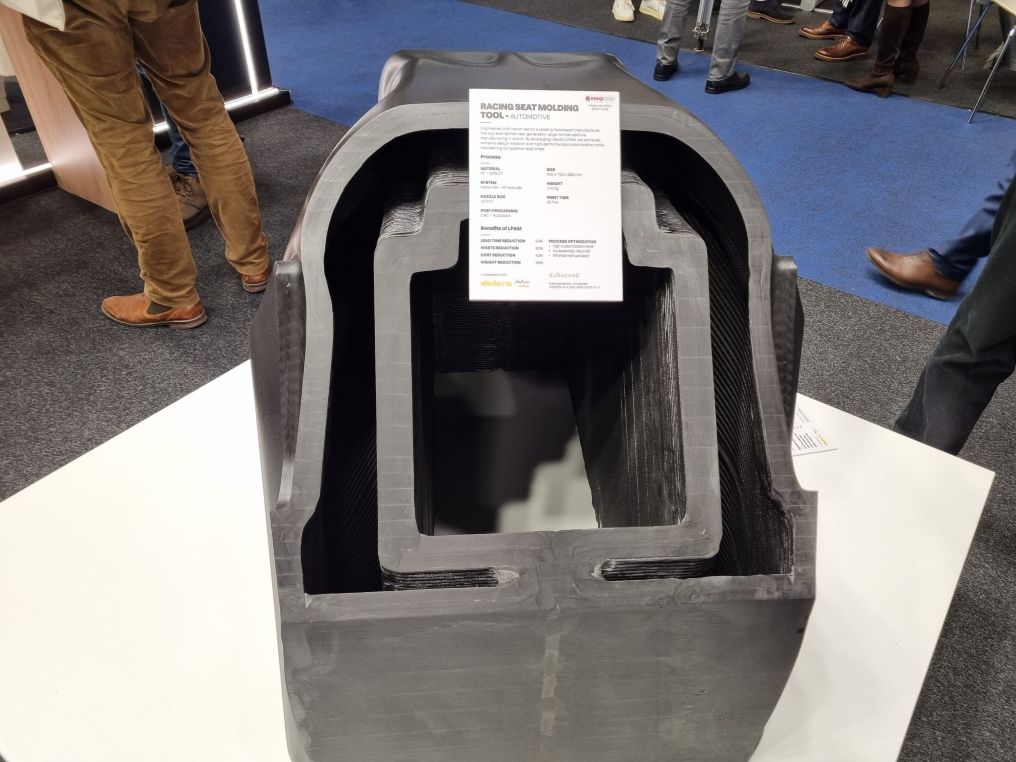
A few interesting parts on display included a racing seat molding tool produced by Caracol’s Heron AM for a motorsport manufacturer. Developed in collaboration with Dallara using SABIC’s PC reinforced with 20% carbon fiber, the tool was produced in 20 hours, weighs 110 kg, and required CNC machining and autoclave processing during post-processing.
Marine: catching the LFAM wave
Marine continues to grow as a key sector for LFAM, with hull molds, structural components, and custom boat parts that would remain prohibitively expensive through traditional tooling.
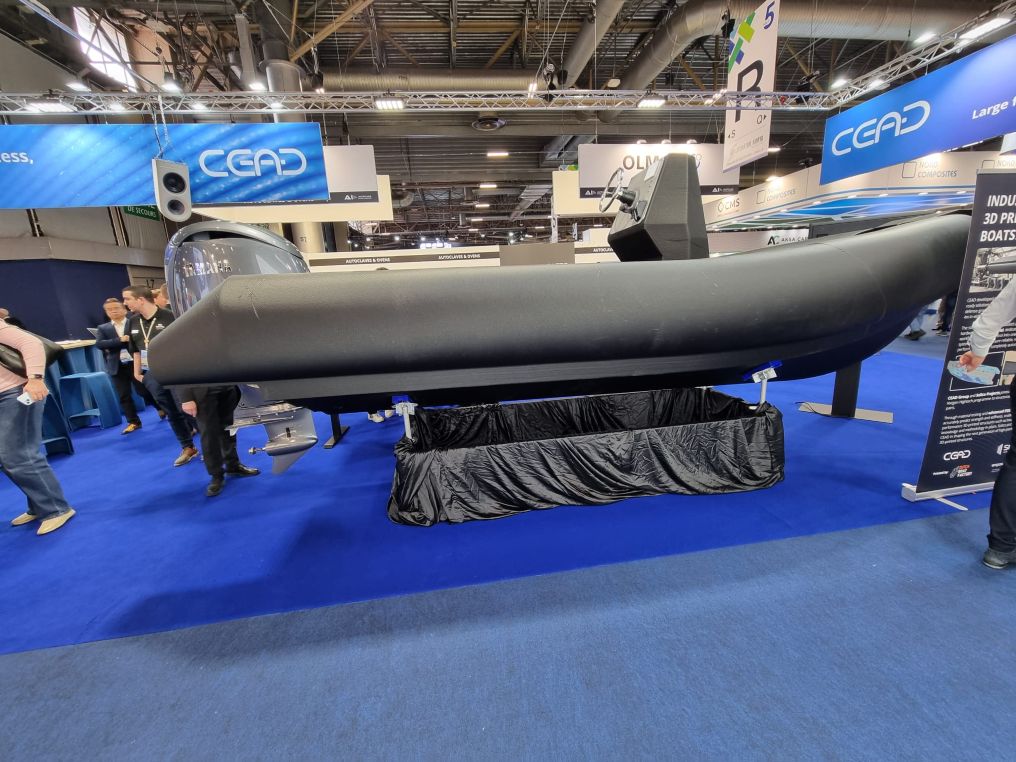
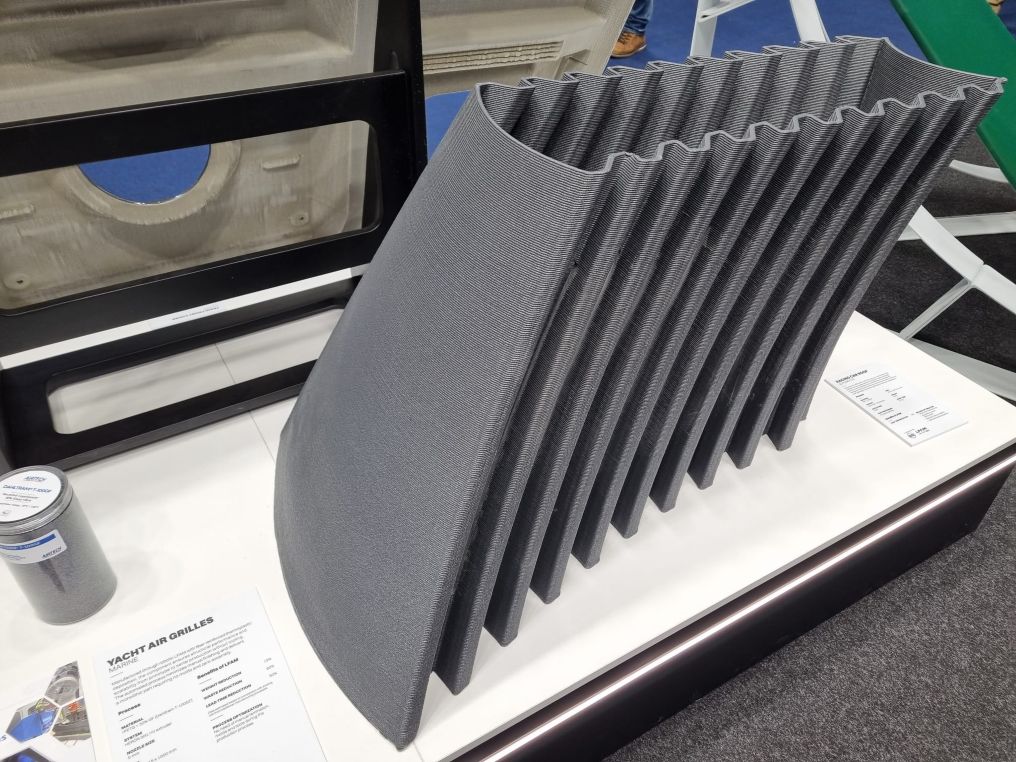
In addition to NUGAE’s “Big Chair,” I appreciated how the yacht air grilles developed by Caracol and Airtech demonstrate both structural performance and scalability. Manufactured using Caracol’s robotic LFAM and fiber-reinforced thermoplastic deposition (rPETG with 30% glass fiber) in eight hours, the part required gel coating during post-processing.
Water distribution systems: the unexpected guest
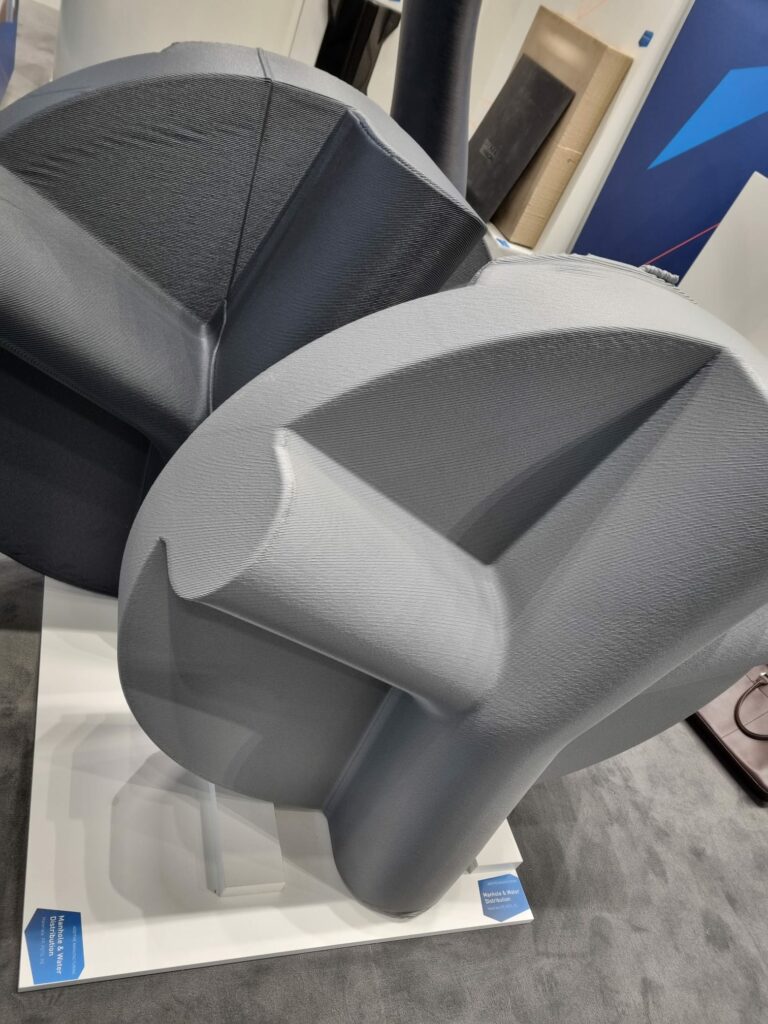
My pleasant surprise in terms of applications was a water distribution system structure on display at KraussMaffei’s booth. Designed to transport treated, safe drinking water from treatment facilities or reservoirs to end users, these structures are critical components of urban infrastructure.
The one showcased by KraussMaffei was printed in PP and PETG. Seeing additive manufacturing applied to such infrastructure-related components was an interesting reminder that the technology’s potential goes far beyond the industries we usually associate with it.
 Architecture & furniture: the public face of LFAM
When looking at the market on a larger scale, architecture and furniture will probably not drive the growth of LFAM in the same way aerospace or motorsport do. However, they might be the sectors that help democratize the technology for a broader audience.
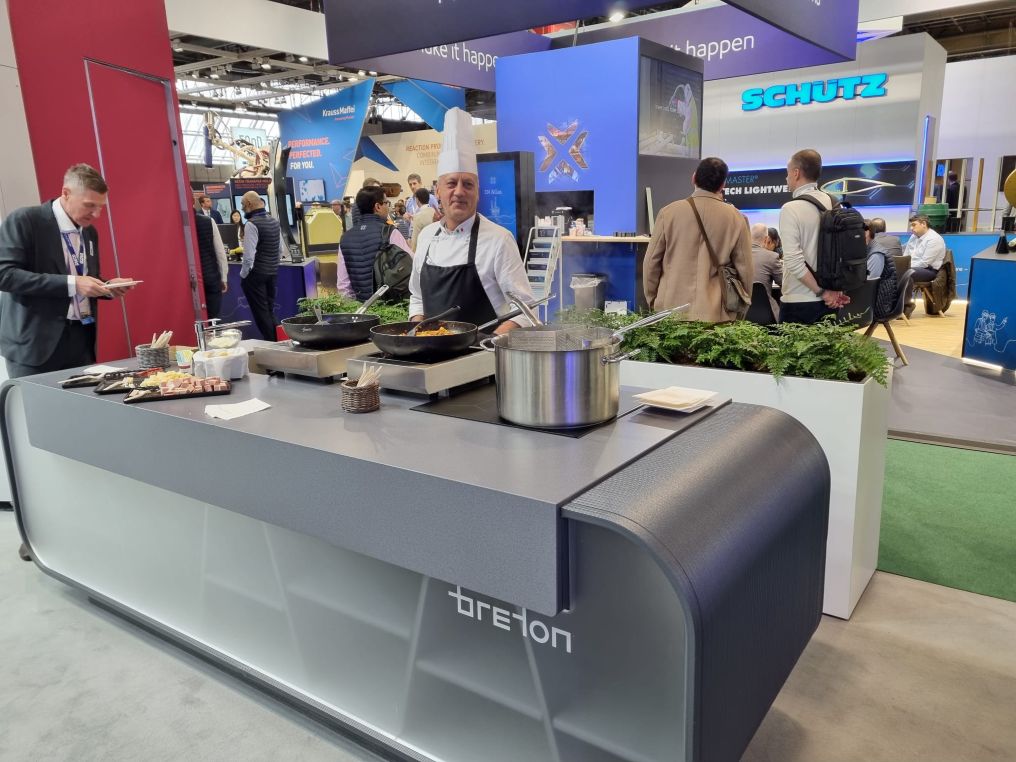
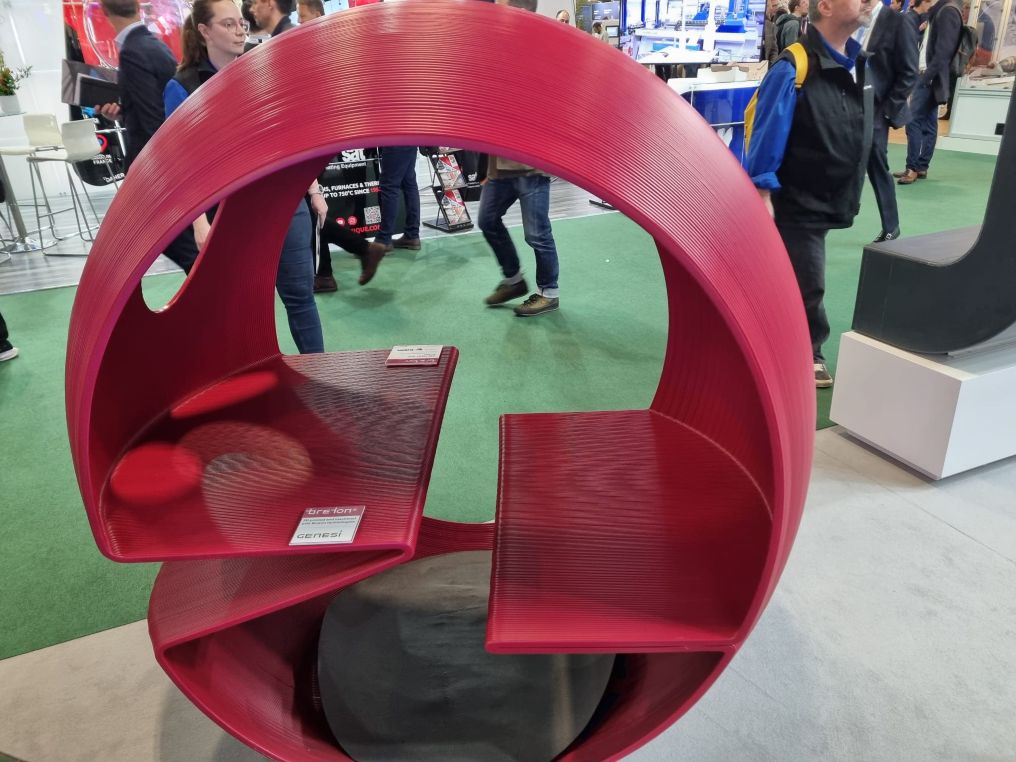
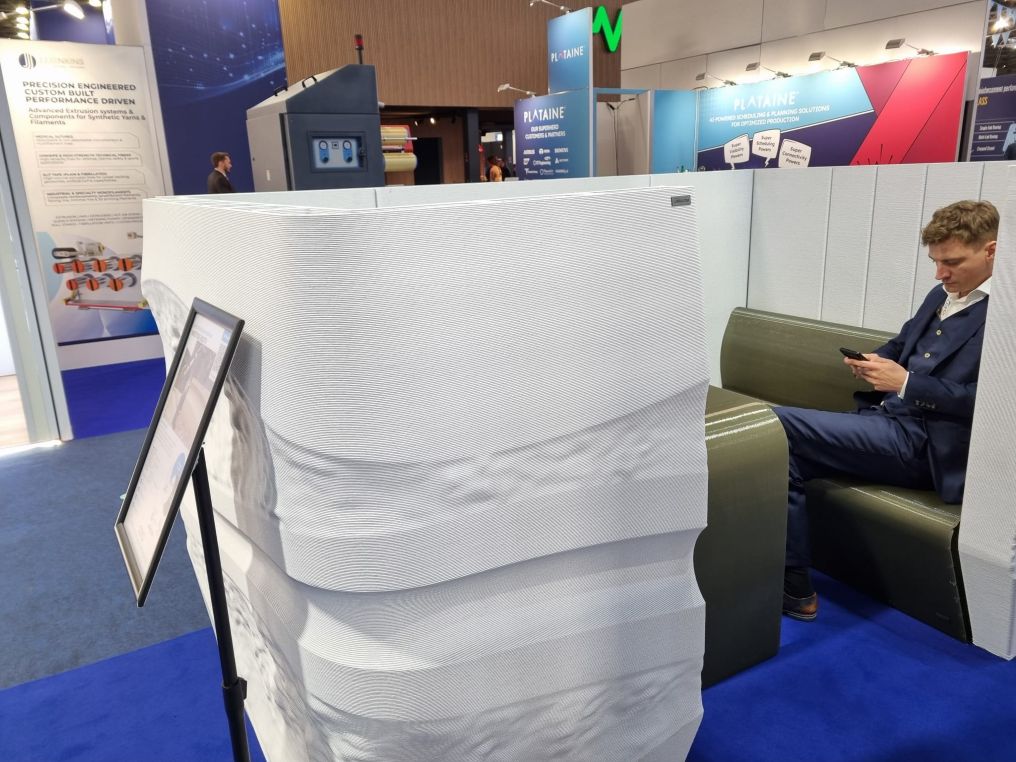
Breton and its collaboration with Stylplex continue to illustrate this idea well. Between a 3D-printed kitchen where visitors could enjoy Italian cuisine during the show, single 3D-printed offices, meeting corners, and even 3D-printed bars, there was a clear effort to show how additive manufacturing can integrate into everyday environments, not just industrial production floors.
 Beyond applications…
While it is easy to associate composites additive manufacturing with LFAM, CONCR3DE proposes an interesting alternative to this landscape. The Dutch company showcased its Armadillo White (XL) binder jetting 3D printer at the show.
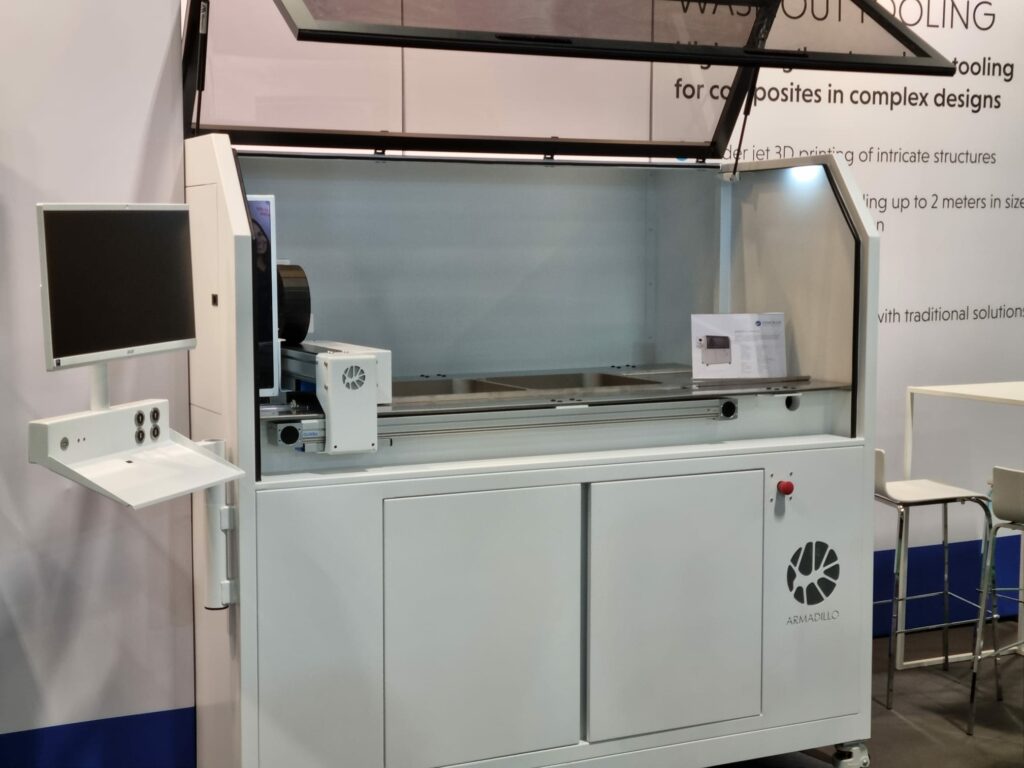 Designed primarily with research and development in mind, the Armadillo White is built as a fully open binder jetting platform, allowing users to experiment with a wide range of powders and binders while maintaining full control over process parameters, from binder droplet size and saturation to curing options such as UV or infrared heating.
The system is modular and customizable, enabling researchers to test new material combinations and explore novel applications without the restrictions typically imposed by closed industrial platforms.
While LFAM dominates current industrial deployments, platforms like CONCR3DE’s may play a quieter but equally important role: helping researchers develop the next generation of printable materials that could eventually feed larger production applications.
Concluding thoughts
Remember when I said in the latest issue of 3D ADEPT Mag that this segment appears to be in a moment of transition, marked by an “unusual calm”?
Whether that calm reflects fewer real opportunities for existing players, or simply fewer companies willing to communicate openly about their developments, was a question I intended to explore further at JEC World 2026.
After walking the aisles of the show, the answer feels more nuanced than the Paris weather that accompanied the week. If the sky remained mostly grey, the outlook for composite additive manufacturing did not feel gloomy. The technology is not everywhere, and it does not need to be. Where complexity, scale, and economics align, it is already proving its value.
*We curate insights that matter to help you grow in your AM journey. Receive them once a week, straight to your inbox. Subscribe to our weekly newsletter.