

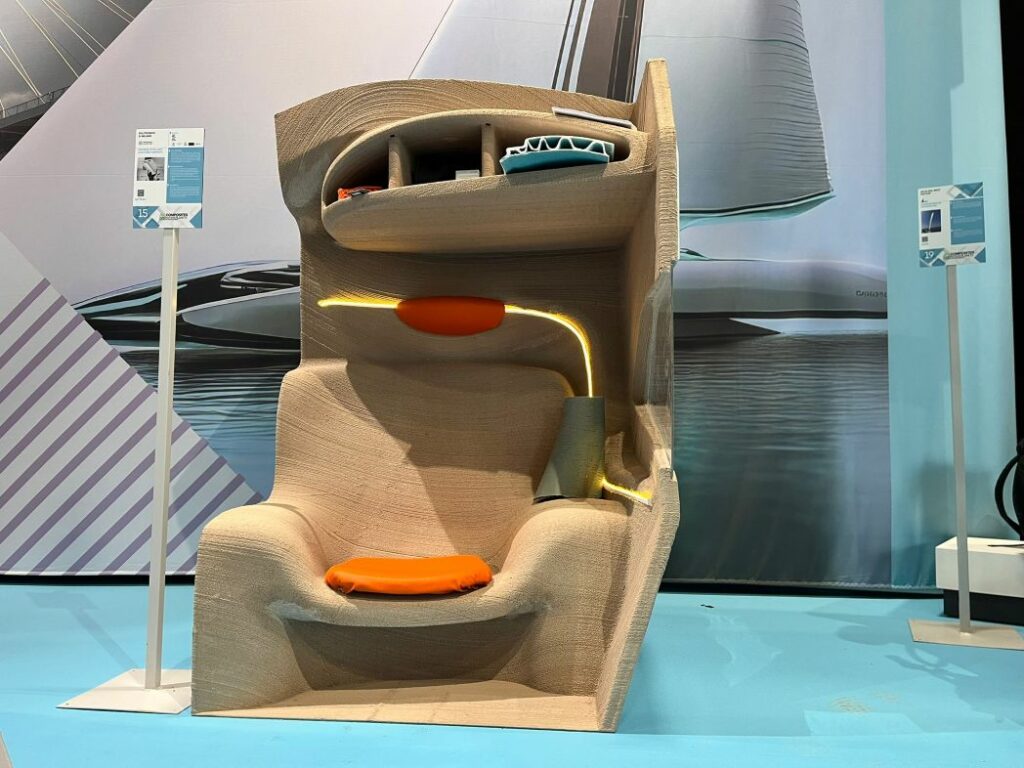
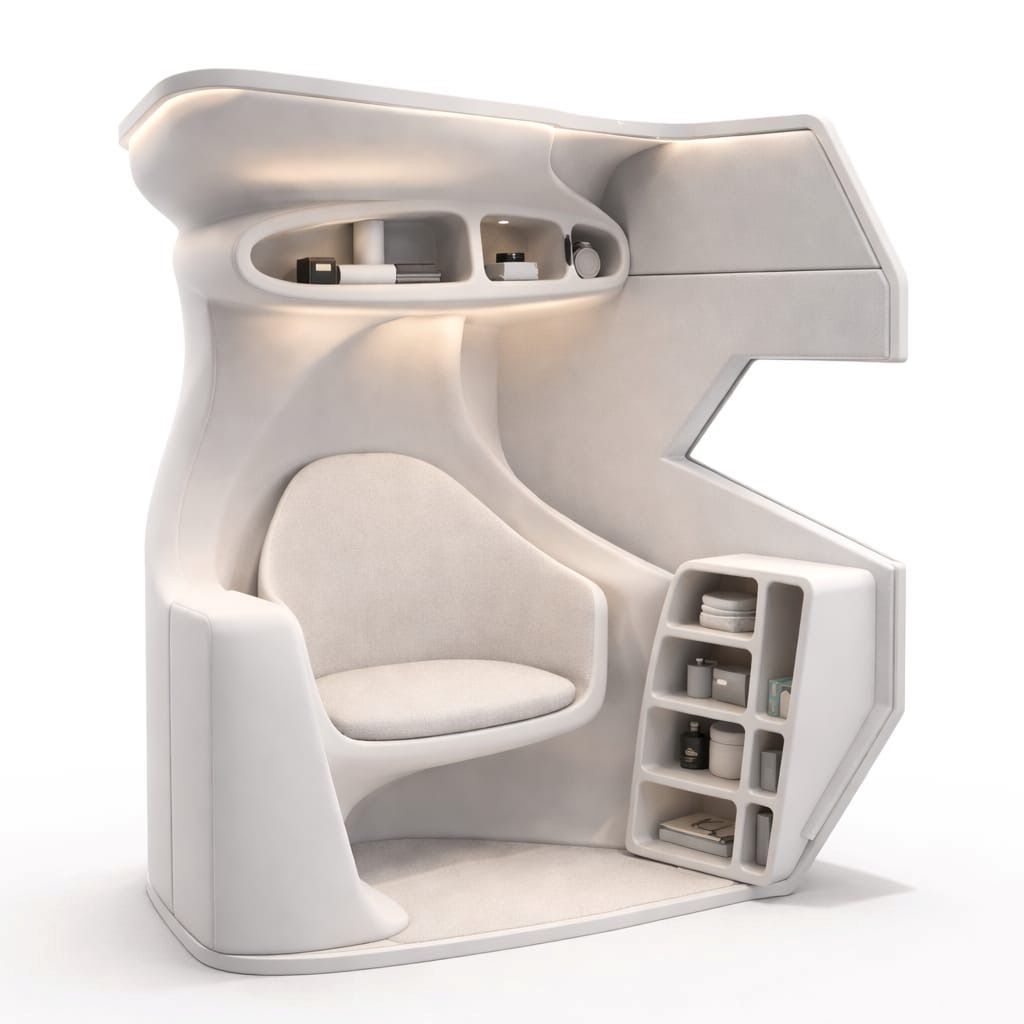
At JEC World 2026, NUGAE showcases a structural component that demonstrates how robotic 3D printing can transform the way boats and large composite structures are designed and built.
The project presented has been developed within the framework of the NEMO – Design 4 Yacht Flexible Customization project, carried out in collaboration with Politecnico di Milano.
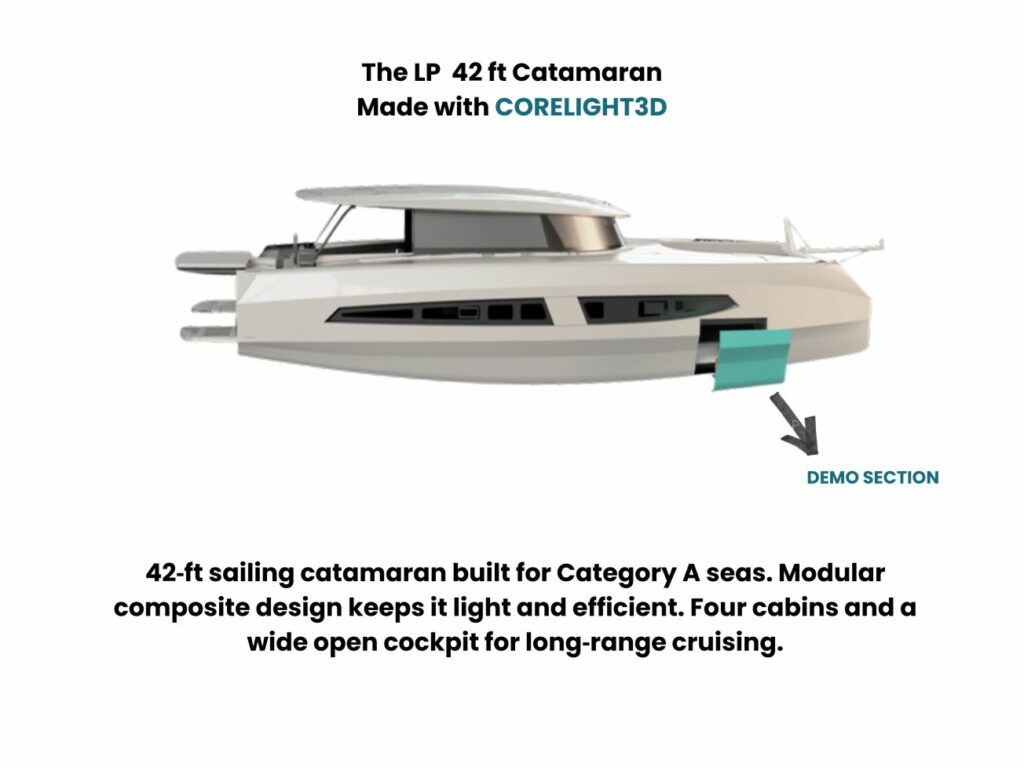
The component on display is part of a 43-foot (13 m) catamaran currently under construction by the company. It weighs 37 kg, was produced in 42 printing hours, and was made using 70% recycled material. The result is a lightweight structure engineered for performance while embracing more sustainable manufacturing principles.
Key elements of the manufacturing process
At the core of the component’s manufacturing process is UL-LFAM (Ultra-Light Large Format Additive Manufacturing), a proprietary robotic manufacturing system the Italian company developed.
Unlike conventional boatbuilding processes, which rely on complex molds and labor-intensive workflows, the NUGAE system produces structural geometries directly through robotic additive manufacturing.
The second key element is CoreLight3D®, an innovative ultralight core material based on recycled polypropylene (PP). Engineered by NUGAE specifically for robotic additive manufacturing, the material is designed to be easily machinable while being optimized for adhesion with resins and composite laminates. This enables printed components to integrate seamlessly with traditional composite reinforcement processes commonly used in advanced boatbuilding.
The third element is NU-Slice, NUGAE’s proprietary software environment, which manages the operation of the robotic system and implements advanced slicing and deposition strategies developed specifically for functional structural geometries.
Together, these technologies enable the production of lightweight shell structures with integrated internal geometries. UL-LFAM is already operational in industrial environments and is being applied to marine structures, design components and other advanced manufacturing sectors.
While the marine sector remains the company’s primary focus, where NUGAE maintains a distinctive specialization that likely makes it a unique case worldwide, the company is also exploring new industrial applications through collaborations that will be revealed in the near future.
“Our approach has always been driven by one principle: lightness and process optimization,” says Francesco Belvisi, Co-Founder of NUGAE. “We design components that are structurally efficient and that do not require costly post-processing. The goal is to produce parts that come directly out of the printer ready to be used, reducing time, waste and complexity in the manufacturing chain.”
Images: NUGAE
THE 3D ADEPT WEEKLY NEWSLETTER
The industry moves fast. Stay ahead.
Every week, the latest additive manufacturing news, in-depth features and real-world applications, straight to your inbox. Plus, be the first to know when a new issue of 3D ADEPT Mag is out.
Free · One email a week · Unsubscribe anytime
Clicking loads our email provider’s sign-up form, including its analytics and Google’s anti-bot protection. You’re only subscribed if you complete the sign-up. Read our privacy policy.