





Combining laser sintering with a technique similar to SLA to manufacture ceramics
Researchers from NC State University have explored the use of lasers to create ceramics that can withstand ultra-high temperatures. The technique can be used...

ASTM International partners joins forces with OEMs to launch an Additive Manufacturing Certification Program
ASTM International’s Additive Manufacturing Center of Excellence (AM CoE) has launched a new manufacturer certification program designed to enhance quality assurance, regulatory compliance, and...

New lab to test the structural integrity of 3D printing materials in space-like conditions
Until now, no research facility has been dedicated to ensuring that polymers, ceramics and metals printed in orbit will be able to withstand the...
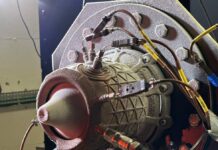
LFAM: LEAP 71 to develop meganewton-class propulsion systems
As part of its rocket engine program and on the heels of the validation of smaller-scale engines, global software developer LEAP 71 plans to...
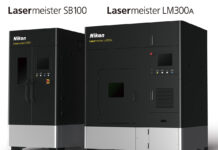
New agreement to enable the University of Waterloo to explore repair capabilities for metal 3D printed parts
OEM Nikon, and AP&C, a Colibrium Additive company, part of GE Aerospace, signed a sponsored research agreement that will enable the University of Waterloo...
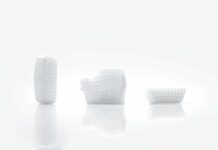
3D printed bioceramic implants achieve a 92% total success rate with Lithoz lithabone material
This study evaluates the healing success of LCM-manufactured ceramic implants in human bodies over a follow-up period of 5 years.
Manufacturers are often criticized for...

New association takes up the challenge to make Bavaria a high-tech location for AM within 10 years
A consortium of large companies, medium-sized businesses, universities, research institutions, and the innovation agency of Bavaria is incorporating Bavaria Makes e.V., an association that aims...

Electronic waste recycler turns e-waste into 3D printing filaments
E-waste refers to any electrical or electronic equipment that's been discarded. On average, each Australian produces 20kg of e-waste a year, compared with the...
24 months and £1.9M to develop 3D printing materials for bioprocessing applications
AM can be used in bioprocessing to enhance efficiency, customization, and performance. Some of the applications include bioreactors and fluidic systems, filtration and separation...
Adjusting alloy composition could ensure a better 3D printing process
To prevent changes in the microstructure of metals during the 3D printing process, researchers from Cornell University have developed a method to precisely control...