


Editorial review of 2020, published in the November–December 2020 issue of 3D ADEPT MAG. Survey figures, roles and the outlook for 2021 are presented in their historical context.
This review examines five topics that shaped additive manufacturing discussions in 2020: the pandemic, sustainability, diversity and inclusion, funding, and climate change. It presents concerns and expectations expressed at the end of that year.
1 — The COVID-19 pandemic
The pandemic profoundly changed working conditions, trade and everyday life in 2020, making it central to this review.
3D printing companies contributed to producing protective equipment during the crisis. Beyond that mobilisation, businesses had to assess the economic consequences and prepare their next steps.
The VDMA Additive Manufacturing Working Group conducted two surveys in 2020. The findings reported below describe the responding companies and their expectations at that time.
In the survey reported here, covering around 70 companies, 56% of respondents reported lower sales in the first half of 2020. One fifth reported a decline exceeding 20%, while one fifth reported growth. These proportions describe the survey sample.
“The weak economy resulting from the corona pandemic is also affecting the business situation in Additive Manufacturing,” explains Dr. Markus Heering, Managing Director of the Additive Manufacturing Working Group. According to the survey, consulting firms, AM materials and manufacturing service providers are hit the hardest. The fact that many users of AM processes and users of AM parts also reported declining sales fits the picture. “Many projects are currently being postponed. In addition, foreign business is significantly more difficult due to travel restrictions,” he explains.

Confidence based on export expectations
At the time of the survey, almost 40% of respondents expected exports to grow over the next twelve months and 46% expected stability. Looking 24 months ahead, more than two thirds anticipated growth. Nine out of ten cited the EU as their main export market. These were forecasts made in 2020.
For 40 percent, exports to the USA are also highly relevant – and a fifth of all respondents also name China as an important target market for their products and services. Heering sees this export orientation as proof of the increasing maturity of the AM industry. “At the same time, the large differences between the 12- and 24-month forecasts indicate a certain scepticism about a rapid return to normality without pandemic-related restrictions,” he explains.
AM industry gets ready
Nevertheless, the willingness of companies to invest has increased compared to the last survey in April 2020. Thus, 35 percent now state that they want to expand their investments. In the April survey this figure was 24 percent. And compared to 32 per cent in April, only 18 per cent of those questioned now state that they are planning with lower investments in the AM sector. “Even after the very difficult first half of the year, our member companies are still looking ahead to their growth opportunities,” says Heering. This is also reflected in the fact that a large proportion of companies say they are using the current rest period for product development and staff training. “They want to be ready when the economy picks up again,” he explains.
2 — Sustainability

When 3D ADEPT Media shared that twelve companies join AMGTA, to promote sustainability within the AM industry, Eliana Fu, an engineer in the industry, comments: “If COVID hadn’t been the major topic of conversation in 2020 in the AM industry, it would have been “sustainability” quite frankly.”
I could not agree more with her. Sustainability has been widely addressed throughout the year, by 3D ADEPT Media itself, by our colleagues from other media, and during so many events. So, what’s important for Additive Manufacturing companies then?
The attention paid to sustainability also raises practical questions: how should companies measure impacts, set objectives and assign responsibility?
In a panel discussion on the relationship between sustainability and AM, Björn Hannappel, Head of Sustainability at EOS, explained that AM companies should keep in mind the four I in their sustainability strategy:
- Innovation in powders, machine and cost side
- Information towards the customers, the public and non-customers
- Impulse
- And Inspiration as we need leadership and proof that it is working.
Usually, “there is a sustainability strategy and there is a company’s strategy but from my perspective, the company’s strategy also needs to be a sustainability strategy”, Hannappel completes. A vision that Sherry Handel, Executive Director at AMGTA shares as she concludes: “sustainability is a journey, not a destination” and everyone should feel concerned.
3 — Diversity and inclusion in tech
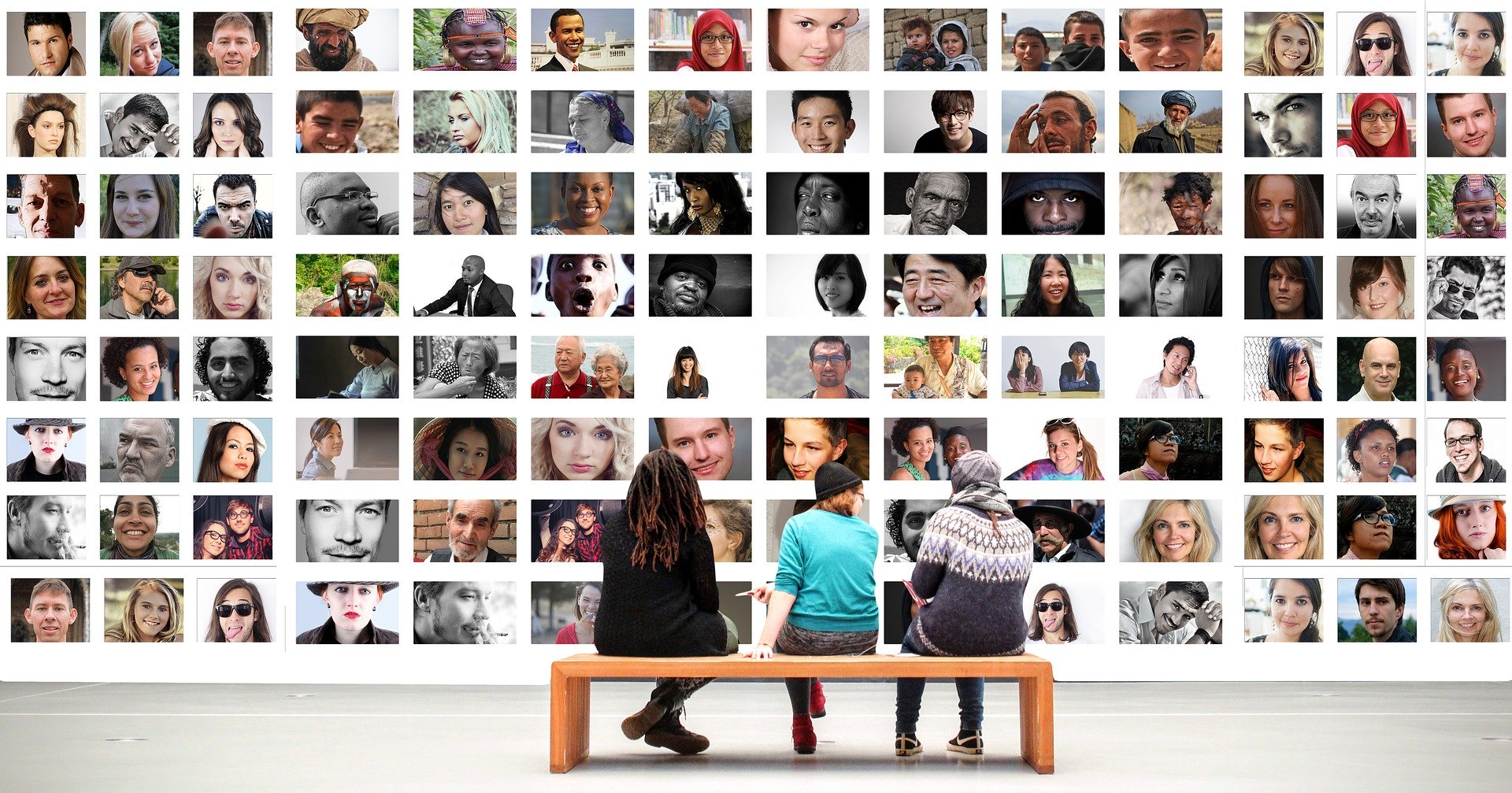
This long-standing issue has caused much ink to flow throughout this year. For the additive manufacturing industry, Women in 3D Printing has published a special edition of its 2020 Diversity for Additive Manufacturing Report. The report that Kety Sindze, our very own Managing Editor at 3D ADEPT Media, has led goes beyond the simple goal of improving gender parity.
The report draws on two surveys. The first addresses recruitment companies and examines minority representation among applicants and within the sector.
The second asks additive manufacturing companies about workplace inclusion practices and actions that could improve diversity in the sector.
The 2018 McKinsey report found that companies in the top quartile for ethnic and cultural diversity on executive teams were 33% more likely to achieve above-average profitability than those in the bottom quartile. This is an observed correlation, not a 33% increase in profits or proof of causation.
The Women in 3D Printing report proposes ways to reduce bias and improve inclusion. Implementation should reflect each organisation’s context and be monitored over time.
Approaches may differ across countries and businesses; the aim remains to make career opportunities more accessible and inclusive.
4 — Funding
Further reading: our funding interview with Arno Held.

Raising funds in an uncertain market is a challenge for additive manufacturing businesses. 3D ADEPT Media spoke with Arno Held, then Chief Venture Officer at AM Ventures, to understand an industry investor’s criteria and outlook.
5 — Climate change

Climate concerns also raise questions about manufacturing choices: materials, energy, transport, service life and end of life. The question here is under what conditions additive manufacturing can help reduce impacts.
Service provider ProtoCAM points to design for additive manufacturing, topology optimisation and generative design as ways to reduce component weight or material use. These opportunities need to be assessed for each application.
“Because printing can be performed on-site for green energy producers such as wind turbines, additive manufacturing offers a two-for-one hit for sustainability and environmental protection”, the company said.
Editorial clarification: local production or reduced part weight alone does not demonstrate an overall environmental benefit. The comparison must consider materials, process energy, transport and use across the life cycle.
On 18 September 2020, the European Commission opened a €1 billion Horizon 2020 call to support the green and digital transition. The call’s budget was not an amount already paid in full to additive manufacturing companies.
The call covers ten areas and seeks short- and medium-term results within a longer-term transition. Its environmental goals do not establish that additive manufacturing is inherently pollution-free or preferable to every other process.
DyeMansion appears in the EIC Accelerator selection for the 19 May 2020 cut-off, with its Powerfuse S 4 AM project. That selection is separate from the €1 billion call opened in September. The company also announced a $14 million funding round in 2020.
The Powerfuse S described at that time is intended for automated smoothing of 3D printed polymer parts. Surface and sealing results depend on the material, geometry and treatment parameters.
The supplier highlights automated loading options, connectivity, batch tracking and solvent recovery. These features do not remove the need to assess process impacts. A solvent’s regulatory status does not approve every treated part for food contact or another regulated use.
“Being selected as one of the very first startups to work at the forefront of Europe’s mission to become the first climate-neutral continent is a great honor for us,” said Felix Ewald, CEO and co-founder of DyeMansion. “This underlines not only the sustainability potential of 3D printing but also the innovative ‘green’ approach that we bring to the manufacturing industry with our Powerfuse S. We take this job seriously and see sustainability as a key obligation to all our activities.”
Covestro also describes a circularity ambition in its 2020 annual report, including alternative feedstocks, recycling and renewable energy. This is a strategic direction, not an announcement that full circularity would be achieved in 2025.
“We collect raw materials and make new out of them,” states Business Development Manager Lukas Breuers during an expert Session moderated by Niko Palosuo, Head of External Communications. “Our new materials are based on three pillars”. With a key focus on recycling, Breuers explained that new manufactured products [should be] based on recycled raw materials, on CO2-derived raw materials as well as bio-content of up to 50%.
Editorial clarification: the bio-content figure concerns the materials discussed by the speaker, not the entire portfolio. Recycled, bio-based or CO₂-derived feedstocks alone do not demonstrate a lower overall life-cycle impact.
At the end of 2020, these initiatives offered directions for 2021. The challenge remained to turn ambitions into measurable results and establish the conditions under which additive manufacturing delivers a benefit.
This feature was initially published in the November–December 2020 issue of 3D ADEPT MAG.
THE 3D ADEPT WEEKLY NEWSLETTER
The industry moves fast. Stay ahead.
Every week, the latest additive manufacturing news, in-depth features and real-world applications, straight to your inbox. Plus, be the first to know when a new issue of 3D ADEPT Mag is out.
Free · One email a week · Unsubscribe anytime
Clicking loads our email provider’s sign-up form, including its analytics and Google’s anti-bot protection. You’re only subscribed if you complete the sign-up. Read our privacy policy.