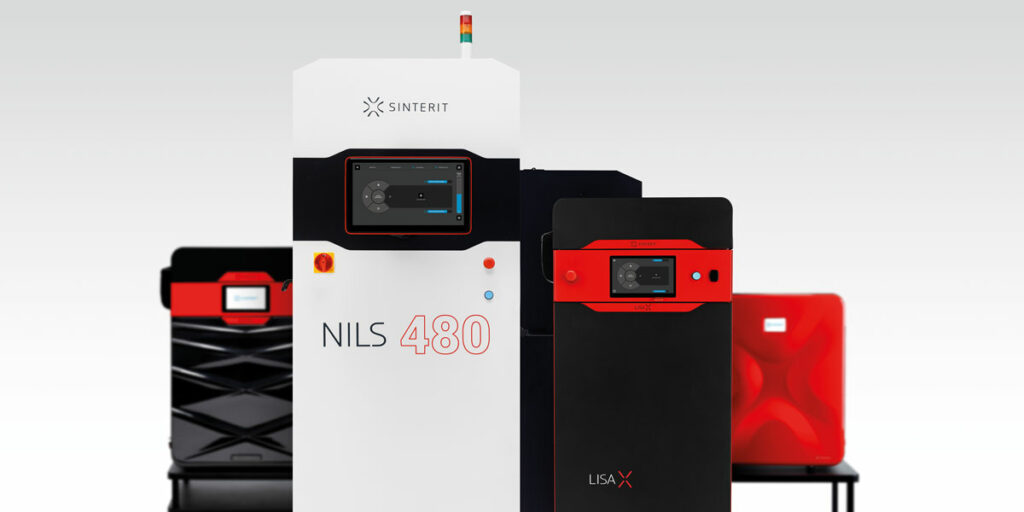
Sinterit is winding down its manufacturing operations. The Polish company helped bring SLS 3D printing to the desktop. In a LinkedIn statement, the Kraków-based manufacturer confirmed that it filed for bankruptcy in July. The court then appointed a temporary court supervisor on October 28.
This may surprise readers who saw the launch of BIANCO2 in May. The CO₂ laser SLS printer had first deliveries planned for Q4 2026. Moreover, in July, the same month as its bankruptcy filing, Sinterit announced an agreement with DyeMansion to sell post-processing systems to its customers.
“We are currently winding down our manufacturing operations. In coordination with the court, we are exploring options to continue our service, consulting and sales activities, with the aim of protecting the interests of Sinterit’s creditors and customers to the greatest extent possible,” the company writes.
It may not be a full shutdown yet, but the warning signs were there
After Formlabs debuted its Fuse 1 in January 2021, Sinterit struggled to maintain its leading position. It launched Suzy in April 2025 at EUR 17,590. At the time, the company’s Sales Director Maks Wikar described the mid- and large-size SLS market as “overcrowded, with slim profit margins.”
Suzy’s launch could be seen as a response to Formlabs’ Fuse 1 and an effort to retain market leadership. However, the orders that followed did not secure that position. In fact, the largest reported order came from FIT AG, Sinterit’s largest shareholder. It covered more than 30 printers.
Can the SLS printer market still grow?
With Sinterit winding down operations, I am questioning the future of the SLS printer market. Swiss pioneer Sintratec shut down in May 2024 after selling more than a thousand systems. This year, EOS retired its FORMIGA.
Meanwhile, other OEMs continue to enter the SLS field. For example, Raise3D’s partnership with AMT aims to deliver end-to-end SLS post-processing in Europe.
Together, these developments suggest there may be less room for standalone machines. With the current demand for SLS parts, the market may instead reward ecosystems that combine materials, post-processing, software and service.
Sinterit’s situation shows how hard it is to sustain a hardware business in a consolidating market. We will keep following the proceedings.
THE 3D ADEPT WEEKLY NEWSLETTER Every week, the latest additive manufacturing news, in-depth features and real-world applications, straight to your inbox. Plus, be the first to know when a new issue of 3D ADEPT Mag is out. Free · One email a week · Unsubscribe anytimeThe industry moves fast. Stay ahead.