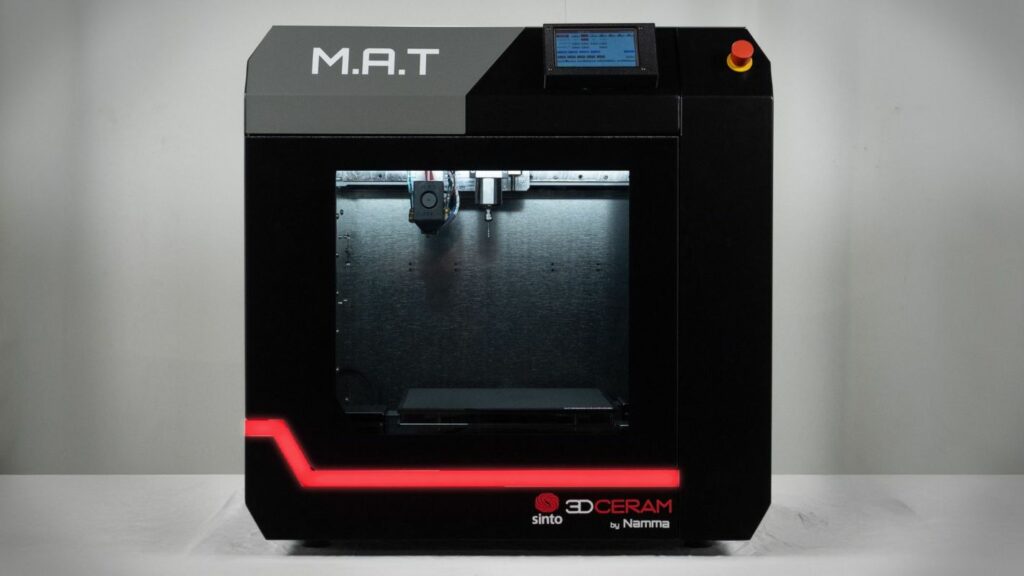
Launched in 2023, 3DCeram’s Multi Additive Technology (M.A.T) platform integrates multiple manufacturing processes (FFF, machining, extrusion/robocasting) within a single system. A recent collaboration with ONERA offered a concrete opportunity to assess the industrial potential of this hybrid approach and explore the performance envelope of the M.A.T platform.
In a collaboration that aims to explore additive manufacturing for ultra-high-temperature ceramics (UHTCs), ONERA, the French Aerospace Lab, has been working with one of the leading experts in ceramic 3D printing, 3DCeram.
ONERA has built extensive expertise in UHTC materials, developing advanced compositions and shaping complex components through subtractive routes. Many of these parts have been successfully tested within national and international aerospace programmes.
The company is now tapping into additive manufacturing as a complementary pathway to produce intricate UHTC geometries that are difficult or impossible to achieve through conventional processes.
How exactly?
This growing interest led ONERA to conduct a technical assessment of 3DCeram’s M.A.T platform.
Additive manufacturing is steadily establishing itself as a critical processing route for ultra-high-temperature ceramics (UHTCs), particularly when combined with purpose-designed feedstocks such as the ZrB₂–SiC filaments developed by Nanoe for ceramic AM applications.
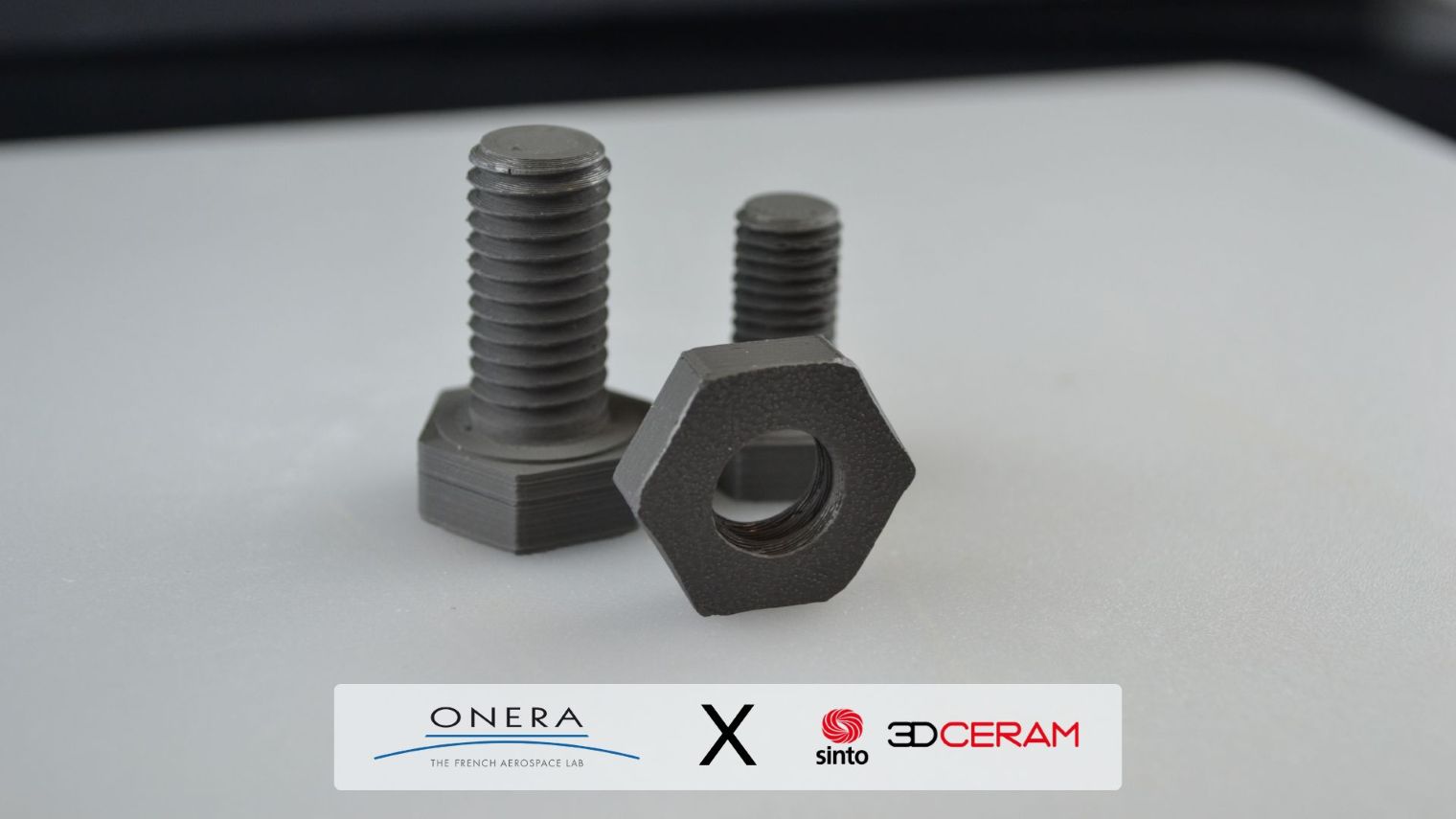
In this context, 3DCeram successfully 3D-printed ZrB₂–SiC components on its M.A.T platform using Zetamix UHTC filaments developed by Nanoe and ONERA-defined test geometries, validating the platform’s ability to process advanced UHTC materials through ceramic additive manufacturing.
“This joint effort combines ONERA’s deep materials expertise with our process capabilities, marking a meaningful step towards expanding the design possibilities for next-generation aerospace components. This work represents an important milestone in making UHTCs compatible with future industrial and space-mission requirements,” the team at 3DCeram states.
*We curate insights that matter to help you grow in your AM journey. Receive them once a week, straight to your inbox. Subscribe to our weekly newsletter.