

Set aside The Big Bang Theory or Disney’s Big Hero, Ocean’s 8 (2018): A crew made of fearless women 3D scanned a $150 million Cartier Toussaint necklace at the heart of the plot. The crew then sent the digital file to a desktop 3D printer. It produced a convincing Cartier replica, until someone examined it with a jeweler’s loupe.
That was one of the rare times I got to see a desktop 3D printer on screen. That scene made me giggle like a young girl happy to see the boy of her dreams. I was talking about it at work, seeing some sort of real technology on screen while eating popcorn on my couch.
That was impressive and cool for me. It also showed that Hollywood knew about 3D printing and other advanced processes. These tools could bring otherwise impossible objects to life.
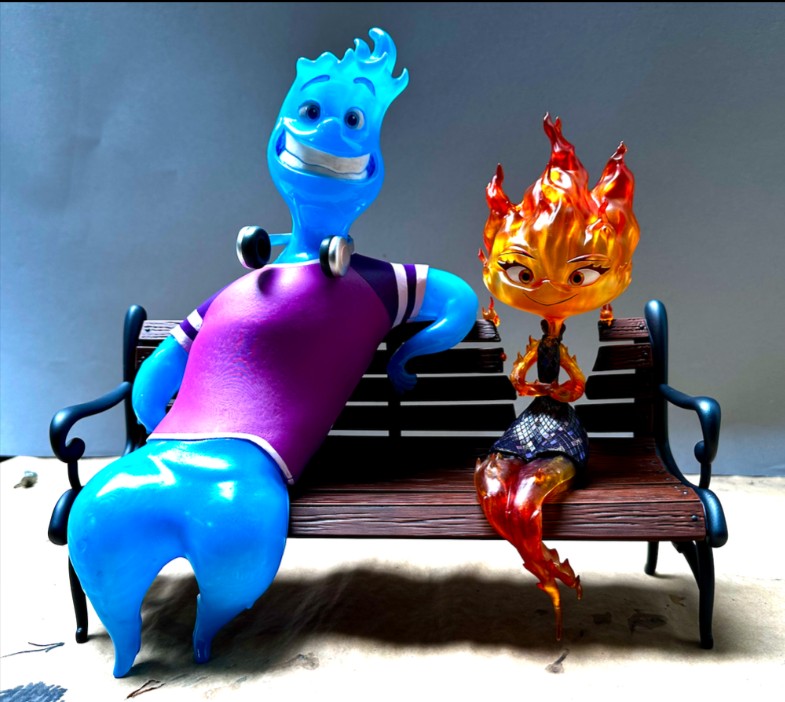
Behind the scenes, the possibilities extend much further. Many printed objects look entirely real. We have seen intricate props, costumes, set pieces, animated characters, etc. made thanks to 3D printing.
2024, AMUG, Chicago. Jason Lopes gave us a glimpse of the behind-the-scenes magic of these movies. His keynote explored the many ways film and entertainment teams can use additive manufacturing and related tools.
Lopes built his film credentials at Stan Winston Studios, Legacy Effects and Gentle Giant Studios. His less discussed time at Carbon also gives him insight into the wider AM industry.
His conversation with 3D ADEPT Media highlights an often overlooked factor: materials. It also explores the value of AM in film and its business opportunities.
“Beauty only attracts the eye […]”
The film lover in me enjoys the art of 3D printing and the advanced tools it brings to the screen. As an editor, I also want to explain what adopting those tools involves for creative professionals.
And that for Lopes, comes to understanding “material” first. Yes, you’ve heard it well. What is a deep concern for demanding industries is equally legitimate in the film industry. To emphasize how important materials are, Lopes told 3D ADEPT Media, he does not look at the technology:
“I don’t look at the technology,” Lopes says plainly. “I look at the application, material requirements. Functionality, performance, what environment it’s going to be in; anything like that. Once I know the palette of materials I have available for that application, the technology follows suit.”
After years at Legacy, Lopes saw what entertainment needed to take AM further: a deeper understanding of material science.
“I went to Carbon because they have some of the best materials out there, specifically in elastomers,” he explains. “It was my first time to really leave entertainment, to go into other verticals, to see what their challenges, problems were, their barriers, what materials they were looking for, and the requirements of those materials.”
Carbon’s Digital Light Synthesis (DLS) technology serves automotive, consumer and medical uses. It processes dual-cure elastomers, chemical-resistant epoxies and soft-touch materials that can withstand thousands of cycles. These needs do not always arise in entertainment.
“The whole time,” Lopes says, “I was building a playbook: if automotive has this need, has this problem, has this challenge, and we know it’s being solved and being worked on, how can I bring that over back to entertainment?”
What if a lattice structure designed to reduce weight in automotive parts could become a design principle for animatronic suits? Could soft-touch materials from consumer products also help performers? Someone wearing 3D printed armor for 14 hours on set needs both comfort and durability.
These are possibilities that can only come to life through experiences.
Limitations are predictable
Material knowledge comes first. Teams must then understand which AM technologies deliver those properties, and when to use them.
While the Superman production spotlighted FDM (Fused Deposition Modeling) as the backbone of on-set flexibility, Lopes emphasizes the potential of color 3D printing and DLS and resin-based systems.
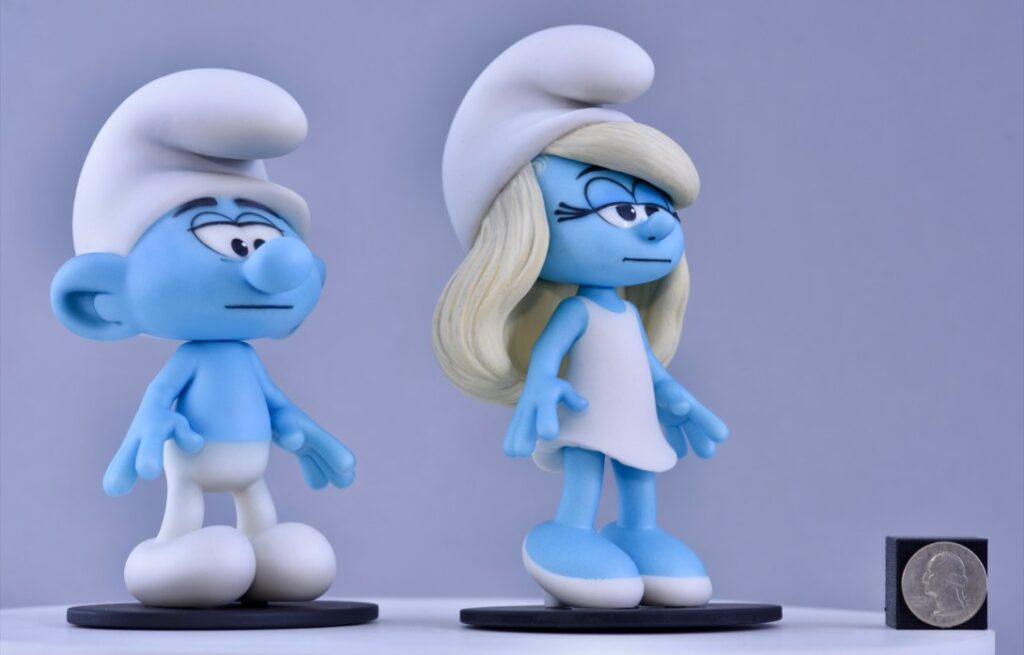
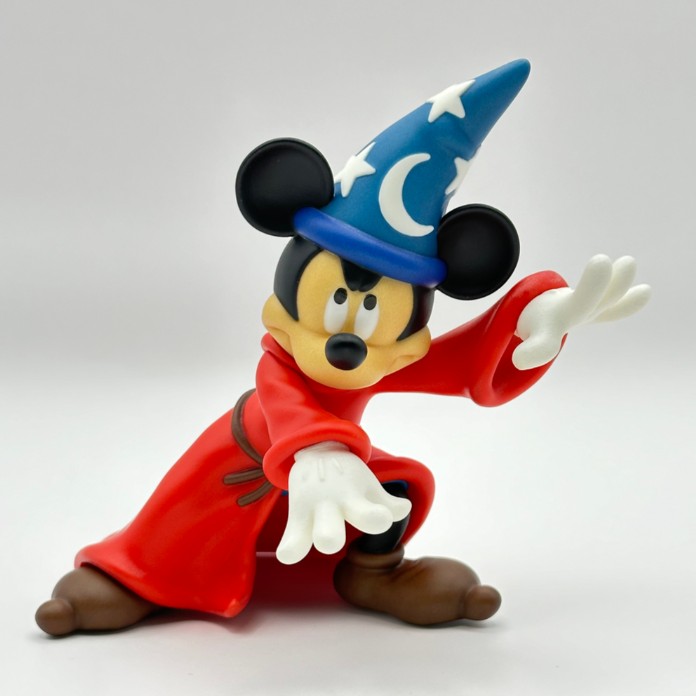
PolyJet and similar color printing systems excel at realistic appearance. They reproduce the color, texture and finish of real objects. This makes them ideal for figurines, art collectibles, display pieces, and hero props where durability across multiple takes isn’t the constraint.
But here’s where Lopes is blunt: “Color is a different beast. At the end of the day, the color technology materials are not engineering materials. They’re still more in that prototype, fragile type of world.”
For the expert, this means one should be aware of the fact that the limitations are predictable. “If you drop a porcelain figure, it’s going to break. Same thing works in the color world. It’s more forgiving in that,” he explains, because audiences and producers expect fragile objects to be, well, fragile.
The key here is to ask the right questions: does this part need to perform? A 3D-printed collectible figurine or a hero prop that appears on screen once? Color 3D printing is your answer. A flexible suit that a stunt performer wears for 12 takes in a single day? Color 3D printing will disappoint.
Choosing durability and performance
By contrast, DLS and similar resin processes can use elastomers and flexible polymers designed for performance. These materials can withstand thousands of cycles, resist chemicals and retain their soft touch under stress.
“DLS and resin-based can really drive across in a major, major impactful way,” Lopes says. These technologies unlock what color cannot: durability, engineering performance, and true end-use capability. A flexible animatronic skin or an armor piece that endures multiple takes. In a nutshell, a costume component subjected to real production stress.
The trade-off here is aesthetic finish. Resin-printed parts usually need finishing to match the look of parts that leave a color printer. However, the performance gains can justify this work.
This explanation refocuses the debate on the application’s actual demands and reinforces the value of a material‑first approach:
“The best way to really get success is to look at it from a material standpoint that supports what the application needs,” Lopes says. “Then it tells me what technologies can support those materials I’m trying to use.“
The magic lies in creative possibilities
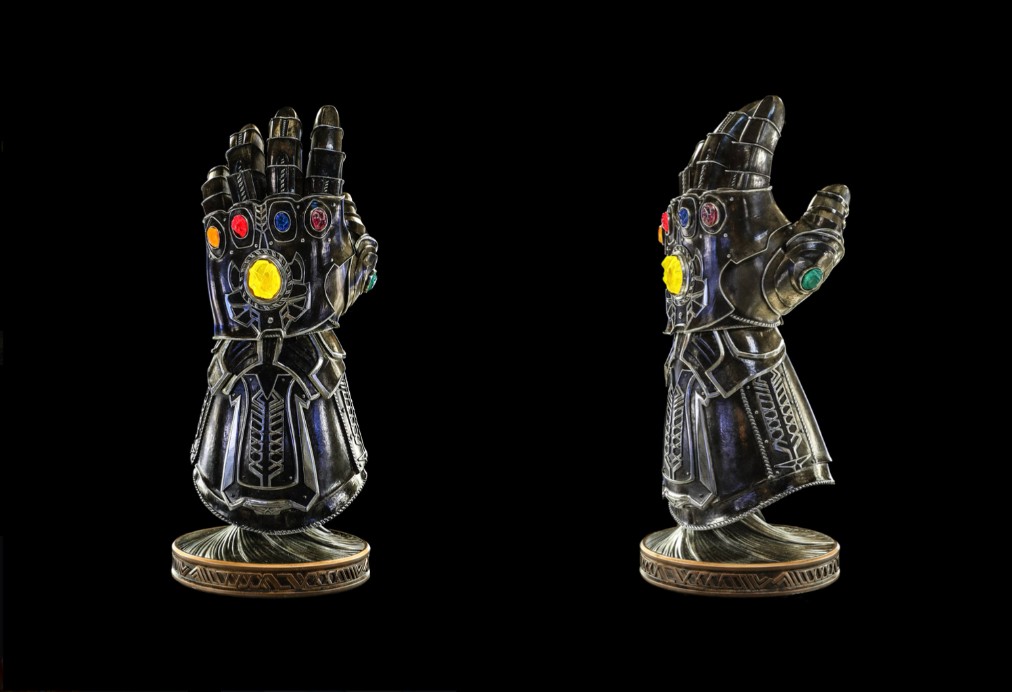
When AM enters a production environment, we usually measure its value in time saved and costs reduced. Film production has unforgiving schedules. Directors change their minds, last-minute requests are routine and budgets shift overnight. Everything moves fast.
“AM keeps us relevant,” Lopes says. “Clients change direction fast, deadlines are crazy. You can’t do that in an analog world. But with a digital‑physical workflow, you can take feedback, update the design, and put a new tangible iteration in front of someone very quickly.”
The real value remains the ability to say “yes” to creative possibilities that traditional timelines would force you to refuse.
Compared with aerospace, healthcare, automotive or energy, film has had a short and fast learning curve for AM.
Filmmakers had different goals from regulated industries. Their parts did not need to last 30 years or pass FAA or FDA certification. Props, costumes, miniatures and puppets needed to look convincing and arrive on time. Teams also had to modify them quickly when needed.
Lopes sees in the learning curve of that industry two very different mindsets:
“From a studio perspective, adoption has been more of a maker adoption. Everyone knows what a 3D printer can produce, and it solves that problem. But from a true manufacturing end-use perspective, there’s still a long way to go.”
From studio tools to production workflows
In Europe, Lopes has seen a different approach. Stop-motion studios, especially in the UK, use AM as a core tool. They have integrated it more deeply than most US narrative film producers.
“If you look at stop-motion studios, they’ve adopted this understanding that this is part of the backbone of how work gets done today,” he says. “Yes, we’re going to have that hybrid workflow of using hands and technology, but by default, we wouldn’t be able to do the things you see today without having AM/3D printing as part of that mindset.”
Lopes is now focused on what he calls “production mindset” for color workflows, specifically, driving down material costs to enable higher-volume production.
“One of the biggest barriers is the cost of material,” he acknowledges. “When you compare the cost of materials to traditional plastics, there’s a reason prices are what they are for things. When AM comes in with exotic materials that are much more costly than traditional materials, it keeps it hard to do high-volume production for the common purchaser.”
Looking forward…
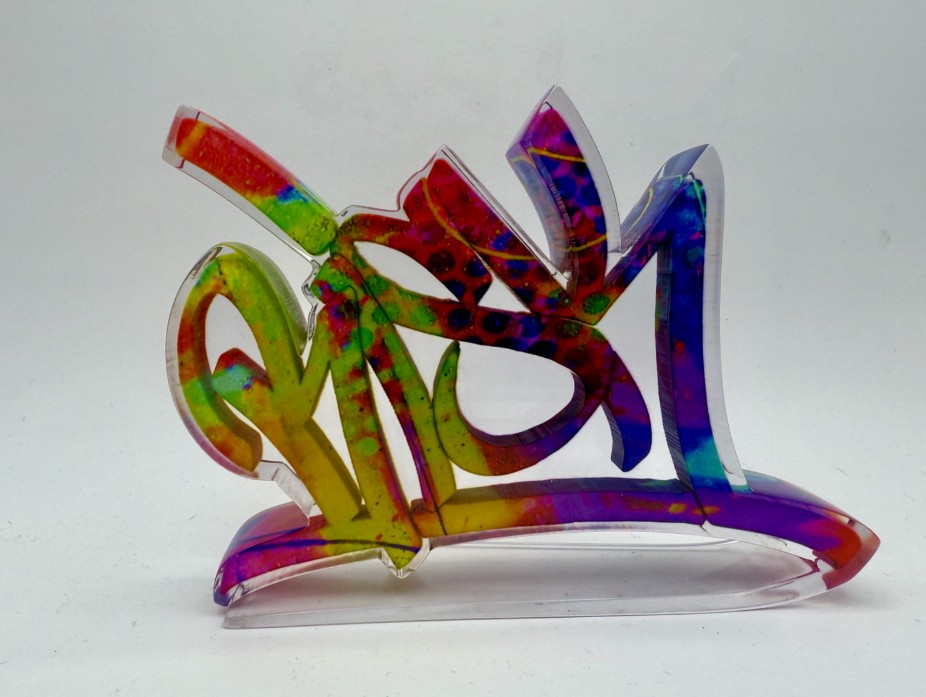
As Lopes builds his consulting practice, he wants to bring practitioners together. They can identify barriers to color printing in entertainment and work with vendors to solve them.
The industry has moved from hand-sculpting toward a broader use of material science and digital tools. Its next chapter combines more tools with a deeper understanding of how they work.
With Lopes part of that transformation, I can’t wait to see how his perspective shapes the next wave of color printing applications in entertainment.
*Lopes’ words have been edited for brevity and clarity. Disclaimer: This interview was conducted before Lopes joined DyeMansion. It was first published in the summer edition of 3D ADEPT Mag.
THE 3D ADEPT WEEKLY NEWSLETTER Every week, the latest additive manufacturing news, in-depth features and real-world applications, straight to your inbox. Plus, be the first to know when a new issue of 3D ADEPT Mag is out. Free · One email a week · Unsubscribe anytime Clicking loads our email provider’s sign-up form, including its analytics and Google’s anti-bot protection. You’re only subscribed if you complete the sign-up. Read our privacy policy.The industry moves fast. Stay ahead.