Fraunhofer IGD’s Cuttlefish driver and Stratasys PolyJet printers carried the replacement animation of the studio’s most ambitious film to date.
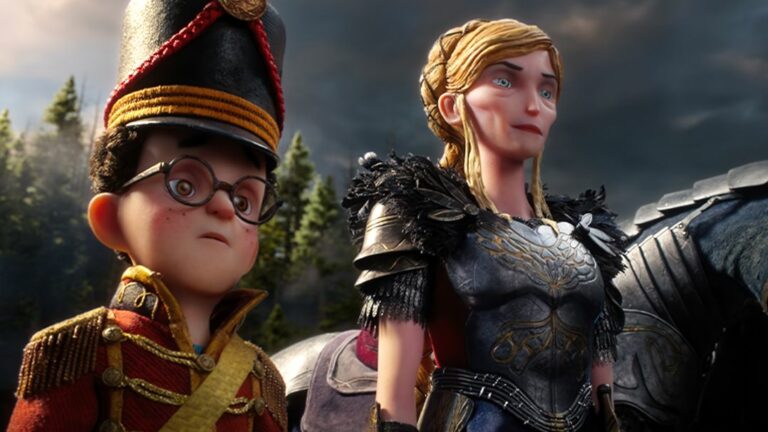
One second of smooth stop-motion animation can require 24 face changes and 24 separate photographs. If one of them is a shade off, audiences will see it on the big screen. LAIKA worked with that constraint on Wildwood. The studio describes it as its most challenging and ambitious production to date. The film opened in U.S. theaters on October 23 and releases in Germany on November 5.
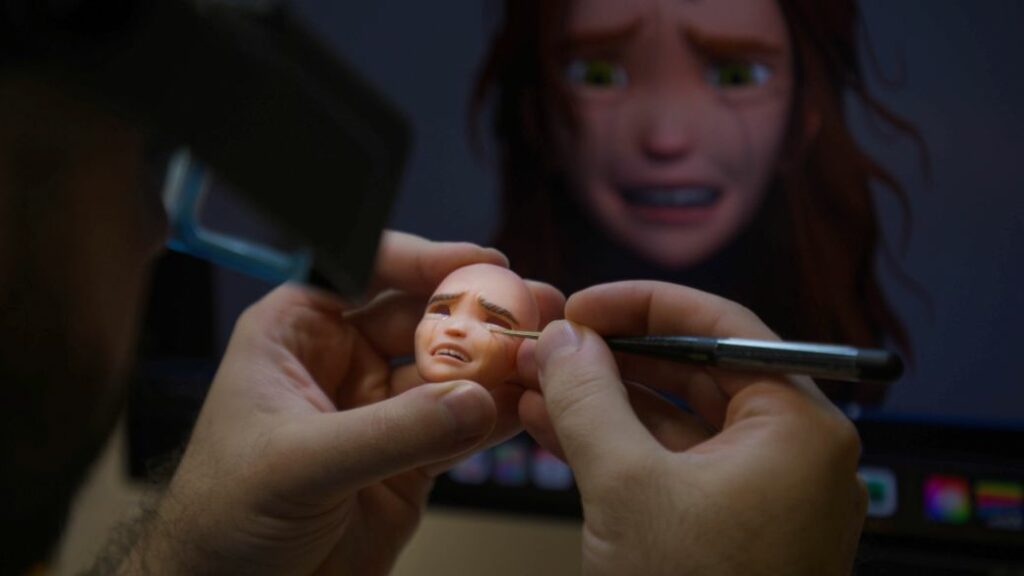
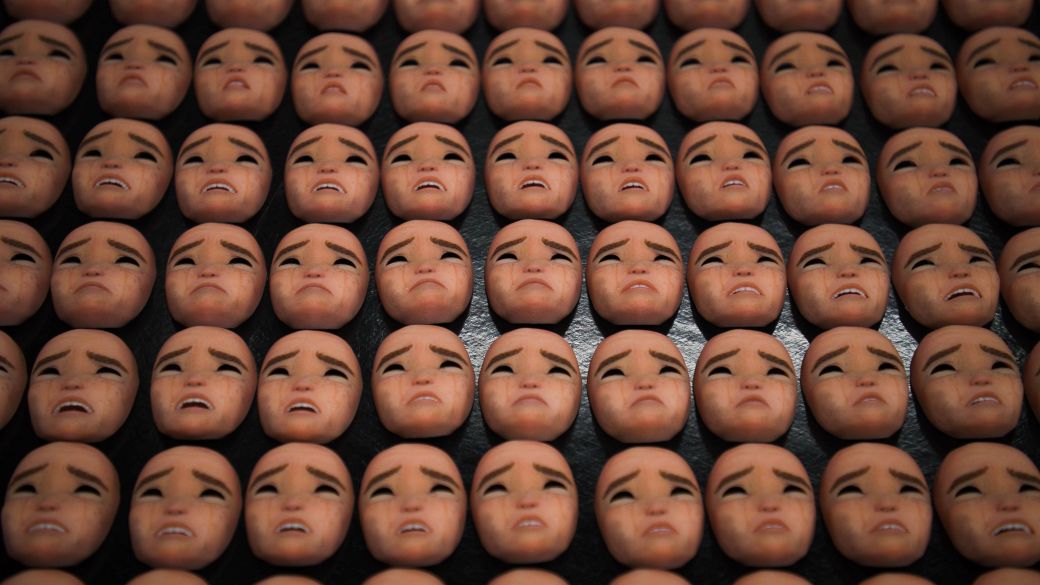
The Oregon-based studio therefore used Cuttlefish®, a full-color 3D printer driver. The Fraunhofer Institute for Computer Graphics Research IGD developed this software. LAIKA combined it with Stratasys’ J750 and J850 PolyJet 3D printers. The use of these solutions led to more than 142,000 bespoke facial expressions.
The collaboration goes back about a decade.
LAIKA discovered Fraunhofer IGD’s research in a scientific publication. Shortly before, the Academy had recognized Brian McLean, LAIKA’s Director of Rapid Prototype. It cited his role in “pioneering the use of 3D printers in stop motion animation.” Initial test prints led to a long-term licensing partnership. We discovered it in 2019, when LAIKA used Cuttlefish and the Stratasys J750 to produce color-matched faces for Missing Link.
Cuttlefish converts LAIKA’s digital 3D models, including their color and texture information, into optimized print data. It aims to reproduce colors, textures and fine shapes precisely, even on very small parts. Dedicated methods sharpen textures, optimize surfaces and process color. For Wildwood, Fraunhofer IGD implemented “numerous enhancements” to meet the production’s requirements. The institute has not yet shared details of these changes.
“Wildwood is an amazing cinematic experience; the scale, scope, and emotional impact of this film are unprecedented in animation. In order to accomplish a story of this complexity, we needed a process that could create intense and deep emotional facial performances, with rich skin tones and fine details, and the only way that was possible was through artists blending technology and innovation into a seamless practical effect,” said Brian McLean.
Beyond the usual benchmark
Producing accurate, repeatable results sometimes comes down to choosing the right tools. Industrial projects often prioritize automation. LAIKA’s team also relies on simpler tools.
Yet this is not the studio’s first achievement of this kind. LAIKA 3D printed 64,000 faces for Kubo and the Two Strings (2016), then 106,000 for Missing Link. Guinness World Records listed the latter as the most 3D printed faces made for a stop-motion film. Wildwood now goes well beyond that mark.
In this specific case, every part is unique, yet each one must match the previous one in color and surface finish. Few industrial applications push mass customization and frame-to-frame repeatability this far.
LAIKA has also integrated PrismSlicer into its pipeline. It lets the team preview color and translucency before printing. I am curious to see how this improves repeatability.
As a reminder, Fraunhofer IGD’s Cuttlefish can also contribute to medical technology and industrial manufacturing. “A studio like LAIKA sets some of the most demanding requirements in full-color 3D printing. Technologies that prove themselves in this environment can create value across many other industries,” said Philipp Urban, Head of Research and Development 3D Printing at Fraunhofer IGD.
THE 3D ADEPT WEEKLY NEWSLETTER Every week, the latest additive manufacturing news, in-depth features and real-world applications, straight to your inbox. Plus, be the first to know when a new issue of 3D ADEPT Mag is out. Free · One email a week · Unsubscribe anytime Clicking loads our email provider’s sign-up form, including its analytics and Google’s anti-bot protection. You’re only subscribed if you complete the sign-up. Read our privacy policy.The industry moves fast. Stay ahead.