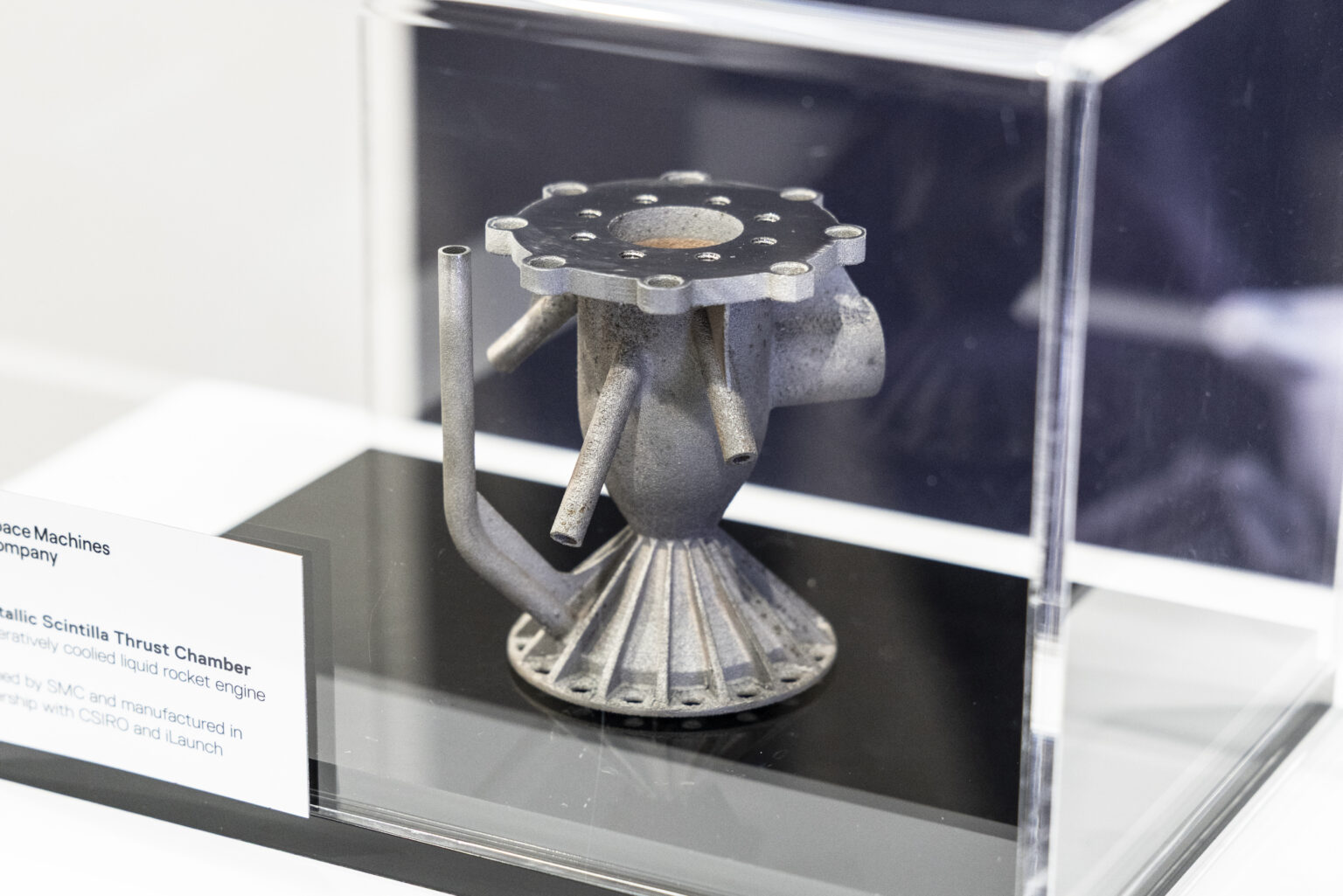
Space Machines Company (SMC), a startup specializing in mass-produced rapid response systems, completes the production of a bimetal rocket thruster using multi-material additive manufacturing (3D printing).
Described as a first in the country, this application was completed as part of the iLAuNCH Trailblazer program, which includes 4 projects to advance space manufacturing. As a reminder, the program is led by the University of Southern Queensland in collaboration with the Australian National University and the University of South Australia. Over 25 industry and research partners are involved to bridge the gap between research and commercialisation in the space sector.
The manufacturing process
The thruster will be used in Space Machine’s Optimus Viper, an Australian-made spacecraft designed for on-orbit inspection, servicing, and logistics.
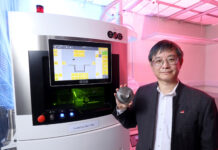
The manufacturing process required the use of multi-material laser powder bed fusion (LPBF) (a Nikon SLM280 3D printer) capable of processing two high-performance metals in a single print.
The machine produced high-strength steel for structural strength as the outer jacket and copper alloy for high thermal conductivity. This combination allows the thruster to endure extreme heat while remaining lightweight and robust, an uncommon design not typically seen in conventional, single-metal rocket propulsion systems.
“We strive to build sovereign space capabilities by developing, manufacturing and operating space technology right here in Australia,” said Darin Lovett, Executive Director of iLAuNCH. “We’re proud to support a project that demonstrates how Australian-led innovation is building world-class space technology and capability locally.”
Traditional methods for manufacturing rocket thrust chambers involve machining cooling channels into a copper liner and brazing it to a steel jacket, a costly, time-intensive process with multiple failure points. With multi-material 3D printing, both metals are printed simultaneously, reducing production complexity, cost and time while increasing design flexibility and durability.
The thruster forms a key part of Space Machine’s Scintilla propulsion system, which requires precise, repeatable and durable thrust to carry out close proximity operations in orbit. The regenerative cooling provided by the copper alloy channels ensures the thruster can withstand repeated firings and long burn durations, while the steel jacket maintains structural integrity under pressure.
Remember, you can post job opportunities in the AM Industry on 3D ADEPT Media free of charge or look for a job via our job board. Make sure to follow us on our social networks and subscribe to our weekly newsletter : Facebook, Twitter, LinkedIn & Instagram ! If you want to be featured in the next issue of our digital magazine or if you hear a story that needs to be heard, make sure to send it to contact@3dadept.com