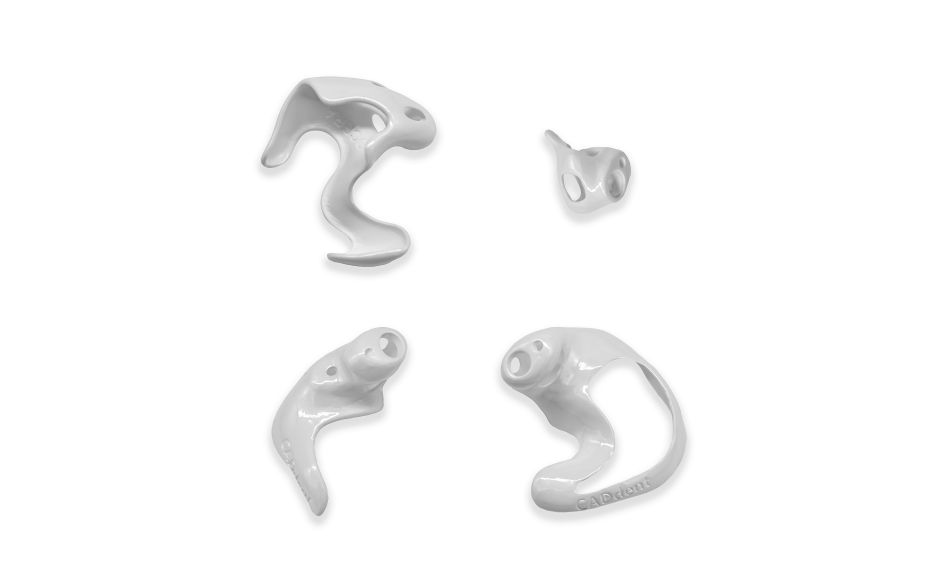
If you’ve ever struggled to pick out a friend’s voice in a crowded room, imagine how much harder it is for someone with hearing loss. Conventional hearing aids often fall short — they can be affected by earwax buildup, discomfort, connectivity problems, and challenges with understanding speech in noisy environments. Surprisingly, one tiny component can make a big difference: the earmould. To understand how its design and manufacturing can overcome some of these challenges, we spoke with Dr. Daniel Bomze (Lithoz GmbH), Dr. Christoph Lauer (CADdent GmbH), and Jurij Belik (OC Otoplastisches Centrum GmbH).
For those who are new to this field, the number of parts of hearing aids often depends on the type of hearing aid, but core functional parts often include a microphone, an amplifier/processor, a receiver (speaker), the power source, the shell (housing), and the ear piece also called earmould.
The role of an earmould
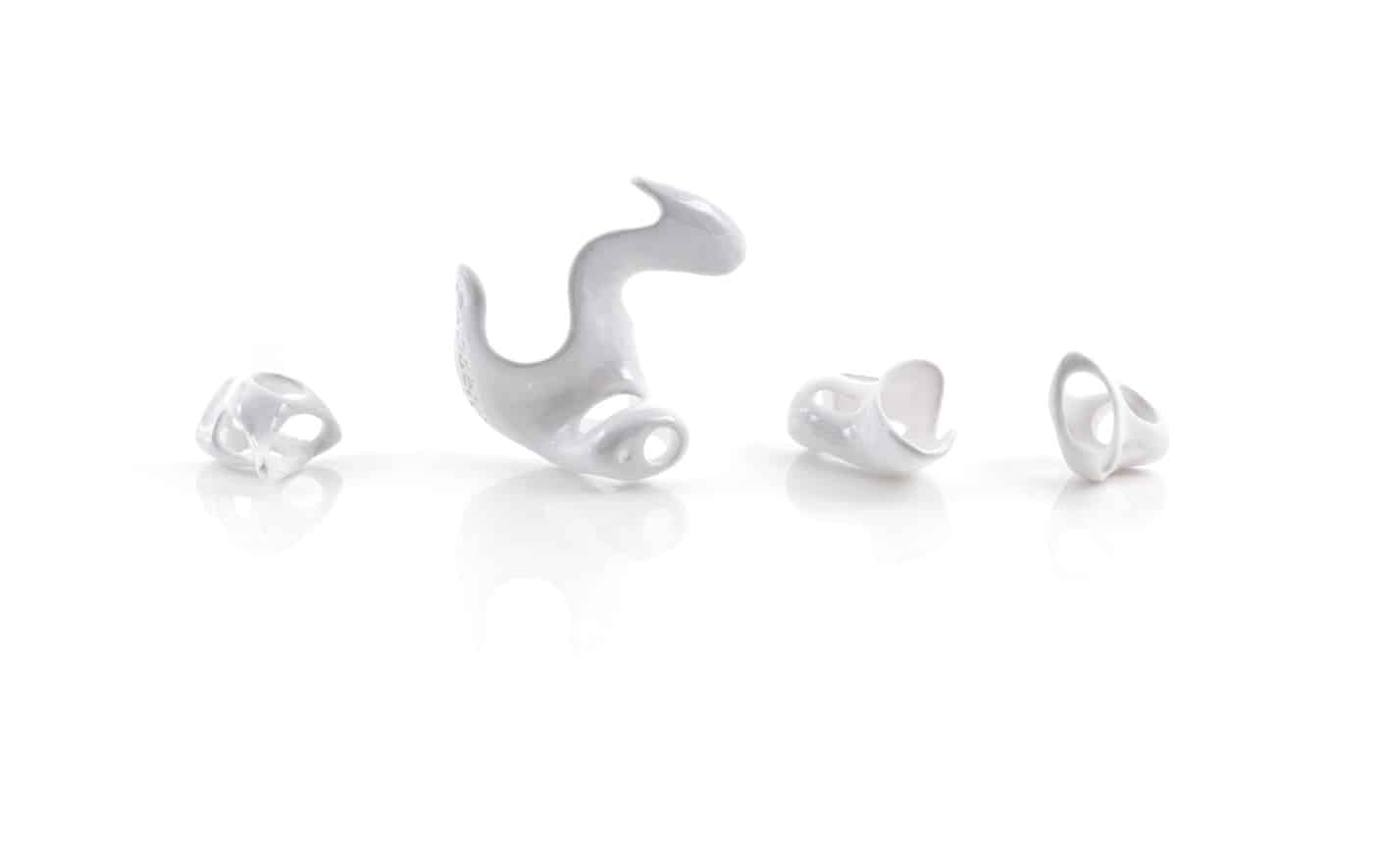
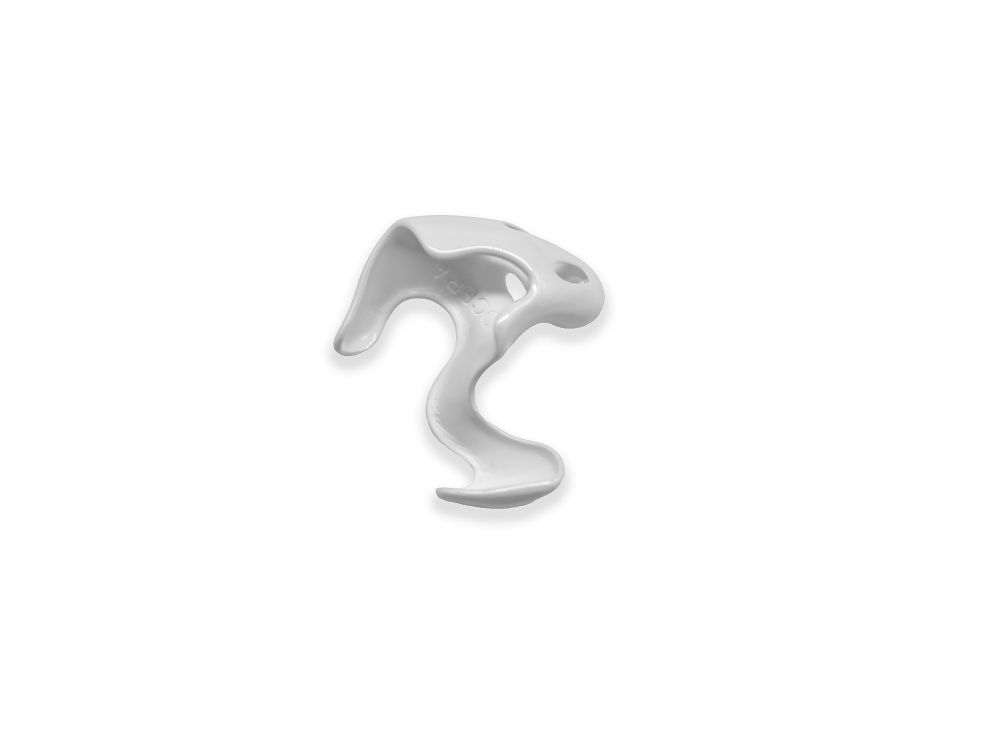
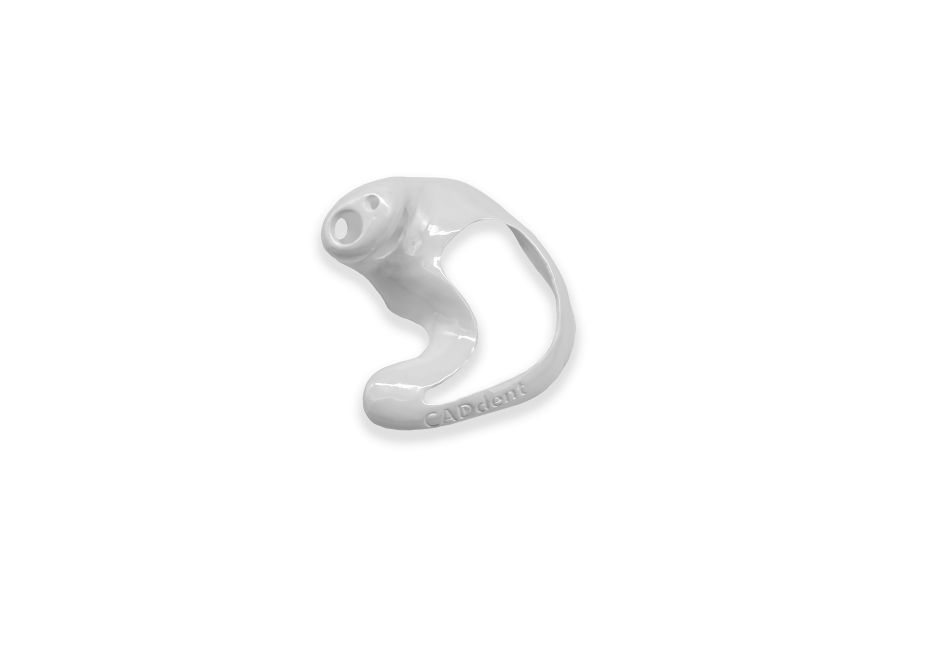
Although many people focus on the electronics, the earmould of a hearing aid is, in my opinion, one of the most important parts. Its role goes well beyond just “holding the parts together”, to ensure acoustic performance, comfort & wearability, protection & durability, design & personalization as well as integration with other features.
“It is the part that sits in the wearer’s ear and connects to the actual hearing aid. It bears the weight and should perfectly match the body’s anatomy,” Bomze explains.
“As Daniel said, one function is to carry the weight of the hearing aid, and the other is to direct the sound consistently into the ear, to the eardrum where hearing takes place. That’s important because otherwise the sound from the hearing aid would change each time you place your dome in the ear, like with headphones,” Lauer completes.
According to Jurij Belik, through conventional manufacturing processes, the mould can be manufactured with casting using acrylates or other biocompatible plastics that are poured into molds created from the master model. It may also be milled from pre-formed plastic blocks. After the material is cured, it will require some manual finishing before adjustments for fit or comfort. It’s all a lot of manual labor compared to AM.
With AM that allows for customization, it’s easy to see applications for hearing aids achieved with VAT photopolymerization processes – specifically SLA and DLP. Interestingly, Lauer drew our attention to the fact that they can also be achieved using titanium and ceramics.
“Titanium is still relatively uncommon in this context. It’s been around for a while, but it’s rare. Some well-known companies are now pushing titanium more into the mass market, yet it remains a premium material — not something regular,” Lauer clarifies.
The addition of titanium and ceramics as new 3D printing material additions that could enable 3D printed shells refocuses the debate on a single question: What makes a good earmould?
A closer look at materials that make a good earmould
Although its ideal features can be understood as those of a hearing aid in general, Jurij Belik notes:
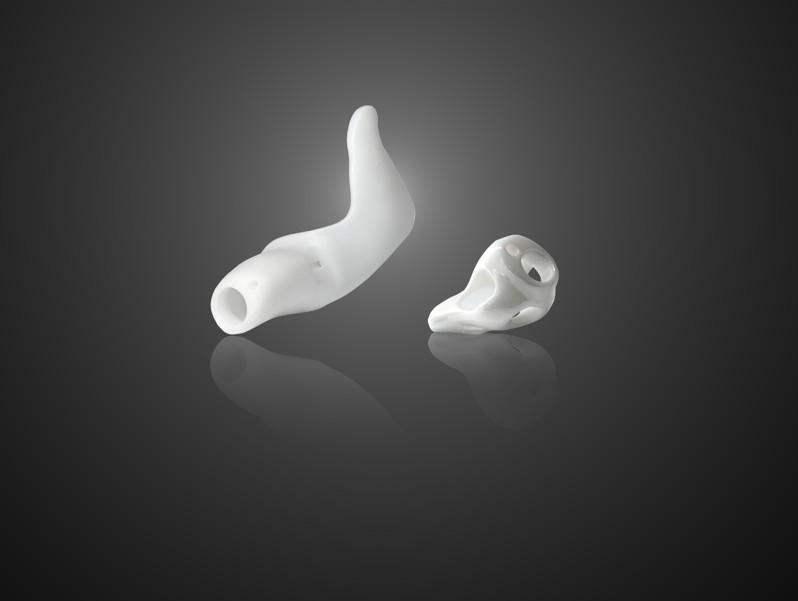
“In addition to a good fit, biocompatibility, and ease of cleaning, a hearing aid shell should also be durable, resistant to moisture and chemicals, and aesthetically pleasing. For this reason, the material should be comfortable against the skin and potentially come in various colors or styles to suit individual preferences.”
When comparing plastics, ceramics, and titanium for hearing aid shells, three main criteria emerge: biocompatibility, ease of cleaning, and aesthetics.
Plastics such as silicone and acrylic polymers have long been the standard, but they fall short in some areas. Over time, they can become yellow due to earwax exposure and may trigger allergic reactions in some patients. In the past, those with allergies were sometimes given moulded titanium shells—then an expensive option due to manufacturing challenges—or plastic shells coated with a thin layer of real gold, which is hypoallergenic but also expensive and additionally short-lived. The gold coating needs to be refreshed regularly.
Titanium and ceramics offer clear advantages over plastics. Both are highly biocompatible (with ceramics considered slightly superior in this respect) and have exceptionally smooth surfaces, preventing earwax from adhering.
They are also resistant to both chemical and physical wear, making them easier to clean and maintain over time.
Why ceramics excel in this application?
Speaking of titanium, the material that is increasingly being promoted in Germany, Belik states, “Titanium is not ideal for either the patient or the audiologist. It‘s very hard to grind and to polish it, so if you need to replace a speaker, you have to send it back.”
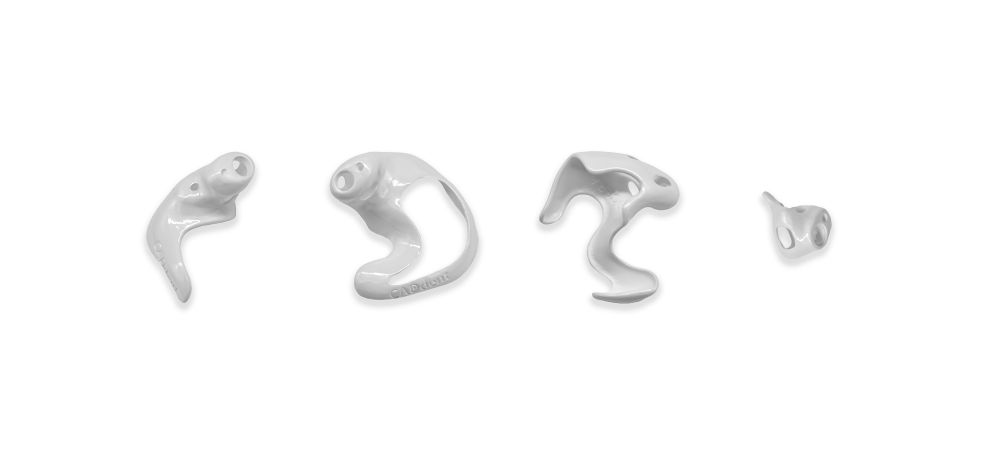
In addition to a stronger biocompatibility, “ceramics stand out not just for their aesthetics, but also for their functional benefits. The shells can be made with completely freeform surfaces—very thin, intricate, and complex—yet still achieve a dense, smooth finish. This smoothness prevents earwax from penetrating the material, unlike polymers, which are slightly porous.
Ceramics can also be polished more easily than titanium and can be glued with adhesives, which is not possible with titanium. Another advantage lies in sound quality: titanium can sometimes produce a slight echo or distortion, whereas ceramics deliver a clearer, undistorted sound for the patient—an important factor in achieving high-quality earmoulds, ”, Bomze and Lauer complete.
From an aesthetics standpoint, materials can be colored or produced in a translucent form to suit patient preferences; an area where ceramics also excel. For example, the LithaBite material enables the production of translucent alumina parts.:
“Ceramic is the most natural material for a hearing aid. Unlike titanium, which has high thermal conductivity and quickly matches the outside temperature, ceramic adapts to the body’s temperature, avoiding the discomfort of a ‘cold head.’ Ceramics like alumina-toughened zirconia (ATZ) have a unique advantage: they can be naturally white. In fact, they’re the only material used for hearing aids or earmolds that can remain white over time. Titanium isn’t naturally white, and while acrylic polymers can be made white, they typically lose their brightness within days,” CADdent GmbH expert emphasizes.
This is especially important for patients who specifically request white devices. We learned during our conversation that, depending on the market needs, there’s also potential to produce black alumina-toughened zirconia (ATZ), as black zirconia already exists—offering another appealing color option for those who prefer a discreet, dark look.
ATZ and LCM: The perfect match for manufacturing earmoulds
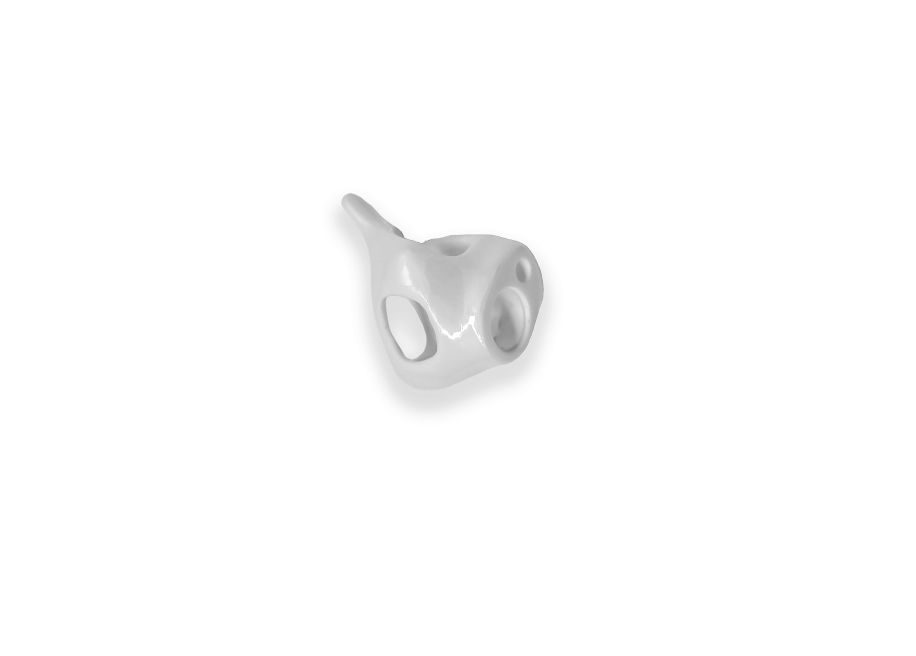
From my understanding, the full production process for the hearing earmoulds takes approximately four days. This includes a few hours for the printing phase with Lithoz’ LCM and then several days for the debinding and sintering (i.e. thermal postprocessing) processes. The timeline is for a single batch, as many earmoulds can be processed simultaneously in one furnace, which helps to reduce production costs and improve efficiency.
“In one furnace run, you can produce tens to hundreds of hearing aid earmolds at the same time. So, when producing in batches, you don’t have to wait for each one individually”, Bomze says, outlining the scalable options.
Let’s do the math:
It is possible to produce a high number of earmoulds with one machine. A single print run can produce around 30 earmoulds and takes several hours to complete. This allows for four to six print runs per day, depending on the height of the moulds. Theoretically, a single machine could produce up to a few hundred earmoulds daily. The four to five-day production time is therefore considered fast for a custom-made product in the audiology field, falling somewhere between the quicker dental field and other sectors.
When asked if they faced any challenges at the manufacturing level, Lauer said:
“If these had been the first ceramic parts we printed, we would have faced a lot of challenges. But since we had been working with ceramics for two years, the first time we printed this type of geometry, the challenges weren’t immediately obvious. Of course, we did have some initial challenges figuring out where to place the supports—what is important, what isn’t, and where we can replace supports. That was something we learned from Jurij —what is functional and what isn’t.
From a geometry perspective, the earmoulds or earpieces are actually very nice to print because they have spherical, rounded surfaces. One thing that’s difficult to produce in ceramics ceramics is sharp edges, because of mechanical stress accumulation, which we don’t have in this geometry. That makes printing much easier when the design is done correctly.
The only potential concern is that ceramics could break if dropped on a hard surface. In that case, we might suggest redesigning the earpiece, but that’s really the only scenario where the design or 3D printing would be challenging—and only for larger earpieces. That said, many surfaces are functional, so careful planning is essential and there are small features, like tiny canals, that would be impossible to produce without 3D printing. If you tried to mill them, it simply wouldn’t work.”
Once more, LCM did not disappoint me. After a “long-term clinical follow-up study” that aimed to provide clear evidence of its technology capabilities in ceramic implants, I am positively surprised to see ceramics position themselves as a premium solution for an application where other VAT photopolymerization processes are often explored. Ceramics not only position as a strong alternative in the market, but as one with the best advantages.
Looking ahead, it would be interesting to explore which other components of hearing aids could be 3D printed and brought to scale.
So, where does the opportunity lie?
Aging populations in key markets are expected to cause a significant increase in demand for 3D-printed hearing devices. In the U.S., which represents the largest share of the hearing aid market, the population of people aged 65 and over is projected to more than double to 80 million by 2040. Similarly, Japan, a major importer of these devices, has one of the world’s oldest populations.
In Europe, and speaking of CADDent’s activities in particular, Lauer explains that hearing aids are sold in Germany and Switzerland—Switzerland being a natural fit due to its proximity and shared regulations—and it could also work well in Austria. In Germany in particular, hearing aids are reimbursed under the statutory (public) health insurance system when prescribed for medically confirmed hearing loss.
While there’s potential for expansion, he noted that the market is likely limited to Western countries because it is a high-end, luxury product. Typical target markets would include the European Union, the United States, Canada, and affluent customers in other regions. He added that the German market is generally considered the lead market for acoustics.
Editor’s notes
For this traditional catch-up, Daniel Bomze, Director of Medical Solutions at ceramic 3D printing company Lithoz invited to our virtual table, experts from CADdent® GmbH and OC Otoplastisches Centrum GmbH.
With strong roots in dental technology, CADdent specializes in manufacturing dental products using advanced technologies. Their services extend beyond dental technology to include rapid prototyping for various industries, such as electrical engineering, jewelry, aerospace, and other healthcare applications.
OC Otoplastisches Centrum GmbH is a Swiss company that manufactures and sells high-quality audiology products. Their offerings include a range of items like hearing protection, ear molds for hearing aids, and in-ear monitors. They operate a specialized laboratory where they produce custom-made earmoulds to meet demanding specifications. Their products are sold exclusively through specialist retailers.
Lastly, if you’re not familiar with Lithoz’s Lithography-based Ceramic Manufacturing (LCM) process, please note that in this process, ceramic particles are dispersed in a photosensitive resin. This dispersion is thereafter solidified by a light layer-by-layer approach to form a part. Then the part undergoes a sintering process to develop its ceramic properties and can be used for its final purpose.
Disclaimer: This content has been created in collaboration with Lithoz. Insights from Dr. Daniel Bomze (Lithoz GmbH), Dr. Christoph Lauer (CADdent GmbH), and Jurij Belik (OC Otoplastisches Centrum GmbH) have been edited for brevity and clarity.