


Third part of a feature first published in September/October 2023. Roles and experience of interviewees refer to that interview.
I remember the very first interviews I conducted in the AM industry. As a newcomer, I didn’t have enough distance to analyze things. Therefore, I found myself repetitively writing the same sentences, spoken by different people, as if they were the chorus of the same song:
“AM is a sustainable technology by nature.
AM is less expensive than conventional manufacturing technology.
AM can produce parts that were previously impossible to manufacture.
AM can enable decentralized production, thus can be closer to the point of consumption. A shortened and simplified supply chain means a lower environmental impact.”
And just like that, we have started building the “green” credentials of AM. Fast forward to today, I question each of these sentences as we are continuously monitoring data that demonstrate how accurate they are. And then, we came to realize that:
- At high volumes, conventional processes can benefit from economies of scale. Comparing that situation with a one-off AM part is not sufficient, however: production volume, part function and quality must be comparable.
- AM is not necessarily superior to CM processes when it comes to energy consumption.
- Some desktop polymer-extrusion printers emit volatile organic compounds (VOCs) and ultrafine particles. Emissions vary with material, printer and operating conditions, as illustrated by NIOSH research.
- Not to mention the fact that, sometimes, supply chains can be complex due to the need for secondary processes and additional supplier requirements.
This list can go on depending on each professional’s experience with the technology. So, should we say that the understanding of sustainability in AM is fairly subjective?
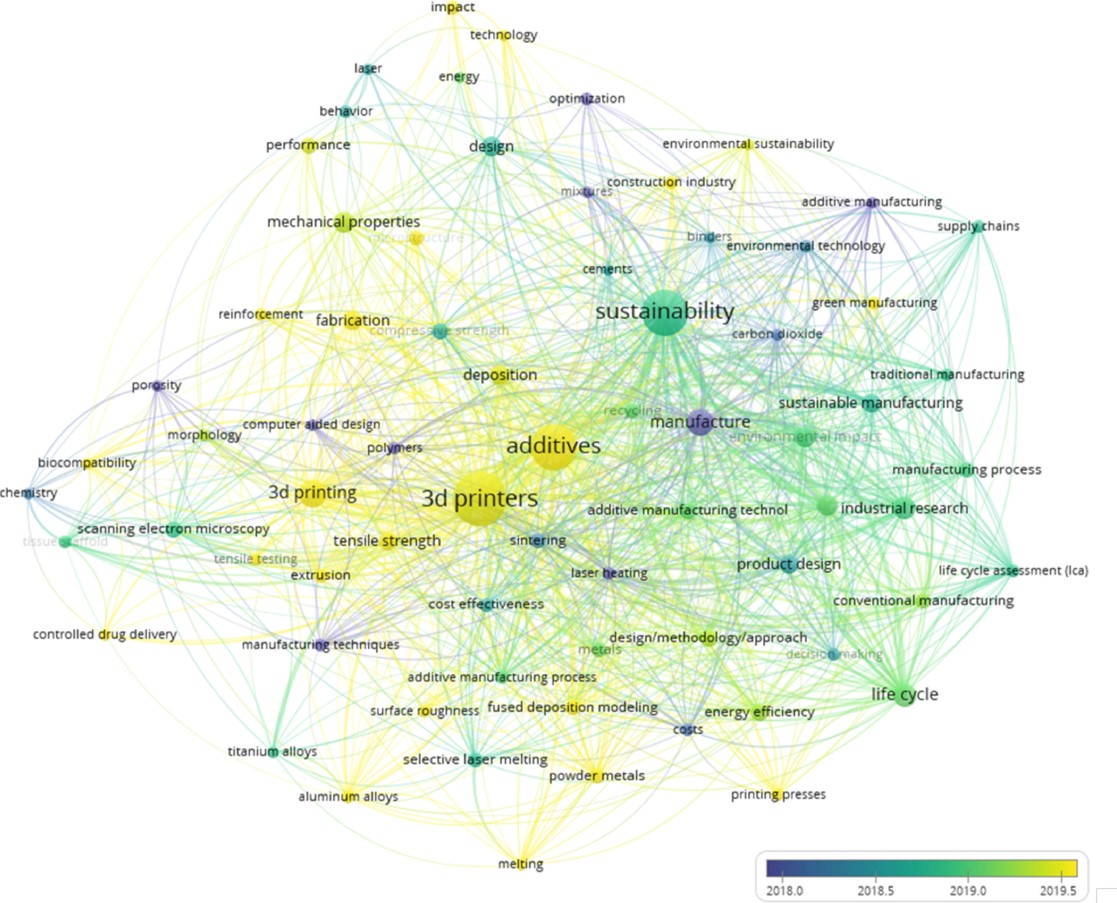
The literature review by Agnusdei and Del Prete (2022) includes the keyword co-occurrence map below. It shows changes in research topics within the selected corpus, including a shift towards environmental sustainability. This bibliometric visualization does not directly measure process environmental performance.
For Sarah Jordan, CEO of Skuld, “It is not that it is subjective. It is that it highly depends on one’s assumptions which may or may not be stated. The devil is in the details as there isn’t just one AM and one conventional process. AM for metal is 25+ processes, and at least that many for polymers and even more for composites or ceramics. Conventional manufacturing is several hundreds of processes and a combination of processes. So, it highly depends on what you are comparing. What material, what process, what transportation, what energy source for the process and transportation is used, how much recycling/reuse in the process all need decided both for the baseline and for the AM option. There is also the risk of greenwashing because one can intentionally make assumptions that benefit AM but harm conventional manufacturing.”
As a metallurgical engineer, she brings a pretty metal-centric input to the table. With over 25 years of experience in conventional metals manufacturing, about 8 years in AM, and after getting her MBA, Jordan has cumulated a decade of experience in forecasting/supply chain/operational excellence. At the time, she was in the University of Tennessee’s Spark Cleantech Accelerator and works as the founder and CEO of Skuld, where they are merging casting process (lost foam) with AM by replacing the petroleum-based foam with a biopolymer.
I love Jordan’s insights here as she has a very critical thinking mindset and as a metallurgical engineer with experience in AM, she brings that technical expertise of both worlds that is very much needed for this topic. But it is not enough.
It was crucial for us to bring the view of a company that believes in a data-driven, multidisciplinary approach to sustainability and energy management. I found that expertise in Foresight Management. Mike Troupos, Vice President at Foresight Management and his team of subject matter experts confirm some of our assumptions and pinpoint where the struggle is:
“Sustainability in AM is absolutely subjective. In fact, sustainability across the board struggles with subjectivity. A prime example in the AM industry is recycled content and chemical transparency, both high values in the marketplace. However, these items are opposing. The more recycled content used in a product, the less chemical transparency. This is especially true if you are sourcing post-consumer recycled content. The most significant sustainability advantage of AM is that you have significantly reduced “waste” compared to traditional stamping/CNC manufacturing of metals – adding will inherently be less resource/waste-intensive than subtracting. Economies of scale for AM are generally the biggest drawback. It is simply longer and more expensive to manufacture using AM in most cases, especially at large scale.”
The team at Foresight Management champions energy management, accelerates sustainability and increases profitability by working with manufacturers and consumer brands that pursue sustainability and energy management initiatives. If you are a regular reader of 3D ADEPT Media, you may have read one of the studies they conducted last year for the AM division of material producer 6K .
Where are we today?
I can feel the willingness of AM companies that want to explore energy management initiatives, to do better to deliver a product that can legitimately be qualified as sustainable. I see the efforts of organizations like AMGTA that should not be overlooked and in the midst of these efforts, I see a strong reliance on life cycle analysis/life cycle assessments.
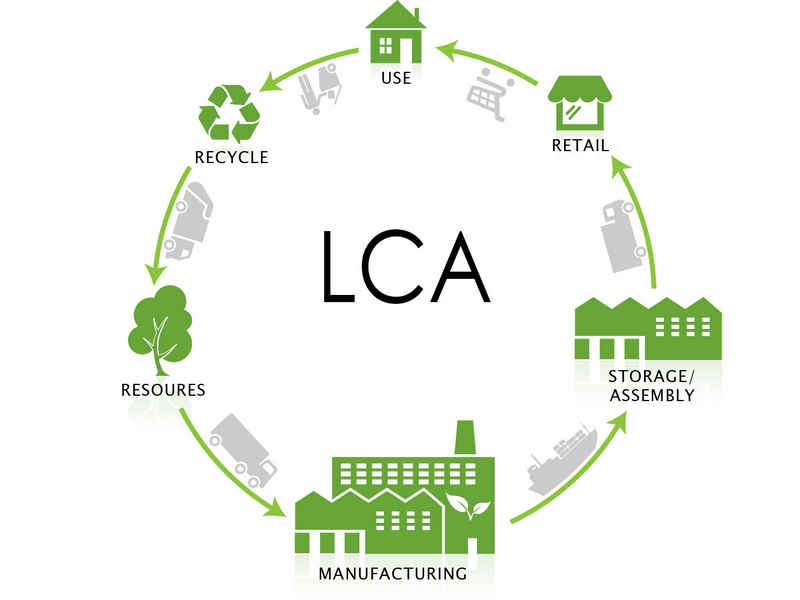
If you’re new to this area, keep in mind that Life Cycle Assessment (LCA) is a tool that helps to assess potential environmental impacts throughout a product’s life cycle, i.e., from natural resource acquisition, via production and use stage to waste management (including disposal and recycling).
LCA is prominent in the studies discussed here, but it is not the only assessment tool. The question is whether its scope, data and assumptions suit the intended comparison. See also the analysis discussed with Sarah Jordan.
“LCAs are not all equal.” one learns from Foresight Management. “Each LCA is built to answer a specific question. An LCA done for a printable powder might help quantify the environmental impact of mining and extraction of materials to make the powder, but not address the impact that product has in replacing other materials downstream. A different LCA for the same printable powder could answer the question of how that powder replaces other products in a specific use phase but leave out other uses.
An LCA can account for the entire product lifecycle, including raw material extraction, transportation (upstream and downstream), manufacturing, product use, and end-of-life. The LCA, practitioner, the product designer, and any industry standards dictate which aspects of the product lifecycle are included in the LCA. Additionally, LCAs don’t only quantify GHG intensity (generally, a product carbon footprint, or PCF, is acceptable if you only want to quantify carbon) but also account for water, waste, and other environmental impacts.”
That’s exactly what Jordan decries here: the fact that even though LCA makes sense, most people do not do a full cradle-to-grave assessment and consider all options. Then, it becomes easy to fall into the trap of blanket statements like “metal 3D printing is greener than casting.”
“Are they assuming sand casting? How much machining are they assuming? Since I work in lost foam I am highly skeptical of any claim of metal AM being green compared to casting when the powder or wire feedstock is required to be melted twice. Once to make the feedstock and once later to make the AM part. Whereas casting is typically taking scrap and melting the material once. I am also skeptical because the vast majority of metal AM parts I see can be cast. Maybe 10% of them are designed such that they must be produced with AM,” Sarah Jordan explains.
Sarah Jordan also draws on her experience of lost-foam casting and its potential benefits. The processing routes need to be distinguished: in lost-foam casting, the pattern decomposes during pouring; in lost-wax casting, it is removed beforehand. Any comparison needs to specify the process and the steps being assessed.
The National Research Council’s 2001 assessment reports estimated reductions of 27% in energy use and 7% in materials, relative to sand casting. These historical figures concern that comparison; they are not guaranteed savings for every part or every alternative to additive manufacturing.
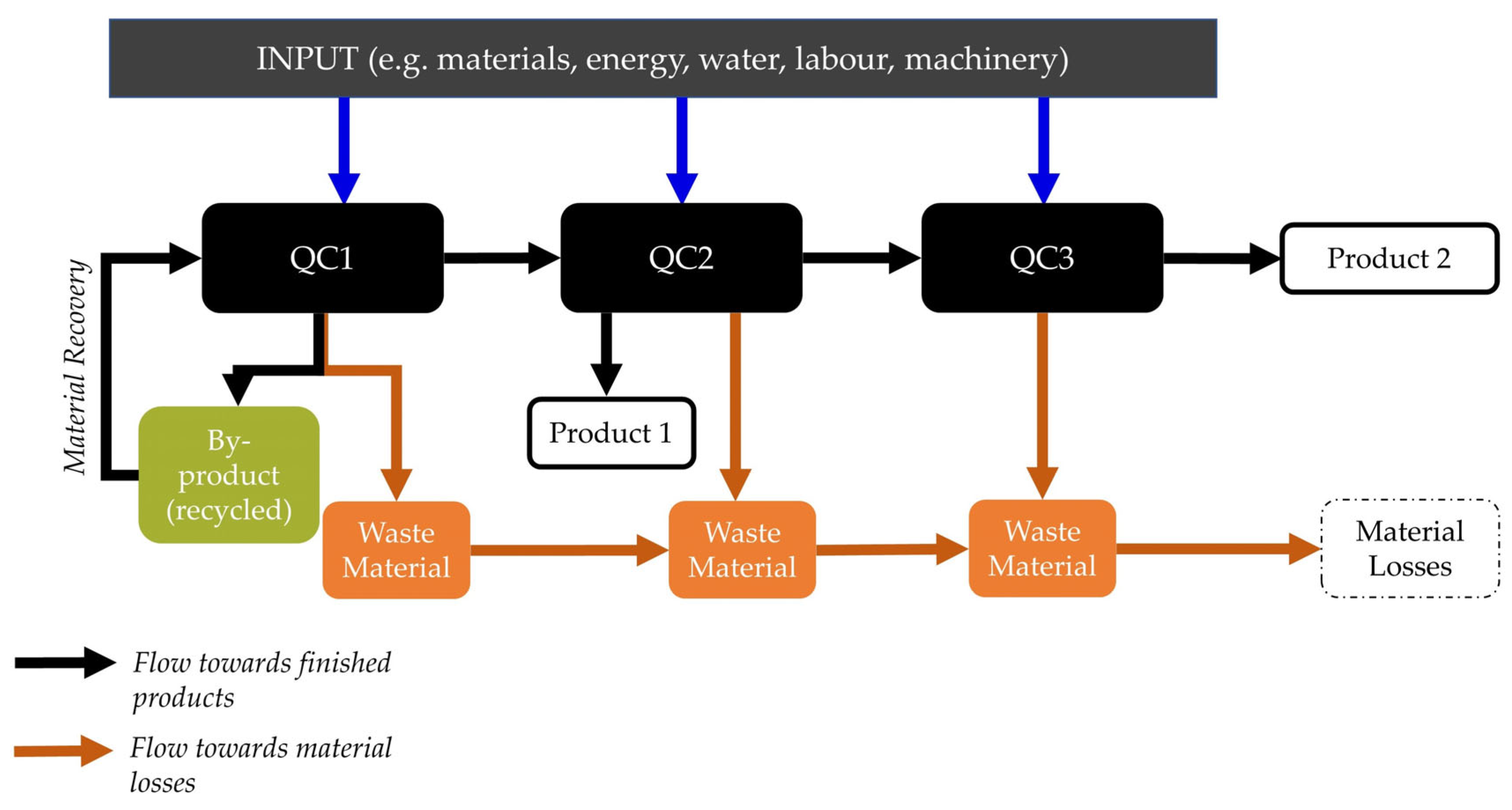
Material Flow Cost Accounting (MFCA), described in ISO 14051, tracks material quantities and their associated costs. It can help identify losses and opportunities for improvement. This management tool complements environmental analysis; it is not, on its own, a replacement for LCA.
Understanding how this can precisely be applied to AM technologies should constitute the subject of another article.
In the meantime, the subject matter experts from Foresight Management remind us that while the LCA modeling framework is the gold standard, it can only be as good as the data entered into the model. The most effective way to improve the accuracy of an LCA is to collect more primary data. Often, a product is modeled with inputs from databases that use industry averages because primary data is lacking. All site/material-specific primary data that is collected makes the findings of the LCA more accurate. This process involves working with your supply chain partners to source their specific data.
On a personal note, in my previous life, I have seen a few trade associations use LCAs as a tool to help their members quantify environmental benefits and improve their designs. Therefore, I do understand that it’s not possible for every company to invest in their own LCA models – and this might become another barrier to taking the leap on their sustainability journey.
Concluding thoughts
How can additive manufacturing’s environmental claims be assessed without generalizing them? These discussions call for explicit assumptions and comparisons between equivalent functions.
After these insights, I can say that AM does not deliver faulty implications for its green credentials but AM companies might, by highlighting the sustainability of their technology in a wrong way. From a strict adoption point of view, we will agree with Jordan when she says “costs, lead time, engineering design capabilities, and supply chain benefits are way more important to most decision makers.”
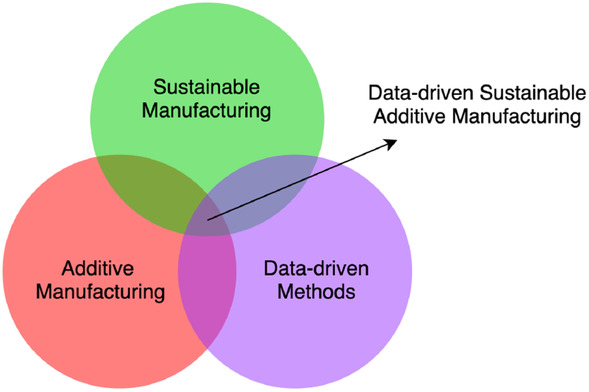
However, for those who would like to become more responsible companies, it’s important to keep in mind that the digital transformation of AM comes along with other digitized processes including design, manufacturing logistics and management. According to research, to handle, manage, and extract knowledge from such big data for sustainability considerations, the current manufacturing framework must incorporate a database infrastructure.
This feature was first published in the September/October 2023 edition of 3D ADEPT Mag.
Read: AM Companies must get started on their ESG journey. Here is how. (Part 1)
Key areas of focus in the application of ESG by AM companies (Part 2)
Editor’s notes
Skuld describes an offering ranging from small-series parts and prototypes to tooling and high-volume production processes, combining expendable-pattern casting with additive manufacturing. Its presentation also cited Solar Impulse Foundation recognition for a thin-walled ductile iron solution. This presentation and its claimed benefits remain attributed to the company.
Foresight’s job isn’t only to perform an LCA, but to help companies holistically understand how to navigate sustainability across their organizations, buildings, and products at the same time. The main value the company has been pushing is transparency as it allows to improve accuracy and accountability. Foresight also helps industry associations create industry-wide models for their members and create Product Category Rules (PCR) for the industry. Having a PCR ensures there is a standardized approach and provides clarity on assumptions for all products in a given industry. Having industry PCRs increases the data quality across the board and lowers the bar of entry for those pursuing LCAs. The company believes that sustainability can mean increased profitability if you get ahead of the curve.
Review note: environmental comparisons and historical figures contextualized; references, figures and terminology standardized.
THE 3D ADEPT WEEKLY NEWSLETTER
The industry moves fast. Stay ahead.
Every week, the latest additive manufacturing news, in-depth features and real-world applications, straight to your inbox. Plus, be the first to know when a new issue of 3D ADEPT Mag is out.
Free · One email a week · Unsubscribe anytime
Clicking loads our email provider’s sign-up form, including its analytics and Google’s anti-bot protection. You’re only subscribed if you complete the sign-up. Read our privacy policy.