

Feature based on discussions from September/October 2023, published online in 2024. Roles, figures and projects refer to that period. Regulatory thresholds and timetables have since changed; consult the rules applicable to the company’s circumstances.
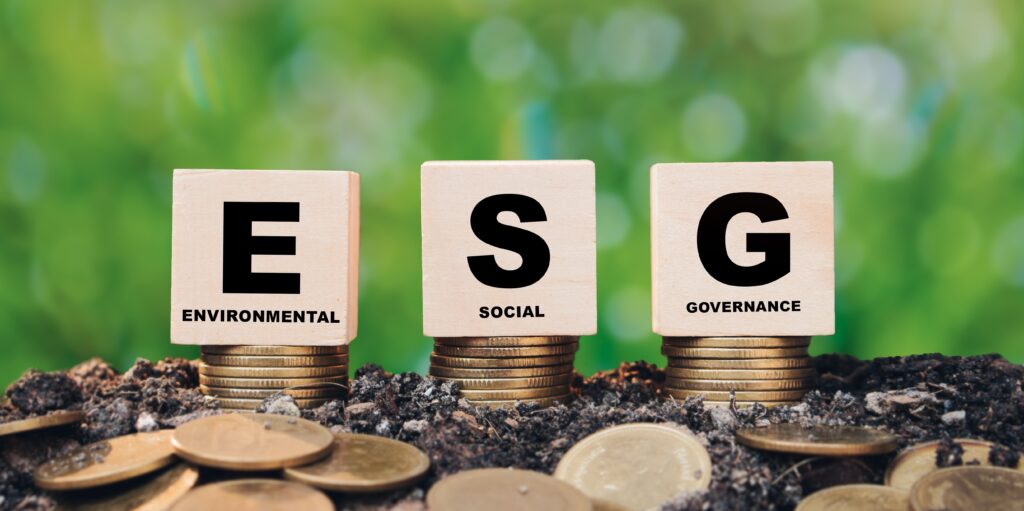
For a long time, sustainability in our industry has been focusing on environmental concerns only. As time goes by, conversations with investors and VC companies have urged Additive Manufacturing (AM) companies to make profit while doing good for people and the planet. This triple bottom line is at the heart of Environmental, Social, and Governance (ESG) planning and strategies companies should implement to withstand the test of time, investor demands, and cultural shifts. So, how should they get started? The article below aims to respond to this question.
ESG is both simple and complex. To avoid drowning in the sea of information the Internet can offer, we sat down with three lawyers from Squire Patton Boggs (US) LLP: Dr. Andreas Fillmann, Wolfgang A. Maschek and Valerio Giovannini. With over 40 offices across the world, this full-service global firm operates on 4 continents with more than 1,500 specialist practicing lawyers. Their Brussels-based office focuses on public policy and looks into all ESG-related legislation. Overall, no matter where they are based, the team at Squire Patton Boggs helps companies understand the business and legal implications surrounding ESG, and on the other hand, helps design, develop or overhaul policies and practices in relation to sustainability and ESG.
Together, Fillmann, Maschek and Giovannini help us understand:
- The different directives and regulations that should draw AM companies’ attention right now
- The regulatory body in charge of monitoring the rules after the implementation of these directives and regulations
- And the first steps to get started
1. Laws discussed at the time of the interview
This feature focuses on the European Union. The interview also discussed the Biden administration’s priorities in the United States in 2023; the legal frameworks of the two regions are not identical.
At the time of the interview, the contributors distinguished several laws and proposals with different scopes and implementation timetables:
- The Taxonomy Regulation
- The Non-Financial Reporting Directive (NFRD)
- The Corporate Sustainability Reporting Directive (CSRD)
- The Sustainable Finance Disclosure Regulation (SFDR) – (mostly applied to banks and financial institutions)
- And the then still negotiated Corporate Sustainability Due Diligence Directive (CSDDD)
“Even across different European companies, one can observe differences in the implementation of ESG legislation. With increasing demand from investors that require companies to be ESG compliant, [technology] companies have to meet reporting requirements but also product requirements. That’s why they should set up a roadmap to ensure that all the discussions around this topic continuously align with their vision and goals,” Fillmann explains.
The EU Taxonomy classifies economic activities, rather than certifying a whole company as sustainable. Alignment requires, among other conditions, a substantial contribution to at least one environmental objective, no significant harm to the others, compliance with minimum safeguards and the applicable technical criteria.
The six environmental objectives that are assessed here include climate change mitigation, climate change adaptation, sustainable use and protection of water and marine resources, transition to a circular economy, pollution prevention and control as well as protection and restoration of biodiversity and ecosystems.
The classification aims to make sustainable investment more transparent. Alignment may inform investor decisions but does not guarantee additional financing.
The NFRD already required non-financial information from certain large public-interest entities. The CSRD adopted in 2022 envisaged extending and specifying sustainability reporting through phased implementation. The estimate of roughly 50,000 companies discussed at the time described the expected scope then; it is not a current count.
The proposed Corporate Sustainability Due Diligence Directive (CSDDD), still under negotiation when the interview took place, addressed adverse human-rights and environmental impacts in value chains. Its status is described here in that historical context.
“With the EU Green Deal, one realizes that ESG is becoming a very important component of the game, as more and more legislation is coming into force. It should be noted companies have an obligation of disclosing environmental information from 2025,” Giovannini comments.
The 2025 milestone in this quotation concerned the first CSRD reports for financial year 2024, not an identical obligation for every company. Timetables and scope subsequently changed; the European Commission provides the policy timeline and reference texts.
Scope and companies concerned
“Rules apply to almost every sizeable company but the level of implementation may vary from one company to another. It’s a question of size,” Maschek adds. The interview referred to exceeding two of three large-company criteria then used: 250 employees, EUR 40 million turnover and EUR 20 million balance-sheet total. It also discussed separate conditions for certain third-country companies.
These historical figures are not a current scope test: the financial thresholds were subsequently increased by Delegated Directive 2023/2775, and further changes followed. Size, group structure, establishment, exemptions and reporting year need to be considered together.
Maschek also explains that “the EU regulator may have defined what it wants to see at the framework level, but there are more granular rules that will apply to specific industry sectors.”
“The EU taxonomy for instance is a green classification that applies also to technology companies specifically [such as the ones of the AM industry] helping them to assess if they meet the EU’s climate and environmental objectives,” Giovannini outlines.
As discussed in the second part of this feature, ESG themes matter to additive manufacturing: environment, diversity and inclusion, safety, supply-chain responsibility and governance. Whether a particular law applies depends on its scope, not simply on a company’s use of AM.
On another note, “the CSDDD is another puzzle piece [AM companies] will have to look into as some might operate with raw materials coming from developing countries where compliance with the future CSDDD rules might be challenging,” Maschek continues. Not to mention the new EU Deforestation Regulation, which could also affect certain AM companies.
Who oversees implementation?
To this question, Fillmann replies that the monitoring will be done at a national level by government bodies as described by EU law, supported by certain EU-level supervisory bodies. That being said, more and more NGOs and non-profit associations are taking responsibility in this area and pro-actively review, and at times sue, firms for incorrect corporate reporting activities.
2. Building an ESG approach
Getting started on ESG is quite similar to a marketing strategy that you design as the plan needs to follow specific objectives. “This can seem complex as most AM companies do not have sufficient ESG expertise, yet they need to move from marketing promises to tangible actions and dedicated ESG teams. Acting now is the first step to avoid promising something that they can’t deliver in 2025,” Maschek points out.
Based on our conversation with Fillmann, Maschek and Giovannini, we came up with 4 steps that can help any AM company confidently take the leap on this journey.
Understand where you are headed
This very first step should be quite similar to the introspection you conduct at the end of the year. With a critical look at your activity, you can assess the areas of your business that may impact people and the planet.
Conduct your Materiality Assessment and related ESG obligations
Conducting a comprehensive ESG audit and materiality assessment means evaluating one’s impact on the environment, society, and governance structure, and determining which of these ESG issues could influence your financial bottom line. A third-party audit firm specializing in ESG assessments can come into play here. Important is also to understand which ESG laws apply to your activities.
Develop & implement your action plan
At this stage, you will set SMART goals. Needless to say, this goes along with key responsibilities assigned to specific teams, the creation of a timeline and budget allocation to make things happen. Most AM companies set environmental goals like reducing CO2 emissions by x % over the next five years. This is great but there are other pinpoint areas. As we will see in PART 3 of this dossier.
Continuously monitor your progress
Regardless of the standards, frameworks, or guidance used to tell your story, what’s important to keep in mind is that your report should tell your results in a concise and clear manner as well as your next areas of interest. At this level, we strongly recommend sharing your lessons/what you’ve learned with the trade press.
What I am hoping to see here is an ESG strategy aligned with business objectives (yes, because in the end, you’re running a business that should be profitable), as well as a focus on ESG goals, metrics and programs put in place.
A company-specific approach
One thing we will keep from this conversation is that just like there is no one-size-fits-all solution with AM technologies, from regulations to implementation, each company’s sustainability journey will look a bit different, depending on its location(s), value chain, investors, or partners. It is important to look for the right external partners on this journey, to ensure you are getting through this new ESG maze.
This dossier was first published in the September/October 2023 edition of 3D ADEPT Mag
In this series: Part 2 · Part 3
THE 3D ADEPT WEEKLY NEWSLETTER
The industry moves fast. Stay ahead.
Every week, the latest additive manufacturing news, in-depth features and real-world applications, straight to your inbox. Plus, be the first to know when a new issue of 3D ADEPT Mag is out.
Free · One email a week · Unsubscribe anytime
Clicking loads our email provider’s sign-up form, including its analytics and Google’s anti-bot protection. You’re only subscribed if you complete the sign-up. Read our privacy policy.