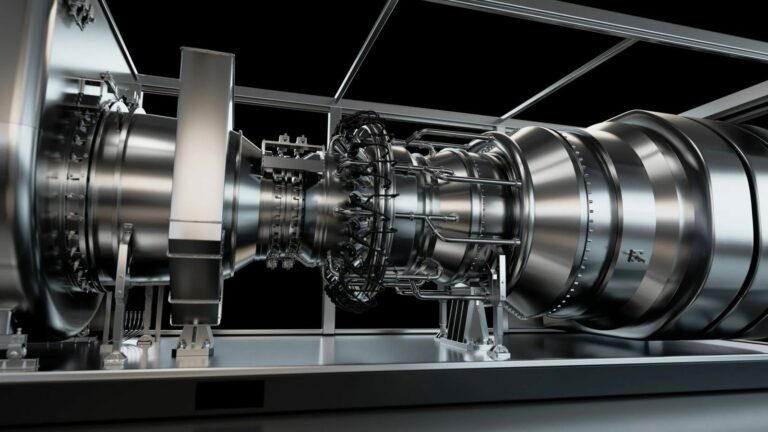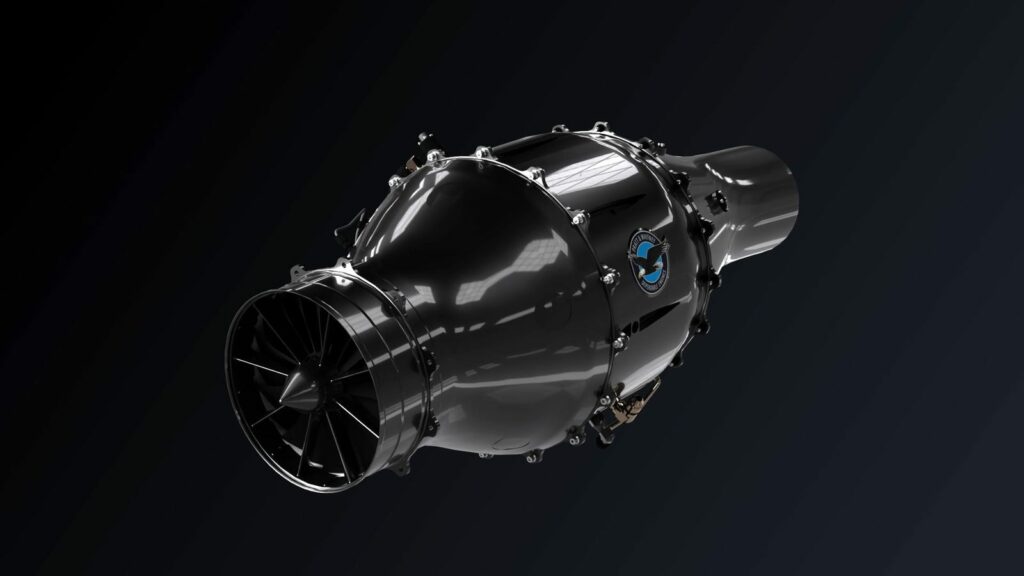
Nearly 60% by volume. That is the share of additively manufactured parts in a TJ150 engine that Pratt & Whitney recently put through demonstration testing. Such an engine is part of what’s known as the Valox™ family, whose variants could one day power multiple types of platforms.
The Valox™ engines target small munitions and uncrewed aircraft. These platforms have short lifetimes and must be produced in large numbers, at a cost that makes what the defense world calls affordable mass possible.
“Our customer’s focus is no longer only on what we can deliver in 10 years, but also on what we can field tomorrow,” said Chrissy Williams, who is in charge of Pratt & Whitney’s Advanced Military Engines portfolio.
The Valox™ family
Named after the Latin velox (swift) and the Greek-derived ox (sharp), the engines would produce between 500 and 1,800 pounds of thrust and power airframes ranging from small munitions to large uncrewed aircraft. They are also intended for autonomous collaborative platforms, a category of aircraft flying in numbers next to crewed fighter jets.
The company’s target is to move from a clean-sheet design to production within months.
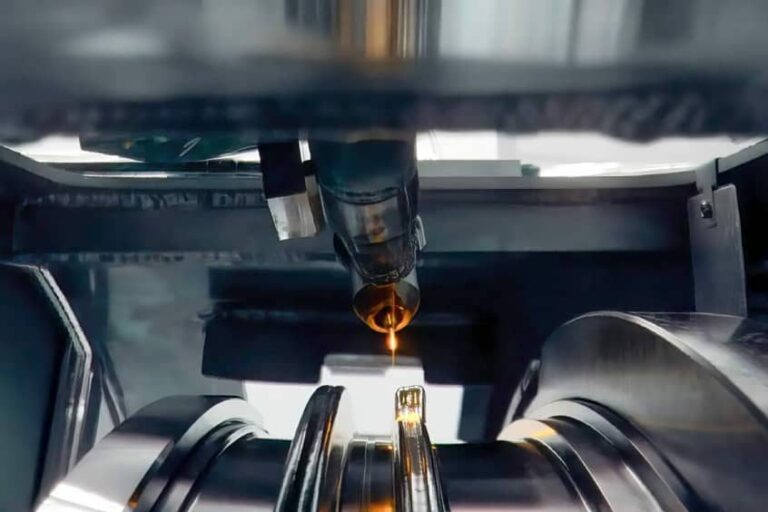
To get there, the approach consists in combining traditionally manufactured parts with components produced by laser powder bed fusion (LPBF) for the hot and cold sections of the engines. The parts come out of the company’s additive manufacturing lab located in East Hartford, Connecticut.
According to Pratt & Whitney, a part that could require more than a year with conventional manufacturing can now be produced in under a week. Once validated, digital build files can be distributed to several suppliers, which can then produce units in parallel.
“You’re enabling your designers to think more aspirationally. What’s really cool is, you start seeing design engineers thinking radically different, embracing what additive manufacturing is capable of,” says Lawrence Binek, Pratt & Whitney’s technical fellow for AM.
The Valox family is Pratt & Whitney’s eighth digital program: when a customer updates a requirement, the change flows through the company’s digital thread in seconds and shows its impact on performance, testing, cost and qualification. Raytheon’s experience with model-based systems engineering helped the team mature these processes faster.
And the TJ150?
The TJ150 has roughly the footprint of a computer keyboard and flies missions of 15 minutes or less. Today, it powers Raytheon’s MALD® decoy and other small systems; The printed configuration could lead to new applications, the company says.
As a reminder, Pratt & Whitney’s GATORWORKS team had already reduced the TJ150’s part count from over 50 to just a handful through a technique called unitization.
The engine maker is not the only one to chase speed in this thrust class. Earlier this month, Beehive Industries tested its 3D printed Frenzy 6 engine four months after finalizing requirements with its U.S. Air Force customer.
Backed by a century of engine data, a nearly 60% printed demonstrator shows how far AM can now go in a small military engine, well beyond a handful of selected components.
THE 3D ADEPT WEEKLY NEWSLETTER
The industry moves fast. Stay ahead.
Every week, the latest additive manufacturing news, in-depth features and real-world applications, straight to your inbox. Plus, be the first to know when a new issue of 3D ADEPT Mag is out.
Free · One email a week · Unsubscribe anytime
Clicking loads our email provider’s sign-up form, including its analytics and Google’s anti-bot protection. You’re only subscribed if you complete the sign-up. Read our privacy policy.