

Composite additive manufacturing combines different materials and processes to meet specific functional requirements. Beyond market forecasts, which applications demonstrate a practical reason to choose it? This feature examines examples in transport, aerospace and tooling, with input from JuggerBot 3D.
Historically, composites and Additive Manufacturing have proven to be a good combination for applications across Aerospace, Defense, Space, Energy and Transportation – industries where “material properties are desirable for both compliance and longevity”, Daniel Fernback, VP and cofounder at JuggerBot 3D LLC, notes.
This 2025 feature examines commercial applications and developments reported during the preceding year, together with their practical limitations.
While we will showcase applications and expertise from various industry players, this feature will also provide key insights from JuggerBot 3D LLC. JuggerBot is an Additive Manufacturing OEM specializing in large-format systems designed to process high-performance materials. As a result, some of the latest applications and developments highlighted may reflect the company’s direct observations and expertise.
The strength (and the weakness) of composite materials
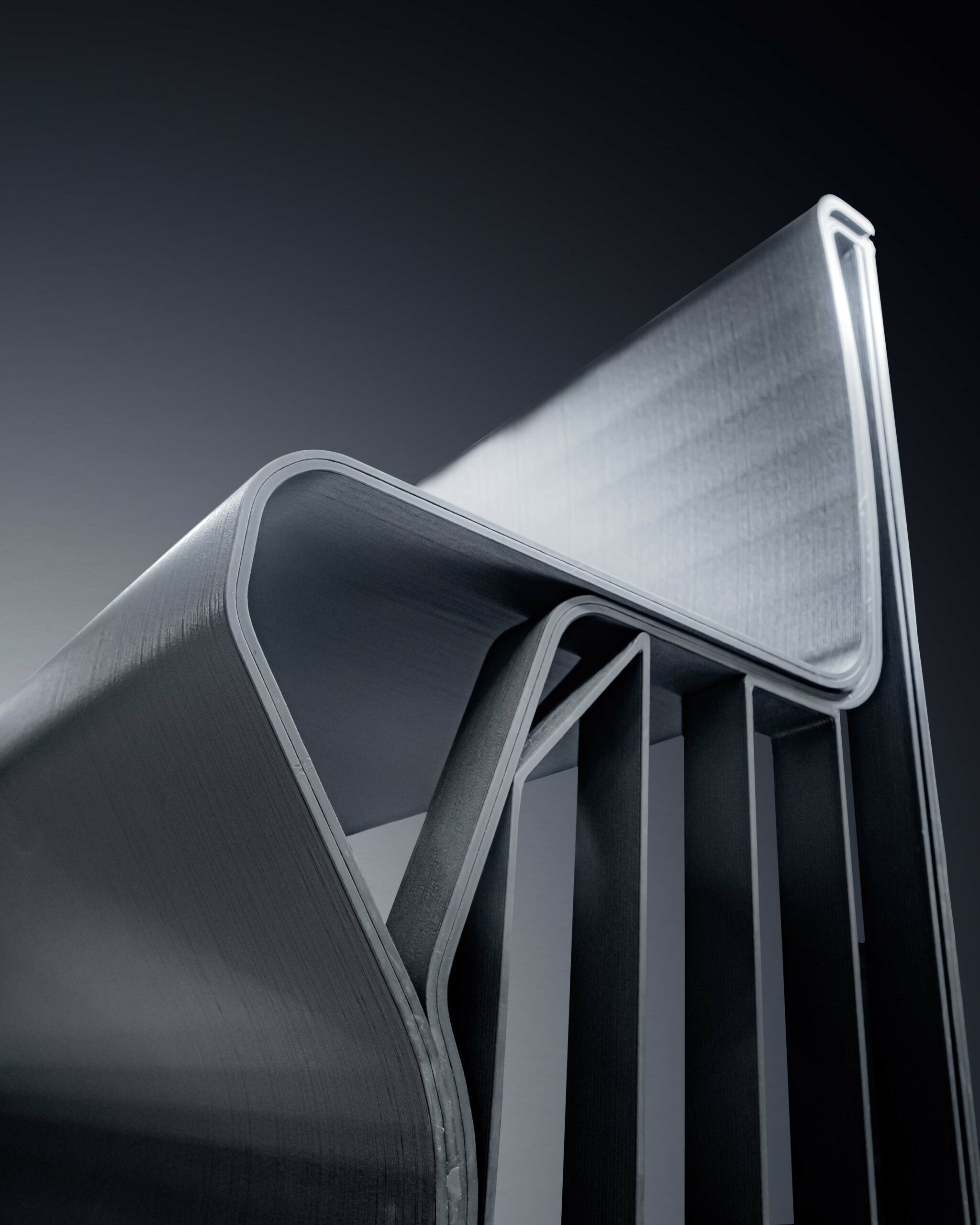
What makes the strength of composite materials is probably the diversity of additives and polymers that can be combined to deliver an engineer-grade material.
Glass- or carbon-fibre-filled polymers can improve stiffness and dimensional stability, but their performance depends on formulation, fibre orientation and interlayer bonding. They are not universally lighter, stronger or more durable than every unfilled polymer. While “carbon and glass fiber reinforcements are prevalent – primarily carbon fiber in the aerospace market for its dimensional stability and lightweighting capabilities -, we have, however, seen increased interest in more exotic additives having a significant impact on material properties beyond strength,” Fernback explains.
That strength can sometimes also be a weakness, as AM technology providers require more time to develop solutions that align with market demand. This can lead to higher costs for certain technologies, potentially slowing the adoption of composite 3D-printed parts.
Fernback identifies interest in high-density fillers such as tungsten from medical and defence customers. Qualifying a compound for a particular printer and application still requires development and testing; this observation does not establish that no commercial tungsten-filled materials exist.
Speaking of cost that can be considered either a driver or a barrier to adoption, he adds: “Certain fillers (organic) can usually drive down the price of a base polymer when compounded but will ultimately compromise the performance of the part. The risk of delamination or the overall brittleness of the part can be self-defeating. This is why we normally test several batches of materials. Various amounts of filler from material manufacturers and the OEM(s) produce a confluence where commercialization and print integrity meet. On the other hand, composites can be cost-prohibitive when additives are off the beaten path. The use of nanoparticles (ex: carbon nanotubes) are largely beneficial for areas of performance related to conductivity or electrostatic discharge (ESD), but the cost of these materials (even on the pellet side) can be daunting. Carbon Fiber can even be cost-prohibitive in some cases. If the performance of these parts for stiffness/weight is not an issue, then most go with glass fiber alternatives when applicable.”
The AM technologies that deliver value in composite applications
Composite AM covers more than substitutes for metal parts. Polymer-matrix composites, other matrix systems and the tools used to manufacture composite components involve different materials and production routes.
The AMEXCI illustration below groups examples into robotic extrusion, composite-based additive manufacturing, fibre placement, powder bed fusion, thermoplastic extrusion and photopolymerisation. It is a presentation of composite-related approaches, not a substitute for a standardised AM process classification.
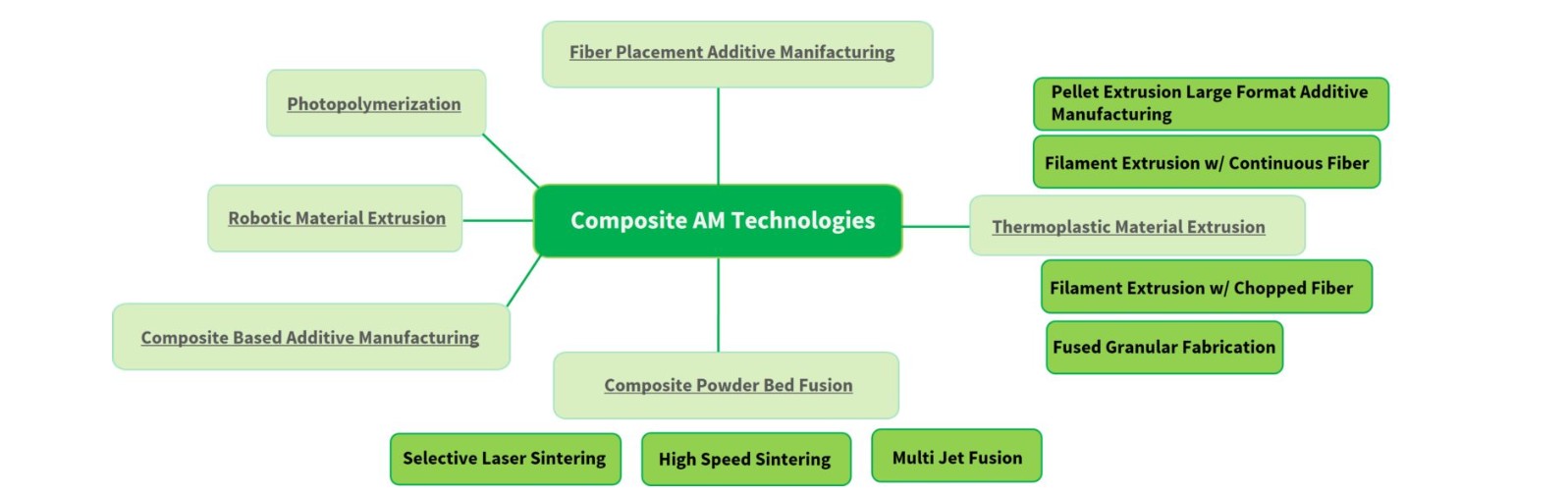
The following examples focus on large-format extrusion and related composite production methods. They do not provide market-share data from which to rank process families.
Large-format printing is particularly relevant to sizeable tooling and transport components. Smaller parts and other material systems may favour different technologies; part size alone does not determine the most suitable process.
For which applications?
“There are several Aerospace applications looking to leverage both 3D printing and thermoplastic composites, especially with the increased activity surrounding Unmanned Aerial Vehicles and Space Exploration,” Fernback outlines before sharing they recently assisted a firm with the production of several people movers at the Orlando International Airport.
“They were dealing with deadlines that they were not going to meet with traditional methods (FRP Molding). They investigated alternatives (Large Format FFF/FDM Technology), and the cost was prohibitive. We ended up printing the entirety of the cabin using an ABS CF20 composite material with lights-out printing over the course of eight (8) days, beating the original lead time by four months and the FFF alternative by 60% in cost. We totaled out this project with over 42 pieces per vehicle with each weighing roughly 450 pounds [204 kg],” he enthuses.
These time and cost figures are reported by JuggerBot for this project. The interview does not provide an independent comparison protocol. The wording does not unambiguously establish whether the quoted 450 lb refers to each printed piece or to the cabin assembly, so no total component mass can be inferred from it.
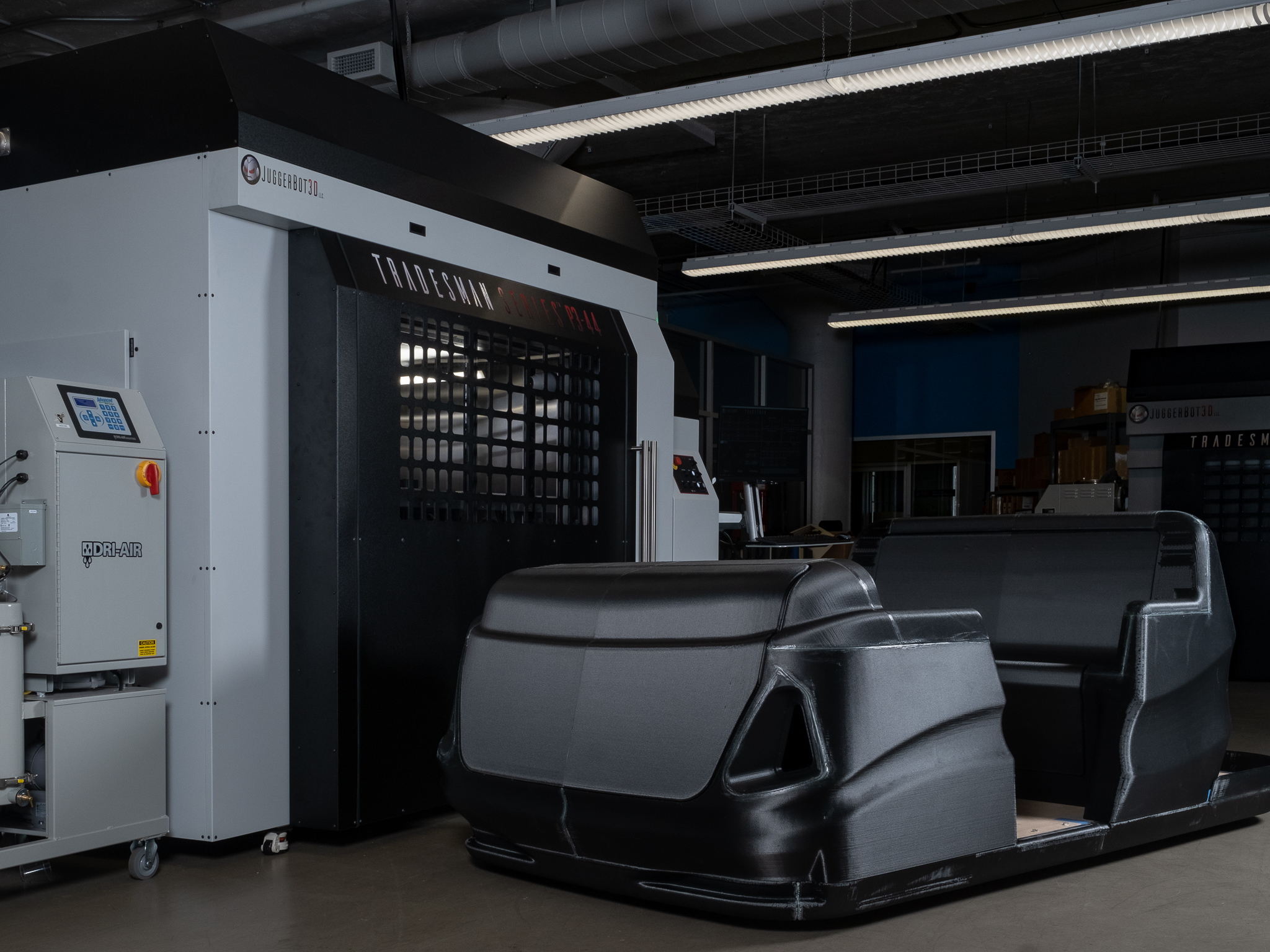
According to Fernback, this type of application demonstrates how the adoption of LFAM can impact what decision-makers care about: time and cost.
Massivit announced an order from Walt Disney Imagineering for a Massivit 10000-G on 2 January 2024. The platform supports printing moulds for composite production, distinct from directly printing a fibre-reinforced end part. The exact Disney application is not detailed here. Separately, Massivit identifies CIM 84 as meeting an ASTM E84 Class A fire rating; this material claim does not certify an entire attraction or every configuration in which it is used.
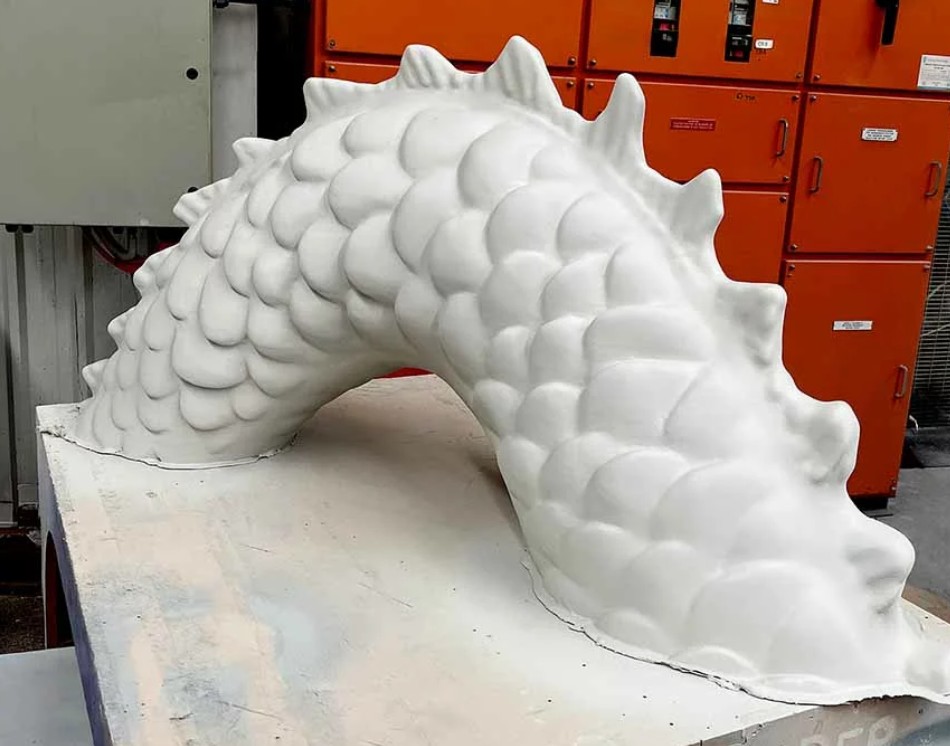
Massivit also reports producing a 4 m × 1.5 m decorative dragon on a Massivit 5000 in two days, for a Chinese New Year display at Sydney Airport. This illustrates large-format display printing; the example does not establish that the dragon itself is a fibre-reinforced composite.
In a different production route, Rocket Lab announced on 8 August 2024 that installation had begun of an Electroimpact automated fibre placement (AFP) machine for Neutron rocket structures. The machine weighs 90 tonnes. It lays continuous carbon-fibre composite; it should be distinguished from the pellet-extrusion printers discussed earlier. The production benefits described in the announcement were projections for the programme.
Beyond these applications, JuggerBot 3D’s expert points out that “industry compliance has proven to be a major driver over the past year.” “For instance, we have had conversations with firms in rail transportation and the need for NFPA and/or EN 45545-compliant materials is non-negotiable. This severely limits the number of polymers [that can be explored] for the production and adoption of AM for MRO. Through our material partner network, we were able to secure a PC CF20 that met these standards and have interpreted that this level of standardization will continue to rise with the adoption of Large Format end-use parts,” he adds.
The interview does not identify the complete test reports, classifications or operating conditions behind this material-compliance statement. A rail application must be assessed against its particular requirements, including the finished component and its manufacturing process.
These examples show why application requirements matter as much as equipment development. A useful assessment separates directly printed composite parts, printed moulds used to make composites and automated fibre placement, then compares quality, time and cost on a defined basis.
THE 3D ADEPT WEEKLY NEWSLETTER
The industry moves fast. Stay ahead.
Every week, the latest additive manufacturing news, in-depth features and real-world applications, straight to your inbox. Plus, be the first to know when a new issue of 3D ADEPT Mag is out.
Free · One email a week · Unsubscribe anytime
Clicking loads our email provider’s sign-up form, including its analytics and Google’s anti-bot protection. You’re only subscribed if you complete the sign-up. Read our privacy policy.