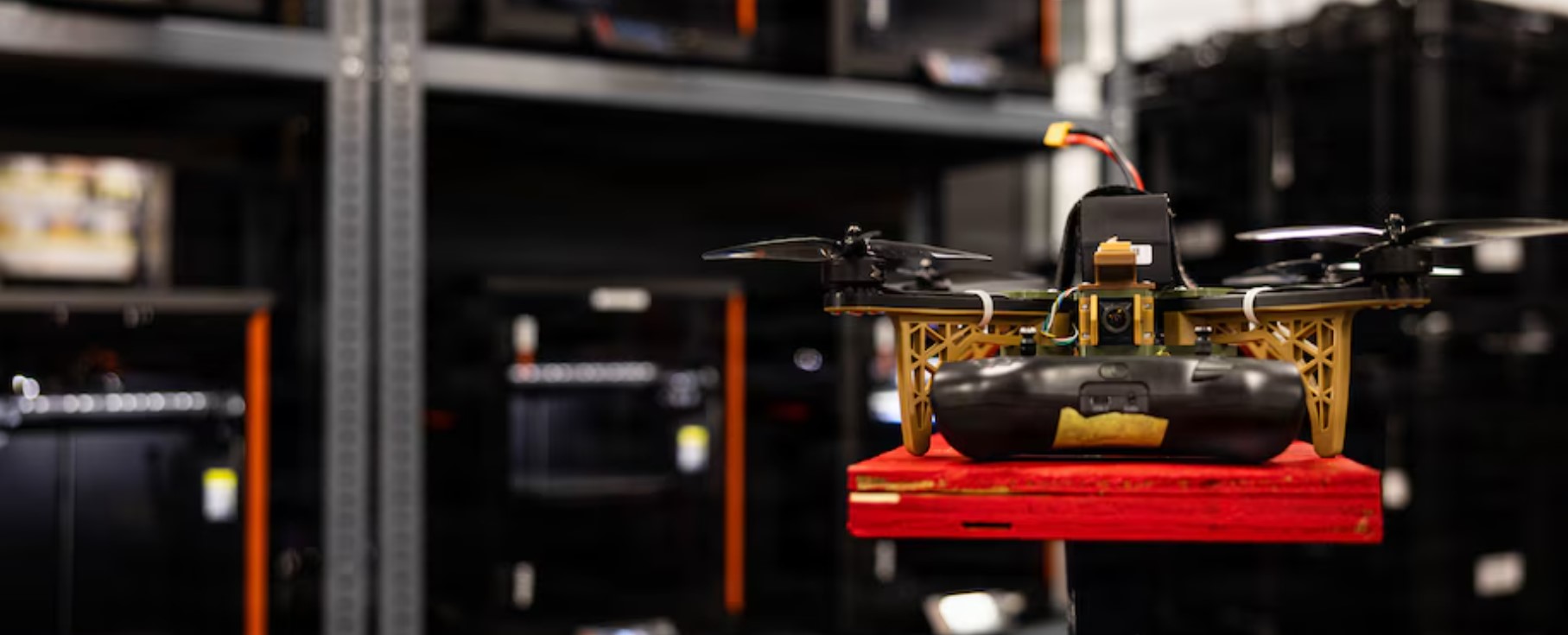
As part of the Department of War’s plan to field 300,000 one-way attack drones by 2028, 2nd Marine Logistics Group has unveiled the Marine Corps’ first NDAA-compliant 3D-printed drone.
The drone, named HANX, is a holistically adaptable approved platform that can be tailored to the needs of the warfighter.
“Anyone can create a cheap drone using cheap non-approved parts; however, finding parts that don’t run the risk of having backdoor software is difficult,” Sgt. Henery David Volpe, an automotive maintenance technician who is behind the creation of the 3D printed drone platform, states. Volpe now helps the Marine Corps to expand their 3D printing capabilities.
90 days to get the job done
The expert was given a deadline of 90 days to get the job done. To do so, he surrounded himself with a multidisciplinary team.
From the outset, Cpl. Liam Smyth produced the first design for HANX’s landing gear, laying the groundwork for the drone’s development. As the project progressed, Staff Sgt. Jonathan Borjesson worked closely with Volpe through hours of tuning to bring the drone in line with required specifications, while Cpl. Isauro Vazquezgarcia and Cpl. Corven Lacy ensured continuous operation of the 3D printers and contributed design input that helped refine the final system.
Underpinning the entire effort was Chief Warrant Officer 3 Pine, whose work on policy changes made the development of the drone possible in the first place.
“You never do anything alone, whether that’s in combat or not,” said Volpe. After meticulously researching, planning, and implementing new knowledge learned to draft his blueprints, hundreds of hours, late nights, early mornings, failed designs, and shared success, the team of Marines had brought the drone from an idea to reality. And now “HANX” was ready to be tested.
How did HANX get approved?
To ensure parts don’t run the risk of having backdoor software, it was crucial for all the critical components to be NDAA compliant, preventing this way, the drone from becoming a potential security risk
In case you are not familiar with it, adevice harboring backdoor software is a device that adversaries could easily hack to record data from.
Volpe spent months researching manufacturers, contacting suppliers, and vetting components to ensure they met NDAA requirements, a process that involved extensive back-and-forth with the U.S. government but was critical to success.
Once the individual components were approved, the team faced a final hurdle: validating that the fully integrated system met all required standards. Months of focused work hung in the balance as they awaited a decision.
That decision came with a call from the NAVAIR program office, which announced changes to the interim flight clearance process that enabled HANX to receive approval for flight. With that, Volpe had built the first NDAA- and NAVAIR-approved 3D-printed drone, designed and manufactured entirely by Marines, for Marines, at a price point that expanded sUAS capabilities across units.
“I had never accomplished something like this,” Volpe said. “I’ve been to college, rebuilt engines, but this is mine. This is what I designed. This is what I made.”
Following HANX’s approval, the Innovation Campus developed a plan for in-house, modular 3D-printed drones, translating the team’s work into training plans and a draft course framework. The effort positioned the Marine Corps to equip any unit with the ability to manufacture and sustain the capability, an opportunity quickly adopted by Marine Corps Special Forces Command at Camp Lejeune.
*We curate insights that matter to help you grow in your AM journey. Receive them once a week, straight to your inbox. Subscribe to our weekly newsletter