Do you know that feeling when you’re the newcomer, at school, at work, or in a room where everyone else seems to know the rules? I experienced that this week in Shanghai, China. First time in the city, first time at TCT Asia, and I suddenly felt new in an industry I’ve been covering for years. I wasn’t lost. I was just in a different world, one that wasn’t mine, one where I needed to learn the codes before I could truly see what was in front of me.
Being there, I couldn’t help but think of cultural anthropologist Margaret Mead’s words when she explained genuine understanding of another culture “demands the open-mindedness with which one must look and listen, record in astonishment and wonder at that which one would not have been able to guess.”
The more I think about it, the more I wonder if that’s exactly how the Western world feels when it comes to engaging with Asia-based companies. Not hostile. Not indifferent. Just unfamiliar. And unfamiliarity, if you let it, can masquerade as understanding.
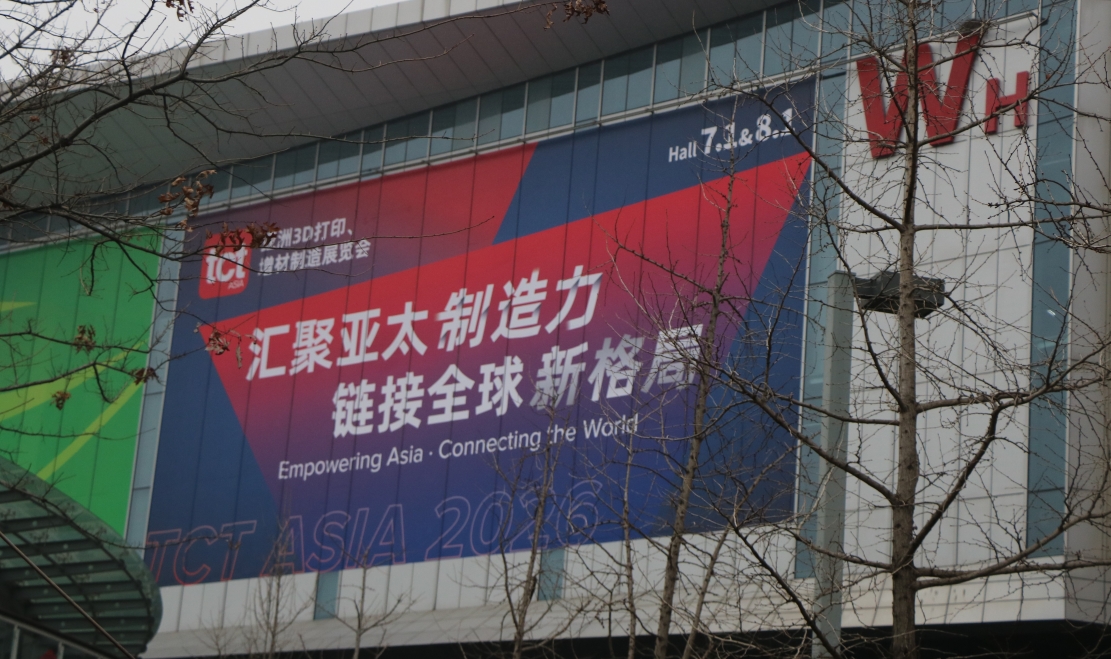
TCT Asia, acknowledged as the leading additive manufacturing event in the region, was held from March 17 to 19 at the National Exhibition and Convention Center in Shanghai, reported to be the largest exhibition venue in the world under one roof.
On day one, the energy was immediate and electric.
But getting there tested that energy. Co-located with two other major events, the venue swallowed us whole. Poor signage and a maze of entrances cost us nearly an hour before we reached Halls 7.1 and 8.1.
What turned things around was a person, not a map. Dannie Wang, one of the event’s organizing team members, met us at the entrance to the halls. In a few sentences, she did what no signage had managed: she gave us a framework: Hall 7.1 was all about metal additive manufacturing and Hall 8.1 was all about polymer 3D printing.
Two halls, two worlds, two distinct expressions of what Asian AM has become. Without realizing it, she had just handed us our mission for the next three days: decode both.
Metal AM in Asia: Beyond the low-cost narrative
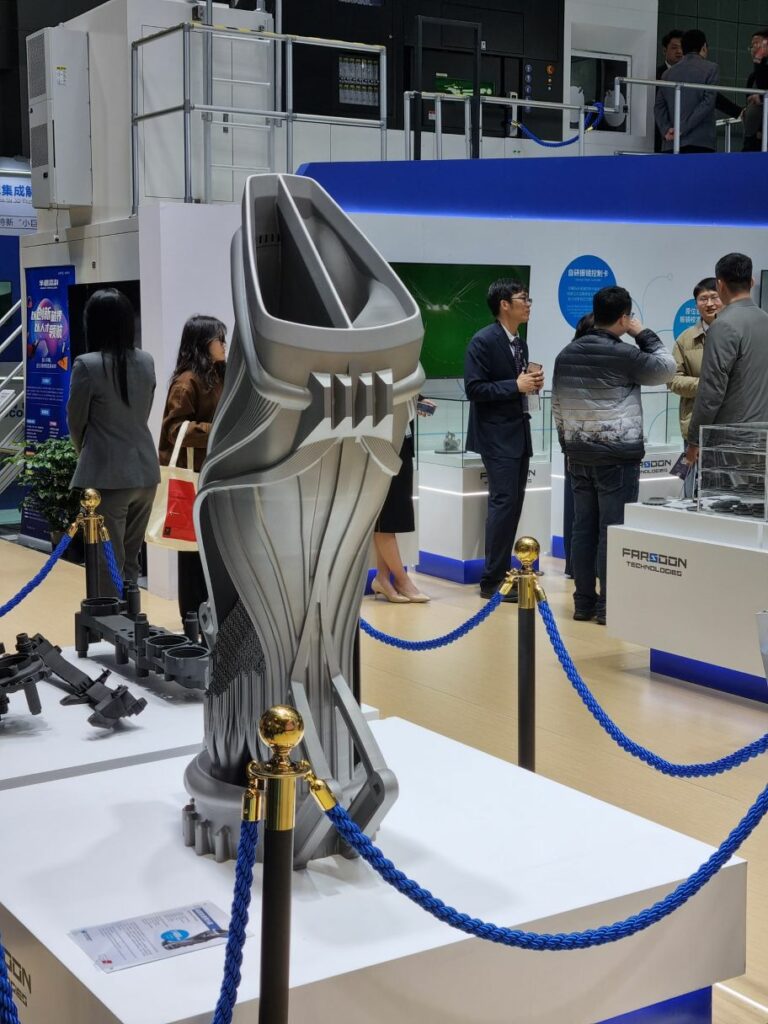
In Europe, we are familiar with the likes of BLT, Farsoon, Eplus3D, HBD, or UnionTech as we used to see them at Formnext, an event 3D ADEPT Media has long been a partner with.
Seeing them “at home” hit differently. It was as if they had gained a new power, a new gravity. And seeing them alongside others with booths just as large — companies whose names were difficult to read for someone unfamiliar with Chinese characters — made us realize two things:
- The Asian market is so vast that most companies simply don’t feel the need to expand into Western regions. The domestic market alone is enough to grow a serious business.
- You can easily spot those who are open to international expansion by the way they communicate: a deliberate blend of English and Chinese, in signage, in conversation, in attitude.
With that reality came another one. Language may be the most visible barrier for anyone doing business in this part of the world, but Chinese people are among the most willing to bridge it. The effort is genuine, and it goes both ways. From that moment on, Google Translate’s speech function became our most reliable AI assistant on the floor.
Across the aisles of Hall 7.1, the familiar frontrunners (Farsoon, BLT, Eplus3D) no longer looked like “low-cost alternatives.” They were setting the pace: multi-laser synchronization, large-format productivity, build volumes that are sometimes difficult to match in the West. The applications on display reinforced that argument, and confirmed, without surprise, that powder bed fusion remains the dominant metal AM process in the region.
New names I’m keeping in mind: powder bed laser melting machine manufacturer XDM 3D Printing, digital twin specialist Synacore, and ENIGMA, which focuses on advanced shipbuilding solutions using Wire Arc Additive Manufacturing. As would become clearer later in Hall 8.1, they each underscored the same strategic logic: depth over breadth.
European founders in Asia and European companies in the region
It’s not surprising to see established players like Materialise and Siemens continuing to hold ground in the region. But what caught my attention was something else: European founders who built their companies here.
SPARKMATE is the name that stayed with me. A steelmaking specialist that turned off stealth mode last year and made its public debut at this year’s TCT Asia.
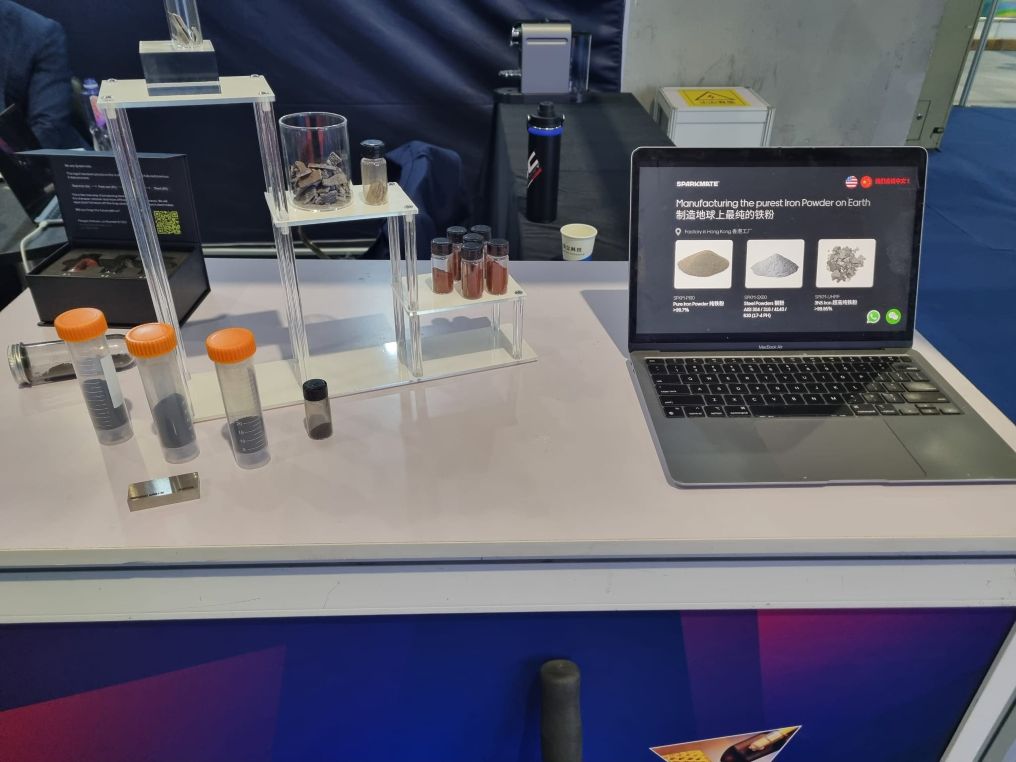 The company is tackling one of industry’s most stubborn problems: decarbonizing steel production. Their approach uses an electrochemical route to produce steel directly from raw ore, bypassing the coal-based processes that have defined the industry for centuries.
Founders Maxime and Morgan studied and lived in Asia before building here, which means they didn’t just understand the cultural codes intellectually, they absorbed them. Add to that the structural advantages of being headquartered in Hong Kong, tax efficiency, regulatory speed, proximity to supply chains, and you start to see the logic clearly.
That combination of Western engineering ambition and Asian operational pragmatism may be exactly the formula this kind of deep-tech company needs to move fast and be taken seriously.
Asian founders eyeing the international market
The same instinct works in reverse. Just as some European founders have found their footing by planting roots in Asia, some Asian companies are ready to look outward.
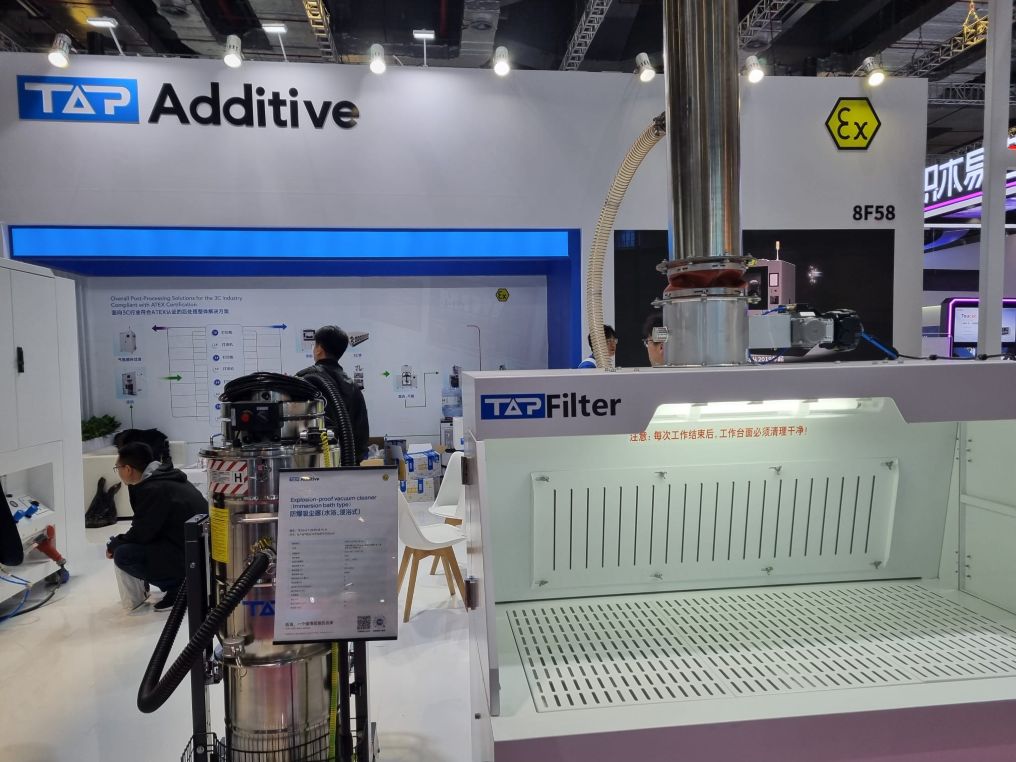
TOP Additive Technology, a powder removal machine manufacturer with a clear eye on the European market, is a case in point. There’s a confidence in that move that mirrors what we saw from the European founders. Whether that expansion gains traction will depend on how well they navigate the cultural and commercial distance between both markets.
On these notes…
Hall 7.1 left little room for doubt about where Asian metal AM stands today. But a trade show is never just one story. Across the floor, Hall 8.1 was telling another one: what happens when a technology stops being special and simply becomes part of how things are made?
*We curate insights that matter to help you grow in your AM journey. Receive them once a week, straight to your inbox. Subscribe to our weekly newsletter.