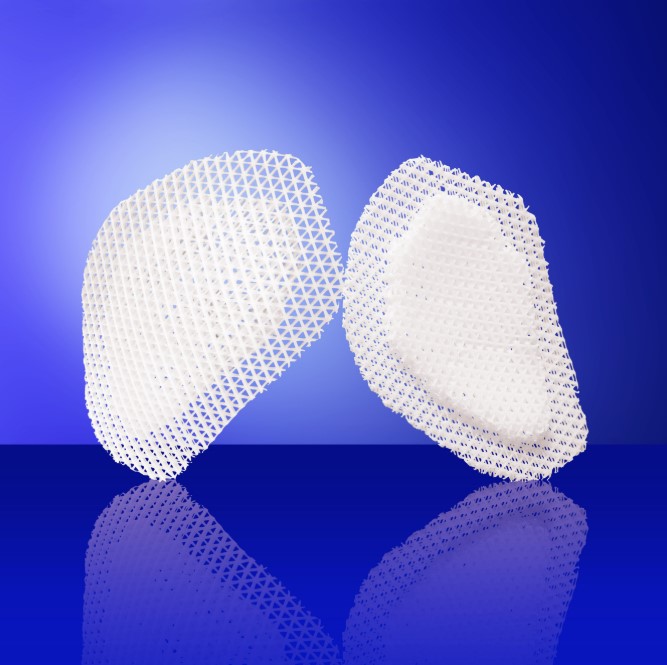
When you know that by this time last year, Osteopore’s 3D printed implants were added to Singapore’s Ministry of Health’s subsidy list, it’s not surprising to see how the company is now expanding clinical 3D printing services across Singapore’s healthcare system.
This expansion strengthens the company’s existing focus on craniofacial reconstruction, rhinoplasty, orthopaedic and dental surgery.
The decision to broaden Osteopore’s 3D printing services followed sustained, case-by-case requests from clinicians who were already using the company’s expertise in patient-specific solutions.
For healthcare professionals, this development reflects a practical response to clinical demand rather than a speculative commercial move. Recurrent engagement from surgical teams effectively confirmed the relevance of in-house design and manufacturing capabilities in supporting operative workflows.
The expanded service offering focuses on two clinically oriented applications. First, patient-specific anatomical models are produced to support pre-operative planning. These models enable surgeons to assess complex anatomies in three dimensions, refine their surgical approach, and anticipate potential challenges before entering the operating theatre.
Second, customised cutting guides are developed to align precisely with an individual patient’s anatomy. By translating pre-operative planning into intraoperative accuracy, these guides aim to improve precision, streamline procedural steps, and reduce variability.
From a clinical standpoint, both tools are intended to enhance efficiency and risk management. Ultimately, the objective is to support safer procedures and more predictable patient outcomes.
While several hospitals have established in-house 3D printing units, there is limited evidence of a single solution provider scaling additive manufacturing (AM) services across an entire national healthcare system. This contrast highlights the structural and regulatory barriers that European companies encounter when attempting to deploy AM technologies at scale within healthcare frameworks.
Read more: Business | Current state of public policies that help patients benefit from 3D printed implants
*We curate insights that matter to help you grow in your AM journey. Receive them once a week, straight to your inbox. Subscribe to our weekly newsletter