
Additive manufacturing (AM) depends on collaboration. Design teams, materials suppliers, machine vendors, software providers and external service bureaus often need access to the same production data. This sharing supports speed and scale, but it also introduces risk. When sensitive files move beyond your organization’s direct control, security gaps can quickly appear.
From a cybersecurity and compliance perspective, third-party data sharing is now one of the most common sources of exposure in advanced manufacturing. Understanding where these risks come from, and how to manage them in daily AM workflows, is essential.
Recent data shows that globally, the manufacturing industry experienced more ransomware attacks than any other industry in 2024, with attackers exploiting weak access controls and supplier connections. What’s more, reports suggest that, in 2024, 80% of manufacturing companies experienced a year-on-year increase in general security issues.
These attacks can slow production, cause data breaches and result in significant costs. Understanding how attackers find their targets, and what can be done to protect AM data can help manufacturers, designers and clients keep their sensitive information safe and secure.
Why partner data sharing creates risks in AM

AM production data is uniquely valuable. Computer-aided design (CAD) files, build parameters, machine settings and material profiles can reveal proprietary designs and process know-how. When these assets are shared externally, even for legitimate reasons, the risk of a breach increases.
Third parties may follow different security standards, use older systems, or rely on unsecured file-sharing tools. In some cases, data is copied multiple times across email, cloud storage and local machines, making it hard to track who has access and for how long.
Unlike traditional manufacturing, small changes in AM files can affect part performance. This makes data integrity just as important as confidentiality. Any unauthorized change, whether intentional or accidental, can introduce serious quality and safety issues.
Common weak points in production data handling
Several recurring weaknesses appear in AM collaboration environments:
- Uncontrolled file sharing using email attachments or public cloud links
- Overly broad access rights that allow partners to view or edit unnecessary files
- Lack of version control, leading to outdated or altered builds entering production
- Limited visibility into how third parties store or protect shared data
Many of these issues are process-related rather than technical. Engineers often prioritize speed and production deadlines, while security controls are added later or inconsistently applied.
Guidance from organizations such as the US National Institute of Standards and Technology (NIST) highlights the importance of access control and data lifecycle management in manufacturing systems.
Threats to IP and part quality
 One of the most obvious risks is intellectual property (IP) theft. Stolen design files can be reused, resold, or reverse engineered without the original owner’s knowledge. For regulated industries such as aerospace or medical devices, this can also lead to compliance failures.
Equally concerning is the risk to part quality. Modified build files, altered orientations, or incorrect material profiles may not be immediately visible. The result could be parts that pass visual inspection but fail under stress or over time.
The European Union Agency for Cybersecurity (ENISA) has repeatedly warned that manufacturing data manipulation is an emerging threat, particularly as digital supply chains grow more complex.
Practical Steps to Secure Third-Party Collaboration
Reducing third-party risk does not mean stopping collaboration, but it does mean structuring it more carefully.
Practical steps include:
- Limit access by role and project, ensuring partners only see what they need
- Use secure data-sharing platforms with audit trails and permission controls
- Apply version control and file integrity checks before production begins
- Define data handling expectations in contracts, including storage and deletion rules
It’s also important to assess third parties before sharing data. Basic security questionnaires and alignment with recognized standards such as ISO/IEC 27001 can help establish a minimum level of assurance.
Embedding security in daily AM workflows
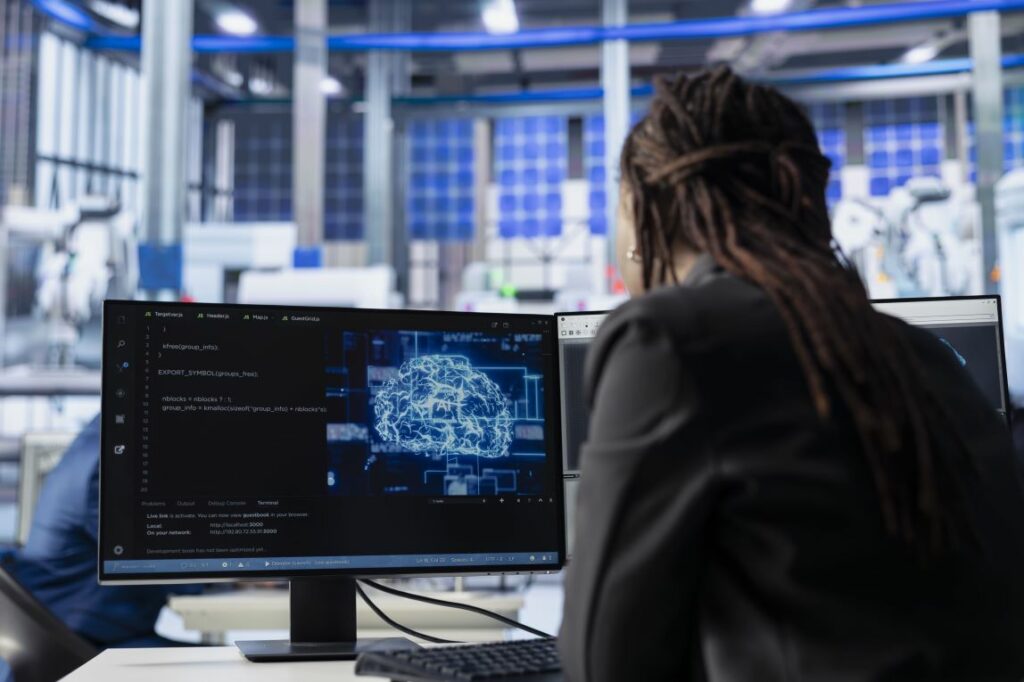 Security works best when it fits naturally into existing engineering processes. This means integrating checks into design reviews, build approvals and handoffs to external partners, rather than treating them as separate tasks.
Clear documentation, repeatable workflows and shared responsibility between engineering, IT and supply chain teams all help reduce risk. Training engineers to recognize common data-handling pitfalls is just as important as deploying technical controls.
A balanced approach to collaboration
Additive manufacturing thrives on openness and shared innovation, but that openness must be balanced with discipline. Third-party risks are not abstract threats, they directly affect IP protection, part quality and operational resilience.
By understanding where vulnerabilities arise and embedding simple security practices into daily workflows, AM teams can collaborate with confidence, protecting both their data and the integrity of the parts they produce.
*This article has been written by Chris Brown, a senior cybersecurity and product marketing leader with over 15 years of experience across cybersecurity, information systems auditing, product management, and marketing. As a Senior Product Marketing Manager at VikingCloud, Chris helps businesses understand how to navigate complex security challenges through solutions that support secure, uninterrupted operations and align with risk management frameworks.