As I wrote in our weekly newsletter, Formnext is always a rush, but that’s also part of its charm. From the inevitable sprints between aisles to the evening events, I usually need a moment to digest my feelings before sharing my thoughts.
This year, though, the event felt different. For many reasons.
The absence of carpet — the first thing we all noticed when stepping into the halls — subtly reinforced a truth we’ve all been sensing: every stakeholder is feeling the strain of an industry facing tough business economics.
Strangely enough, that stripped-down environment helped cut through the glitz and glamour, pushing us to refocus on what truly matters: how to advance the technology, expand its applications, and build profitable, sustainable companies.
I must have had fifty shades of the cost conversation this year, from those who spoke about it openly to those who tried to mask their discomfort. Whether they admitted it or not, the tension was palpable… or perhaps I’ve simply become a pro at navigating tough conversations.
Still, that shared concern over cost is likely what led me to spot a unifying trend across some booths:
The rise of entry-level machines.
The trend actually started at the end of last year. It wasn’t prominent enough to make the headlines of our 2024 “end-of-year” review, but it began to stand out a bit more in 2025, especially as CONTEXT flagged the rise of entry-level 3D printers as a key trend of Q1 2025, with shipments up 15% YoY.
While the market intelligence firm focused mainly on 3D printers, Formnext broadened the picture: entry-level options were emerging not only in professional 3D printers but also in post-processing systems.
Among the many companies I met at the show, I would like to mention two names in this recap; with more to be featured in upcoming articles: Pollen AM and AMT.
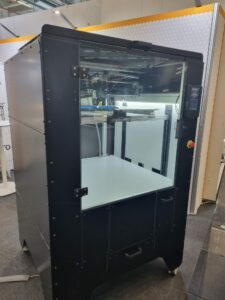
Pollen AM, one of the few manufacturers truly pushing pellet 3D printing forward, introduced Pam Pro. The granulate 3D printer integrates the company’s PAM technology, supports a broad range of thermoplastics, composites, and bio-based materials, and reportedly reaches print speeds of up to 0.5 m/sec. According to Managing Director Didier Fonta, the advantage of pellet-based systems lies in their ability to be easily upgraded to serve a wide range of applications.
I’ve always liked the potential of pellet 3D printing, and I regret that companies in this segment rarely showcase real applications that demonstrate the full capabilities of their technology. Hopefully, this will change.
On the post-processing side, AMT, the vapor smoothing specialist, presented the PostPro SF2X, a compact 24-liter system designed to deliver twice the processing volume within the same footprint.
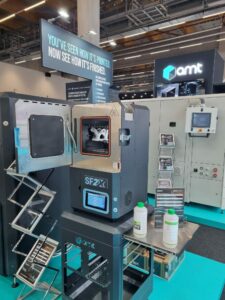
Powered by the company’s proprietary PostPro AI, the SF2X dynamically adjusts vapor flow, temperature, and timing based on material type, part geometry, and batch data, optimizing each cycle for consistency, surface quality, and efficiency.
Joseph Crabtree, Founder & CEO, told 3D ADEPT Media that the system offers a cycle time of 1.5–2 hours, reduced to just 30–45 minutes with PostPro AI optimization, and comes in at around €30,000. Crabtree seems to have found a stable path for his company since restructuring the business. He now leverages the potential of AI, automation, and a renewed business strategy to maintain growth, but that’s a story for another time.
Those who start a new chapter
Although many won’t admit it openly, the broader cost question — “how to make AM profitable for a business?” — has prompted some companies to start a new chapter.
Shapeways rising from its ashes was a great reminder that there is always an opportunity to rebuild, transform, and create something even more beautiful. While a few big names left the industry this year, others have found a new home elsewhere.
Unlike popular belief, I believe these companies deserve a closer look as they carry a legacy from the past and bring a breath of fresh air for the future. This breath of fresh air especially deserves particular attention when technology capabilities were not the reason why they left the industry.
With that in mind, one that we will probably keep on our radar next year is TRUMPF Additive Manufacturing, now rebranded as ATLIX. Matthias Himmelsbach, CEO of ATLIX, walked us through the company’s new vision during their debut at Formnext.

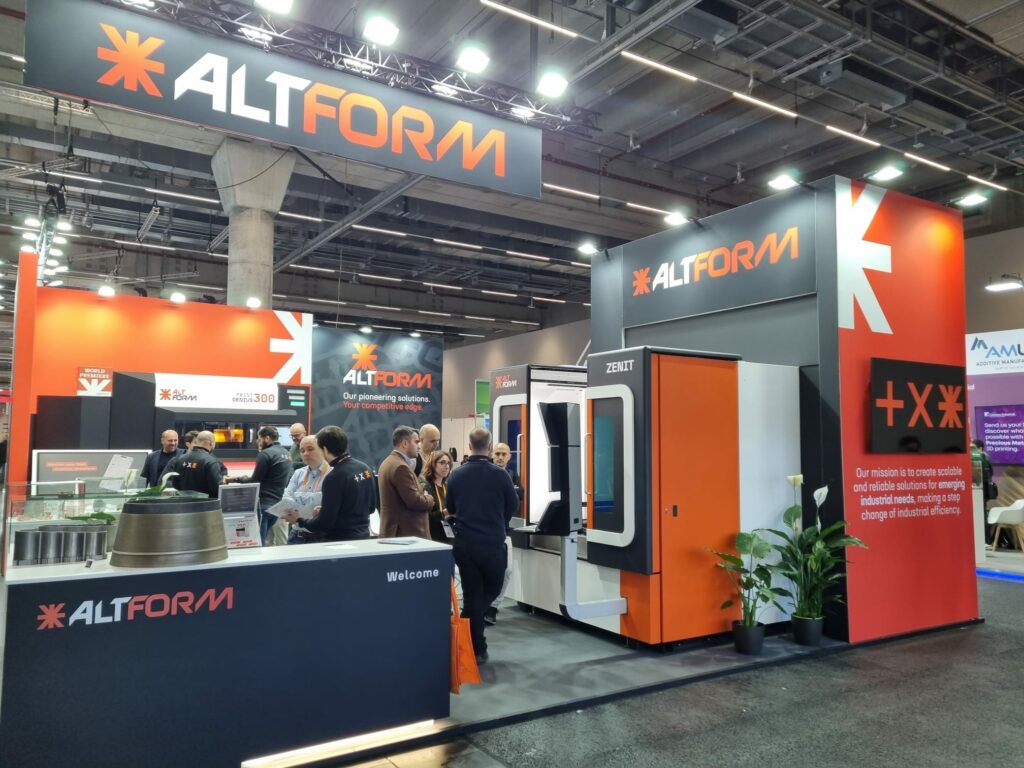
Another one that debuted under a new name at Formnext is Prima Additive, recently acquired by Sodick. Rebranded as AltForm, which stands for Advanced Laser Technologies for Manufacturing, the company now reflects a broader technology portfolio that encompasses both additive manufacturing and other manufacturing processes.
With expertise in Laser Powder Bed Fusion (PBF) and Direct Energy Deposition (DED), AltForm will offer, on top of these technologies, remote laser welding, laser hardening, high-speed surface treatments, and integrated automation for laser-based production.
While I deplore that we still haven’t seen real applications showcasing the full capabilities of their technologies, this new offering underscores a reality we highlighted in our end-of-year review: achieving profitability often requires building a technology portfolio that extends beyond additive manufacturing alone. In the case of AltForm, time will tell us if we were right.
The rise of defense applications
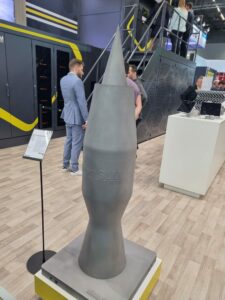
Whether we want it or not, Defense is one of the industries propelling the use of AM technologies. It was already a key trend at last year’s show and it is even more prominent this year. Not only the booths highlighted the parts for that industry, but companies increasingly put it as a key sector to tap into for next year.
One segment in the manufacturing value chain stands out: Post-processing
Among the many technological advancements we’ve witnessed in the past decade, one I am particularly proud of is post-processing, this umbrella term that covers a variety of stages that 3D printed parts have to undergo before being used for the final purpose.
I remember how, a decade ago, companies like Solukon, were raising awareness about how this final stage could significantly drive up the overall cost of 3D printed parts, especially for metals and high-performance polymers. Today, that cost consideration isn’t just a technical challenge; it’s a strategic one, pushing companies to rethink their offerings, optimize workflows, and explore complementary technologies to make additive manufacturing truly profitable.
Since then, and thanks to collaborations with post-processing machine manufacturers in the field, we have made it our goal to educate the community on this step, the different stages it involves, and potential solutions that could be explored to address challenges faced by operators.
Today, progress in the field highlights a growing number of players and solutions that truly stand out from the crowd.
Kudos to Team Solukon, which is going one step further in its 10th year by showing how automation can be taken even further through the integration of robotics into de-powdering. With this automated robotic de-powdering concept (I still need to get used to the right terminology 😊), Solukon demonstrates that automation isn’t necessarily the end goal; it’s a means to push the technology forward.
LuxYours is another company that caught my attention on the exhibition floor. The company develops a chemical smoothing solution that refines laser-sintered, Multi Jet Fusion, Binder Jetting, HSS, SAF, AKF, and FDM parts by gently smoothing and sealing the component surface physically and chemically. From my understanding, the company differentiates itself from AMT thanks to 2 chambers in its system.
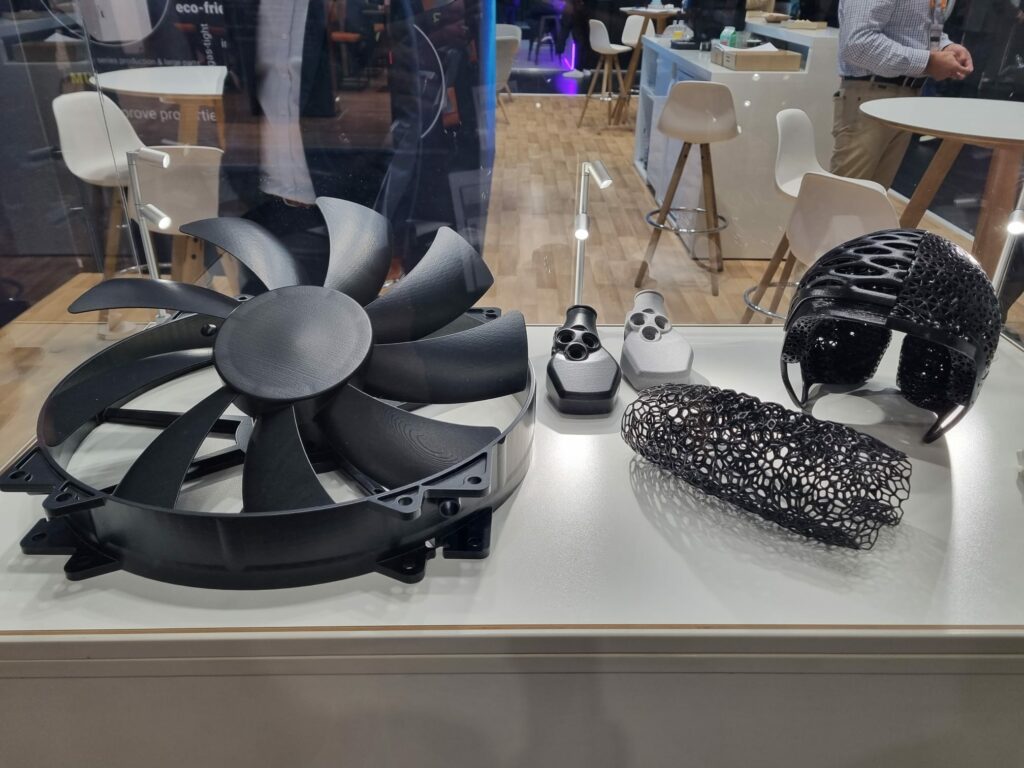
My top pick from the show is probably Reinforce3D and its Continuous Fibre Injection Process (CFIP). Blanca Garro, CEO and founder, together with her team, has built a process that enhances the mechanical performance of parts through the strategic placement of continuous fibers, such as carbon or glass fibers, within the structure of a component.
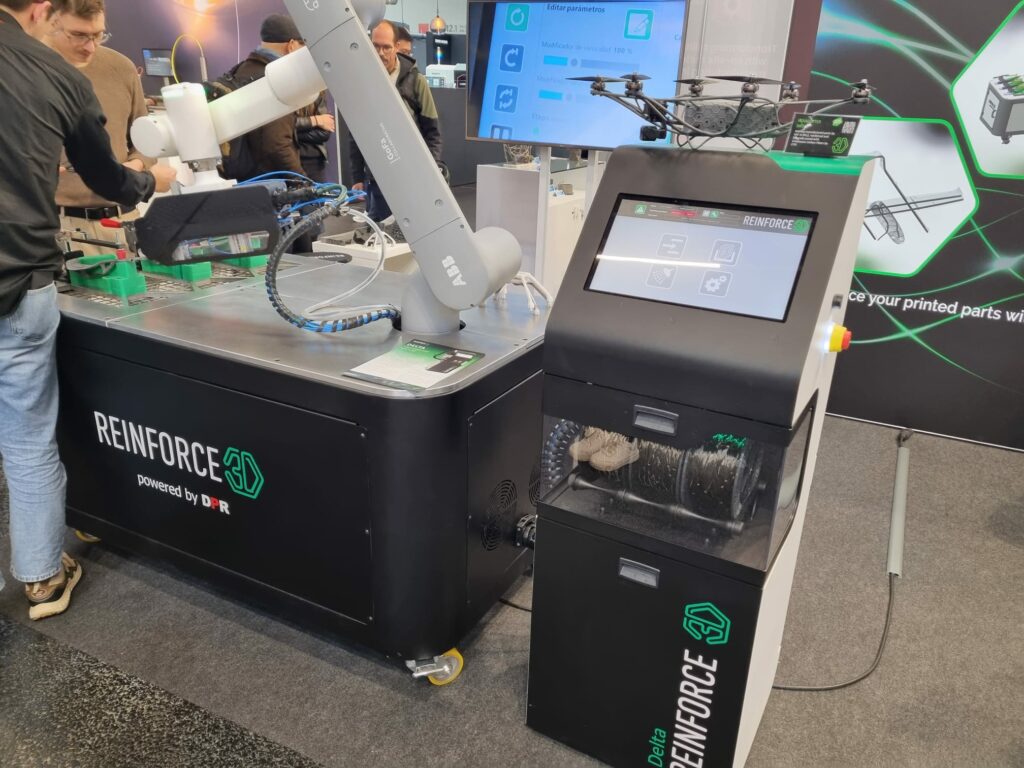
Best part of it? The process can enhance both 3D printed parts and parts manufactured via other processes.
Garro is positioning its company at a crossroads where it can serve all industries. I see great potential in the technology, and I sincerely hope they will be able to demonstrate the value pricing to industries that could benefit from it.
An industry at a crossroads
Formnext 2025 reveals an industry at a crossroads, with every stakeholder playing a role in making it work. Ultimately, it seems everyone understands that advancing the technology requires not only educating vertical industries and pushing applications, but, most importantly, conducting a continuous reality check.
I see a transitional phase where challenges coexist with opportunities. On this 10th anniversary of the show, the 38,282 specialists and executives (47% from outside Germany) who gathered in Frankfurt to explore the 804 exhibitors (61% from abroad) and the extended program signal one thing clearly: the story is far from over.
We curate insights that matter to help you grow in your AM journey. Receive them once a week, straight to your inbox. Subscribe to our weekly newsletter. Featured image: Mesago, Mathias Kutt.