“You can’t impress anyone in Basel,” said Andreas Thor, Professor of Oral & Maxillofacial Surgery at Uppsala University and Consultant Surgeon at Uppsala University Hospital, as he opened his keynote speech. It was a statement that any first-time attendee of European Healthcare Forum for Additive Manufacturing (EFHAM 2025) could easily verify over the course of the two-day conference, held on 26 and 27 June at the FHNW Muttenz Campus.
Though often celebrated as Switzerland’s cultural capital, Basel holds even greater significance for scientists and healthcare professionals: it’s the country’s leading hub for the pharmaceutical industry, home to global giants such as Novartis and Roche. For those focused on healthcare 3D printing, the city also stands out as the base of one of the field’s most advanced users—University Hospital Basel— where Prof. Florian Thieringer and his team continue to push the boundaries of what’s possible with additive manufacturing.
As a reminder, EFHAM is a replacement of AM Medical Days, previously organized by IPM AG. With the goal of bringing even more healthcare professionals around the topic of healthcare 3D printing, AM Medical Days’ founding partner – MGA Medical goes Additive, took over the organization of the event, along with University Hospital Basel, and FHNW Muttenz.
The organizational standpoint

First and foremost, from an organizational standpoint, I appreciated that the event began with a brief introduction of the organizing team. This small gesture added a personal, human touch and set the tone for the entire conference. It also gave attendees the opportunity to connect more meaningfully with the people behind such a human-centered initiative.
In contrast to AM Medical Days, where any company could exhibit—I appreciated that only event sponsors were given booth space. With conference time divided between plenary sessions, workshops, and networking opportunities, limiting the number of exhibitors to sponsors ensured that participants could focus on solutions directly relevant to their work. It also encouraged more meaningful and efficient interactions between attendees and sponsors.
Another positive aspect for me was the diversity of sessions in the plenary room. In addition to the keynote speech, the agenda included individual presentations and panel discussions in different formats. Some panels followed a conversational format, while others began with individual presentations from each speaker on a specific topic. These were followed by a joint Q&A session with the audience and the moderator. This structure allowed attendees to clearly understand each speaker’s area of expertise before engaging in broader discussion.
That said, the event revealed a disconnect between healthcare 3D printing advancements and the market realities, which remain constrained by limited funding.
The full print – integrating 3D printing into healthcare

You would tell me I am a bit biased, because I was privileged to moderate a panel that provides a reality check for an industry at a crossroads. And that reality is that clinicians, researchers, and healthcare providers all use AM in silos, while struggling to move toward a truly connected ecosystem where additive manufacturing is embedded in everyday medical practice.
Well set at the beginning of the conference – right after the keynote pseech, the “full print” panel provides a big picture of where healthcare 3D printing stands today. Interestingly, some of its key takeaways were confirmed across other sessions of the conference:
- First, theory, policy, and practice must align for additive manufacturing to deliver on its full promise in healthcare.
A closer look at policy, in particular, reveals that attempts to develop frameworks for point of care 3D printing, in particular, reveal the need to create a balance between promoting innovation and ensuring patient safety. If for Bernhard Pultar, CEO at POCAPP AG, patient safety should always come first, one needs to recognize that regulatory frameworks can be complex to follow, depending on where you’re based and what you want to do. However, one thing is clear, the production technology does not influence the regulatory pathway, so 3D printed medical devices follow the same pathway as e.g., milled devices. (This means that in Europe, it is the EU Medical Device Regulation 2017/745 that prevails for medical devices).
Daniel Seitz, CEO at BioMed Center Innovation GmbH, sheds light on the importance of quality assurance solutions or processes that help create a foundation for regulatory certification and clinical use. Those processes include, for instance, design validation, material and process validation, machine calibration and monitoring, as well as post-processing QA. Beyond a comprehensive quality management framework, I am keeping from Seitz the ability of a QA process to build clinical confidence – as in the end, the process helps healthcare professionals trust that a medical device or solution will perform as intended.
Read more: Approval of medical 3D printed products and their market access
Nadja Rohr, University Center for Dental Medicine Basel, brought the practical perspective to this table. Her statements underscored something we have been able to confirm throughout other sessions of the conference: dental applications are currently the most developed and widely adopted segment in healthcare 3D printing due to their need for personalization, integration into digital dentistry, and relatively low regulatory friction. They serve as a blueprint for how AM can be effectively scaled and clinically deployed in other areas of medicine. According to Rohr, material cost and training remain the key challenges preventing the wider adoption of AM in digital dentistry.
- Other healthcare 3D printing advancements revealed that surgical models, bioprinting, and implants are growing but remain less financially and commercially mature than dental applications.
The lack of funding in healthcare 3D printing
As Andreas Thor highlighted in his keynote speech—and as echoed in expert presentations during the “Living Layers – R&D behind Biofabrication” session and the panel discussion “The Investment Case of 3D Printing in Healthcare”—the lack of financial support in healthcare 3D printing is a critical issue. It affects everything from early-stage R&D to clinical validation and market deployment.
One key challenge that’s often seen across other vertical industries adopting the technology is the high cost of entry: The technology, materials, and skilled labor required are expensive, making it difficult for startups and other organizations to break in without substantial capital.
Another challenge mentioned by Renaat Coopman and Professor Gyeong-Man Kim on the topic “Personalised Care On Demand” is the limited reimbursement models. Indeed, without clear paths for reimbursement from insurance providers, hospitals and clinics have little incentive to adopt 3D printed solutions.
Read more in the business segment of the healthcare edition of 3D ADEPT Mag: Current state of public policies that help patients benefit from 3D printed implants
Added to that, the lack of large-scale clinical data: Funding is needed for large-scale clinical trials to prove safety, efficacy, and cost-effectiveness, essential for attracting both investors and healthcare providers.
At this stage, recommendations from both scientists and financial experts emphasize:
- The need for a stronger collaboration between industry and academia to share resources and reduce costs
- Investor education on the long-term ROI of healthcare 3D printing innovations
- The deployment of more public and private funding programs to advance specific fields in healthcare 3D printing
Until these issues are addressed, the pace of adoption in healthcare 3D printing will remain slower than its potential allows.
“Yesterday’s spark, today’s momentum”
These takeaways only scratch the surface of the diverse perspectives and topics explored at EFHAM 2025. The event brought together thought leaders whose insights—shaped by experience across disciplines—deserve dedicated coverage on 3D ADEPT Media. Among them were Mark Tan, Radiologist and Clinical Lead at the Singapore General Hospital 3D Printing Centre; Dr. Adriaan B. Spierings of SWISSMEM; and Dr. Özlem Weiss of Expertants GmbH, to name just a few.
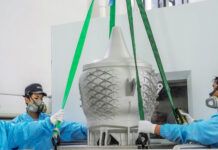
Nevertheless, attending EFHAM 2025 made me aware of an impressive, often overlooked aspect: in addition to the applications often covered and delivered at the University Hospital Basel, the FHNW Muttenz Campus houses a laboratory equipped with one of the most comprehensive arrays of technologies I’ve ever seen at a university—extending well beyond 3D printing equipment. This laboratory is truly every engineer’s dream. Touring the lab revealed the depth of cross-functional collaboration between researchers and University Hospital Basel—and confirmed the university’s capacity to train a skilled workforce capable of transforming patient care in the near future.
Lastly, EFHAM 2025 underscores the value of industry-specific events that explore the use of additive manufacturing within targeted verticals. Such events are essential for understanding the unique challenges of each sector and for fostering the development of tailor-made solutions that truly serve professionals in the field. That, I believe, is the very raison d’être of EFHAM 2025 for the healthcare sector. I hope that the discussions held this year will contribute to building a stronger, more grounded present for healthcare 3D printing.
All images: Copyright EFHAM 2025 _ Remember, you can post free-of-charge job opportunities in the AM Industry on 3D ADEPT Media or look for a job via our job board. Make sure to follow us on our social networks and subscribe to our weekly newsletter: Facebook, Twitter, LinkedIn & Instagram! If you want to be featured in the next issue of our digital magazine or if you hear a story that needs to be heard, make sure to send it to contact@3dadept.com.