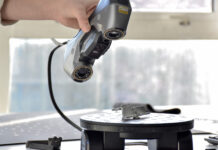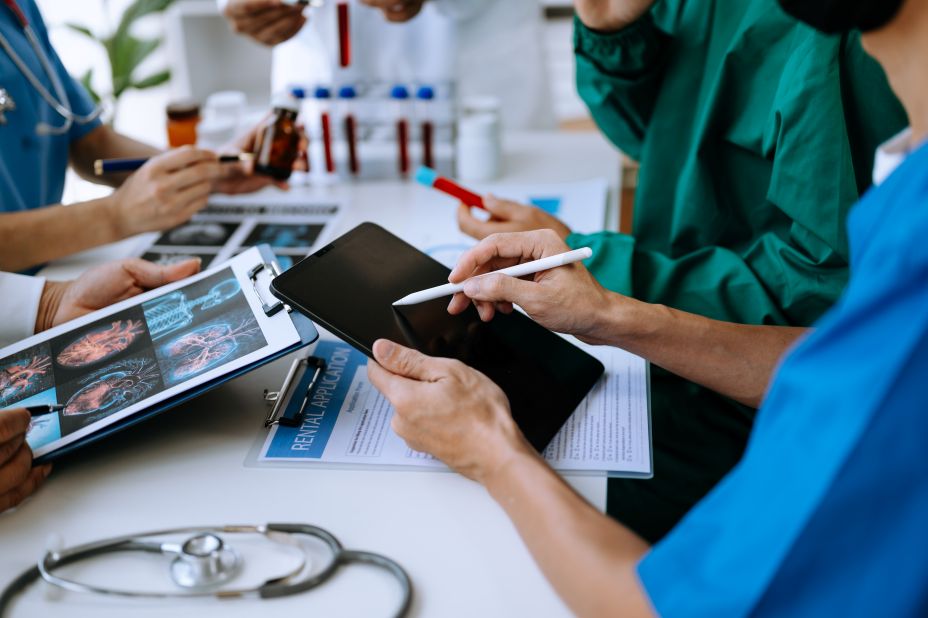
In the latest healthcare edition of 3D ADEPT Mag, we identified three main digital manufacturing stages (3D scanning and digital model creation, print and process, and patient fitting) to deliver 3D-printed patient-specific devices. In mass customization of healthcare applications, these steps are still the same, but their execution varies depending on scale, regulations, and clinical requirements. With a key focus on software, the article below aims to discuss the key drivers of mass personalization with AM and the current state of the market.
Very often, healthcare applications enabled by Additive Manufacturing are highlighted through the lens of customized solutions. In a world where personalized care is the new standard, can AM capabilities enable mass manufacturing and deliver the best in treatments?
Mass customization is not a new concept in healthcare, but many companies that have centered their business around this approach have struggled. By learning from their experiences, we aim to identify and share the key dos and don’ts for healthcare professionals and medical device manufacturers.
Digital manufacturing includes both additive and subtractive processes that are controlled with computer-based systems integrating processes such as CAD, simulation, visualization, and analytics. However, as mass customization is often linked to AM, it’s often considered with a DfAM perspective, hence the key focus on AM as part of this dossier.
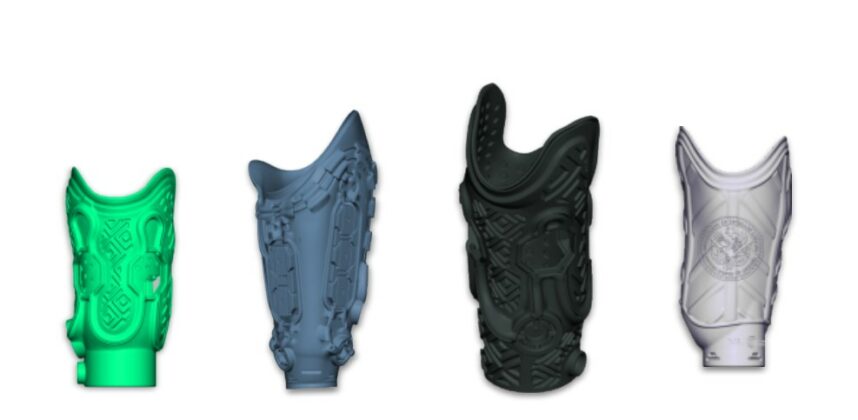
In the healthcare industry, custom-made medical devices can improve the practice of orthopedics, reconstructive surgery, prosthetics, orthotics, or even dentistry. Prosthetics, orthotics, dental devices, implants, hearing aids, and regenerative tissue engineering are examples of applications where software-driven mass customization has made significant impacts. Rajeev Kulkarni, Chief Strategy Officer, axtra3D, explains:
“In prosthetics, machine learning algorithms process 3D scans of a patient’s residual limb to generate optimized digital models that account for soft tissue compression and load distribution. This ensures a precise fit and reliable performance under daily stress.
In orthotics, software automates the creation of custom insoles and braces by processing foot scans with segmentation and adaptive slicing algorithms. This results in tailored support structures that improve patient comfort and mobility at scale.
Dental applications use CAD/CAM software to design custom crowns, bridges, and aligners from intraoral scans, with algorithms optimizing shape and occlusion. Invisalign, for instance, produces millions of patient-specific aligners annually using automated workflows.
In implants, software integrates CT data with design tools to create implants that precisely match a patient’s anatomy. Simulation software evaluates mechanical performance to ensure structural integrity and regulatory compliance.
Hearing aids are almost entirely mass-produced through 3D printing, with ear canal scans generating custom-fit designs optimized for acoustic performance. Companies like Phonak and Widex produce millions of these annually.
In regenerative tissue engineering, software translates patient-specific anatomical data into bioink print instructions, ensuring optimal scaffold porosity and mechanical properties for cell growth. This approach has successfully produced patient-specific cartilage, bone, and vascular tissues.”
Those applications reveal that a mass customization approach heavily relies on patients’ data, and its success depends on the part’s design.
Design for mass customization
In general, to customize a 3D printed product, the product structure is designed with an individualization scope, and thereafter, the design process is repeated for each patient within a fixed solution space, where DfAM considerations are present. As explained in the beginning, the typical digital workflow therefore includes “3D scanning and digital model creation, print and process, and patient fitting.”
In mass customization, two key elements are particularly important: the ability to design several variants of the same design (taking into account unique constraints) and the ability to produce these variations in a cost- and time-effective way.
“When it comes to patient-specific devices, capturing accurate anatomy with high-res CT, MRI, or optical scans is critical. The digital model must be spot-on to ensure the device fits and functions properly. But with mass customization, it’s about finding a balance between personalization and efficiency. Instead of starting from scratch every time, manufacturers often use adjustable templates that let them tweak key dimensions based on patient data. It’s like building a custom suit but starting with a tailored pattern instead of measuring from the ground up. Dental aligners are a great example where each set is customized, but the process is automated enough to handle massive volumes without losing accuracy.
Printing and processing are where things diverge. For truly bespoke implants, like a custom cranial plate made from titanium using laser sintering, every step – printing, heat treatment, polishing- is closely monitored to meet strict medical standards. The process is slow and deliberate because there’s no room for error. In mass customization, though, it’s all about throughput and consistency. The same 3D printing tech is used, but automation kicks in for post-processing, automated support removal, surface finishing, and quality checks to keep things moving quickly while maintaining high quality. Hearing aids are a good example where most are 3D printed and post-processed using highly automated systems that crank out thousands of custom-fit devices every day.
Fitting is where the difference between bespoke and mass customization becomes most obvious. For a custom prosthetic, fitting is usually hands-on, with a clinician fine-tuning it until it’s perfect. But with mass customization, advanced simulations and predictive modeling help streamline that process. Aligners and insoles, for example, are designed using data-driven simulations, so they fit well right out of the gate with minimal adjustments. Even so, medical devices have higher standards than consumer products, so quality control remains tight.
The core steps in manufacturing are pretty much the same, but custom medical devices require more precision and oversight, while mass customization focuses on scaling up without losing accuracy. The sweet spot is finding balance, leveraging automation and smart design to meet both the demand for personalization and the need for efficiency, Kulkarni points out.
Another approach that could be worth exploring to design with mass customization in mind is the development of a seed design architecture that contains a variety of design features in its structure. Once completed, the designer should manage the interaction between different design domains, taking into account the proposed seed design architecture and customer co-creation. When the customer co-creation considerations are integrated in the development process, with real-time design decisions, the product development can lead to an interactive approach for design personalization. Although this approach may work in all 3D printed products, it can be difficult to apply in healthcare and medical devices, which require specific expertise from healthcare professionals.
While various software solutions support different stages of the manufacturing process (from design to quality assurance (QA)), a workflow that ensures a manufacturing process that is beneficial for application providers, clinicians, and practice owners is critical.
Read more: Does your software enable production? (pp 14-17)
From data acquisition to the final part, this process should automate complex tasks and facilitate collaboration between multidisciplinary teams.
Scaling, regulations, and other considerations
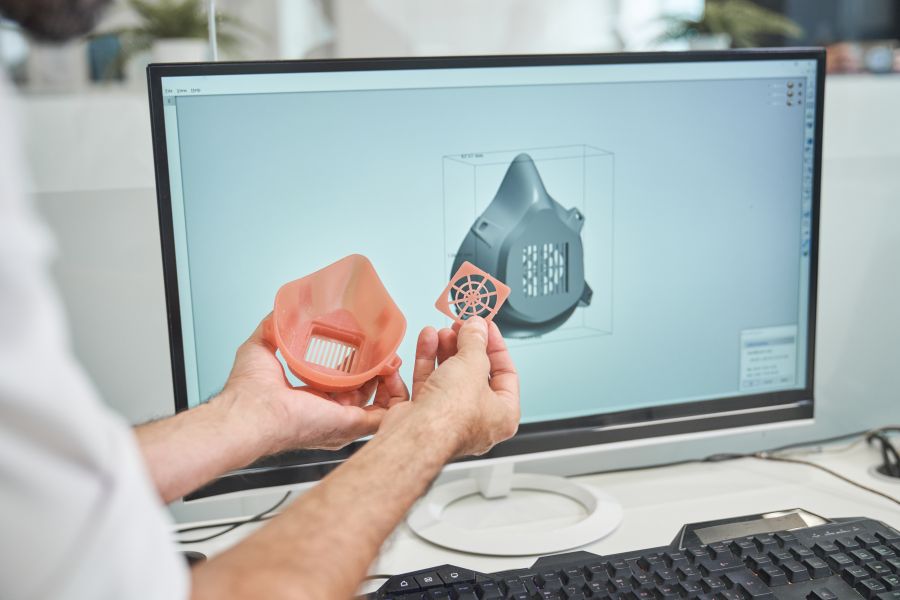
The need for automation refocuses the debate on design automation and its ability to enable production at scale. Design automation helps to reduce the cost of personalization and shorten development cycles. That’s why, although customization in AM production is relatively inexpensive, it can be quite costly during the design phase.
Rajeev Kulkarni reminds us that “processes begin with diverse data from CT scans, MRIs, and 3D optical scans, which must be transformed into accurate digital models. Handling different data formats and ensuring flawless integration is crucial; even a misaligned dataset can compromise a custom implant. To solve this, standardized protocols and middleware act as translators between systems, preserving every detail.
As the digital model takes shape, automation becomes the next challenge. The team uses advanced software and deep learning algorithms to streamline tasks such as segmentation, model optimization, and print preparation. These tools continuously refine their accuracy by learning from vast amounts of high-quality data. However, the natural variability in patient anatomy demands unmatched precision. Continuous learning systems help maintain the rigorous standards required by regulators while ensuring that every automated decision is traceable and validated.”
That said, scaling the personalization of healthcare 3D printed devices also requires taking into account regulations in the country where the product will be used. In Europe, in particular, the CE marking has helped streamline access to these devices within hospitals.
Speaking of the complexity that regulatory compliance brings, Kulkarni points out that: “Every step of the process must be meticulously documented, creating a digital journal that records every decision and adjustment. This traceability is essential for passing audits and building confidence among both manufacturers and patients. At the same time, cybersecurity becomes paramount. Sensitive patient data must be encrypted and rigorously protected against breaches, with multi-factor authentication and regular vulnerability assessments serving as a modern fortress. The journey continues with the integration of simulation tools to predict device performance under real-life conditions. Cloud-based platforms and high-performance computing resources run complex simulations without slowing production.”
Concluding notes
A key focus of this article was the importance of a digital manufacturing workflow to enable mass customization of healthcare 3D printed devices. This article serves as a follow-up to the article describing “the digital manufacturing stages of 3D printed patient-specific devices.”
If the need for automation is no longer a topic of debate, healthcare professionals and medical device manufacturers will go the extra mile to further optimize their processes. To do so, they will rely on specific algorithms and automation techniques to boost efficiency. Machine learning-driven segmentation algorithms and optimization algorithms are a few of them.
Our expert comments: “Machine learning-driven segmentation algorithms, such as convolutional neural networks, rapidly process medical imaging data to accurately isolate anatomical structures, dramatically reducing manual workload. Adaptive slicing further refines the process by dynamically adjusting layer thickness based on the model’s complexity, using thinner layers for intricate contours and thicker ones for simpler areas, thus speeding up printing while maintaining precision.
Optimization algorithms like genetic algorithms and topology optimization balance factors such as strength, weight, and material use, ensuring designs meet clinical standards. During printing, efficient path planning algorithms minimize unnecessary movements of the print head, cutting production time. Additionally, real-time monitoring systems with feedback control adjust printing parameters on the fly to correct any deviations.”
Lastly, the future of mass customization in healthcare 3D printing will be shaped by key factors such as predictive planning, next-generation 3D-printed devices, point-of-care personalization, scalable operations, and the evolving landscape of regulations and health economics. As these drivers continue to advance, they will play a crucial role in unlocking the full potential of customized production across the healthcare and medical industries.
This dossier was first published in the 2025 March/April edition of 3D ADEPT Mag. Featured image: 3D ADEPT Media