A conversation with APWORKS’ new CEO, Sebastian Lepa
APWORKS may not be the most talkative contract manufacturer in additive manufacturing, but it remains one of those companies worth keeping on your radar. As a spin-off from Airbus, it has benefited from the credibility of the aerospace giant since its founding in 2013.
For many, that pedigree alone would be reason enough to pay attention. I, on the other hand, remain convinced that what makes a company truly extraordinary is its people. It takes individuals who embody an organization’s mission, and are willing to go above and beyond, to drive success and deliver real value to customers.
 Things become especially interesting when, beyond roles held across various companies, one position reveals the leader within. That is precisely what caught my attention in the new era APWORKS is entering with Sebastian Lepa as its new CEO.
From what could be described as humble beginnings as a young application engineer in 2018, few would have predicted a trajectory leading him to the CEO role, succeeding the highly respected Jonathan Meyer.
“Looking up to and learning from role models around me, feeling their daily trust and support, and being given the opportunity to take on more and more responsibility in this very special company continuously motivated me to push further,” Lepa confides in 3D ADEPT Media.
“Seeing how the close collaboration between our former CEO, Jonathan Meyer, and myself in the COO role helped build the foundation for turning APWORKS into a profitable AM company makes me incredibly proud. With the trust and opportunity given by our internal management team and our shareholder board at Airbus Defence and Space, stepping up to the CEO role was a no-brainer and personally very meaningful to me.”
While I may have discovered the company in 2017 through Project 3i-PRINT, a joint demonstration project that highlighted its manufacturing and AM design expertise for automotive applications, the company’s strong differentiator in the market is certainly the material expertise it has built up in a specific niche:
“We never aimed to flood the market with a wide range of technologies and materials, but instead chose to focus on challenging niche products with the highest quality requirements. Our ongoing and upcoming Scalmalloy variants — Scalmalloy CX, EX and HX — will help us continue on this path by offering a truly unique product portfolio in the market,” Lepa says.
Manufacturing first: How and why APWORKS’ AM design expertise translates across industries
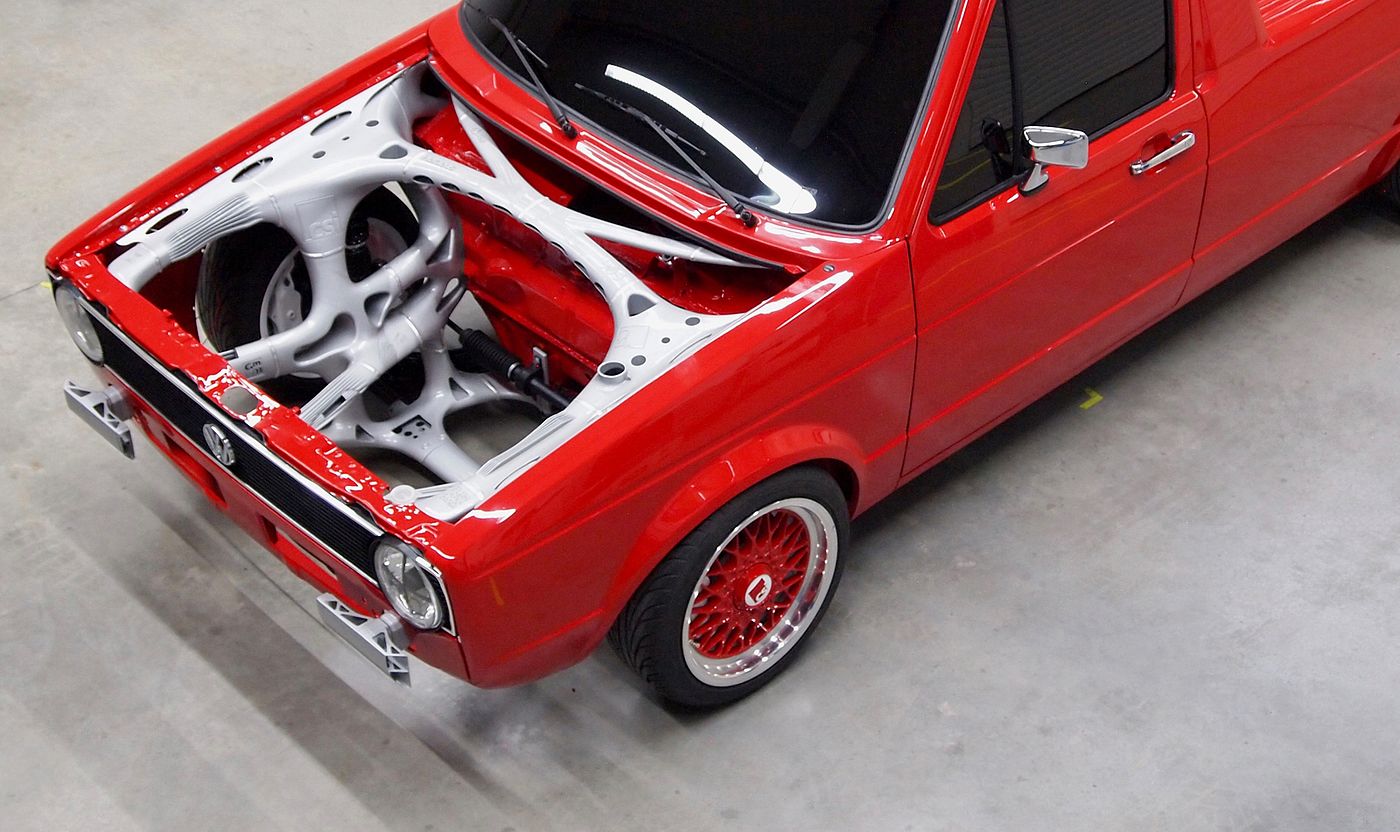
Long before additive manufacturing became a strategic discussion point in aerospace boardrooms, APWORKS was already building its manufacturing and AM design expertise where performance tolerates no compromise: motorsports and luxury automotive applications.
Motorsport and hypercars, by nature, offered APWORKS a demanding yet agile testing ground. Design iterations were fast, performance expectations uncompromising, and failures highly visible. More importantly, these early projects forced the company to think beyond design freedom and address the realities of serial production, process stability, and quality assurance, competencies that would later prove transferable to far more regulated environments.
“Indeed, motorsport and hypercars have always been important markets for us, especially in the early days of APWORKS, where we learned a great deal that we were later able to successfully apply to Space, Aerospace and other highly regulated markets as well,” the CEO told 3D ADEPT Media.
Although most space and defense applications may largely remain outside the public spotlight due to their confidentiality nature, their growing weight in APWORKS’ activity reflects an industry shift where additive manufacturing is no longer framed as experimental, a transformation that Lepa emphasizes:
“Looking at Aerospace today, we clearly see a shift in mindset across European companies, with growing trust in additive manufacturing as a mature and reliable production technology.”
What distinguishes APWORKS in this context is not simply its aerospace lineage, but its ability to translate AM design expertise into flying, serial parts, supported by EN 9100 certification, robust quality systems, and a deep understanding of material behavior and statistics.
As experience in qualification, certification, and industrialization accumulates, AM will strengthen its position as a manufacturing reality with lasting impact on aerospace production.
Scalmalloy®: the strategy, business and applications of the material concept
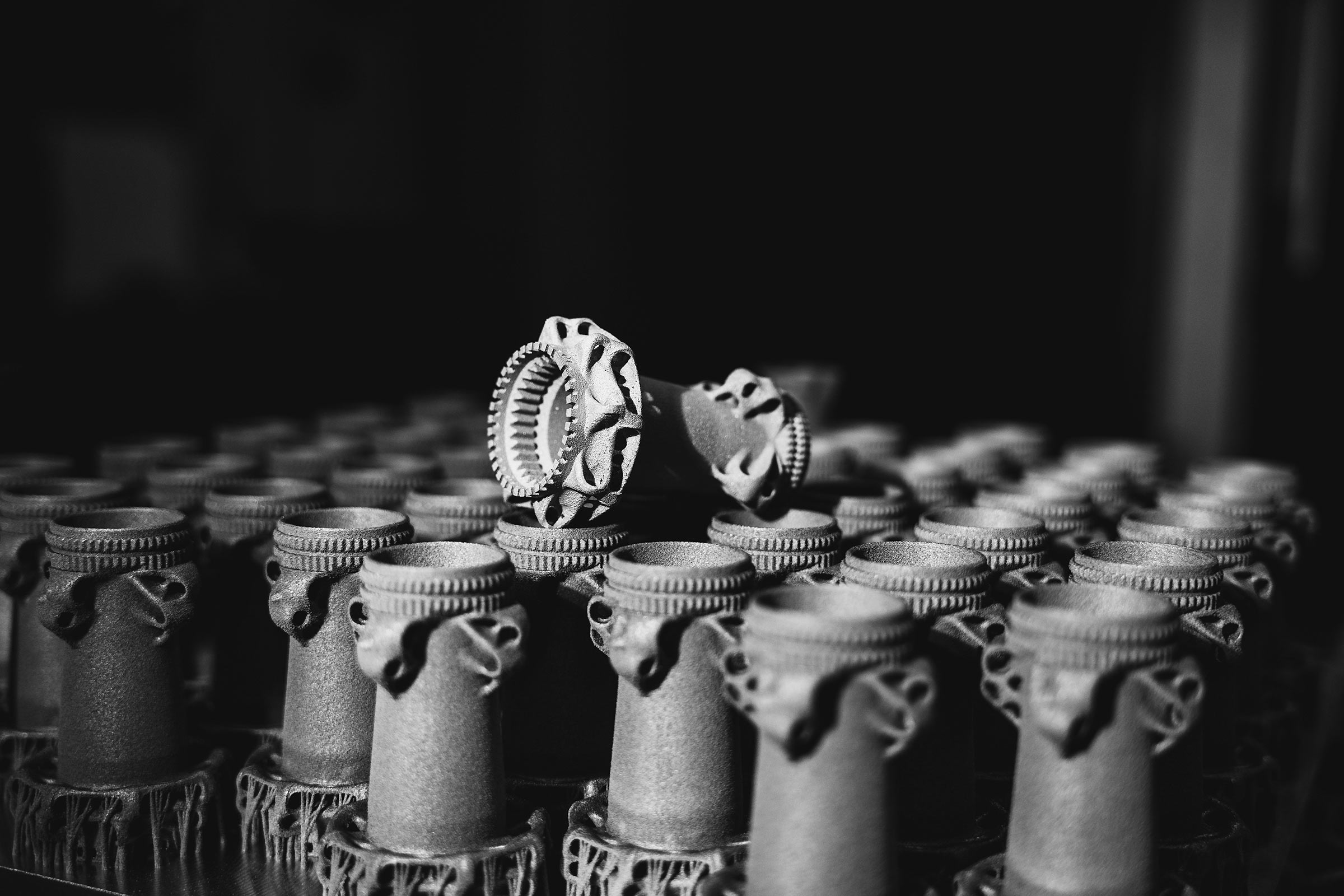
In an additive manufacturing market increasingly saturated with “new” aluminum alloys, few materials can claim both longevity and relevance. APWORKS’ Scalmalloy® is one of them.
Scalmalloy®, a material portfolio built for longevity
More than a decade after its introduction, it has moved beyond the status of innovation to become a benchmark against which newer high-strength aluminum alloys are often measured.
Sebastian Lepa acknowledges how its competitive landscape has evolved:
“The market for high-strength aluminum alloys has certainly been very dynamic over the past years, and we have seen several interesting materials enter the market alongside Scalmalloy®.”
Yet I believe what differentiates Scalmalloy® is not novelty, but validation. Its record across highly regulated industries, from space to aerospace, positions it as a mature, trusted solution rather than an experimental alternative.
“With its outstanding track record of more than ten years in various highly regulated industries, we still consider Scalmalloy® the material of choice for high-strength lightweight applications,” Lepa emphasizes.
That said, it’s pleasantly surprising to see how APWORKS has resisted the temptation to treat Scalmalloy® as a static success. Instead, the company has deliberately expanded it into a portfolio. The latest variants signal the company’s willingness to continuously extend its applicability into domains traditionally served by other aluminum or even titanium alloys:
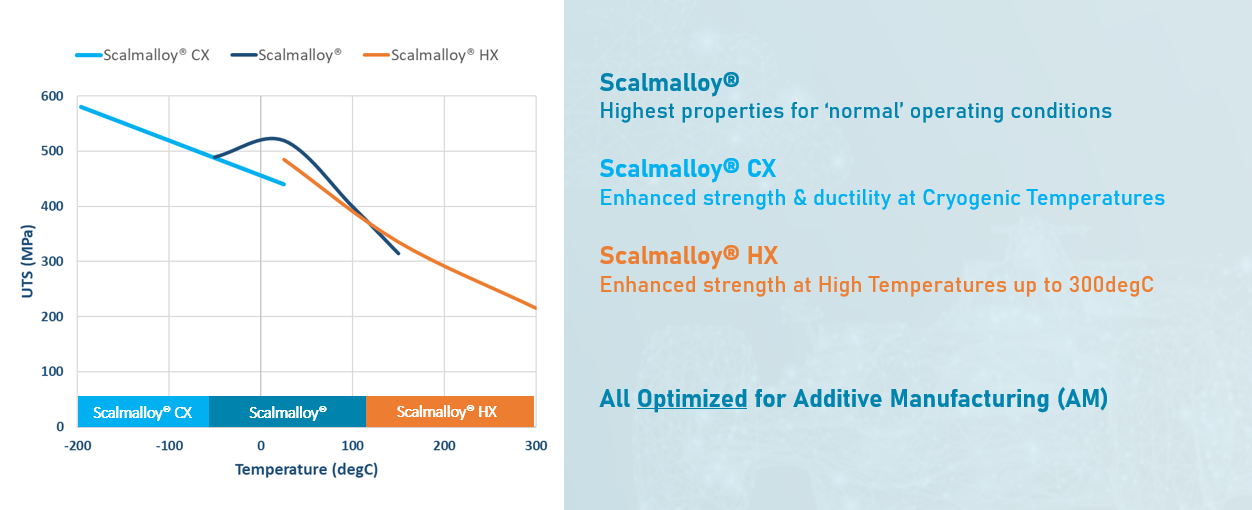
“At the same time, we are continuously pushing the Scalmalloy® portfolio to the next level with our new variants: CX for cryogenic temperatures, EX for high electrical and thermal conductivity, and HX for elevated temperature applications,” the company’s CEO explains.
The business around Scalmalloy®
Material development alone rarely guarantees market adoption, especially in additive manufacturing. What sets APWORKS apart is how deliberately it has built a business ecosystem around its material portfolio. Over the years, 3D ADEPT Media has documented APWORKS’ collaborations with machine manufacturers, end users, and industrial partners, all aimed at expanding the practical use of Scalmalloy® beyond isolated success stories.
These collaborations have been instrumental in qualifying the material across platforms, applications, and geographies. Notably, APWORKS’ expansion of Scalmalloy® production and partnerships in the United States reflects a clear intent: to remove supply-chain and qualification barriers that often slow material adoption in aerospace, defense, and high-performance industrial sectors.
APWORKS’s efforts to make Scalmalloy® reproducible, certifiable, and scalable make it easy to look at the material beyond its mechanical properties to see how it integrates into regulated production environments.
Applications that validate APWORKS’s strategy
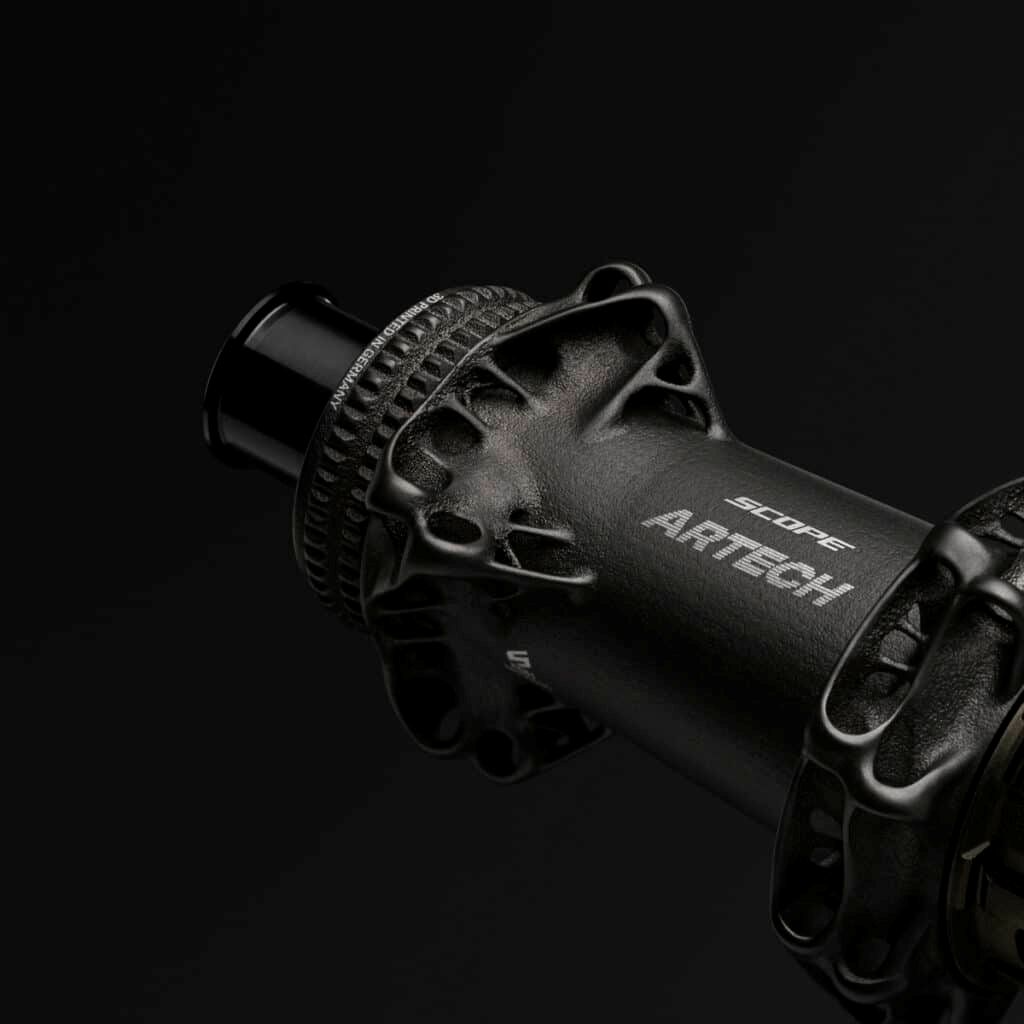
If material credibility is earned in application, Scalmalloy® has accumulated its proof points steadily. One of the most illustrative examples remains its use in serial production for Scope Cycling.
“One of the greatest success stories we are allowed to publicly share is the serial production of Scalmalloy bike hubs for our customer Scope Cycling,” Lepa notes. “Together, we not only developed a design that contributes to the lightest and fastest wheelsets worldwide and fully leverages the design freedom of additive manufacturing, but also one that enabled true serial production of more than 10,000 parts per year.”
Beyond performance, this project underscores something often missing in AM material discussions: repeatability at scale. Continuous improvements in both design and process demonstrate how Scalmalloy® supports long-term production strategies, not just one-off achievements.
On the space side, applications become even more unforgiving. “Scalmalloy® is also used in various highly demanding structural, thermal and flow applications, such as impellers for rocket engines, where mechanical performance and reliability under extreme operating conditions are critical.”
Looking ahead, the newer Scalmalloy® variants deliberately challenge incumbent materials. As Lepa notes, “Scalmalloy® EX directly addresses applications that are traditionally served by AlSi-based alloys when electrical or thermal conductivity is the key requirement,” while HX opens doors to applications “currently dominated by titanium alloys in AM… providing a more lightweight and design-flexible alternative with a more efficient overall cost structure.”
I believe this is where APWORKS’ material strategy comes full circle: not by competing alloy against alloy, but by redefining where aluminum can realistically replace heavier, costlier materials in additive manufacturing.
A measured ambition for the next chapter of APWORKS
If I had to summarize this conversation with Lepa in three words, I would say: “continuity over disruption.”
For APWORKS, the next three to five years are about strengthening what has already proven its value: materials, manufacturing excellence, and a growing impact beyond its historical anchor within Airbus.
“We want to grow in a sustainable and healthy manner, building on what we have established over the past few years,” Sebastian Lepa shares. The ambition is deliberate: refine the material and manufacturing portfolio, expand the customer base beyond Airbus, and increase value creation for shareholders, without losing the agility required to adopt new technologies. As Lepa puts it, “For us, sustainable and healthy growth does not mean avoiding the early implementation of new technologies… it allows us, up to a certain point, to think outside the box and take well-considered risks.”
Looking further ahead, Lepa’s vision becomes less about size and more about trust. In ten years, he hopes APWORKS will be recognized as “one of Europe’s most trusted partners for high-performance additive manufacturing,” particularly in defense and space, sectors where certified quality, reliability, and secure supply chains are non-negotiable.
But not only: The selective transfer of this rigor into high-value niche markets, without diluting core expertise, reflects a strategy rooted in industrial discipline rather than expansion for expansion’s sake.
If, in a decade, APWORKS is remembered as having helped make AM a trusted solution for mission-critical components across demanding sectors, “that would be a very meaningful legacy,” he concludes.
*All images: Courtesy of APWORKS. This article has first been published in the 2026 January/February edition of 3D ADEPT Mag.