

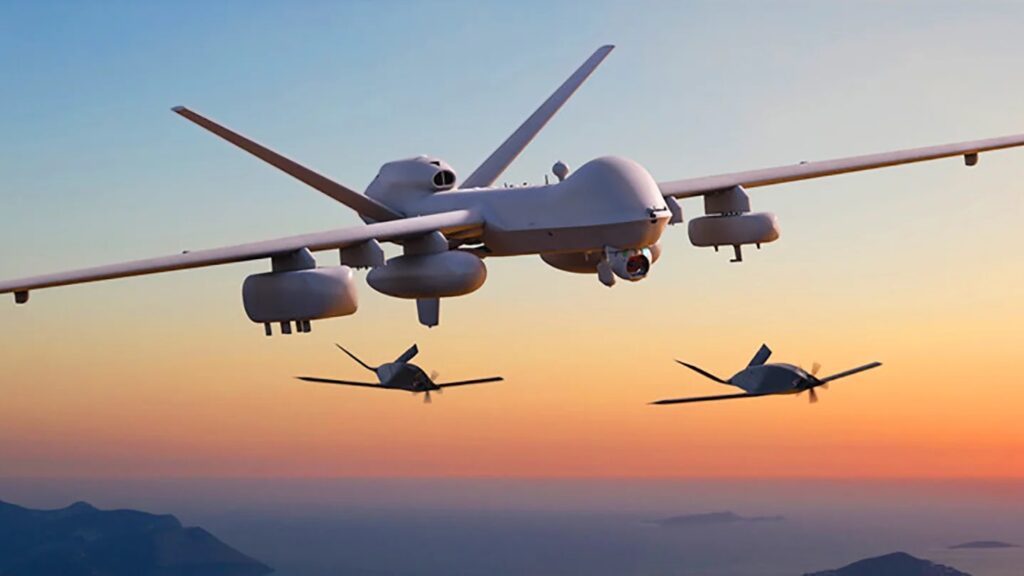
The phrase has become ambient noise in manufacturing. Every major industrial player, every technology vendor, every trade show keynote has its own version of the Factory of the Future: Autonomous production lines, digital twins, AI-driven quality control. Additive manufacturing woven into the workflow. The language is everywhere, which is probably why it has started to mean very little.
Unless, that is, you can point to a factory that is actually running.
General Atomics Aeronautical Systems (GA-ASI) is one of the few organizations in the aerospace and defense industry that can. And the story of how they built it, decision by decision, over more than a decade, is a useful antidote to the abstraction.
A decade before the headline
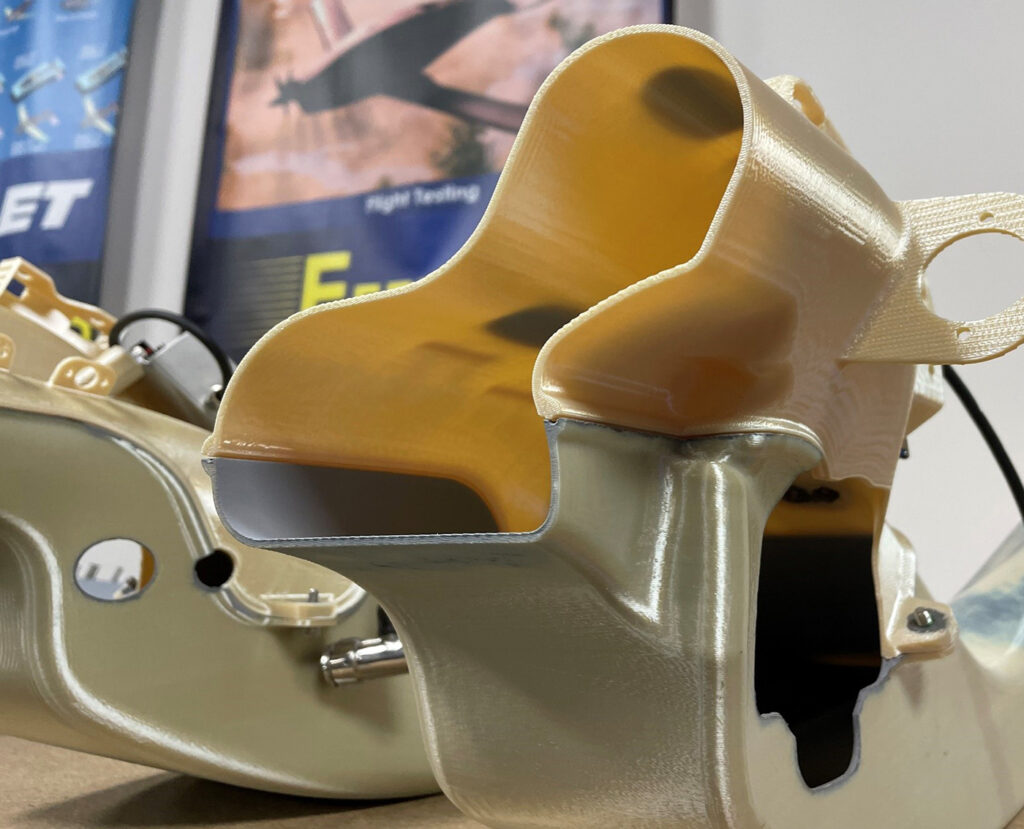
GA-ASI’s journey into additive manufacturing began in the early 2010s with a deliberate, exploratory period: the company’s engineering teams worked through collaborative projects with machine manufacturers and AM service bureaus before committing to any specific technology. The goal was to understand what AM could and could not do for their specific applications in unmanned aircraft systems.
As 3D ADEPT Media documented in a detailed article on the company’s AM journey, GA-ASI onboarded its first AM system, a Polyjet technology from Stratasys, in 2011. What followed was not a rapid roll-out but a sustained capability-building effort that would take nearly a decade to reach operational scale.
In 2019, the company flew its first metal 3D printed component: a titanium NACA inlet on an MQ-9B SkyGuardian Remotely Piloted Aircraft. It was a milestone, but more importantly, it was a proof point that the underlying qualification and engineering work had been done correctly. The part did not just print. It flew.
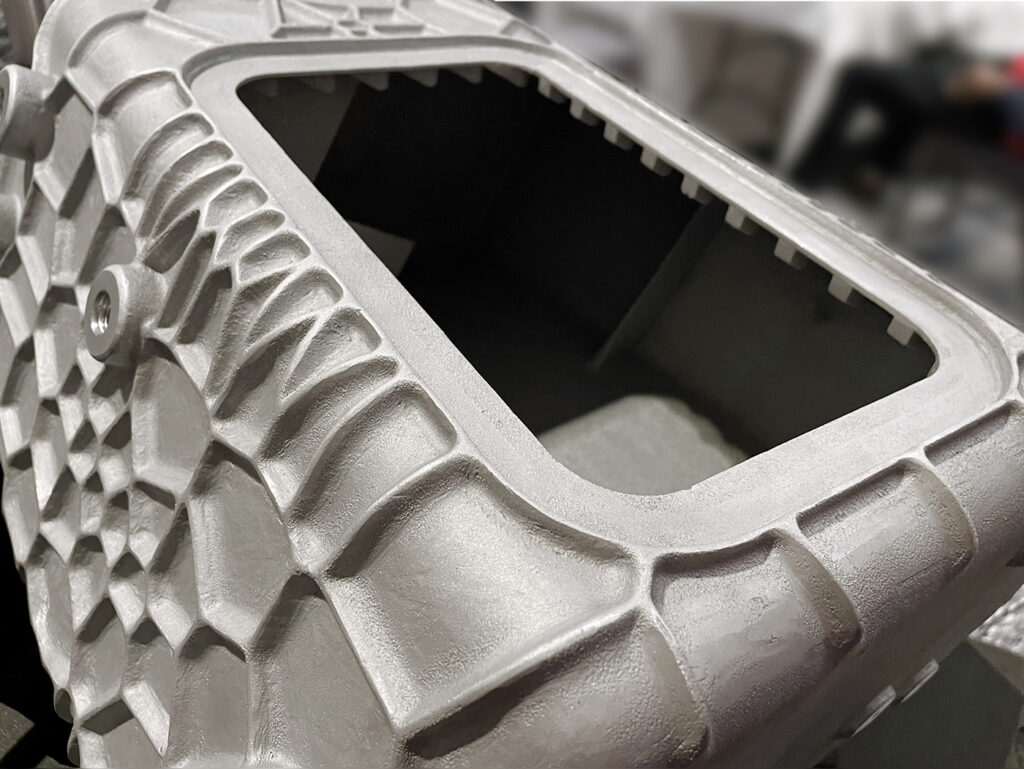
Two years later, GA-ASI opened the Additive Design and Manufacturing Center of Excellence (AD&M CoE). The center was not conceived as a showcase. It was designed to support rapid-reaction manufacturing for operational programs, handle overflow production of complex end-use parts, and conduct R&D for next-generation platforms. In other words, it was built to be useful, not impressive.
What makes GA-ASI’s version different
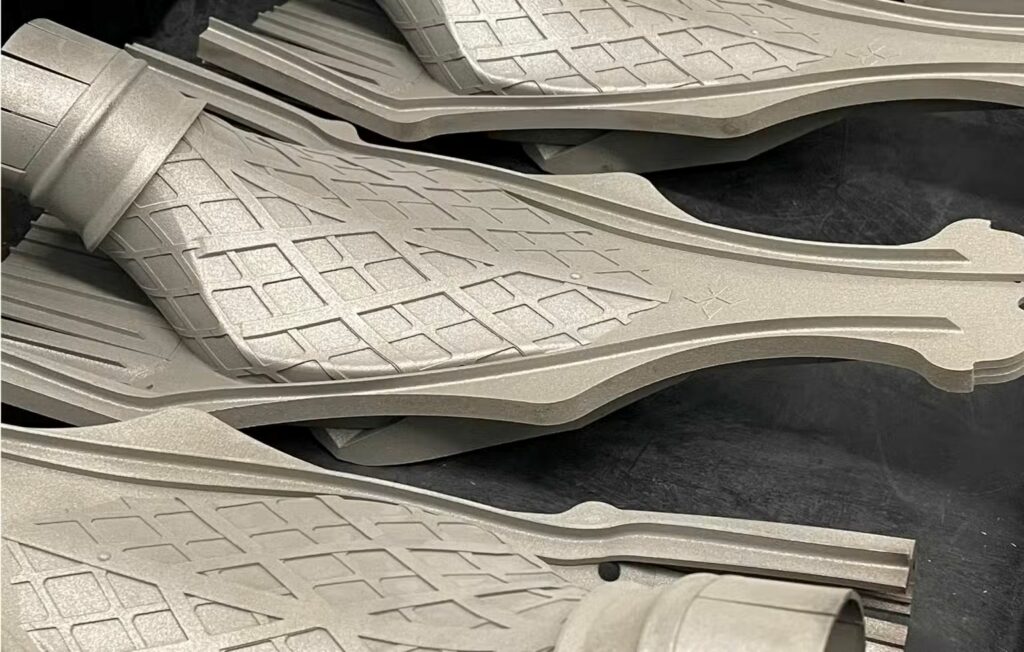
In our earlier interview, GA-ASI described an ambition to increase AM content to as much as 75%, depending on the aircraft class and survivability level. A striking number. Imagine now what has to be built to make that ambition possible. Three things stand out:
First, qualification. When GE Additive’s AddWorks consultancy was brought in to accelerate metal AM qualification within GA-ASI processes, the engagement was structured around materials characterization, part certification processes, and production readiness strategies. GA-ASI understood early that the bottleneck in defense AM is the evidence chain that allows a qualified part to fly.
Second, supply chain. As demand for in-house rapid-reaction manufacturing grew, GA-ASI built a strong AM supply chain for overflow production. The AD&M CoE does not attempt to do everything internally. It concentrates internal capacity where it matters most and coordinates external suppliers for the rest, a model that requires significantly more supply chain management than simply buying machines.
Third, integration. The partnership with Divergent Technologies brought a new dimension to the GA-ASI model. As reported by 3D ADEPT Media, the two companies completed a fully integrated small UAS aerostructure that reduced part count by over 95% while meeting weight targets. The assembly process — digital twin creation, automated tool-less robotic assembly — took less than 20 minutes.
The whole system, from print-ready design to assembled airframe, was completed in under two days. GA-ASI described this as a capability that could enable near-theater ramp capacity: the ability to manufacture close to where the platform is deployed.
Implications of the concept
From our understanding, the Factory of the Future, in GA-ASI’s version, is defined by its operational intent: to manufacture parts that are qualified, traceable, and deployable faster than the alternatives, and closer to where they are needed.
That intent has implications for how the company thinks about qualification frameworks, digital infrastructure, and supply chain resilience, all of which are now being shaped by external pressures as well. The US National Defense Authorization Act signed in late 2025 introduced requirements around security, software control, and data sovereignty for AM in defense manufacturing. The factory of the future, it turns out, also has to be a secure factory.
The questions this raises — about how qualification frameworks can scale across platforms, how digital threads are built to be both auditable and flexible, and what near-theater manufacturing actually requires — are not answered in a product brochure.
What this means for aerospace and defense professionals
If you are responsible for AM adoption in an aerospace or defense organization, GA-ASI’s journey surfaces several questions worth asking about your own operation:
- How much of your qualification process is built around the machine, and how much is built around the part and the evidence it produces? GA-ASI’s discipline around materials characterization and production readiness, rather than machine certification alone, is a meaningful structural choice.
- Is your AM capability concentrated in a center of excellence, distributed across programs, or dependent on external suppliers? Each model has different resilience and scalability profiles.
- What does “closer to the point of need” mean for your specific platforms and operating environments? Near-theater manufacturing is a compelling concept, but it requires a specific kind of digital and logistical infrastructure to function.
These are the operational realities that sit behind every conversation about distributed AM in defense and they are precisely what Steve Fournier will bring to the table at Additive Talks Season 6.
Wednesday, April 22 | 15:30–16:30 CEST | 09:30–10:30 EDT

Steve Fournier (GA-ASI) and Hauke Schulz (Airbus) will address these questions live in Additive Talks Season 6, Episode 1: “Closer, faster, certified: Where does distributed AM stand in aerospace & defense today?”
For context on the civil vs. defense certification divide that frames this conversation, read our earlier analysis: Civil AM certification vs. defense: Two worlds that rarely talk to each other — should they?
Source: 3D ADEPT interview with Steve Fournier, published 1 June 2023.
THE 3D ADEPT WEEKLY NEWSLETTER
The industry moves fast. Stay ahead.
Every week, the latest additive manufacturing news, in-depth features and real-world applications, straight to your inbox. Plus, be the first to know when a new issue of 3D ADEPT Mag is out.
Free · One email a week · Unsubscribe anytime
Clicking loads our email provider’s sign-up form, including its analytics and Google’s anti-bot protection. You’re only subscribed if you complete the sign-up. Read our privacy policy.