The crease is one of those details that may seem cosmetic at first glance, but anyone who has worked with foldable display technology knows it points to something far more structural: the challenge of building a hinge that can absorb hundreds of thousands of folding cycles without compromising display flatness, mechanical integrity, or user experience.
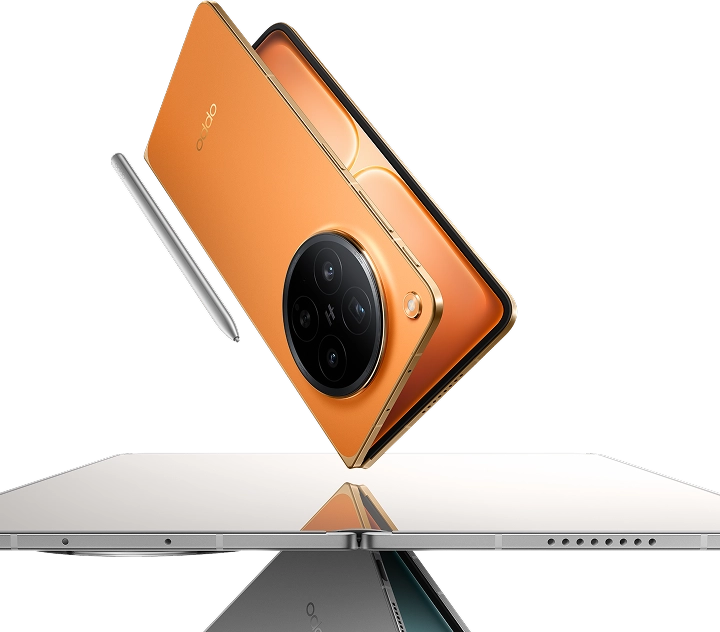
OPPO’s latest flagship, the Find N6, launched globally on March 17, 2026, takes a significant step toward solving this problem, and metal additive manufacturing is at the heart of it.
Bright Laser Technologies (BLT) contributed to the development of the Find N6’s hinge system, continuing a collaboration with OPPO that began with the Find N5. The focus this time: the wing plates, the components on either side of the hinge that absorb the bulk of folding stress.
Traditionally, these required up to 13 individual machined parts, each assembled with exacting precision. BLT replaced this assembly with a single titanium 3D-printed structure, integrating lattice geometries and lightweight design features that conventional CNC machining simply cannot produce.
The result is a 50% improvement in supporting surface flatness compared to the previous generation. “Achieving this level of precision once seemed extremely difficult, even unattainable,” said Vincent Yang, General Manager at BLT Shenzhen. “Through continuous iteration and rigorous testing, our team was able to meet and even exceed expectations.”
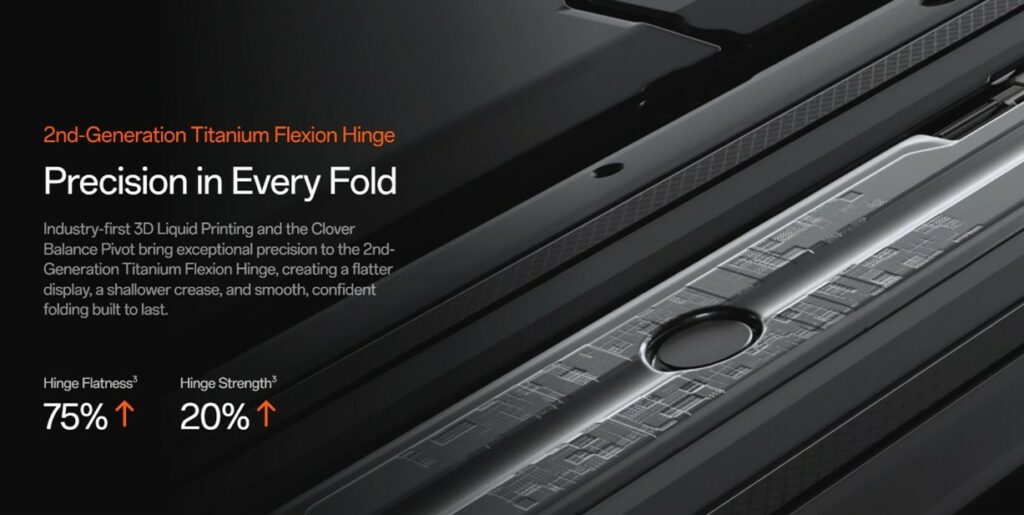 The Find N6 subsequently passed 600,000 folding cycles certified by TÜV Rheinland, a number that reveals the kind of industrial validation that matters when components are heading into mass production.
This development fits into a broader trend we’ve been tracking on 3D ADEPT Media. When Apple integrated metal AM into its iPhone Air and Apple Watch components, it forced a real conversation about what production-scale additive manufacturing looks like in consumer electronics. The OPPO-BLT collaboration pushes that conversation further.
What makes this case interesting is the ecosystem logic behind it. The collaboration was carried out within OPPO’s “Tianqiong Partners” industrial alliance, a structure designed to bring together suppliers, research institutions, and technology partners around shared development challenges.
BLT’s end-to-end capabilities were essential to translating a design concept into a component that could be reliably scaled.
*We curate insights that matter to help you grow in your AM journey. Receive them once a week, straight to your inbox. Subscribe to our weekly newsletter.