




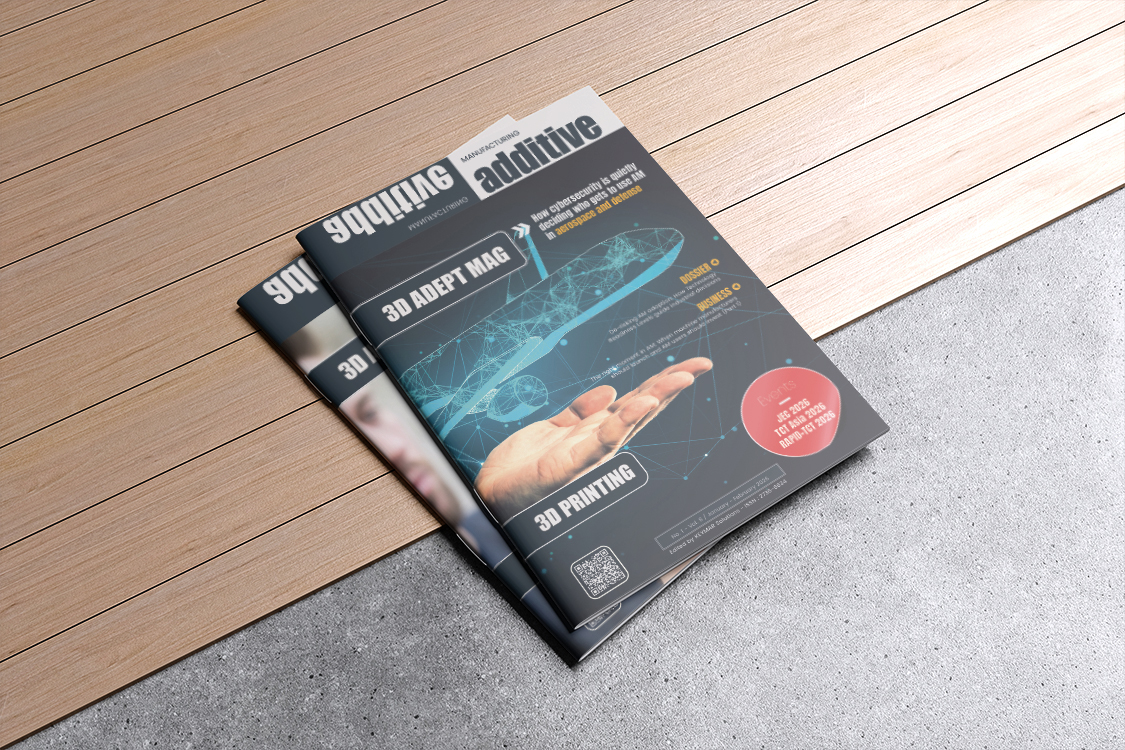
Download the 2026 January/February edition of 3D ADEPT Mag

The best moment for making decisions 

I was recently told a story about someone who faced an ethical dilemma: having to lay off consultants for several consecutive weeks to cut costs. She believed it would have been wiser to lay off some coordinators, but her boss opposed the idea.

The year before, that same boss had advocated for hiring more coordinators during the annual planning cycle to support the company’s growth. The decision turned out to be counterproductive. Coordinators were more expensive and often idle due to a lack of teams to manage, while laying off consultants placed additional pressure on those who remained.

Her experience highlighted two key issues. First, the reluctance to revisit incorrect decisions often makes a situation worse. Second, companies tend to make anticipatory decisions during planning stages, typically at the end of the year. This is not inherently a bad idea, but it raises a legitimate question: is it always worthwhile?

This story reflects a dilemma faced by many in the additive manufacturing industry. As AM introduces new materials, processes, and qualification pathways, are existing TRLs still fit for purpose to guide the right decisions? When should you upgrade existing AM equipment, and when does it make more sense to replace it entirely? When is AM truly defense-ready?

From a leadership perspective, similar questions emerge. What does taking a leadership role in a new company mean for its next chapter? After a previous company’s failure, at what point do you realize that the venture you have been quietly building is no longer just a continuation, but something that is actively reshaping other businesses?

With a key focus on Aerospace & Defense, this new issue of 3D ADEPT Mag explores this range of dilemmas. It approaches additive manufacturing with fresh eyes, through key topics that deserve attention right now.

While it ultimately aims to de-risk AM adoption, it reveals that sometimes, making the right decision depends on asking better questions at the right moment, and being willing to challenge the assumptions that once felt safe.

Our words are now in your hands.
Make the rest of 2026 count.
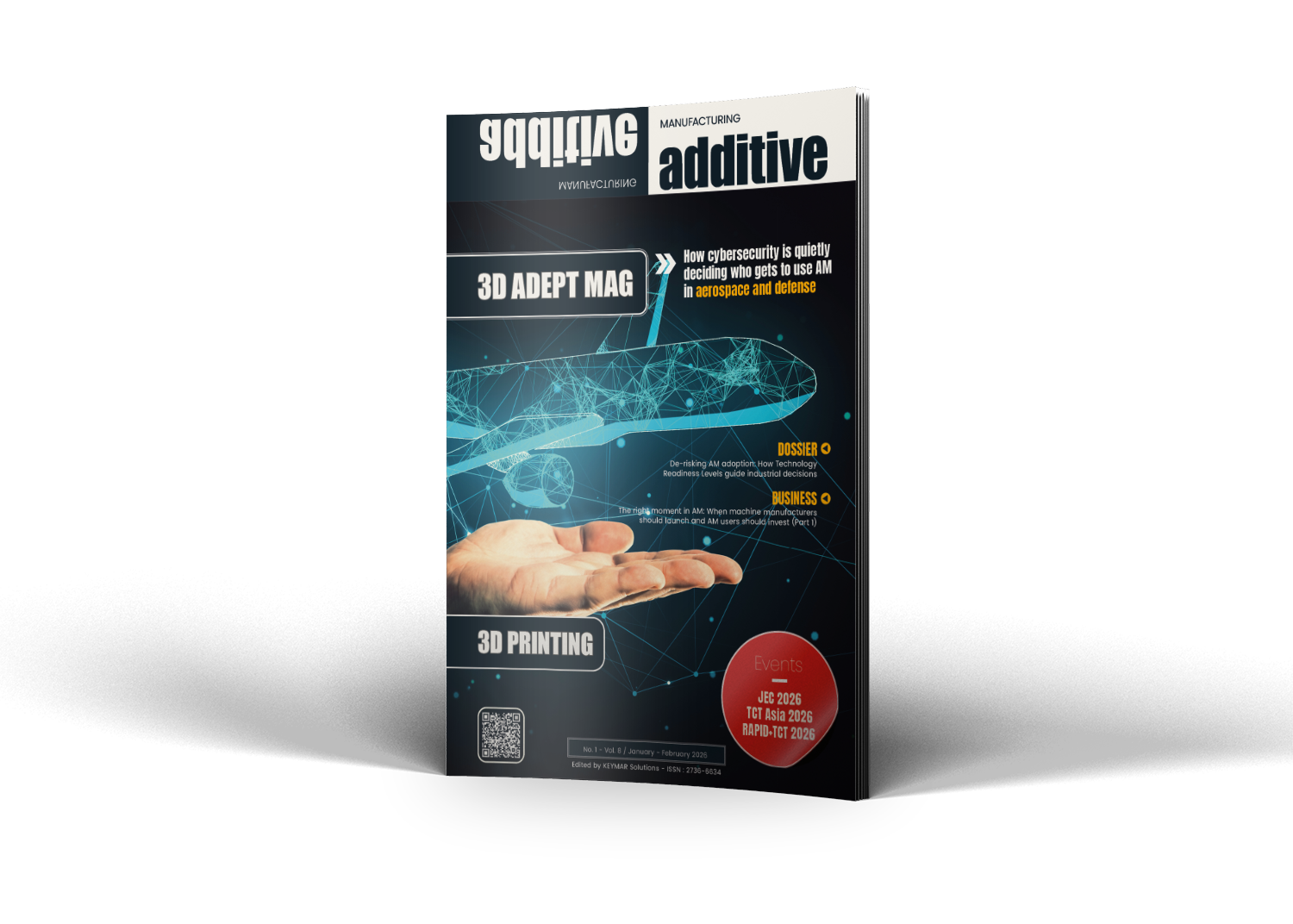
Subscribe to download the 2026 January/February edition of 3D ADEPT Mag

"*" indicates required fields

Name*
Email*

Exclusive features

Dossier |   De-risking AM adoption: How Technology Readiness Levels guide industrial decisions

As additive manufacturing introduces new materials, processes, and qualification pathways, are existing TRLs still fit for purpose, or should they evolve to reflect this new industrial reality?

This dossier aims to examine how TRLs guide industrial decisions. With insights from Paul Gradl (NASA), Dan Woodford (Conflux Technology) and NAMIC.

Focus | How cybersecurity is quietly deciding who gets to use AM in aerospace and defense

If additive manufacturing isn’t secure, it isn’t defense-ready. 

Bart Van der Schueren and Kyle Adriany from Materialise took 50 minutes of their Wednesday shift to help us make sense of why cybersecurity has become unavoidable for the aerospace and defense industry,  and how its digital supply chain security and quality assurance platform sits at the heart of that transformation.

Design | Why LEAP 71 thinks in code first and what that means for Aerospace & Defense

In this Q&A, Kayser shares more about LEAP 71’s “wow” moments, why a code-first approach is particularly well suited to aerospace and defense, how bootstrapping has shaped their journey, and why building all of this in the UAE has been a strategic advantage rather than a constraint.

Composites: Additive, but not “AM” as we know it

What emerges is that the composites AM market is currently in transition. A market that feels unusually calm. Whether this calm reflects fewer real opportunities for existing players, or simply fewer companies willing to communicate openly about their developments, remains an open question. But silence, in itself, is a signal worth paying attention to.

Events: JEC 2026, TCT Asia 2026 and RAPID+TCT 2026

  • JEC WORLD 2026 under the Motto “Pushing the Limits”
  • Inside TCT Asia 2026: Exploring a full-chain additive manufacturing platform
  • The strategy behind RAPID + TCT’s move to Boston

Business | The right moment in AM: When machine manufacturers should launch and AM users should invest (Part 1)

When should you upgrade your existing AM equipment and when does it make more sense to replace it entirely?

This dossier aims to shed light on those grey areas, by reconnecting machine builders’ strategies with the real-world constraints, expectations, and decision-making processes of AM users.

With contributions from EOS, HP and Solukon.

Interview of the Month | A measured ambition for APWORKS’ new era: Manufacturing, materials, and strategy

A conversation with APWORKS’ new CEO, Sebastian Lepa

Technical ceramics | How is the industry tackling densification challenges in additively manufactured technical ceramics?

Why is densification such a persistent headache in ceramic additive manufacturing? In which AM processes does it pose the greatest challenge? And how are technology providers and manufacturers working to overcome it?

Xjet, 3DCeram and Sinto Advanced Ceramics Europe GmbH explore these questions and why, in ceramic AM, making the shape is only half the battle.

AM Shapers | Designed for DED: How Airbus is challenging the economics of structural aircraft manufacturing

Until now, the dominant additive narrative for aircraft structures has been constrained by process economics and certification realities. By embracing wire-based Directed Energy Deposition for large, load-bearing titanium structures, Airbus is redefining where and how AM competes with traditional forging and machining.